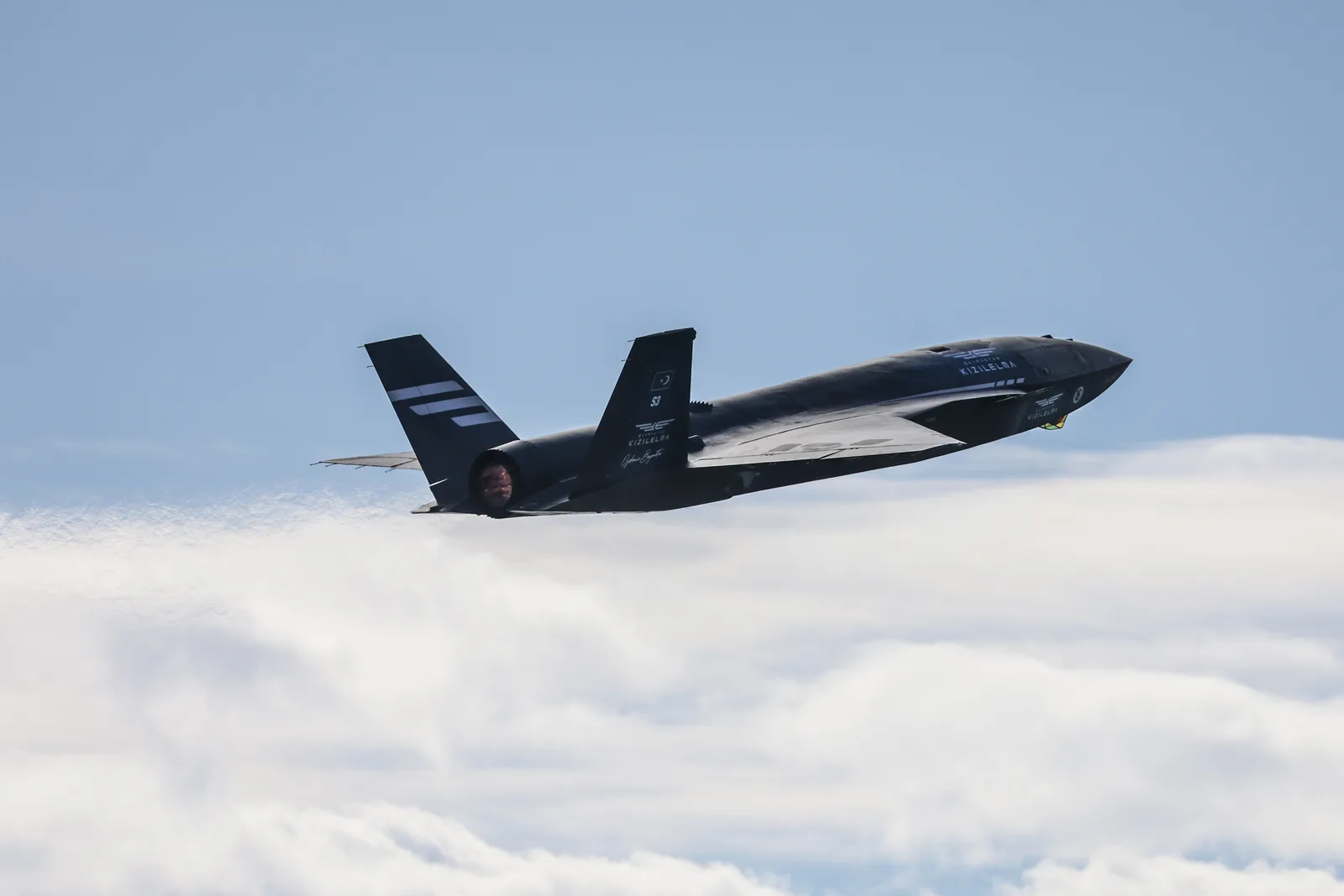
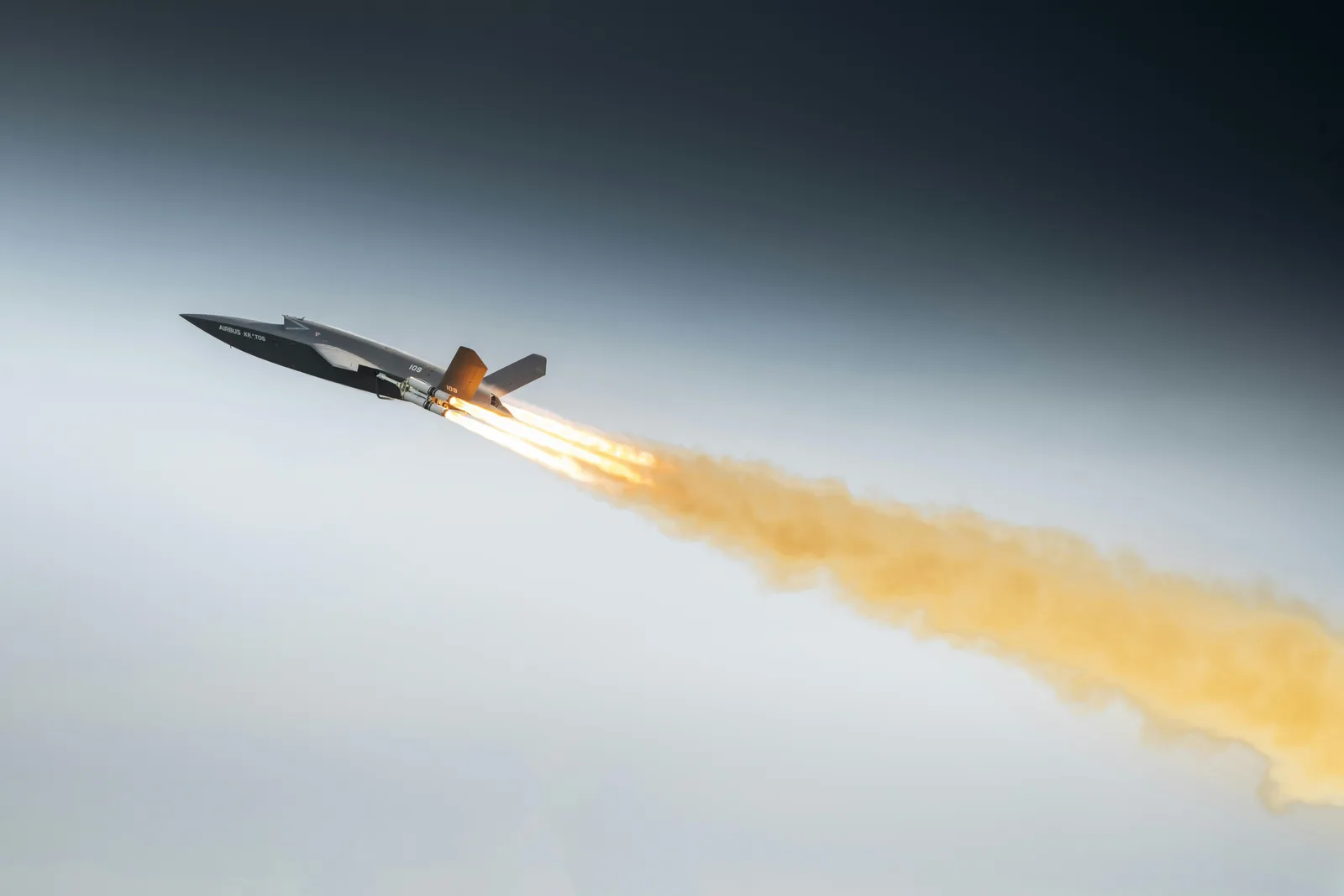
Türkiye has brought its first three Kızılelma unmanned fighter jets into service, moving Baykar Technologies’ jet-powered combat aircraft programme from flight testing into the initial operational capability phase.
The aircraft were delivered to Turkish security forces on 19 November 2026 after completing acceptance tests, Baykar announced. The company said the programme had accumulated 600 test and training sorties before the handover.
Baykar didn’t identify the receiving service, but photographs circulating online appear to suggest that the aircraft were delivered to the Turkish Land Forces’ Army Aviation Command, though this hasn’t been officially confirmed. The company also provided no details on the operating location or timetable for subsequent deliveries.
Baykar described the delivery as the world’s first operational entry into service of an unmanned fighter jet. While that distinction depends on how the category is defined, Kızılelma’s combination of air-to-air weapons, radar and strike capability sets it apart from unmanned aircraft developed primarily for surveillance and ground attack.
The delivery nevertheless leaves questions about which missions and weapons are cleared for operational employment.
Kızılelma: From prototype to armed aircraft
The handover comes just under four years after Kızılelma’s maiden flight on 14 December 2022. Baykar publicly unveiled conceptual renderings in July 2021, with the first aircraft entering production in March 2022. The programme subsequently progressed through formation flights, sensor integration and weapons trials.
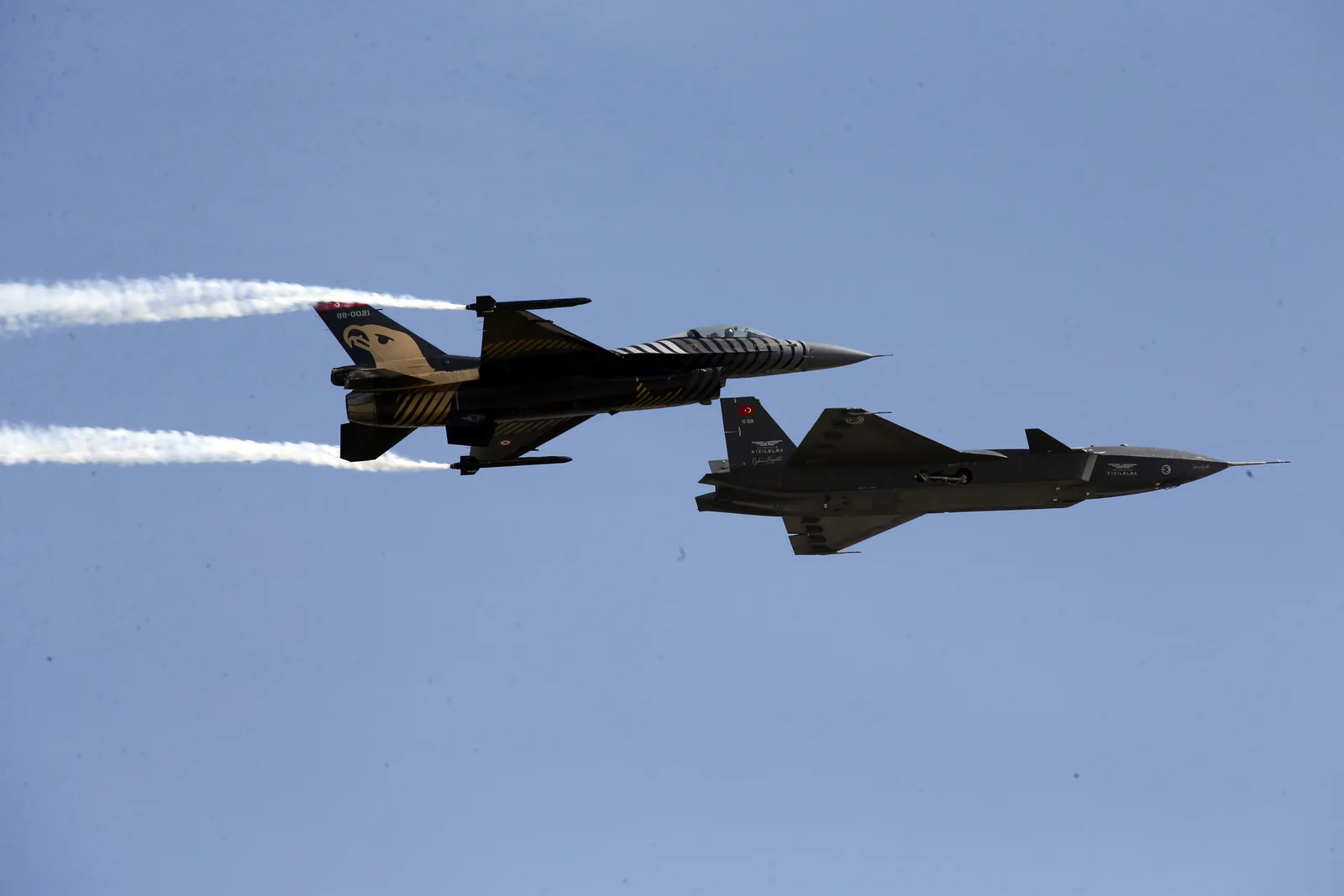
Early demonstrations included formation flying with Baykar’s Akıncı unmanned aircraft in April 2023 and appearances alongside Turkish crewed military jets during that year’s Teknofest exhibition. More recent tests have addressed the systems needed to turn a flying platform into an armed aircraft.
Kızılelma conducted its first firing trials with Tolun and Teber-82 guided munitions on 8 October 2025. Integration of Aselsan’s Toygun optoelectronic targeting system followed in November 2025.
The programme’s most significant reported air-to-air milestone came on November 29, 2025, when Kızılelma engaged a jet-powered target aircraft off Sinop using a TÜBİTAK SAGE Gökdoğan beyond-visual-range (BVR) missile. According to Baykar, Aselsan’s Murad active electronically scanned array (AESA) radar designated the target.
The engagement demonstrated a radar-and-missile combination central to the aircraft’s intended fighter role. However, a controlled interception of a target drone doesn’t establish performance against manoeuvring opponents or under electronic attack.
Weapons development continued in July 2026 with a Jet-230 supersonic air-to-surface missile firing, followed later that month by the first Tolun and Teber-82 releases from the internal weapons bay.
Payload, sensors and autonomy
Baykar’s published specifications give Kızılelma a maximum take-off weight of 8.5 tonnes and a payload capacity of 1,500 kg. The aircraft measures 14.5 m in length and has a 10 m wingspan.
The turbofan-powered platform has a stated maximum speed of Mach 0.9, a cruise speed of Mach 0.6 and endurance exceeding three hours. Baykar lists a combat radius of 926 km (500 nautical miles), an operational altitude of 7,620 m (25,000 ft) and a service ceiling of 12,192 m (40,000 ft). These are manufacturer figures, rather than performance guarantees for every weapons configuration or mission profile.
Its internal weapons bay is intended to support reduced radar observability by avoiding the additional signature associated with external stores. The published weapons categories include air-to-air missiles, guided bombs and standoff weapons, although this broader catalogue shouldn’t be read as confirmation that every weapon type is operationally integrated.
The listed sensor suite includes an AESA radar, optoelectronic targeting and infrared search-and-track (IRST) systems. Autonomous taxiing, take-off, flight and landing are also advertised, alongside line-of-sight and beyond-line-of-sight communications.
Two Kızılelma aircraft demonstrated autonomous close-formation flying in December 2025. A further autonomous formation flight with Italian M-346 trainer aircraft followed in May 2026, supporting development of crewed-uncrewed cooperation. Such demonstrations are relevant building blocks, but don’t establish a complete operational teaming capability.
In May 2026, Kızılelma has secured its first export order, with Indonesia ordering 12 aircraft, with an option for a further 48.
A pathway to carrier-based operations
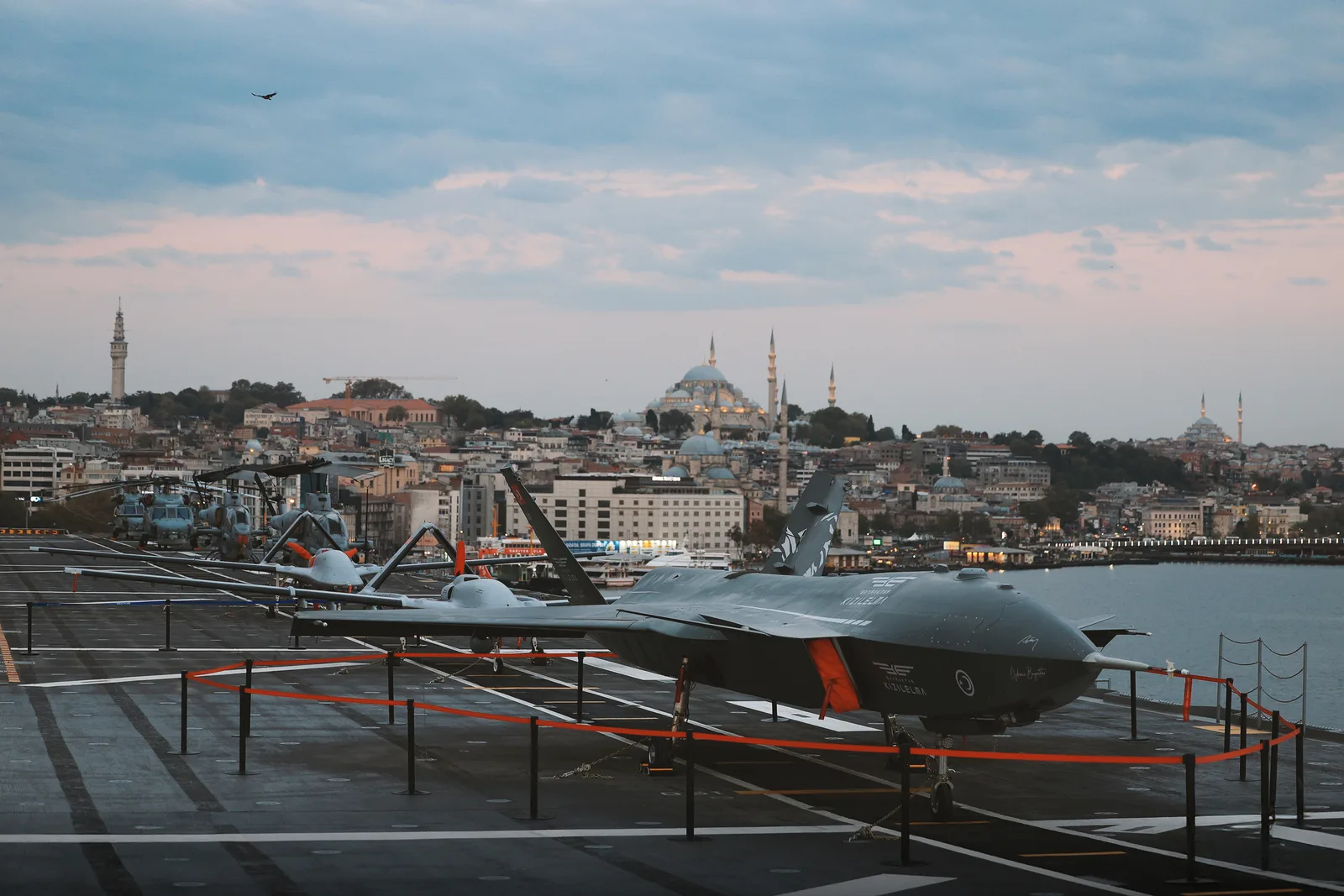
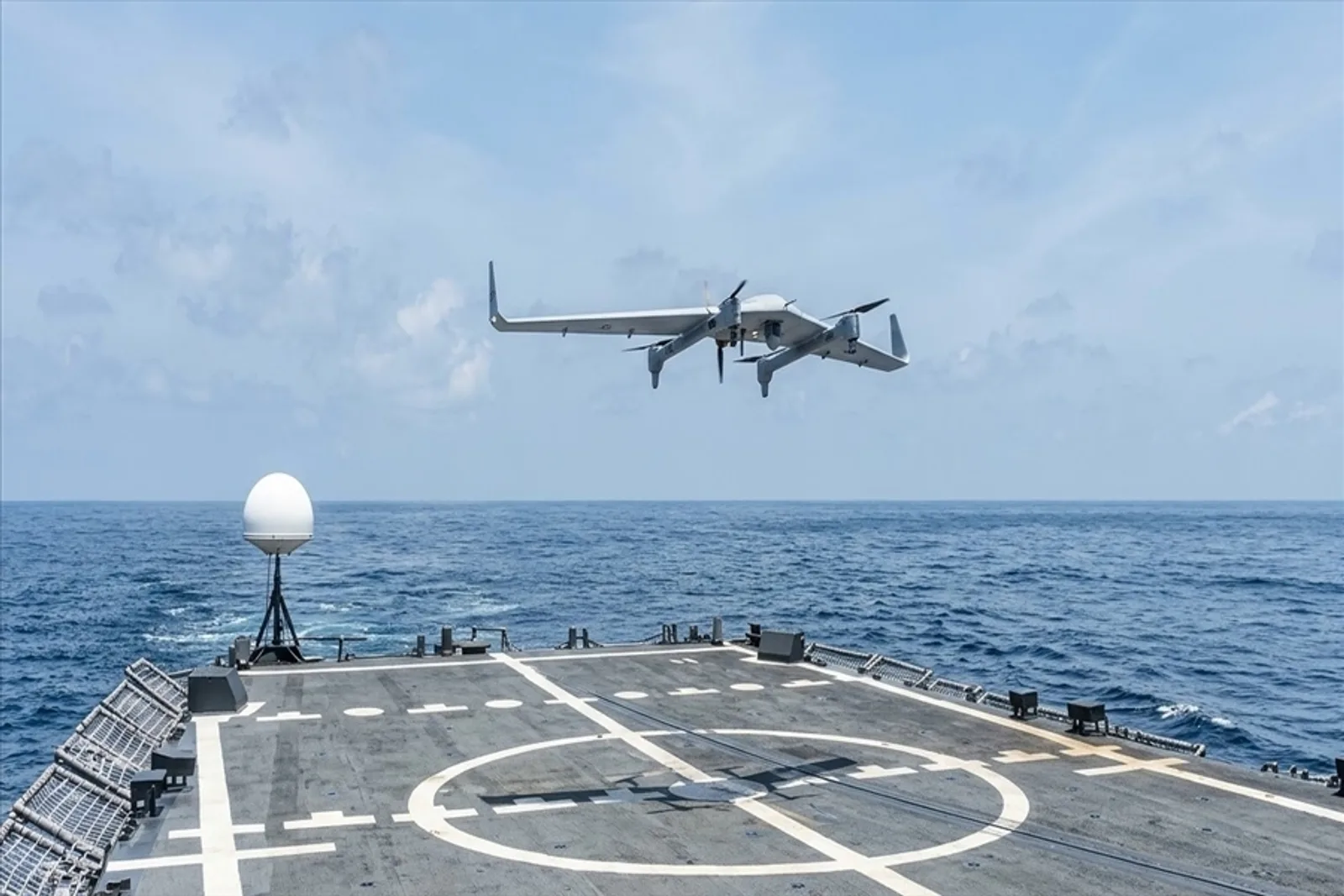
Shipboard operations remain another important development objective. Kızılelma is intended to operate from short-deck carriers, potentially extending Turkish unmanned combat aviation beyond land bases.
However, its association with the amphibious assault ship TCG Anadolu requires qualification. In remarks reported in September 2025, Baykar chairman Selçuk Bayraktar said the aircraft could take off from the ship, but couldn’t land aboard without modifications because Anadolu lacks an arresting system.
He also linked future operations to a larger Turkish carrier design incorporating arresting cables. Launch capability alone therefore shouldn’t be confused with a demonstrated ability to conduct sustained shipboard operations.
For Türkiye, the initial delivery creates an opportunity to develop operating procedures, maintenance arrangements and tactics around a jet-powered unmanned combat aircraft. The immediate significance lies in moving beyond prototypes towards service use, rather than establishing that every planned capability is already available.
The next measures of progress will be the scope of operational weapons clearance, cooperation with crewed aircraft and a demonstrated shipboard recovery solution. These will determine how far Kızılelma’s service entry translates into deployable combat capability.