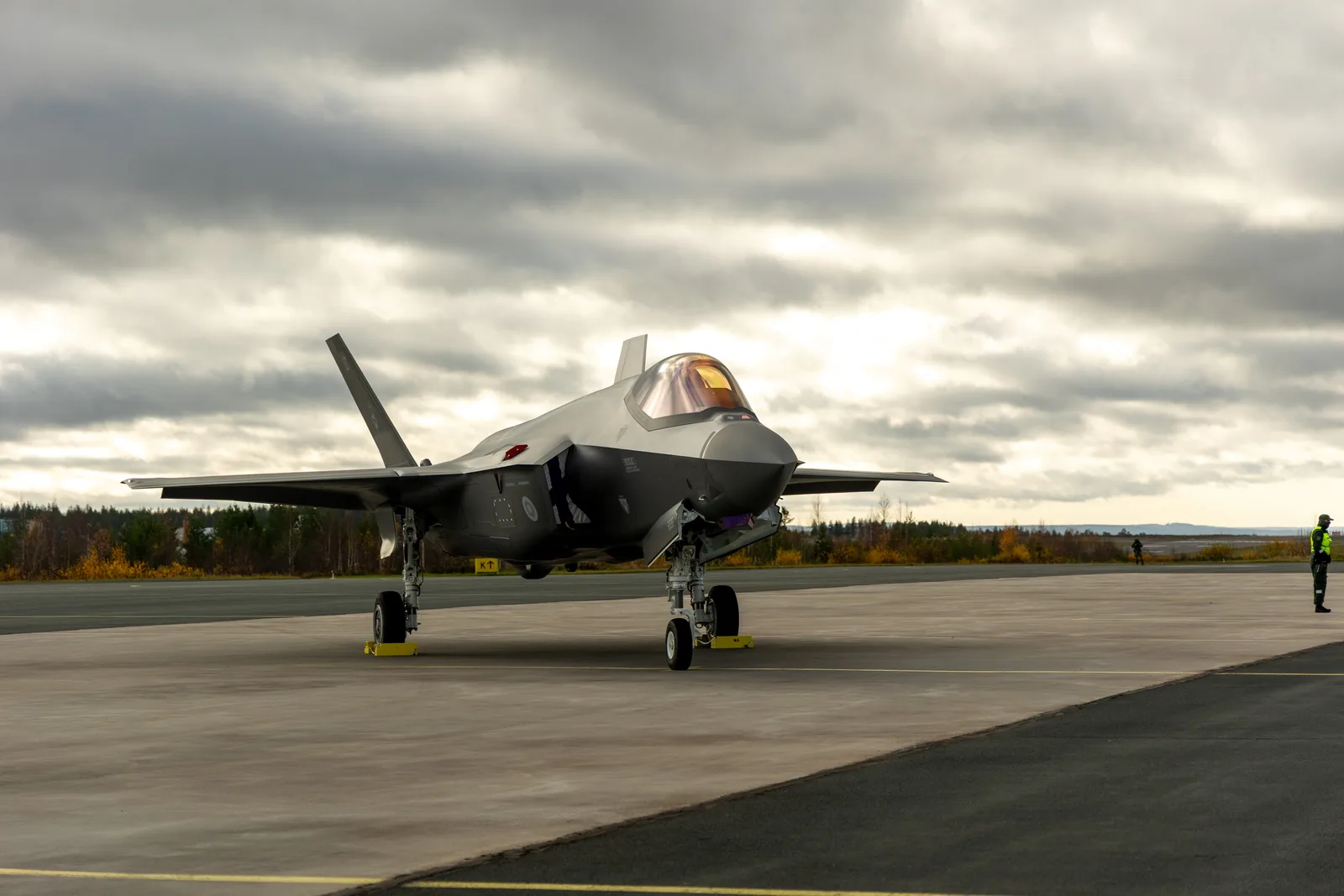
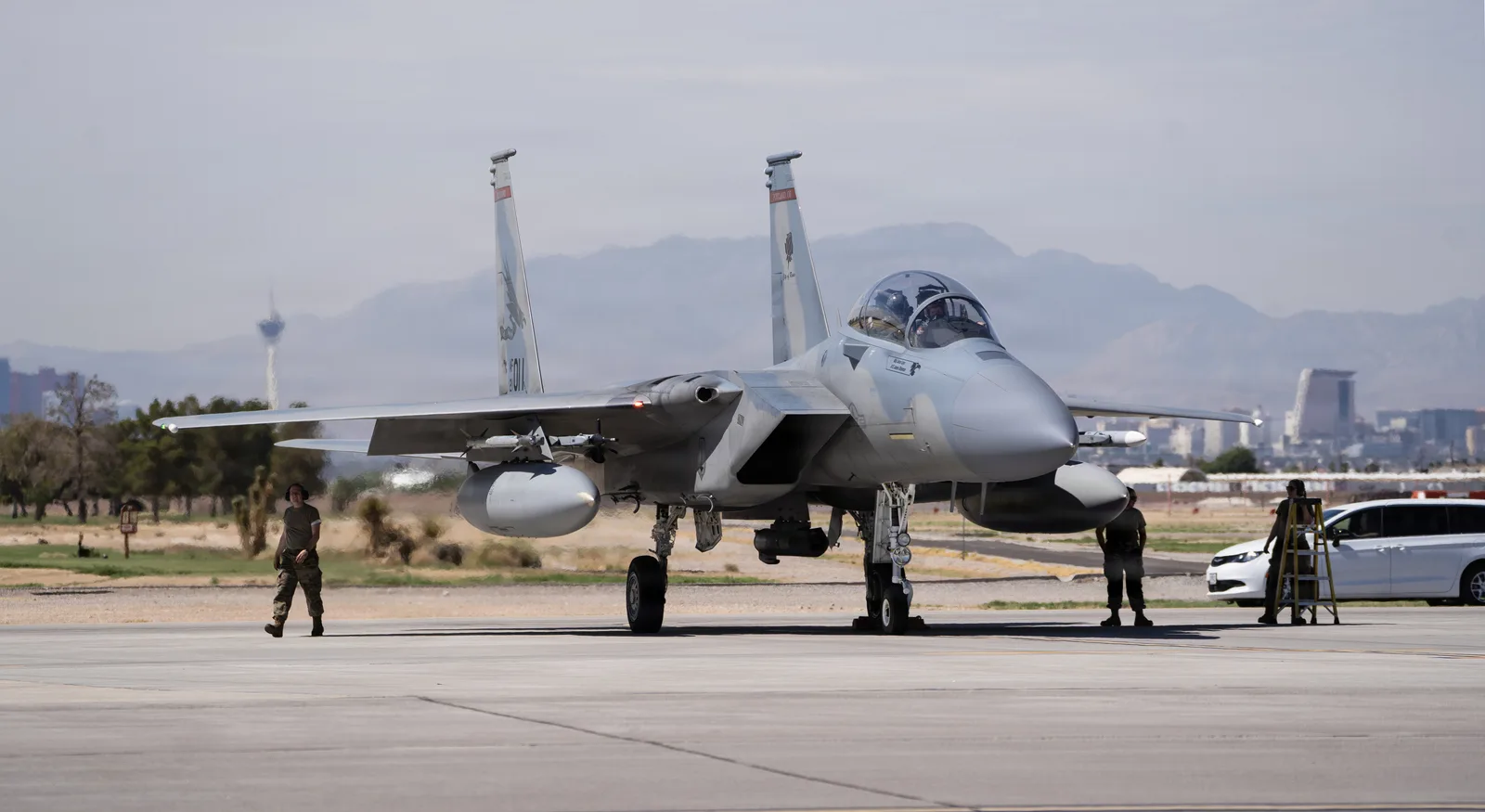
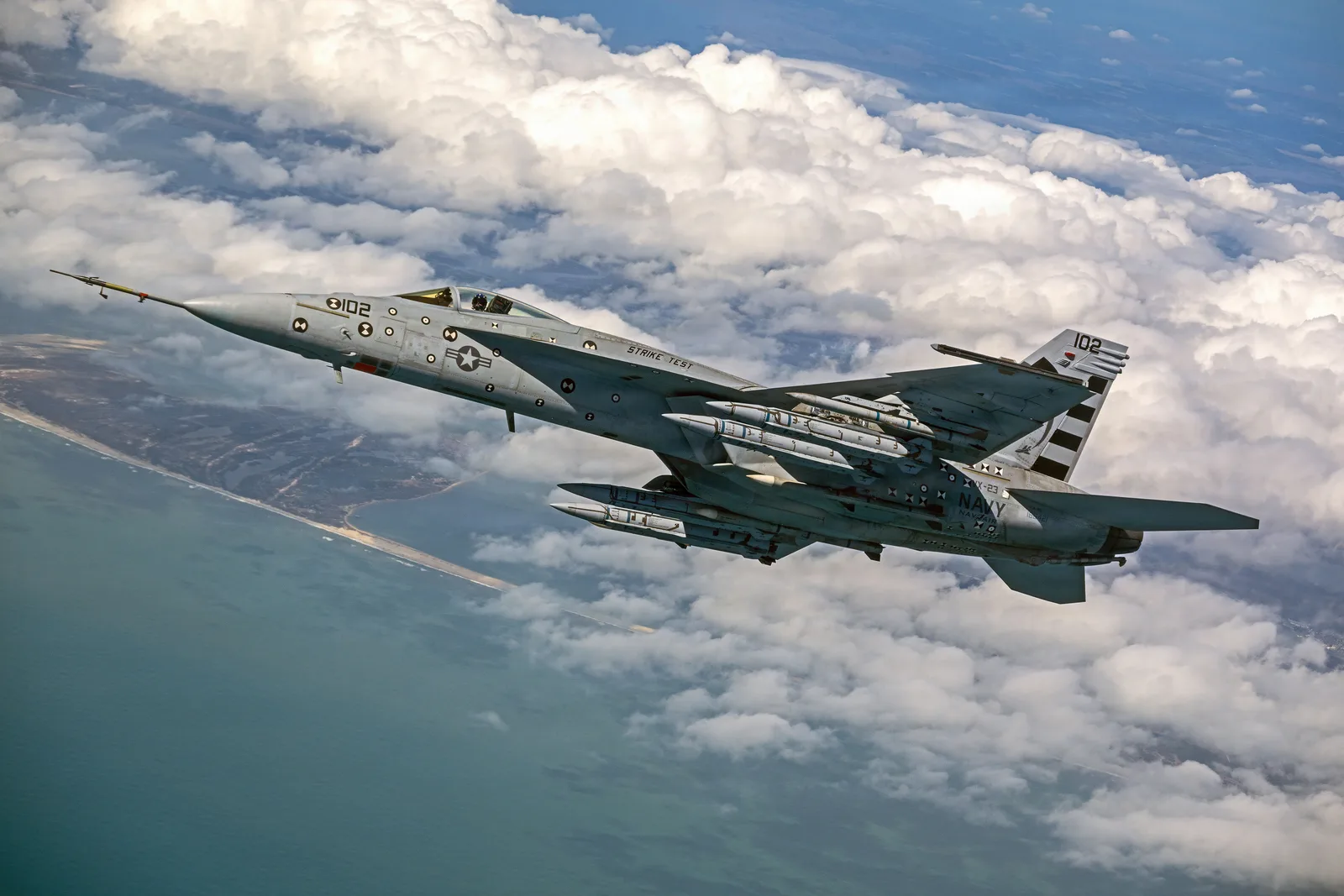
The USD 267.7 billion Fiscal Year 2027 US Air Force budget request has outlined plans to increase procurement of the Boeing F-15EX Eagle II from 129 aircraft to 267.

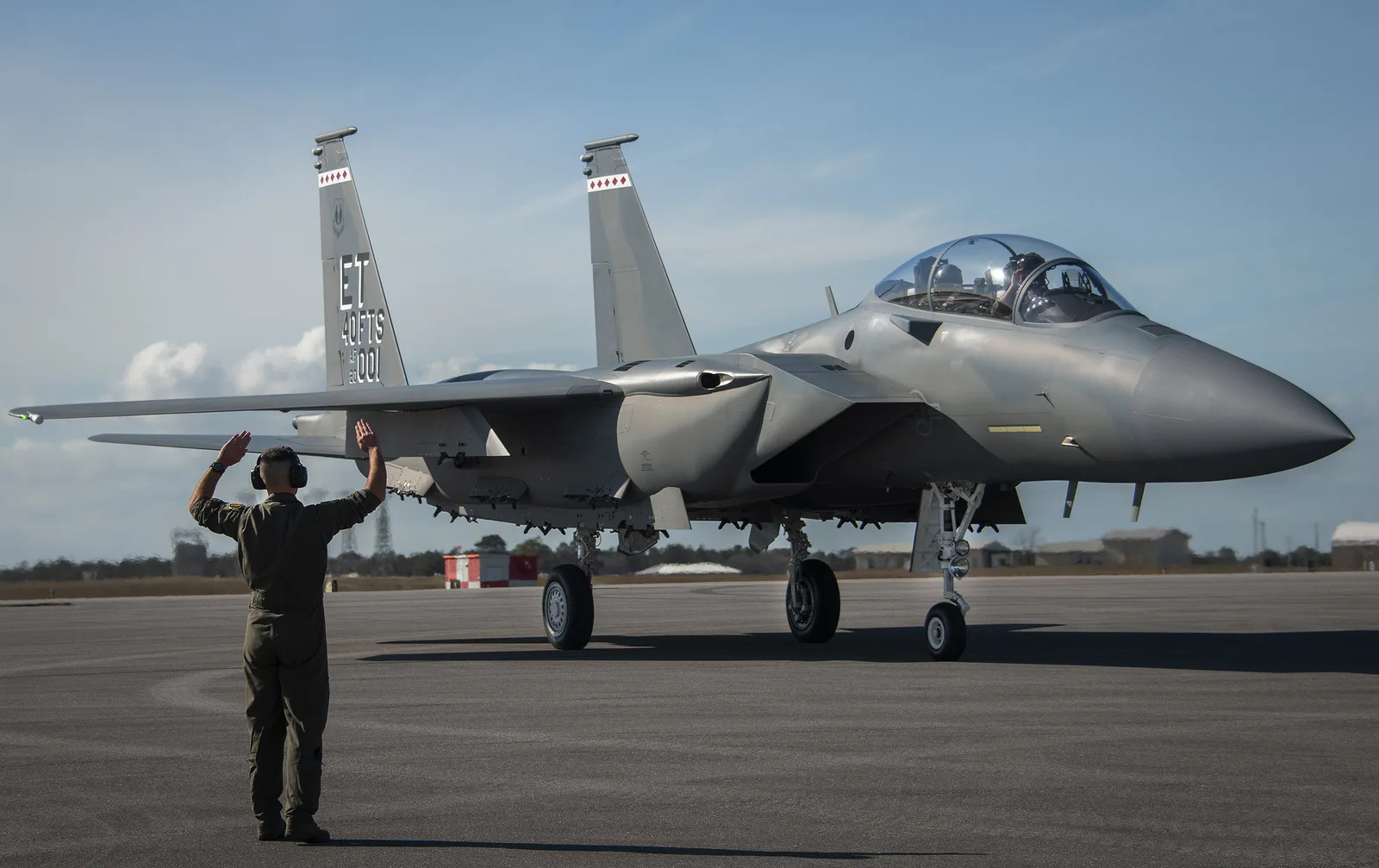

The USD 267.7 billion Fiscal Year 2027 US Air Force budget request has outlined plans to increase procurement of the Boeing F-15EX Eagle II from 129 aircraft to 267.

The embracement by the US Air Force (USAF) of the Boeing F-15EX Eagle II has its origins in tight post-Cold War budgets that saw the air force abandon plans for an ‘all-stealth’ frontline force based around 132 Northrop Grumman B-2 Spirit bombers, 750 Lockheed Martin F-22 Raptor fighters and more than 1,200 Lockheed Martin F-35 Joint Strike Fighters. B-2 production was cut to 21 aircraft, while F-22 procurement was capped at 187.
The legacy of these plans meant that there was a residual unwillingness to invest significantly in ‘previous generation’, non-stealthy combat air aircraft and the burden of re-equipping the force increasingly fell on the F-35A.
It was soon obvious, however, that the F-35 could not be produced in sufficient numbers to fill the gap and that the USAF would need to augment its fifth-generation F-22s and F-35As with new production of older ‘Gen 4.5’ legacy fighter types. This promised to leverage the higher availability, reduced maintenance demands, longer airframe life and easier access to spare parts associated with new aircraft, compared to ageing, long-serving airframes.

There were two main possible options, based mainly on updated variants of the Lockheed Martin F-16 and Boeing F-15 that had been developed for export customers. Both the Block 70/72 F-16 and the Advanced F-15 had new active electronically scanned-array (AESA) radars, modernised cockpits, structural improvements and improved electronic warfare (EW) capabilities. Although the USAF opted for new-build F-15EX Eagle IIs, it did also pursue the F-16 Radar Modernization Program (RMP), installing AN/APG-83 Scaleable Agile Beam Radar in many of its F-16s as part of the wider Post Block Integration Team (PoBIT) upgrade being applied to 608 Block 40 and Block 50 F-16s. The modernisation of these F-16s by upgrade has an unspecified impact on the requirement for the annual need for 72 new aircraft.
The F-15EX, meanwhile, was selected when it became clear that there would be no other way of recapitalising the USAF fighter force. It was calculated that 72 new fighters would need to be procured each year to maintain force structure, modernise the USAF’s ageing fleet and prevent any further decline in the total number of combat-ready fighters and operational capacity. By procuring a total of 72 fighters (comprising a mix of F-35A Lightning IIs and F-15EX Eagle IIs) a sustainable 30-year refresh rate can be maintained. It should be noted that the USAF has not bought more than 72 new fighters in a single year since 1998.

Some 22 adjutants general, representing every state fielding Air National Guard (ANG) fighter units, put their names to a letter to the US Congress. This letter claimed, “The United States Air Force is the oldest, the smallest, and the least ready in its 78-year history. We must build a fighting force that will win.”
In order to do so, the adjutants general urged Congress to authorise multi-year procurement of both the F-35A Lightning II and the F-15EX Eagle II. Significantly higher rates were outlined, with the ANG leaders urging the procurement of 72 F-35As and 36 F-15EXs, with an annual purchase of 48 F-35As and 24 F-15EXs as the minimum required to simply ‘stand still’.
This recommended minimum is rarely being achieved. The air force requested funding for 48 F-35As and 24 F-15EXs in Fiscal Year 2024 (72 fighters in total), followed by 42 F-35As and 18 F-15EXs in 2025 (60 fighters in total), 24 F-35As and 21 F-15EXs in 2026 (45 fighters in total), and 38 F-35As and 24 F-15EXs in the proposed 2027 budget (62 fighters in total).
The total number of F-15EXs planned for the USAF has fluctuated wildly. The service originally planned to acquire 144 F-15EX Eagle II fighters to replace ageing F-15C/D models, but the planned buy was reduced to just 80 aircraft in 2023 before being restored to 98 aircraft in the FY2025 request. This would have allowed the ANG units at Portland, Fresno and New Orleans to re-equip, together with two regular squadrons at Kadena Air Base in Okinawa, Japan. The Fiscal Year 2026 budget request increased the programme of record from 98 to 129 aircraft to allow the Michigan ANG to replace Fairchild Republic A-10C close air support aircraft with the F-15EX.

When the USAF unveiled its FY2027 budget (which represented a 25% increase compared with FY26) it was revealed that the air force wanted to buy an additional 138 F-15EXs, taking the total to 267 aircraft. This would allow the F-15EX to replace the USAF’s 117 older F-15E Strike Eagles, keeping only the 99 newest aircraft powered by the F100-PW-229 engine. Some 20 of the oldest Pratt & Whitney F100-PW-220-engined F-15Es will now be retired under the FY2027 budget.
The new 267-aircraft total would also allow the USAF to field 13 squadrons (most of which would have around 21 aircraft), with three at least spare F-15EXs for test and evaluation duties.