The US Navy has outlined a new schedule under which it plans to award a long-awaited contract for its F/A-XX next-generation fighter following a downselect expected in August this year.

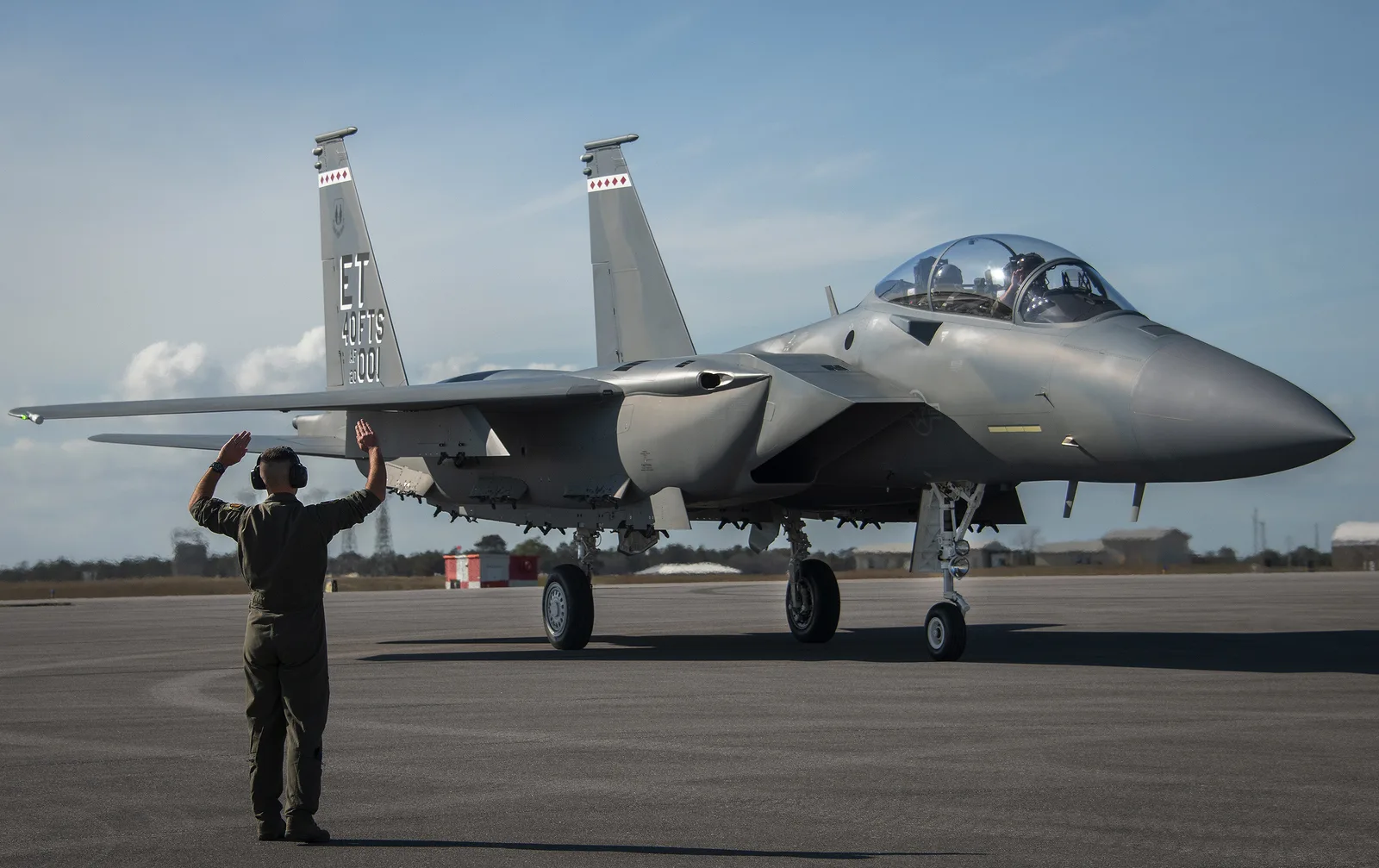

The US Navy has outlined a new schedule under which it plans to award a long-awaited contract for its F/A-XX next-generation fighter following a downselect expected in August this year.

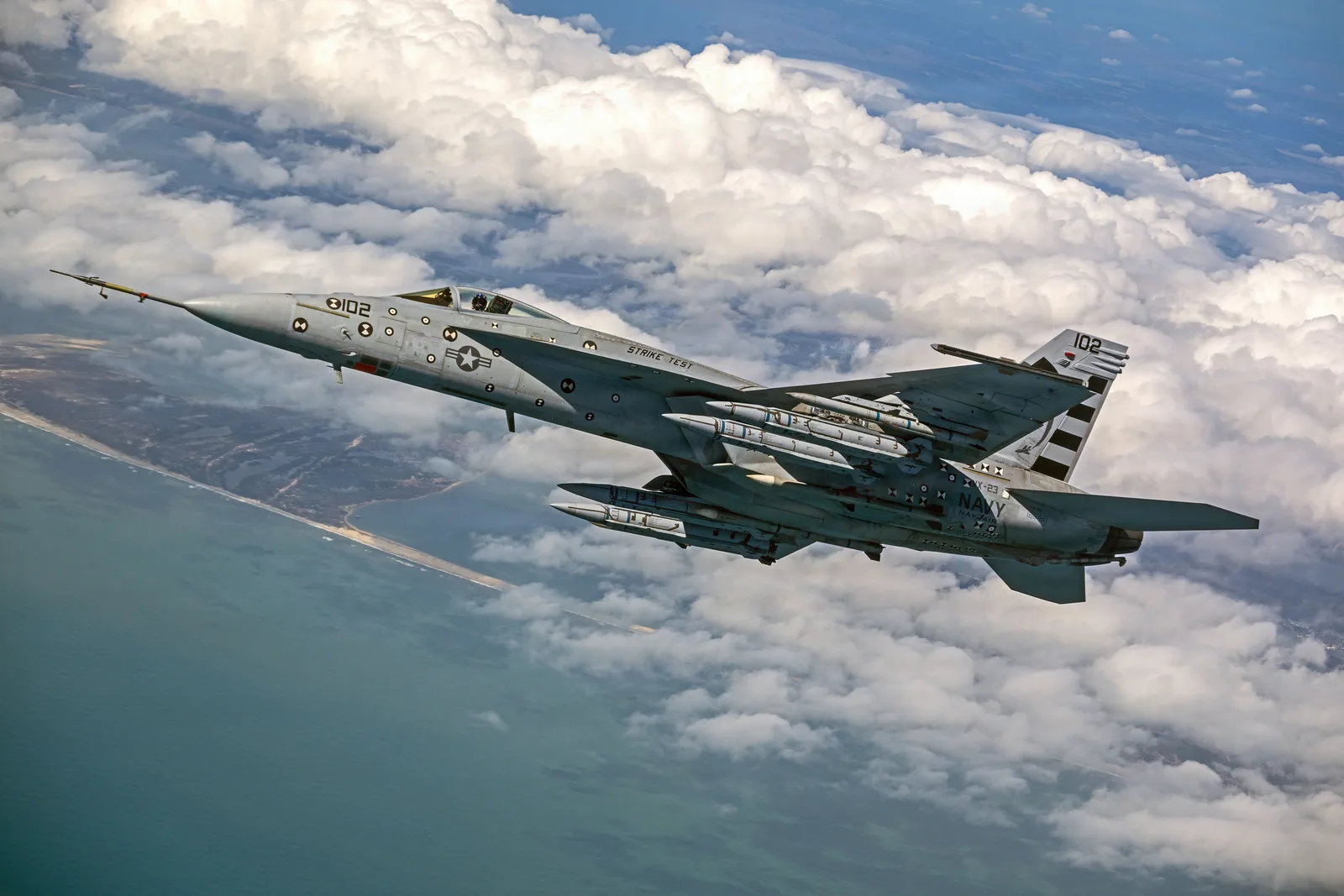
The F/A-XX Next Generation Fighter (NGF) is the manned combat air (fighter/attack) component that lies at the heart of the US Navy’s (USN’s) Next Generation Air Dominance system of systems (using the acronym NGAD, but not to be confused with the similarly named US Air Force (USAF) NGAD programme). The aircraft is designed as part of a ‘system of systems’ that will replace the F/A-18E/F Super Hornet in the 2030s, operating from USN aircraft carriers augmented by unmanned adjuncts and effectors and leveraging networked sensors across domains.
The F/A-XX has been a very long time coming, since the original requirement was first identified in June 2008 and a contract award was once expected in the spring of 2025.

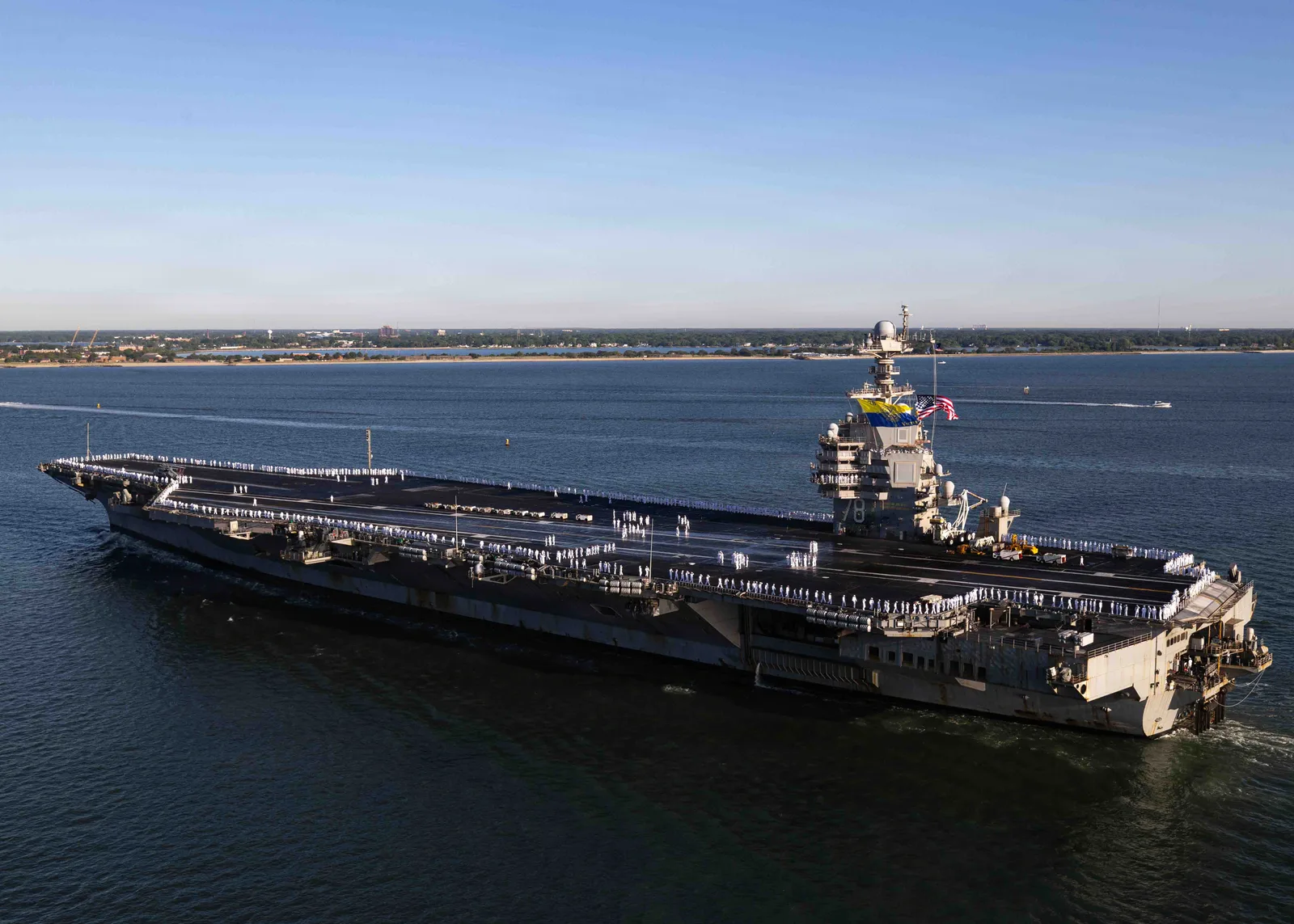
NGAD was briefly conceived as a joint air force/navy programme, but the two services soon established separate offices as the programmes diverged, primarily because the USN needed a ‘less heavy’, slightly smaller aircraft that would be capable of operating from a Ford- or Nimitz-class aircraft carrier.
Size and weight are relative, however, and the USN is looking at an aircraft with a hard limit of 85,000 lb (38,555 kg) maximum take-off weight (MTOW) and with a landing weight (with full weapons and minimal internal fuel) of around 55,000 lb (24,948 kg). To put this in context, it is slightly heavier than a North American/Rockwell RA-5C Vigilante and only 15,000 lb (6,804 kg) heavier than a Lockheed Martin F-35C Joint Strike Fighter at MTOW. The navy wanted a 750 n mile radius of action (expressed as “a combat radius at least 25% greater than that of the Super Hornet”). This reflects a growing US concentration on the Indo-Pacific region, where Chinese anti-access/area denial (A2/AD) capabilities will push aircraft carriers further back from the fight, making the range of the aircraft they carry more vital.

The USAF is looking at an aircraft in the 110,000 lb (49,895 kg) MTOW class, heavier than the Russian Tupolev Tu-128 long-range interceptor introduced by the Soviet Union in the 1960s, and in broadly the same MTOW class as an Airbus A318 airliner, or, put another way, weighing about the same as a pair of Tornado or F-35B strike fighters!
The difficulties in achieving the required payload/range/capabilities in a carrier aircraft led the US Department of Defense to repeatedly examine alternative plans, especially looking at increasing procurement of the F-35C. Analyses of alternatives were undertaken in 2011 and 2015-2019.
Concept development then began, although many expected the F/A-XX programme to evolve into a modification of the F-35C, or even of the F/A-18E/F Super Hornet.
Boeing, Lockheed Martin and Northrop Grumman all submitted competing bids for the design of the sixth-generation F/A-XX, although Lockheed Martin was eliminated from the competition in March 2025.

Until FY2024 much of the funding for the F/A-XX was hidden under a classified special access programme known as Link Plumeria. The USN proposed delaying the F/A-XX in its FY2025 budget request in order to focus on nearer-term investments, primarily as a result of funding constraints. Subsequently, in April 2026, Admiral Daryl Caudle, the US Chief of Naval Operations, said that one of the two companies competing for the F/A-XX contract lacked the capacity to deliver the fighter “in the timeframe we need it”. This echoed earlier accusations by the then incoming Secretary of the Navy, John Phelan, who paused source selection while the balance of crewed and uncrewed aircraft in the USN’s future carrier air wing was ‘reviewed’.
Both Boeing and Northrop Grumman denied the charge against one of them, insisting they could meet the navyʼs schedule for the fighter, but the accusations almost certainly delayed the planned downselect.
Concerns around the capacity of the US industrial base may also have affected F/A-XX development and production milestones, as many believe that developing F/A-XX near simultaneously with the USAF’s F-47 fighter could derail or delay the higher-priority USAF programme. There are also concerns about oversubscribing contractors who may be over-stretched managing high-priority programmes like the F-35.
In April 2025 Naval News reported that the USN’s F/A-XX programme had transitioned from the concept development stage to the operational testing and evaluation phase, although there had been no downselect of a ‘winning design’. On 7 October 2025 Reuters reported that the navy could select the successful F/A-XX bidder “as soon as this week”, although this did not happen. It subsequently emerged that engineering and manufacturing development (EMD) source selection had been repeatedly delayed due to funding disagreements at the Office of the Secretary of Defense level.

Some USD 76 million (EUR 65.37 million) was allocated to the F/A-XX programme for FY2026 (a cut of 85%, compared to the USD 3.4 billion allocated to the USAF’s Boeing F-47). Congress subsequently increased the F/A-XX’s programme funding by USD 1.69 billion, including USD 940 million in regular appropriations and USD 750 million in the One Big Beautiful Bill Act. USD 897.3 million was allocated to support earlier fielding with USD 1.4 billion in development funding. This activity reportedly moved the programme forward into the EMD phase.
The Pentagon’s FY27 budget request includes USD 140 million for the F/A-XX, including USD 68 million in the base budget and USD 72 million requested as part of a forthcoming reconciliation bill.
The USN was expected to release a revised request for proposals on or around 17 April 2026, prior to a downselect at the end of the summer.
On 29 April, addressing a congressional committee hearing, US Secretary of Defense Pete Hegseth said that the F/A-XX was a “critical capability that we need to fund for the future of naval aviation”, adding that the navy “will move forward with the Next Generation Fighter programme and that a contract decision for the US Navy’s F/A-XX Next Generation Fighter is planned for August”. Hegseth added: “It’s not a matter of if; it’s a matter of when.”
There have been reports that the Trump administration aims to provide enough budgetary support for the navy to be able to make its F/A-XX Next Generation Fighter source selection, but not enough to advance the programme into production before the F-47 is ‘squared away’.