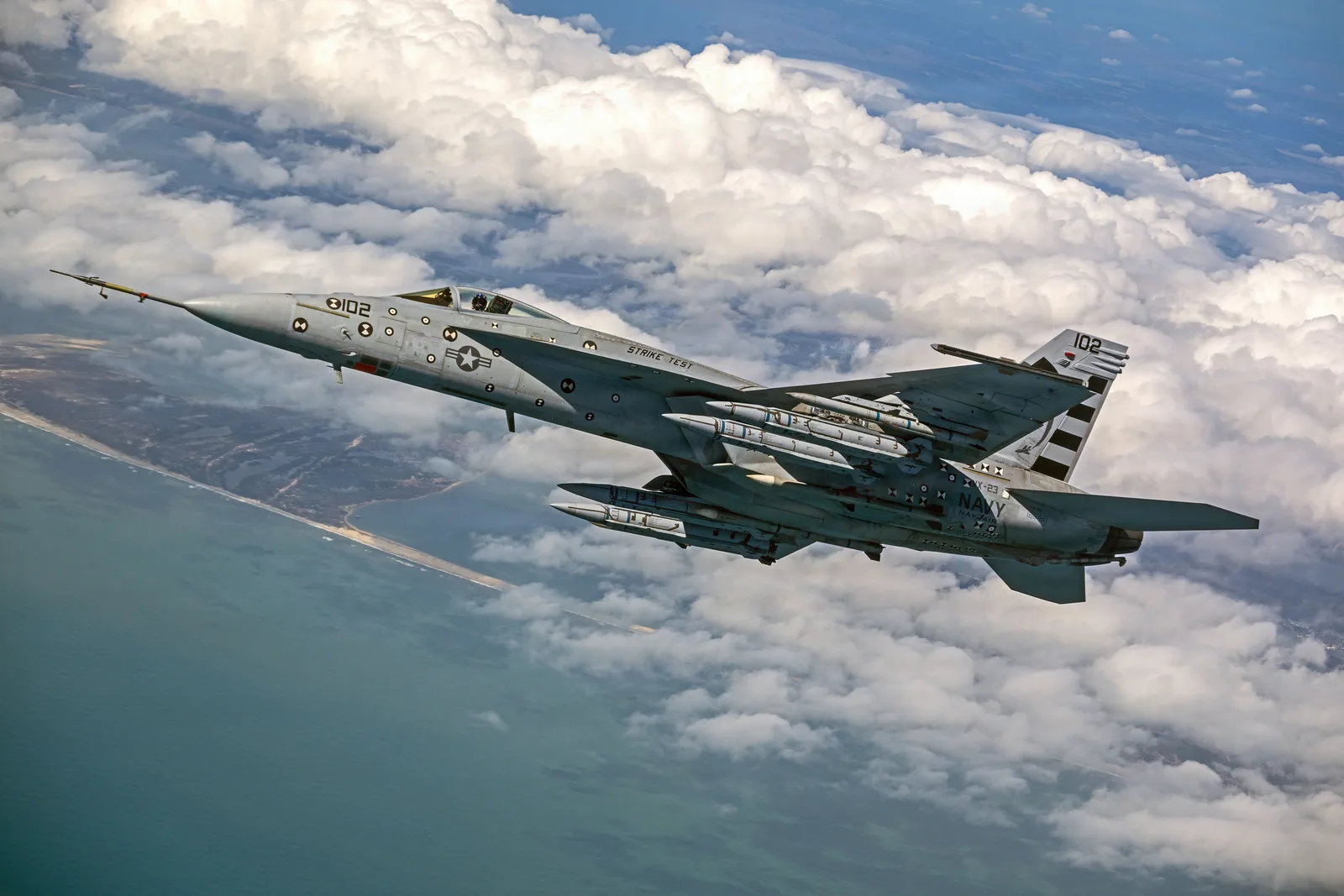
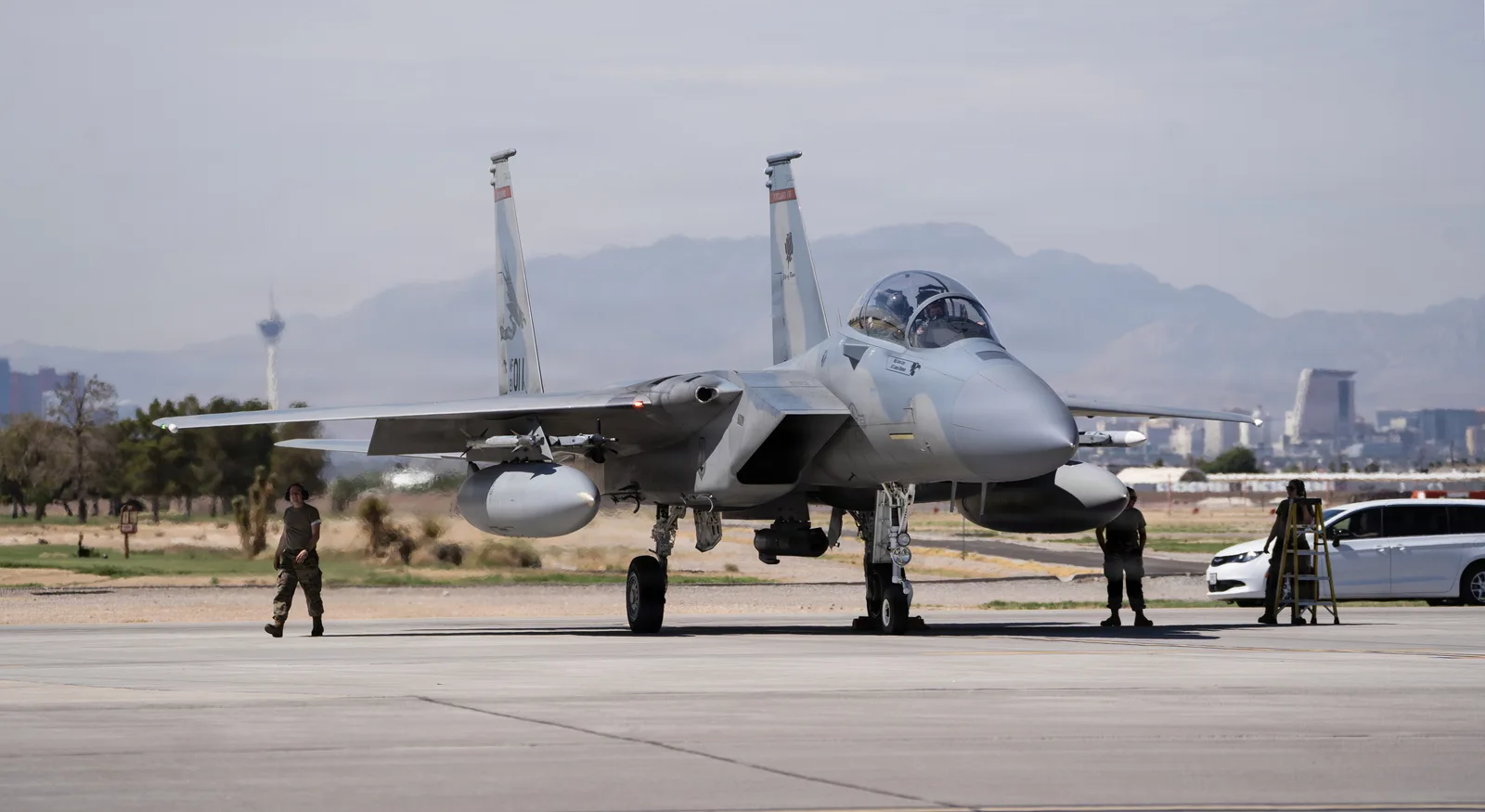
As industry sharpens its collective pencil to finalise bids for the US Navy’s T-45C replacement requirement, the US Navy drops some training requirements that were previously considered sacred.


As industry sharpens its collective pencil to finalise bids for the US Navy’s T-45C replacement requirement, the US Navy drops some training requirements that were previously considered sacred.

US Naval Air Systems Command (NAVAIR) has issued its long-awaited Undergraduate Jet Training System (UJTS) request for proposal (RFP) as it looks to replace its venerable T-45C Goshawk fleet. Responses are due by 29 June 2026 with a contract award expected in March 2027.
This RFP follows last year’s request for information and a draft RFP issued in February 2026 that saw industry engage with PMA-273, the US Navy’s programme office that is responsible for naval undergraduate flight training systems as well as for USMC fast-jet pilots. If all goes to plan, the first of 216 aircraft will be delivered in 2032.
According to the RFP, the first deliverables include engineering, manufacturing and development (EMD) aircraft, followed by low-rate initial production (LRIP) aircraft, limited Ground Based Training Systems (GBTS) alongside an interim-contractor logistic support (I-CLS) package.
There are four contenders in the frame for the contract award. Textron has teamed with Leonardo to offer a version of the latter’s M-346 Master that is referred to as the Beechcraft M-346N. Currently in-service or on order with nine air forces around the world, the aircraft has a number of advantages. It has a suite of GBTS solutions, including an embedded tactical training system as well as a proven CLS record.

Boeing is offering its T-7A Red Hawk that was selected by the US Air Force as its advanced jet trainer when it won the T-X programme in 2018. Developed alongside Saab, the aircraft has been subject to a number of delays and the need to re-work some design issues. Awarded under a fixed-price USD 9.2 billion contract, Boeing has to absorb these ongoing programme losses so would welcome success with UJTS. The Boeing Red Hawk highlights the issues when an air force selects a ‘paper design’ for a major programme.
Turning to Lockheed Martin and its partner KAI, their offering is the TF-50N, a variant of the established T-50 Golden Eagle. Like the M-346N, the T-50 is in widespread use with over 250 in-service or on order and comes with a proven GBTS package. The aircraft is supersonic and perhaps this is a capability too far for the UJTS requirement. Another factor that could be in its favour is that Boeing won T-X so is it time to throw a bone to Lockheed Martin?
The final bidder is Sierra Nevada Corporation (SNC) alongside Northrop Grumman and General Atomics – Aeronautical Systems Inc. (GA-ASI). They are offering a clean-sheet design dubbed the Freedom Trainer. Powered by two Williams FJ44 turbofans, the company says the aircraft will provide 40% lower operating costs than the current T-45C. Like the issues surrounding T-7, is a ‘paper aeroplane’ too much of a risk for the US Navy?

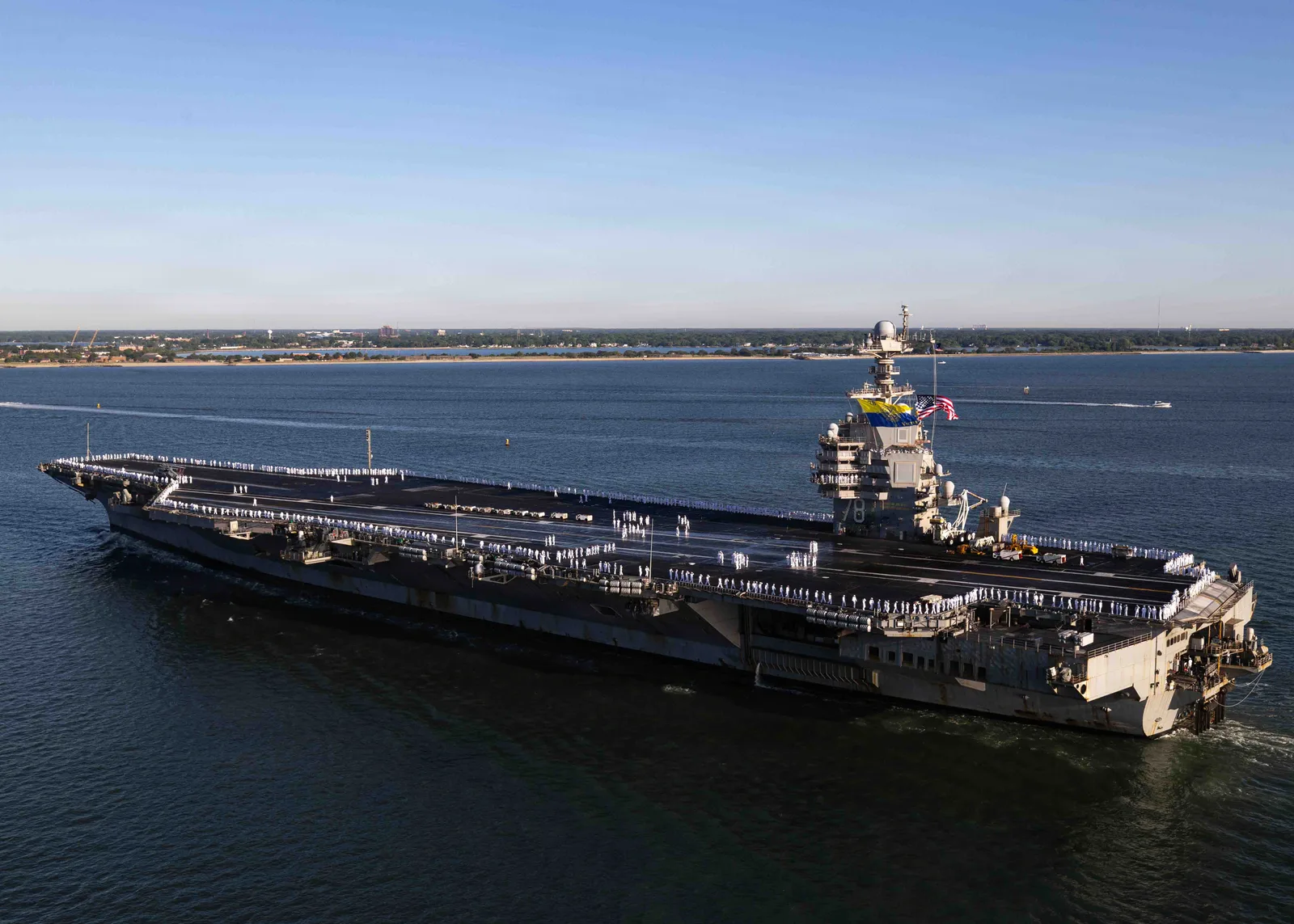
One surprising element of the RFP is the removal from the syllabus for the need to undertake field carrier landing practise (FLCP) and carrier qualification landings. The former saw pilots land on a marked carrier deck at an airfield prior to undertaking carrier landings for real.
The new syllabus will see pilots carry out FCLPs to the point of wave-off by the flight deck officer. Strangely, carrier qualification landings will be conducted on the frontline aircraft at the Fleet Replacement Squadron (FRS) during conversion training. In essence, this is shifting training that could be undertaken on a cheaper training aircraft onto a more expensive combat aircraft.
The US Navy’s rationale behind this move is that avionics and GBTS has improved such that together, the aircraft’s Precision Landing Mode (PLM) combined with higher fidelity simulation can remove a significant part of the training syllabus. Time will tell!