UK armed forces and law enforcement personnel will now be able to board Russian shadow fleet vessels transiting UK territorial waters, UK Prime Minister Sir Keir Starmer announced as he attended a Joint Expeditionary Force (JEF) Summit in Helsinki on 26 March 2026.
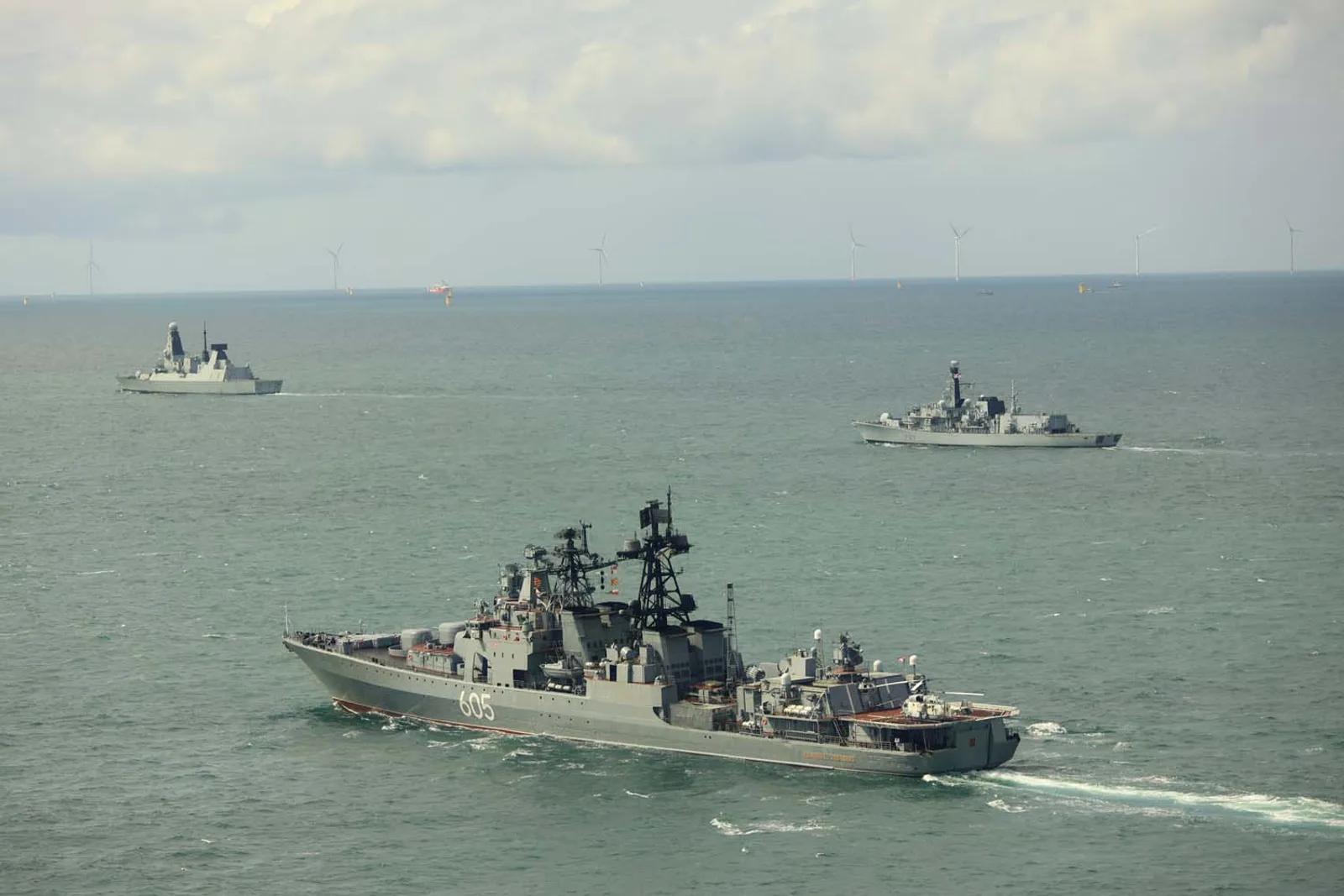
While the Royal Navy has been tracking suspected shadow fleet tankers – which operate without a valid national flag to avoid oil sanctions – controlled by Russia for a number of years, it was only in January 2026 that the UK government resolved that it had a legal basis to board and detain such vessels.
The move could put significant pressure on Russia because it effectively closes the English Channel as a viable, risk-free route into the Atlantic and beyond for its shadow fleet tankers. This is because territorial waters extend out 12 NM (22.2 km) from a country’s coastline and the English Channel is only 34 km wide through the Strait of Dover between the UK and France, which has already established a legal basis for interdicting shadow vessels. On 20 March, for example, the French Navy intercepted and seized the tanker MT Deyna in the Western Mediterranean, which was flying a Mozambican flag but was suspected of being a sanctioned Russian tanker. It has started its journey in the Russian port of Murmansk.
With UK and French territorial waters abutting each other in the middle of the English Channel, Russian shadow fleet vessels must now run the risk of interception if using the Channel or instead make a much longer – and therefore financially more painful – passage north of the Shetland Islands and directly out into the Atlantic Ocean before heading east to the Middle East and Asia.
“Around 75% of Russia’s crude oil is transported by Putin’s decrepit and ageing fleet of ships,” the UK Ministry of Defence and Prime Minister’s Office stated in a joint press release on 26 March. “Alongside allies, the UK has imposed sanctions on 544 Russian shadow fleet vessels.”
The UK prime minister was quoted in the press release as stating that Russian President Vladimir Putin “is rubbing his hands at the war in the Middle East because he thinks higher oil prices will let him line his pockets. That’s why we’re going after his shadow fleet even harder, not just keeping Britain safe but starving Putin’s war machine of the dirty profits that fund his barbaric campaign in Ukraine.
“He and his cronies should be in no doubt: we will always defend our sovereignty and stand with Ukraine for as long as it takes,” Starmer added.
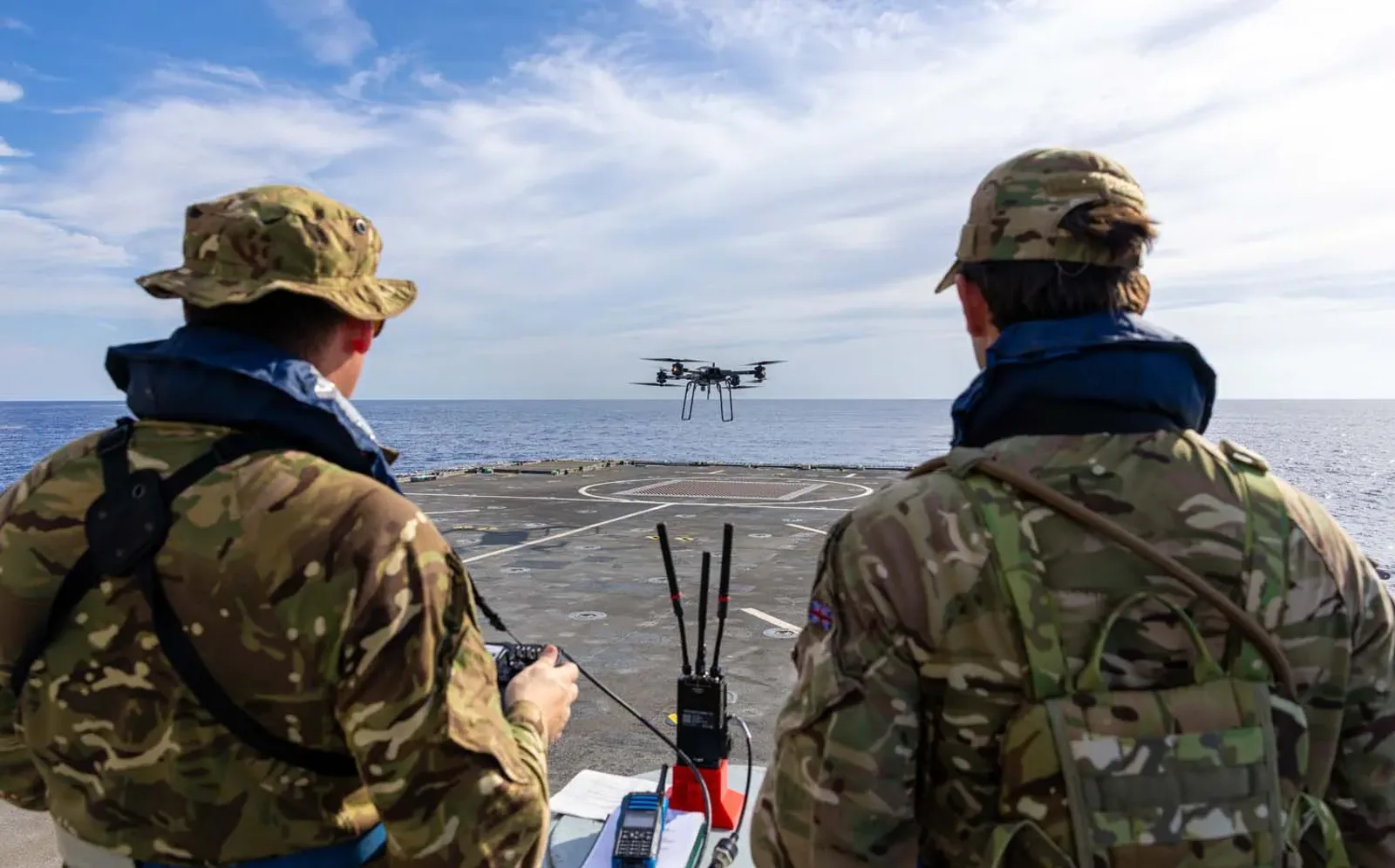
The press release noted that UK military and law enforcement specialists have been put through their paces in preparation for a number of interdiction scenarios in recent weeks, including boarding vessels that do not surrender, are armed or use high-tech pervasive surveillance to evade capture.
Regarding the standard operating procedures for an interdiction, each target ship will be individually considered by law enforcement, military and energy market specialists before a recommendation is made to ministers and an operation is executed. Following the detention of a ship, criminal proceedings may be brought against its owners, operators and crew for breaches of UK sanctions legislation.
During his visit to Helsinki Starmer met with the leaders of the UK’s JEF allies – Denmark, Estonia, Finland, Iceland, Latvia, Lithuania, the Netherlands, Norway and Sweden – to further co-ordinate seizing shadow fleet vessels between JEF allies. A number of JEF nations, including Finland, Sweden and Estonia, have carried out recent operations against suspected illegal shadow fleet vessels in the Baltic Sea, closing off critical maritime routes for Russian sanction busting.