GM Defense attended the Association of the US Army (AUSA) 2026 symposium, held in Washington, DC, from 12 to October, with both new vehicle developments and a strong message about the validity of its ‘commercial-to-defence’ operating model.
Addressing a gathered audience on the GM Defense stand at AUSA 2026 on 12 October, company president Steve Dumont stated, “Every single piece of technology we have here comes from a great commercial starting point. So what does that mean? That means we can move at speed, we can move and build at scale, and we don’t have to go through the long, lengthy process that those of us like myself have spent my career in the aerospace and defense industry [doing]. … Our adversaries have expedited their process; we now have to expedite our process.”
Taking the company’s Chevrolet Colorado-based Infantry Squad Vehicle – Utility (ISV-U) as a typical GM Defense success story, Dumont noted that originally 649 such vehicles were intended to be built under a contract to field a capability for the US Army’s Airborne Brigade Combat Teams.
“Now the army number’s 12,000 and I think it’s going to double that,” he said, “so what we’ve demonstrated is that there’s real value in this model of taking commercial technology and adapting it. And we don’t adapt it just using our own knowledge; we spend an amazing amount of time directly with soldiers. That vehicle is the success that it has been, not because of myself, not because of my amazing engineering team, but because of soldiers.”
GM Defense’s UGV approach
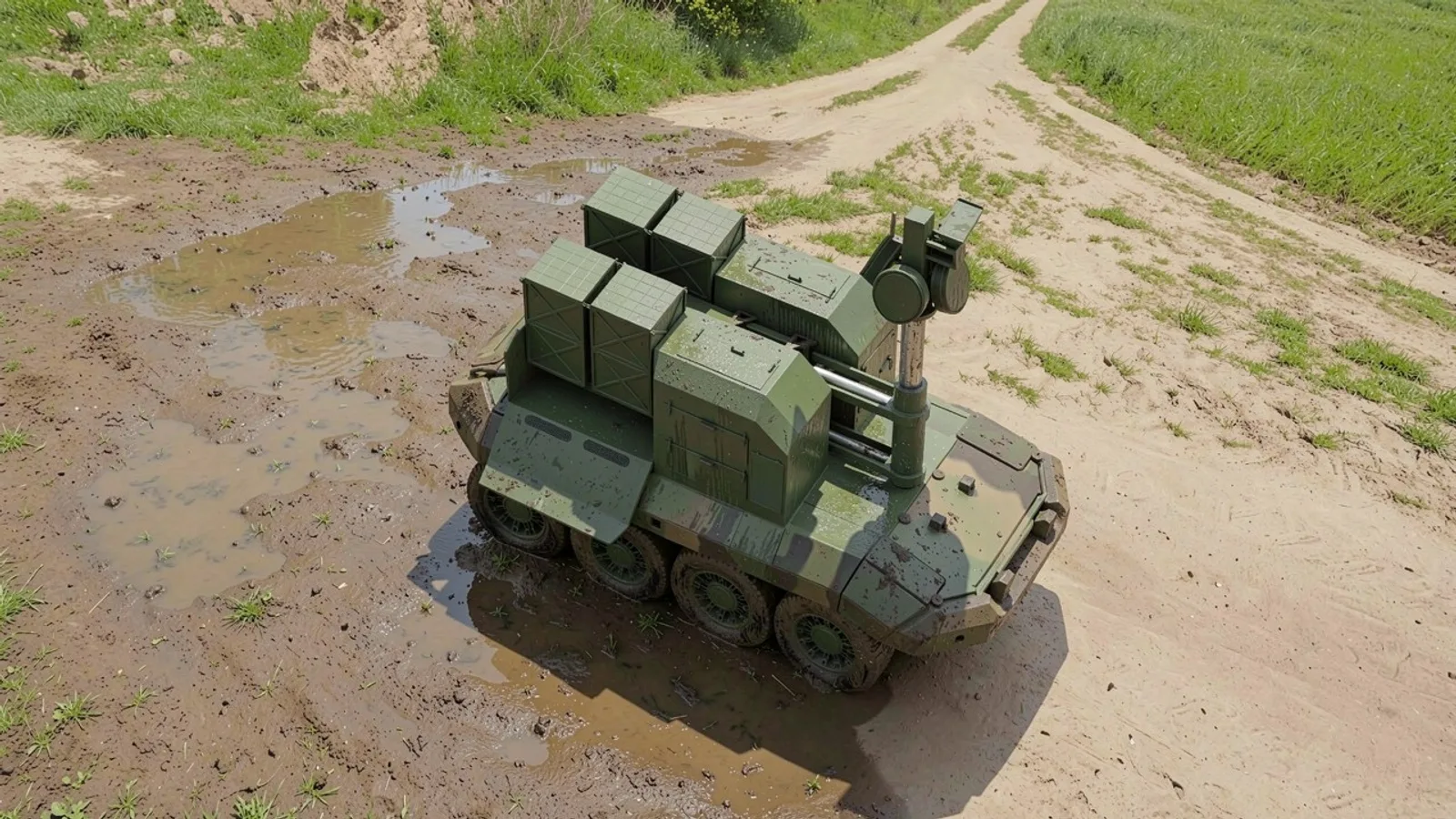
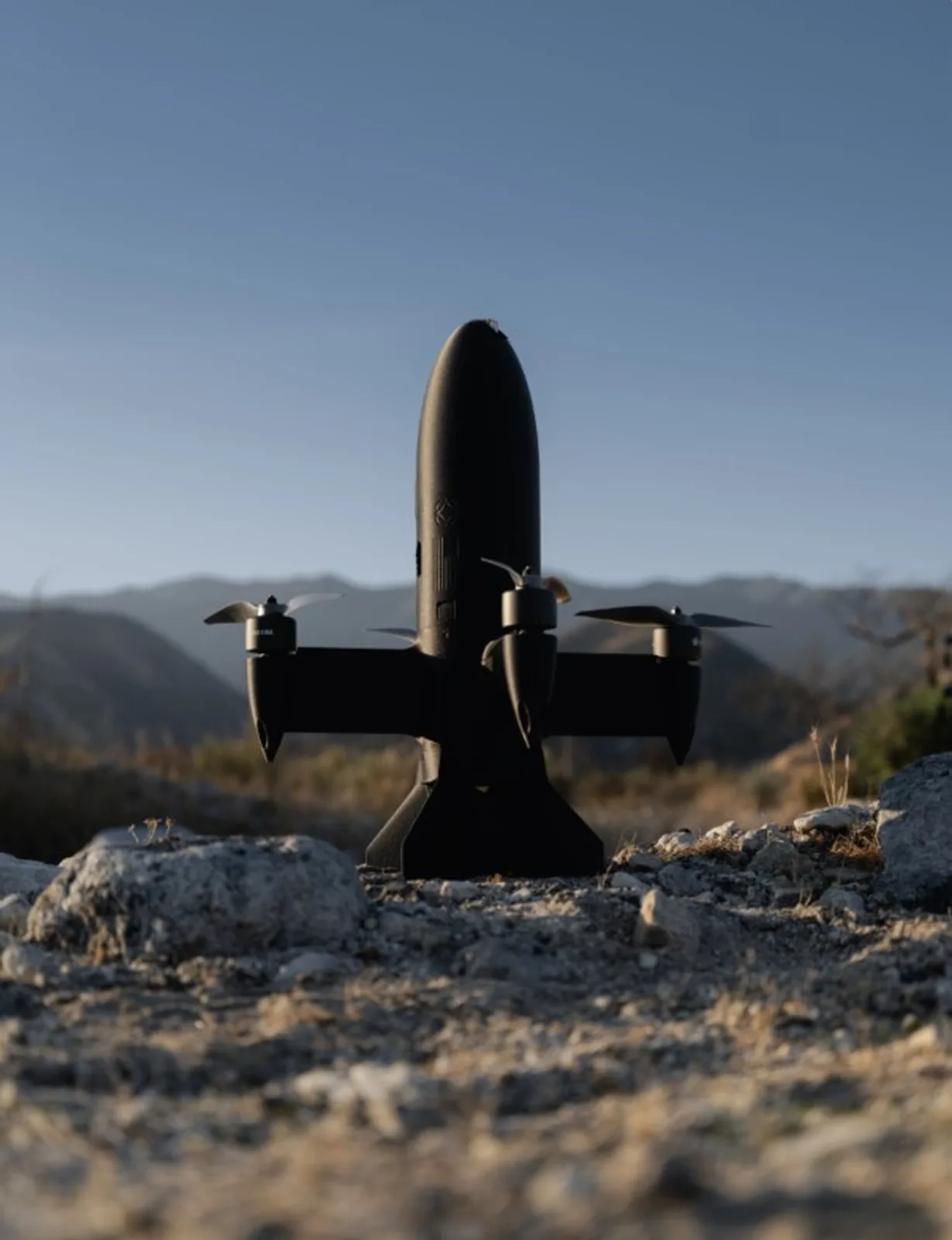
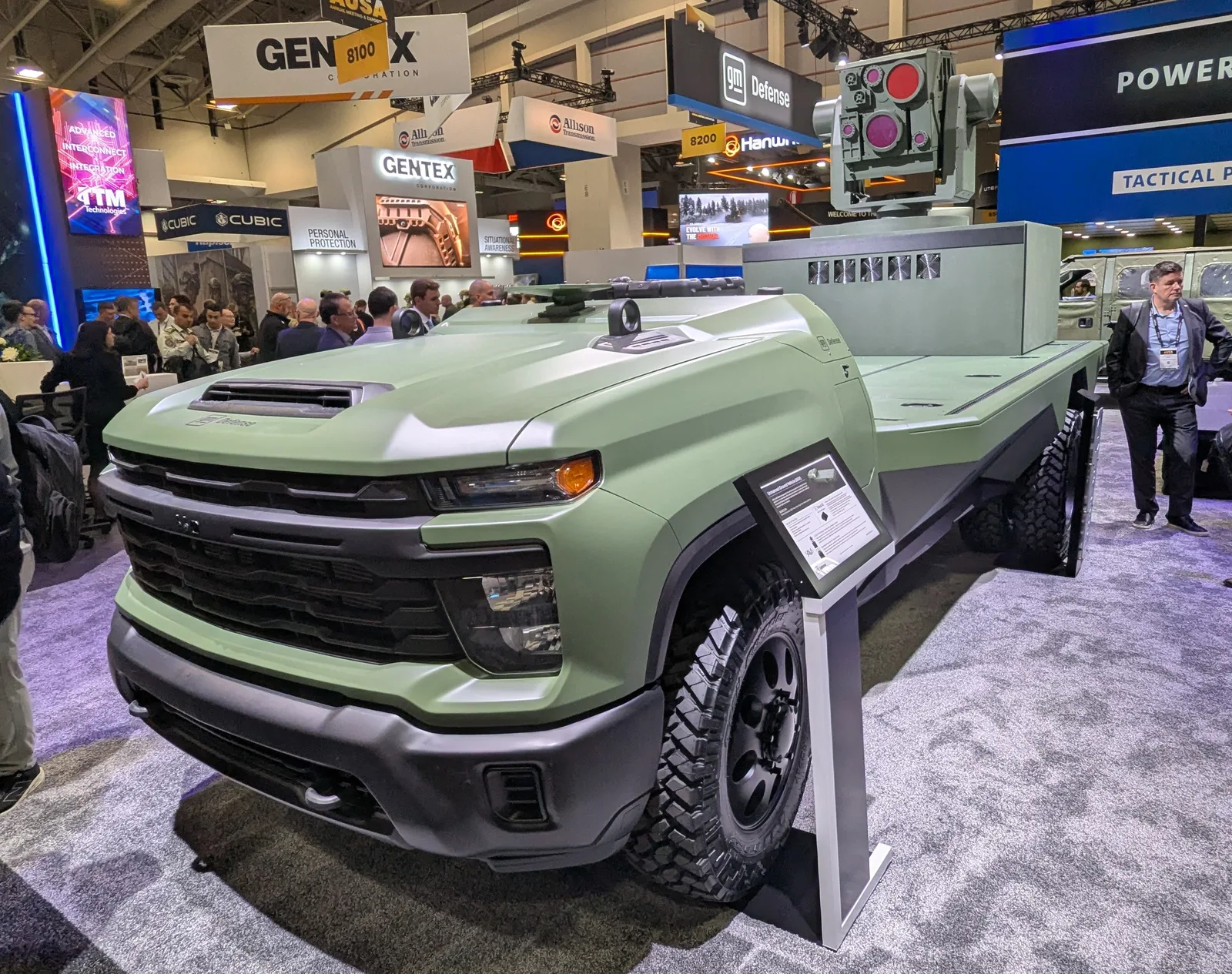
The most obvious new system on display on GM Defense’s stand was the company’s ‘skateboard-format’ unmanned ground vehicle (UGV). Based on a Chevrolet Silverado 3500 heavy-duty dual-rear-wheel truck chassis, this UGV is guided by Scout AI’s Gx Ground Agent autonomous AI driving system, with the vehicle shown at UASA 2026 mounting an Aerovironment Locust X3 laser-based counter-unmanned aerial vehicle (C-UAV) system.
Pete Johnson, GM Defense’s vice president of integrated vehicle solutions, told the UASA 2026 audience, “What you see here with our unmanned ground vehicle is a direct reflection of how we … pay attention to the changing character of warfare. We’re watching closely the developments in Ukraine, the Middle East, and how the army’s organising to campaign in the Indo-Pacific. And all of those observations are pointing to a very clear need: more robotic and autonomous capability to deliver operational effect and to reduce risk for our soldiers. GM Defense is ready to help the army move in that direction by bringing the speed, scale and innovation of the commercial sector to bear on the defence mission.
Noting that the UGV has been built around a Chevy Silverado 3500 chassis, Johnson stated, “That brings a proven and affordable commercial baseline with an open interface and a modularity approach for sensors, autonomy stack, command and control, and mission autonomy. This architecture gives the army flexibility and a blank slate for adaptation to multiple different kinds of missions.
Johnson added that the UGV’s onboard power generation storage and export power capability “also adds another very-needed dimension. While it can certainly effectively deliver supplies, it can also provide much-needed energy at the tactical edge. It can host sensors, directed-energy counter-US capabilities, as shown here, or it can be reconfigured to backhaul casualties on the battlefield.
“This is the GM Defense approach: our superpower,” said Johnson. “We begin with a real need, we build upon proven products, we integrate openly, we experiment early with soldiers, and we continue to listen.”
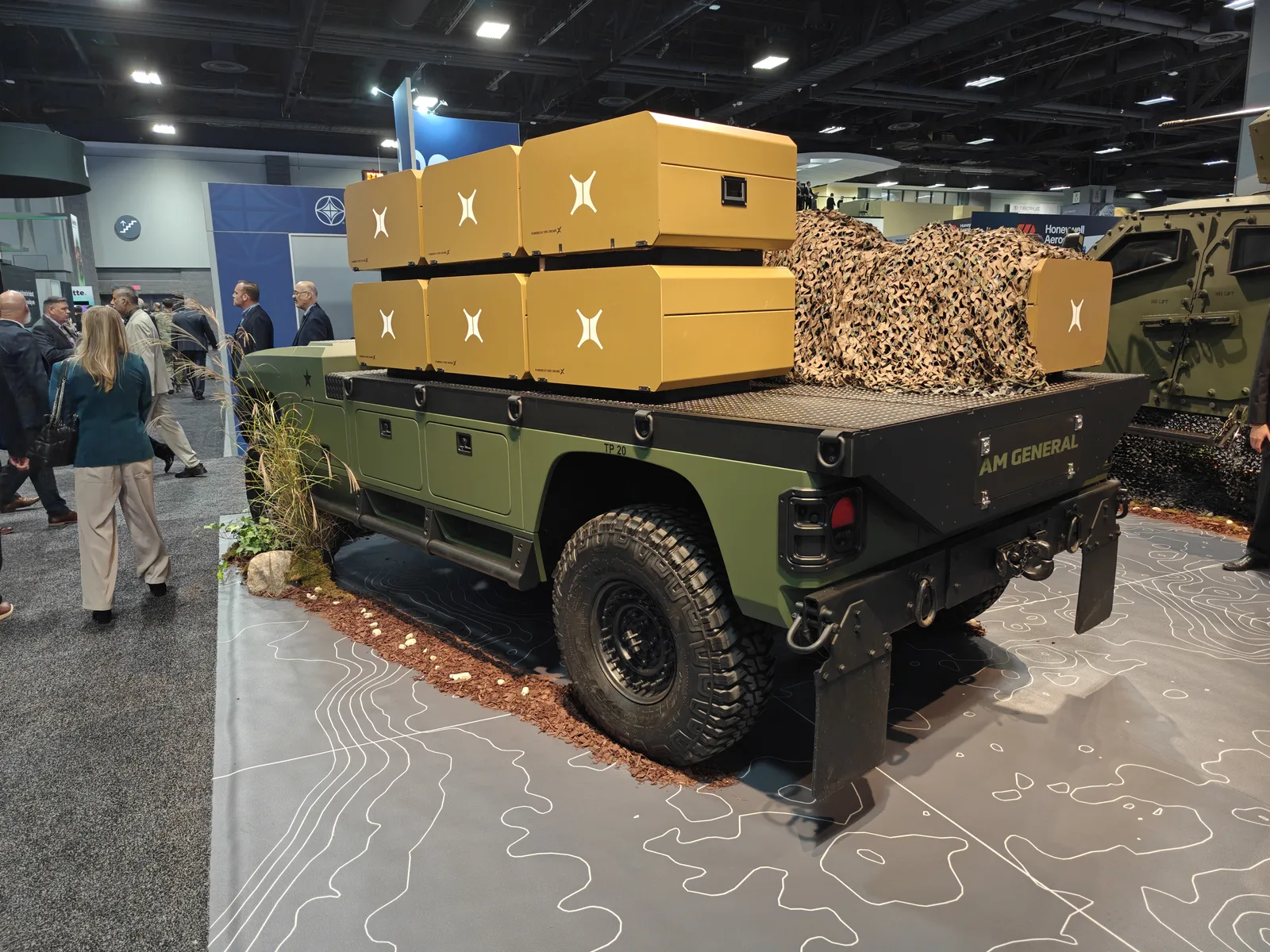
GM Defense’s skateboard-architecture UGV was one of several such concepts displayed by companies at AUSA 2026 (Warsight has reported on the AM General Humvee-based solution shown at AUSA 2026 here, for example). Having cancelled its Robotic Combat Vehicle programme in May 2025, the US Army has since shifted its UGV strategy toward solutions that offer cheaper platforms that can employ vehicle-agnostic autonomy capabilities.
GM’s capabilities at scale
Bruce Brown, GM Defense’s vice president for strategy, emphasised to the AUSA 2026 audience the commercial scale behind the overall General Motors operation, under which “every 60 seconds a vehicle comes off the line”.
This capability has already had tangible results in supporting Lockheed Martin. After GM Defense signed a contract on 6 August 2026 to deliver critical housing components for Lockheed Martin’s PAC-3 Missile Segment Enhancement (MSE) air defence missile, the first batch of those components were delivered on 28 August: just 22 days after the contract was signed.
“The partnership that we have with Lockheed Martin demonstrates that GM Defense can contribute beyond our own vehicle line-up that you see here today,” said Brown. “We can help strengthen the broader defence-industrial base by applying those commercial technologies to your applications. … We’re ready to answer the call for those things here, not with a slogan, but certainly with people, with the commerciality and the process here to go deliver again in 22 days.”
Expeditionary power
Bruce Daley, GM Defense’s vice president for commercial, energy and manufacturing solutions, then addressed the AUSA 2026 audience in relation to expeditionary power on the battlefield.
“You can see how challenging the power requirements are for the warfighter today and in the future,” said Daley, “so what that does is it challenges us to deliver tailored energy solutions that are scalable; they’re transportable, they’re resilient; they can comport with the requirements that the warfighter drives and needs every single day.”
GM Defense has already completed a US Defense Innovation Unit (DIU) prototyping effort with its baseline EPIQ transportable power concept. At AUSA 2026, however, the company showcased its EPIQ Hybrid prototype: a customer-inspired expeditionary energy storage system that offers a power output of 60 kW and an energy storage capacity of 100 kWh while lowering fuel demand as well as thermal and noise signatures in austere environments.
Daley noted that GM Defense’s move toward hybrid power systems, both on and off its vehicles, are geared to providing scalable power on the battlefield “that’s clean, safe, transportable and meets warfighter requirements”.
The UK LMV requirement
After the main GM Defense presentation at AUSA 2026, Gilbert Nelson, vice president for international business development for GM Defense UK, gave an update on GM Defense’s progress in addressing the UK’s Light Mobility Vehicle (LMV) programme, which seeks to replace the UK’s legacy light, mobile tactical platforms. While a tranche of around 3,000 vehicles will initially be procured, the total requirement could amount to more than 9,500 vehicles.
On 1 October 2026 Team LionStrike, which comprises GM Defense, BAE Systems and NP Aerospace, was one of seven bidding teams downselected by the UK Ministry of Defence (UK MoD) to move forward with providing candidate vehicles for a series of trials.
The UK MoD has stipulated that three candidate vehicles from each team be submitted: a General Purpose Vehicle, a Tactical Mobility Vehicle and a Battlefield Ambulance. GM Defense is the vehicle supplier for Team LionStrike, providing variants of the Silverado HD pickup, Silverado LD pickup and Infantry Squad Vehicle.
Nelson noted that Team LionStrike’s vehicles are in country and are being delivered to the UK MoD by the end of October. Regarding how the vehicle trials will pan out, Nelson said, “It’s a pretty open-ended plan, so I don’t want to speak for the MoD on timelines, exact dates and whatnot, but they have a pretty open plan. It’s a pretty comprehensive trials plan that they’ve outlined.”
Regarding GM’s capacity to deliver vehicles at scale, Nelson noted, “We have four different factories across North America – Canada, the US and Mexico – where we manufacture Silverado pickup trucks. Any one of those is probably manufacturing a thousand or more Silverados every single day. So when you talk about scale, GM has the scale and the resilience that comes with that. It’s not just the sheer numbers; it’s the resilience. Should there be a disruption in any one of those factories, the others are still out there producing vehicles and could be pulled into that supply chain.
“That’s the reality,” he added. “We could deliver the whole program in less than two weeks if we were to apply our commercial scale to this.”
Asked to what extent the GM Defense vehicles will be modified in North America, Nelson noted that certain specifications will be met off the line, reducing the need for bespoke work having to be done subsequently. The vehicles would then be quickly moved to the UK “in a condition that’s ready for integration of additional kit”, which is where NP Aerospace and BAE Systems would enter the effort.
The US Army’s ISV-Heavy requirement
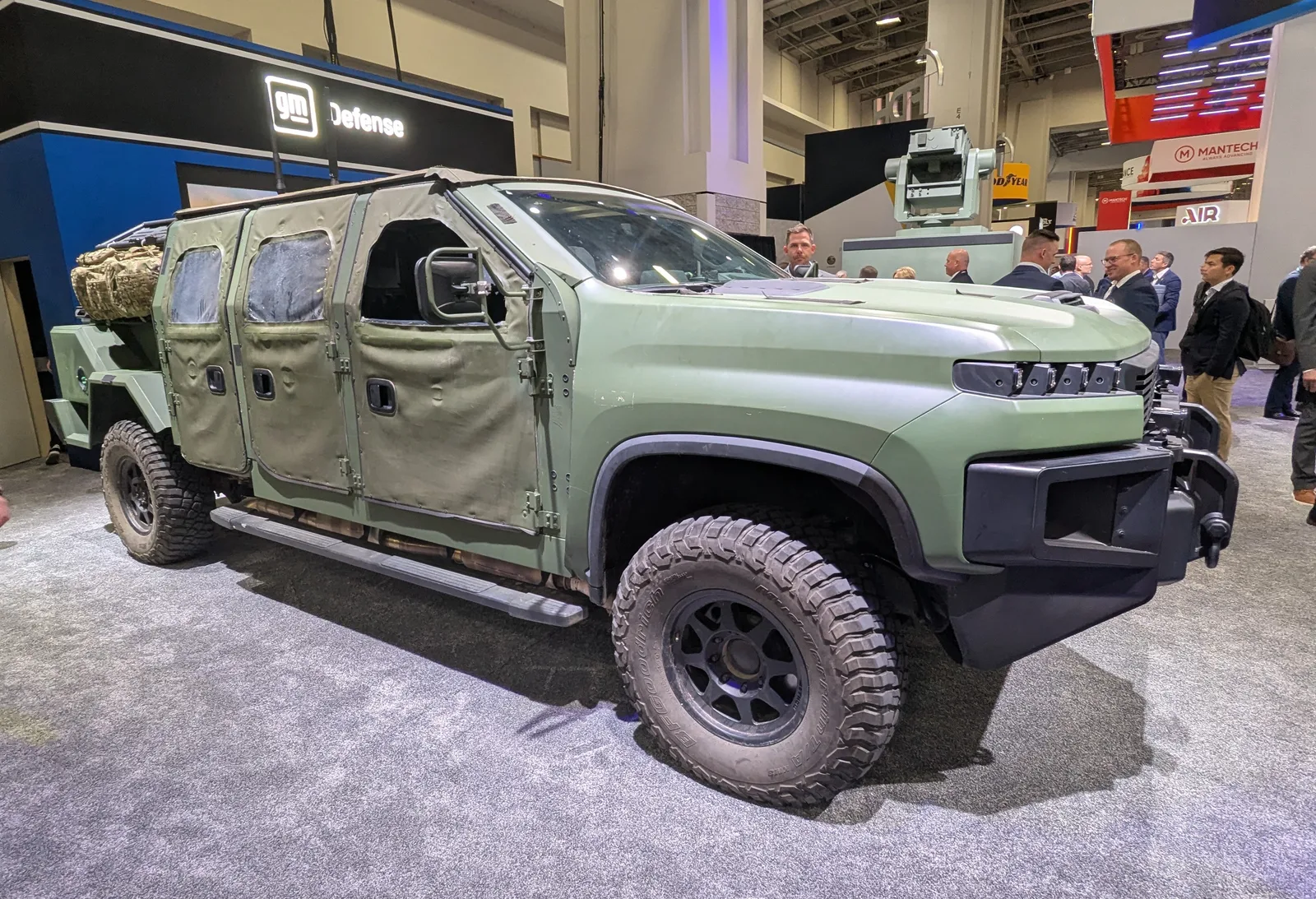
As well as displaying an ISV-U at AUSA 2026, GM Defense also displayed an example of its Heavy Duty Tactical Truck (Hybrid), which the company is currently bidding for the US Army’s ISV-Heavy requirement. On 30 June 2026 the army awarded three Other Transaction Agreement (OTA) contracts for prototype ISV-Heavy vehicles: one to GM Defense; one to Ford, which is offering a variant of its F-Series pickup truck; and one to tactical and off-road vehicle company BC Customs, which is working in conjunction with US defence technology and engineering company Raglan.
GM Defense’s Heavy Duty Tactical Truck (Hybrid) is based on a variation of the Chevrolet Silverado HD and, as the name indicates, was a hybrid solution from the start. Thus, as well as delivering instantaneous torque to the wheels and a silent drive mode to reduce acoustic and thermal signature, GM Defense’s ISV-Heavy candidate offers rapid self-charging, high degrees of export power and a 30% lower fuel usage than traditional diesel generators.
As Johnson told Warsight at AUSA 2026, “We knew it had to be hybrid. We were also watching and listening and seeing that there’s this massive gap for tactical power. Okay. There’s this insatiable growth of systems that require power: drones, directed energy, night vision goggles, the conformable wearable batteries that the soldiers are wearing to power all their personal kit. It’s all energy dense and there’s no capacity to deliver that energy on the battlefield right now. Army units are buying commercial generators to carry around with a bag of gas to charge all of their kit, so we saw that and we thought that this would play a role.
“And again, the army challenged us,” Johnson said. “We delivered prototypes two years ago [in January 2025] to a Joint Multinational Readiness Center rotation in Germany in the dead of winter – snow, sleet, rain – and the vehicles performed superbly. And then we started going to other brigades and essentially it became recognised.
“So the army started experimenting more, and they saw super capable technology, not only for mission command on the move, but also to power their tactical operations centres silently,” Johnson continued. “Right now they’re powered by large, clunky, high-maintenance, loud generators that are on trailers, so you have a prime mover, a trailer and a generator that are powering their technical operation centre. This can do all that: all that baked down to one.”
Johnson noted that the army then developed a requirement that initially drew around 21 bidders, of which 14 were seen as viable. That field of competitors then got paired down to four contenders before the downselect to three at the end of June. Each contender is to deliver three ISV-Heavy examples, with the first expected by 30 March 2027.
Each ISV-H must be able to carry six troops (compared to nine for an ISV-U) with a payload of up to 1.8 tons, tow trailers weighing three 3 tons, recover vehicles weighing up to 4.5 tons, climb 60% gradients, overcome 46 cm vertical obstacles and maintain more than 30 cm of ground clearance. The ISV-Heavy must also be able to export 60 kW of continuous high-voltage DC power and to replenish its own power to 90% within six hours in both extreme cold and intense heat.