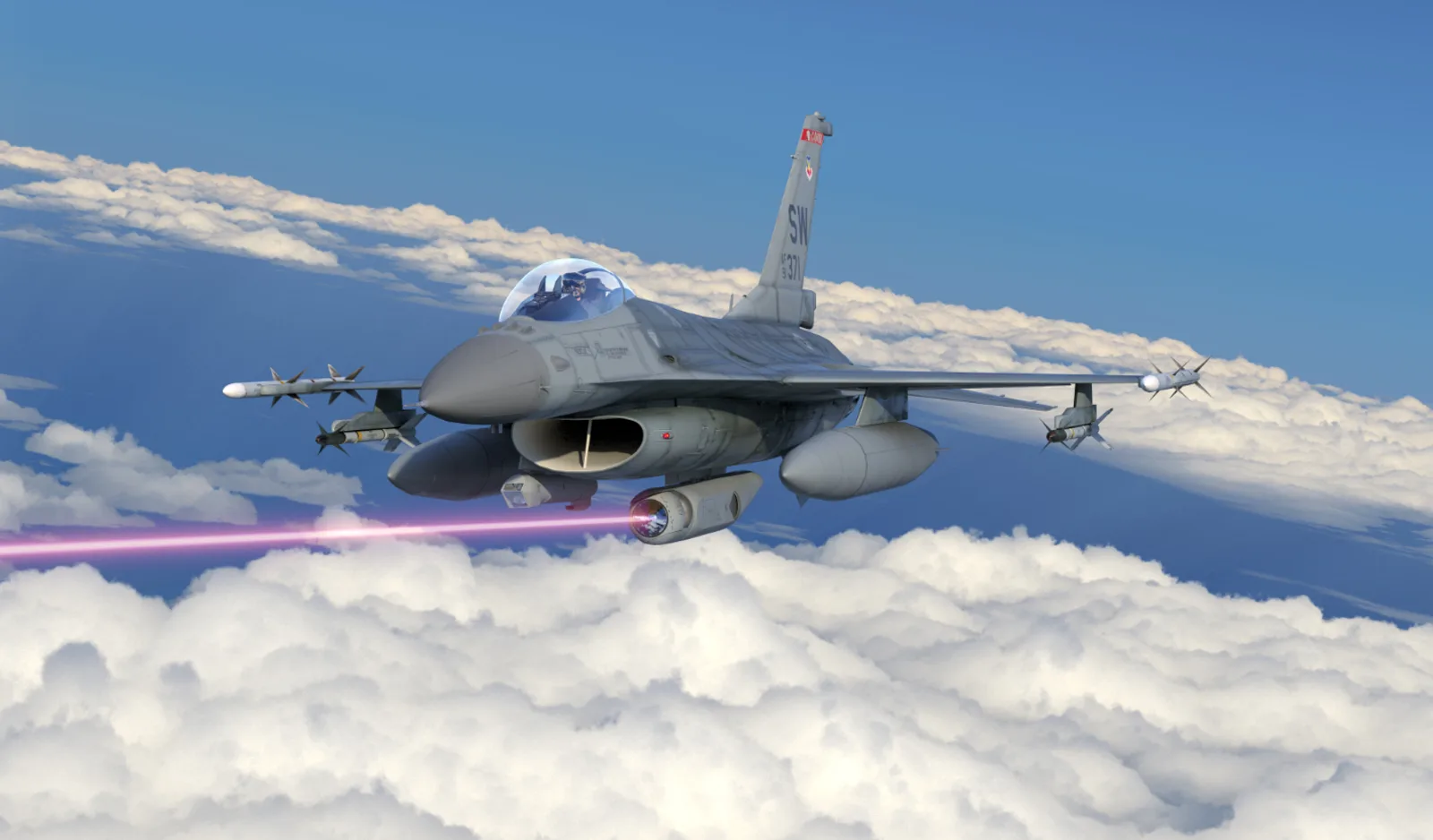
Chinese company AVIC has displayed a graphic showing a high-energy laser weapon mounted on a J-36 aircraft. This suggests China may be betting on directed energy weapons as a defence against air-to-air missiles. However, a deeper look at the practicalities of such weapons in an air warfare context reveals that the picture is more complicated than it may first appear.
AVIC graphic surfaces depicting a high-energy laser on J-36
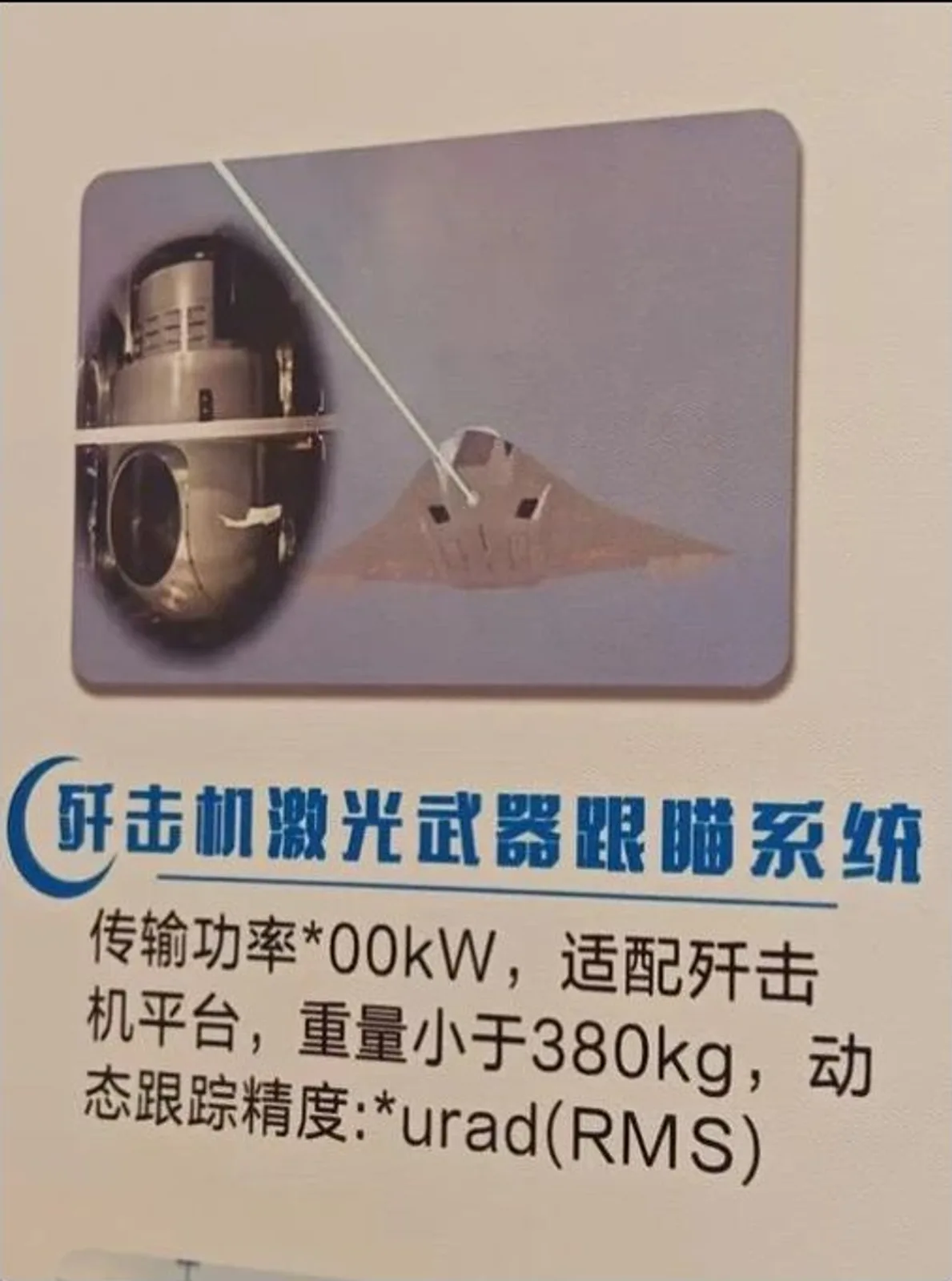
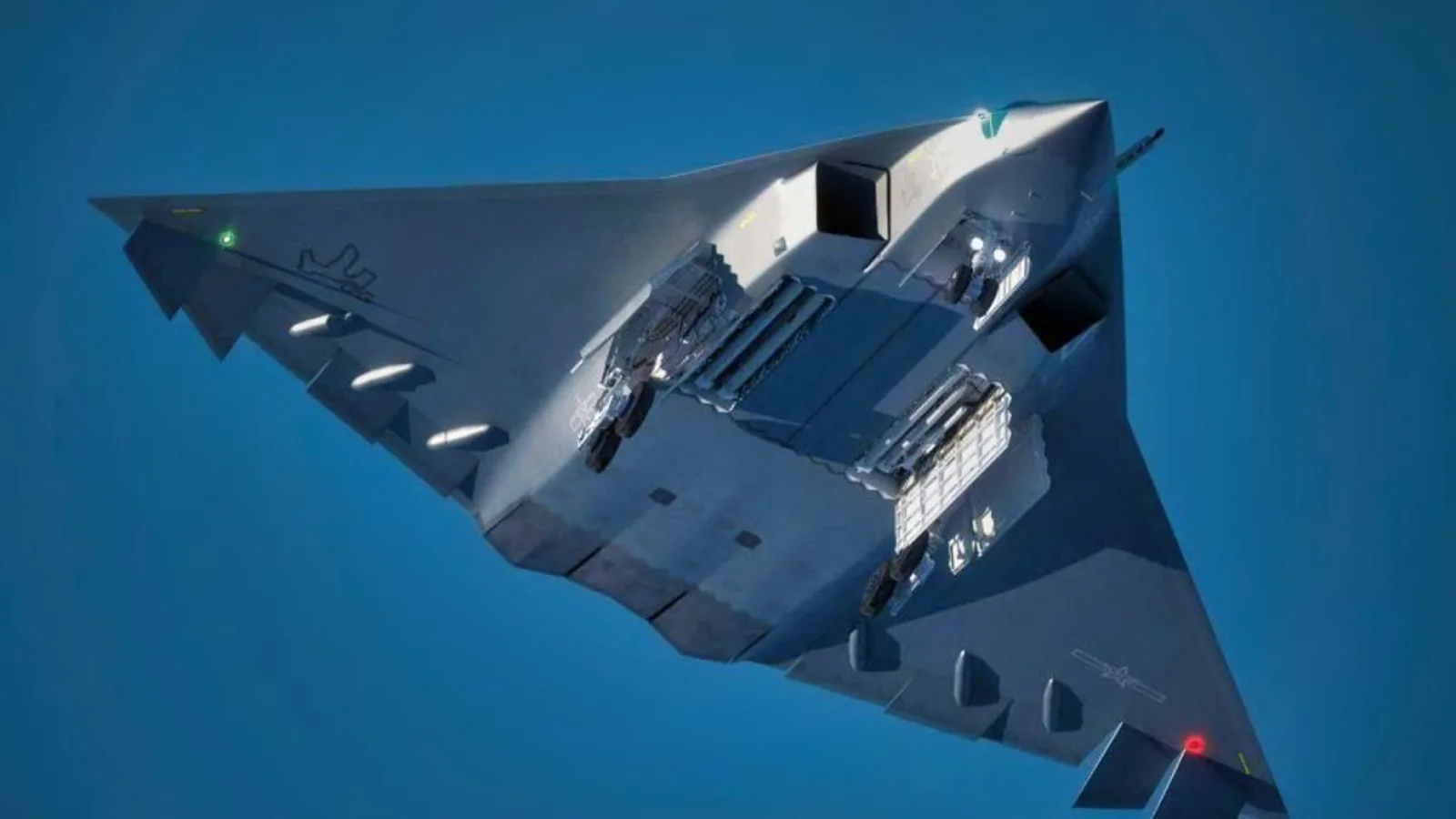
On 17 September 2026, a photo surfaced on Chinese social media showing an Aviation Industry Corporation of China (AVIC) poster showcasing what appeared to be a high-energy laser (HEL) system mounted on what appeared to be a CG render of a J-36 fighter aircraft with a gimballed laser beam director mounted under the nose.

The poster provided a few specifications, though most were either partially or entirely redacted. These included a weight of under 380 kg, which would presumably include the beam director, the laser source, and the cooling system. The poster listed a transmitted power rating of “*00 kW”, where the asterisk is understood to be in place of a number, suggesting a minimum power rating of at least 100 kW. The pointing accuracy was entirely redacted, given as simply “*μrad (RMS)” [root mean square error].
At this point, it is unclear whether this is intended to form part of the J-36 from serial production, or whether it is simply a proposed future upgrade for a later variant of the aircraft.
Naturally, the AVIC poster raises a few interesting possibilities. So what purpose would an airborne laser serve on a large fighter aircraft such as the J-36? The fact that the power rating was even listed in more than single-digit kilowatt figures suggests this is not a directional infrared countermeasure (DIRCM). As such, Warsight assesses that the most likely purpose would be as part of an active protection system (APS) for aircraft against surface-to-air missiles (SAMs) or air-to-air missiles (AAMs). Let’s break down why.
The uses of high-energy lasers
To begin with, there are broadly three main useful effects on target that can be achieved with HELs:
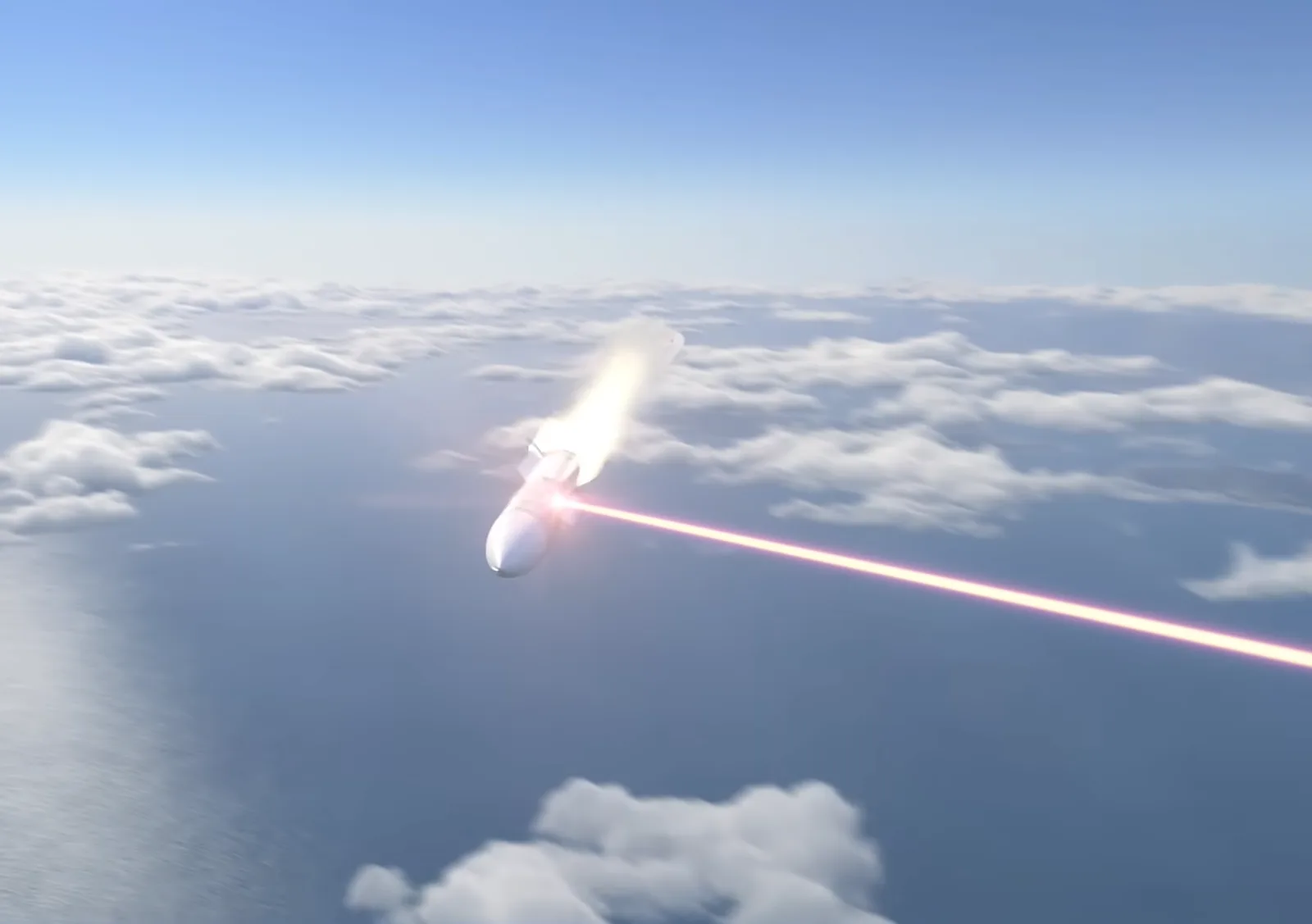
- Kinetic/thermal defeat – in essence, this involves burning a hole in the target, to destroy or cause severe damage to either (if present) the warhead or other sensitive electronic components. This requires delivering the most energy on target, and so is the shortest-range of the three effects.
- Burning out optics – This involves damaging or deforming the optical sensor of a camera or missile seeker, preventing it from functioning. This requires less energy than kinetic/thermal defeat, and so can take place at ranges where the latter is not possible.
- Dazzling optics – This simply involves blinding a camera or seeker temporarily while shining the beam at it. This requires delivering the least energy on target, and so works at the longest ranges of the three effects.
At the high end of their range of effects, burning holes in objects, laser weapons tend to have very short effective ranges (usually in the order of several kilometres), which is significantly less than most missiles.
As such, laser weapons tend to be too short-ranged to be of much use against hostile aircraft or surface targets, especially at the air-to-air engagement ranges possible today, which can easily exceed 100 km, and looking ahead, some of the latest very long-range air-to-air missiles currently in development are assessed to have ranges many times that.
What constrains laser effective ranges?
In the simplest possible terms, effective ranges for lasers are constrained by the fact that as the beam travels further from the source, it gradually gets wider, and interacts more with the atmosphere. This means that at longer ranges, less of the energy makes it onto the target, and the energy that does make it there is spread over a wider surface area, meaning it will take longer to burn a hole in whatever you’re aiming at.
Going slightly deeper, the effective range can change depending on power, aperture diameter, beam diameter, beam quality, use of technologies such as adaptive optics, tracking accuracy, and various other factors. Range is also affected by atmospheric conditions, such as humidity, and thermal blooming as the laser passes through the air. All these factors and others will affect the practical level of energy a laser is able to put onto its target.
Due to such atmospheric effects, a further oddity of lasers is that their effective range is greater when firing vertically, towards the sky, as opposed to horizontally, parallel to the ground. This is because as altitude increases, the air becomes thinner, and so less of their energy is lost to atmospheric interactions when firing vertically.
The importance of cooling and power supply
The other factor to consider from a practical standpoint is the cooling required for a HEL system. Powerful lasers generate a lot of waste heat, and this heat has to go somewhere. If a laser is fired either at too high a power or for too long, it can exceed the thermal load its cooling system was designed to deal with, and this in turn can cause serious damage to the equipment.
Cooling requirements are often far greater than many people imagine. From multiple manufacturers, I have been quoted ratios of many minutes, to several tens of minutes of cooling required for under 30 seconds of laser firing. So far I have only encountered one exception to this general trend in cooling requirements. One manufacturer claimed their system had a continuous firing capability as long as its power requirements were met. But that particular system was both quite large and fairly atypical in several other ways.
Naturally, a host platform’s available size, weight, and power (SWaP) can make it easier to integrate adequate cooling capacity. Large ships for example tend to have a fair amount of SWaP available, as well as easy access to seawater for cooling if needed, so they face fewer problems than some other platform types from a cooling standpoint. On smaller land vehicles and aircraft, adequate cooling capacity can be more difficult to achieve. Generally speaking, smaller platforms are more likely to run into platform SWaP constraints than large platforms.
The same constraints can also impact power supply. Depending on the platform, its engine may not provide enough power to ensure an uninterrupted supply of power to the laser. In this case, power storage, typically batteries, would be needed, and a laser weapon may require time to recharge these between uses.
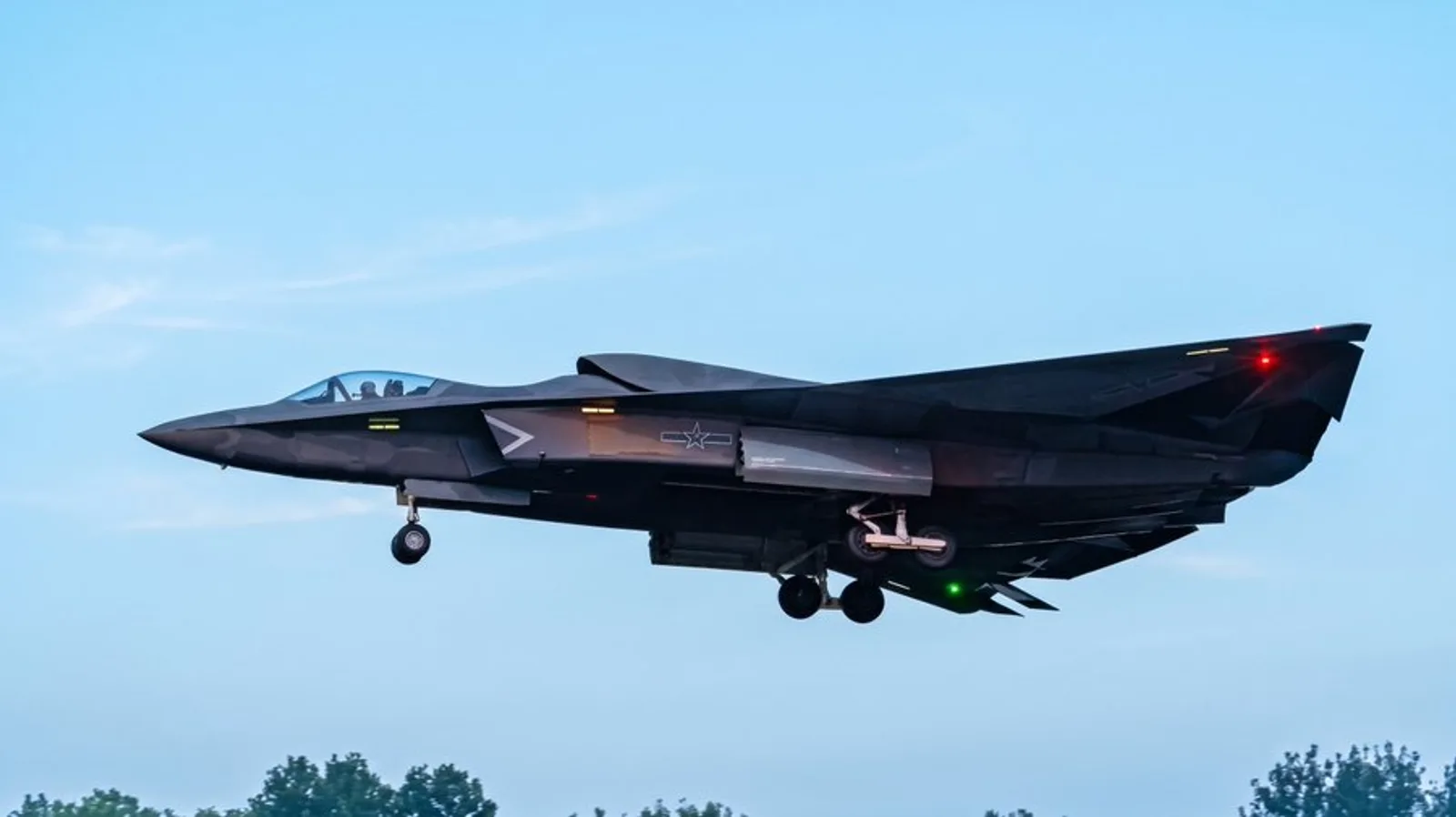
To bring this back to the J-36, assuming the poster indicates that its laser weapon is at least in the 100 kW class, this would impose a substantial thermal load while in use, requiring a lot of both power and cooling. The J-36 is a pretty large aircraft, and somewhat unusually has three engines, giving it additional power to play with, so it would make sense that a platform like this could have the spare SWaP available to carry a HEL weapon.

Prepared with a certain future in mind
So with its likely function and some limitations established, the next question becomes why the J-36 needs a laser-based APS.
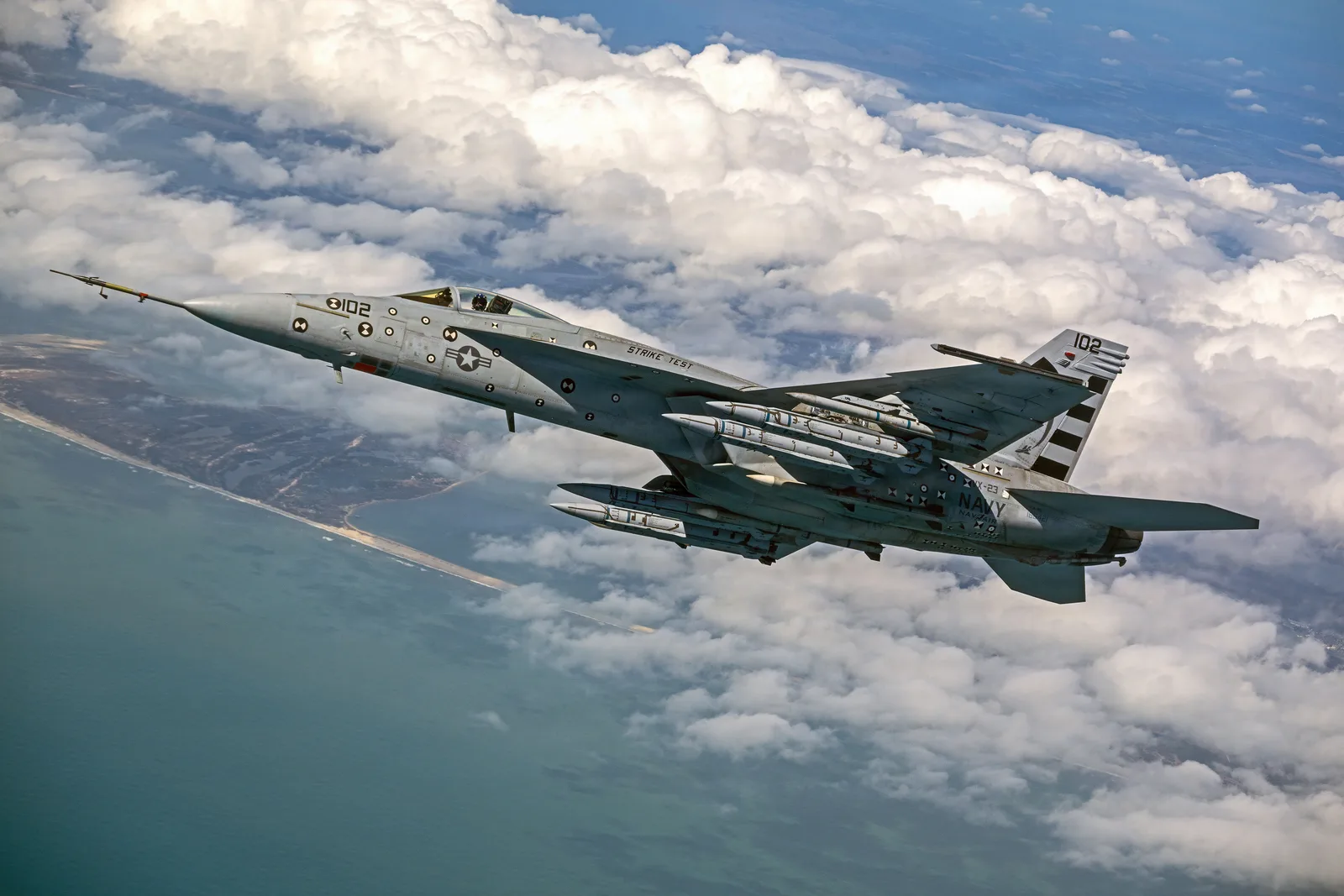
It should be fairly safe to say the Chinese understand that the threat mix in a possible future conflict within the Pacific theatre is likely going to include very long-range US air-to-air missiles like the AIM-260A JATM (estimated range: 222 km), the AIM-174B Gunslinger (estimated range: 278-370 km), and the AIM-424 Malice (range: >463 km), along with a fairly sizeable number of collaborative combat aircraft (CCA).

China has been developing domestic counterparts in the form of the PL-15 and PL-17, along with their own CCA designs. But if air-to-air combat in the Pacific theatre is likely to be a massed long-range missile-slinging fight, being able to thin out the other side’s barrage is extremely useful.
As such, laser-based APSs could make quite a lot of sense in such a scenario, though a lot will depend on their real-world performance. Much of the world’s understanding of laser weapons has been informed by ground-based air defence (GBAD) applications. While some of these can be carried across to the air domain, the latter brings plenty of its own unique problems to the table.
The practicalities of a laser-based active protection system
There are a lot of complicated factors which enter the equation when considering the real-world practicality of laser-based APS in an air combat scenario. Examining these raises a lot of unresolved questions.
Maximum range is important, because it is the limiting factor for possible ‘dwell time’ (time the laser spot spends on target). At high altitudes, lasers will be faced with less atmospheric interference than on the ground, and so performance would be expected to be slightly better. But on the other hand airframes in particular can experience significant vibrations, whether due to the presence of powerful engines or aerodynamic stresses. These may pass along unwanted wobble to the beam director, and so decrease its pointing accuracy, especially at maximum ranges, resulting in a decrease to effective range.
A maximum effective range of 10 km for a 100 kW class weapon would therefore be a reasonable ballpark estimate given similar figures have been claimed by the Iron Beam GBAD system. Assuming an ideal engagement and a small safety margin, these figures would give slightly less than 10 seconds of illumination when engaging a target travelling at 1,000 m/s.
Most HELs aim for as low a dwell time as possible. Some are purportedly capable of defeating a small quadcopter-type drone within 1-2 seconds. Against targets like mortar bombs or artillery rockets, a 3-5 second window may be needed, potentially more, given interceptions of >7 seconds have been observed with the likes of Iron Beam. However, much less is known about reliable timings required to engage AAMs.

This matters, because an aircraft APS and a GBAD system have different roles, and have to deal with different kinds of target. Many of the threats a GBAD system has to contend with travel fairly slowly (quadcopters, fixed-wing drones, mortar bombs, some artillery rockets, loitering munitions, most cruise missiles) compared to the AAMs an aircraft APS may have to contend with, and are made of different materials.
Moreover, GBAD systems will typically be positioned differently with respect to the targets they are intercepting. The job of a GBAD system is to protect something valuable, so most of the time GBAD is positioned near to whatever it is protecting, rather than intercepting targets coming directly at it. The opposite would be expected to be true of an APS.

A long-range air-to-air missile may be travelling at speeds of roughly 1200-1400 m/s (around Mach 3.5-4). In practice they may be slower at greater distances, but designing a defensive system on the basis that it may have to intercept targets closer to their maximum speeds provides more of a safety buffer than assuming the inbound threat is running low on energy. So based on these more conservative figures, this would give around 7-8 seconds to defeat an inbound missile. Is it enough? This depends on many factors, not least the question of where to target the missile.
If optical burnout or dazzling were an option, then conceivably a <8 second timescale could be adequate. However, at long ranges, pretty much all AAMs will be using radar seekers, so there will be no optical seeker to blind, barring edge cases where a missile with a dual mode (radar + infrared) seeker is encountered. So in a long-range scenario, the ability of lasers to burn out or dazzle optics would not seem to be of much use.
On paper, radomes are not the ideal target for a laser, with modern missiles often using composite materials such as silica fibre-reinforced silica composites (SiO2f/SiO2) or quartz fibre reinforced phosphate; or glass/ceramic materials such as Pyroceram or slip-cast fused silica (SCFS). Such materials tend to be capable of withstanding high temperatures for sustained periods. A HEL might be able to burn through given enough time (and time required can vary with the laser’s wavelength), but time during an engagement is limited.
However, dumping a lot of additional heat energy into a missile’s radome could conceivably impact missile performance in other ways. For instance, the dielectric constant of materials can increase at higher temperatures. Materials like Pyroceram and SCFS already aim to solve this problem by having a fairly stable dielectric constant across a wide range of temperatures. But the very high additional heat added by a HEL could conceivably exceed their design limits. Changing the radome dielectric constant could therefore lead to greater signal loss, or angular measurement errors, neither of which are ideal when trying to engage a low-observable target like J-36.
Additionally, some of the laser energy may pass through the radome and directly start heating up the radar seeker, which could in turn induce errors or damage it. So even against a missile with a radar seeker, it may still be possible to achieve certain ‘soft kill’ effects.
To ensure a ‘hard-kill’ of the missile, aiming for the warhead or the fuze would typically be a safer approach. However, depending on the engagement scenario, the missile may not always be positioned correctly for the HEL on the aircraft to target them. A modern missile will probably be approaching the aircraft using proportional navigation (P-Nav) guidance logic, and so will generally be approaching at an angle. In some scenarios this might mean the missile presents more of its body as a target for the laser, and in some cases less.

Trying to aim at the warhead or fuze from an imperfect angle could mean performance degradation – here Lambert’s cosine law rears its head. There’s an experiment you can try out at home which demonstrates this effect quickly and intuitively. Take a simple torch (flashlight for American readers), and shine it at a wall you are standing perpendicular to. It should result in a fairly bright, round, even spot. Next, stay at the same distance but move so you are at an angle to the wall, and shine the torch at the same spot as before. The result will be a wider oval-shaped spot, and the closer the angle of your beam gets to the angle of the wall, the more it spreads out over a greater surface area and the dimmer the spot gets. This effect is also why the Earth’s poles are colder than the equator.
In a laser weapon, this effect will mean that the same energy is being spread over a larger surface area, meaning a longer dwell time will be needed to burn through the target surface. Yet if you only have <8 seconds to ensure the incoming missile is destroyed a safe distance from the aircraft, a longer dwell time could mean the difference between success and failure.
Having said that, some problems can be resolved with a degree of lateral thinking or modifying concepts of operations (CONOPS). For instance, if J-36s are intended to operate in pairs or larger formation relatively close together, then ‘buddy protection’ could be a potential option. Depending on the scenario, it may be more efficient for an aircraft with a laser-based APS to target threats meant for its squadron mates than itself.
As all of the above should show, laser APSs on aircraft are an interesting concept, and one that could potentially play an important role in protecting aircraft of the future. However, looking slightly deeper raises a lot of questions, and things get complicated quite quickly. As laser APSs are still a developmental concept, and there is currently little to no publicly-available test data, it may be some years until we see meaningful answers to these questions.
Share post