The Royal Fleet Auxiliary’s Resurgent, as FSS programme passes milestone

A ‘keel laying’ ceremony has been held for the first of the UK Royal Fleet Auxiliary’s Fleet Solid Support (FSS) ships, but some of the plans leading up to their entry into service remain debatable.

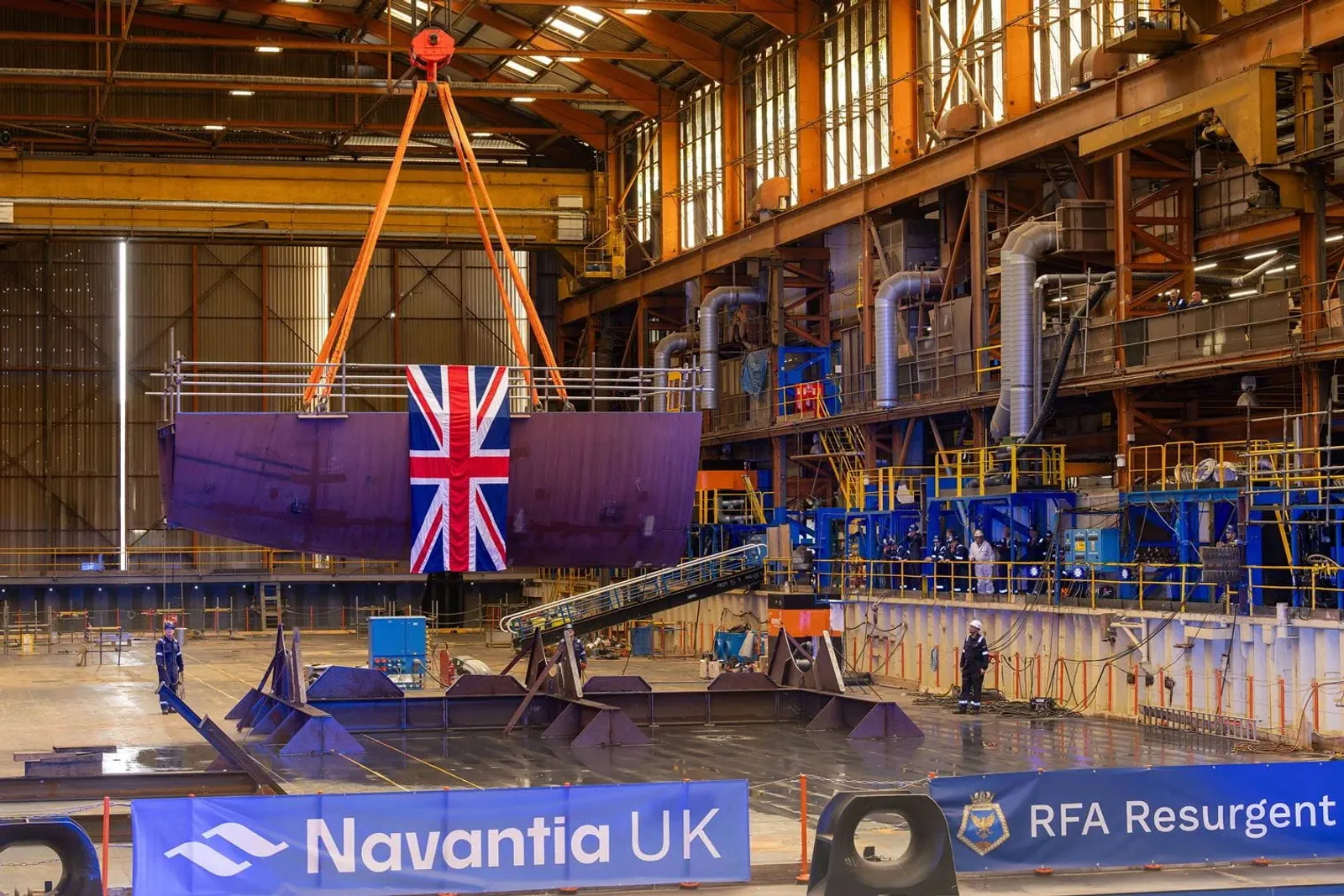
At Navantia UK’s Appledore shipyard in Devon on 3 September 2026 the first block for the future RFA Resurgent was ceremonially lowered onto the Navantia UK barge Seahorse. The forward section of the ship will consist of two modules built at Appledore.
At Navantia UK’s Appledore shipyard in Devon on 3 September 2026 the first block for the future RFA Resurgent was ceremonially lowered onto the Navantia UK barge Seahorse. The forward section of the ship will consist of two modules built at Appledore. (Royal Navy)
Jon Lake

The first section of Resurgent, the first of three new Fleet Solid Support (FSS) ships for the UK’s Royal Fleet Auxiliary (RFA), was ceremonially laid down at Navantia UK’s Appledore shipyard in Devon on 3 September 2026: the UK’s Merchant Navy Day.

The ceremonial ‘keel laying’ came just days after The Times reported that the UK Ministry of Defence (MoD) had asked Navantia UK to speed up delivery of the RFA’s new class of FSS ships. Navantia responded by saying that The Times’ article had misrepresented the company’s comments and that there had been no request to speed up delivery, while noting that “all customers want their ships as quickly as possible”.

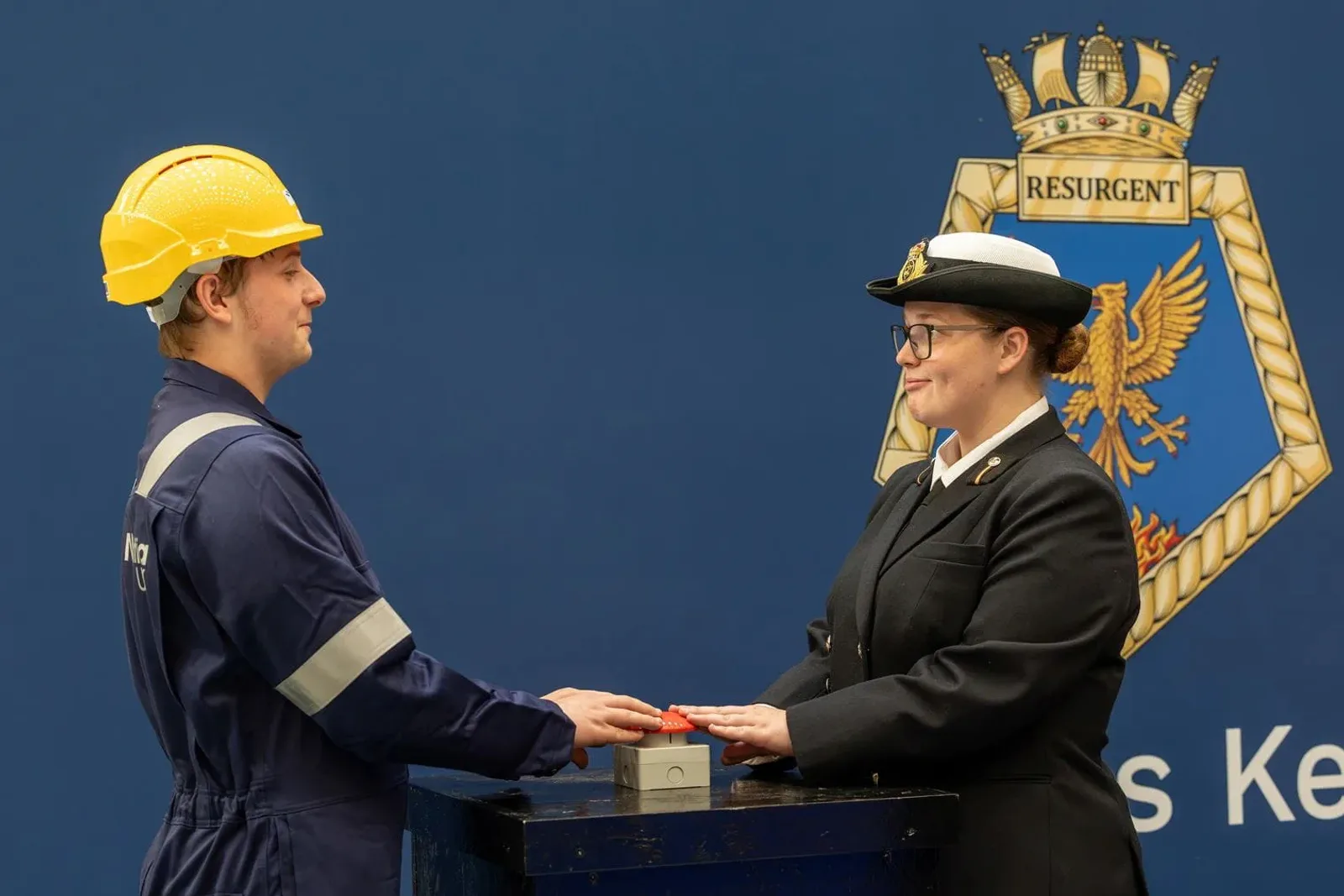
Although described as a keel laying (the first step in traditional shipbuilding), the ceremony on 3 September actually marked the positioning of the first ‘block’ (modular hull section) for the first ship in the class (the future RFA Resurgent) in position on the berth. A crane lowered the first block onto a barge, with two apprentices, one from Navantia and one from the RFA, undertaking the operation. Newly minted coins were welded beneath the unit by a Navantia UK apprentice: a longstanding tradition intended to bring the vessel good luck.

Ein Arbeiter in blauem Overall mit Schutzhelm und eine britische Soldatin betätigen gemeinsam einen roten Druckknopf an einem Podest
During a ceremony at Navantia UK’s Appledore shipyard in Devon on 3 September 2026, the first block of the future RFA Resurgent was lowered by crane onto a barge, with two apprentices, one from Navantia and one from the RFA, controlling the operation. (Royal Navy)

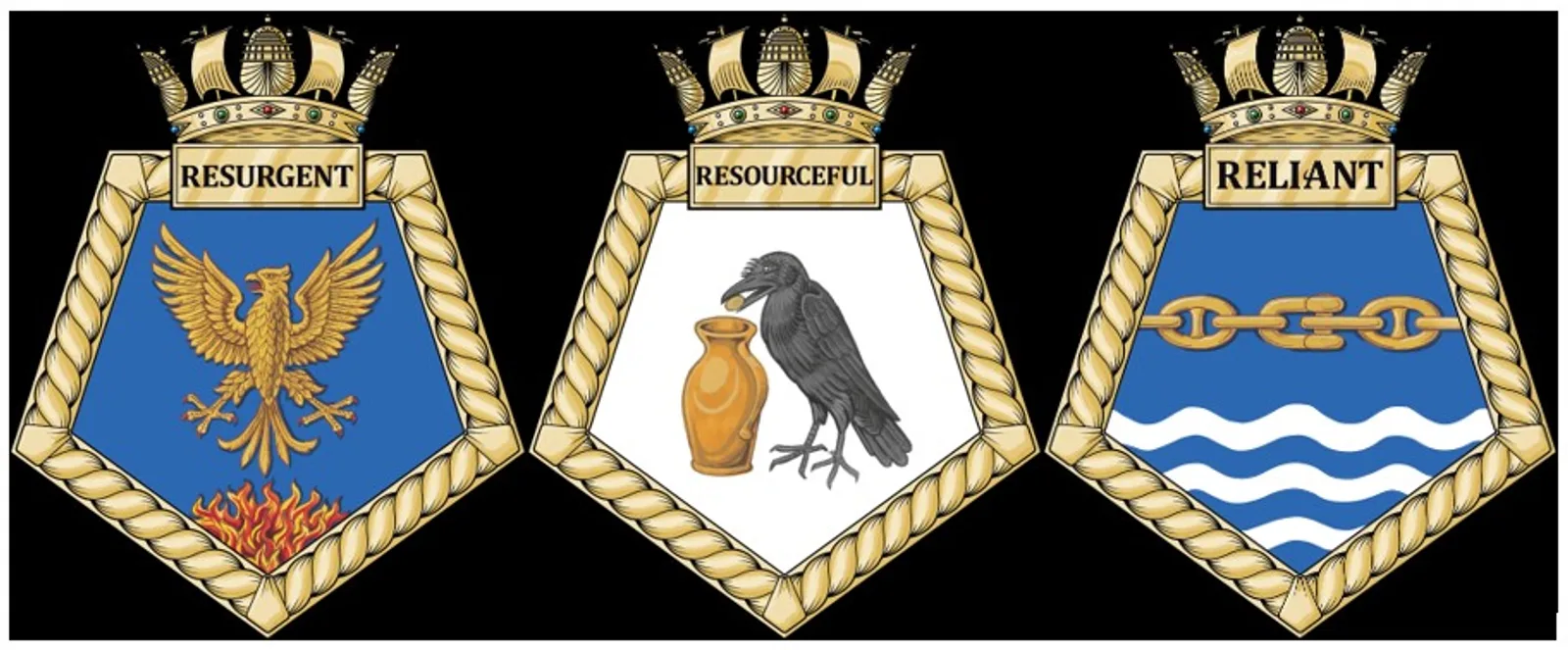
During the ceremony Commodore Sam Shattock, the head of the RFA, revealed that the second and third vessels in the class would be named RFA Reliant and RFA Resourceful.

Drei heraldische Schiffswappen der Royal Fleet Auxiliary mit Phönix, Rabe und goldener Kette unter Schiffskronen
The official ship’s crests for the future RFA Resurgent and sisterships, RFA Resourceful and RFA Reliant. (Royal Navy)

FSS build plans

The FSS ships are each being built in three sections. The forward section consists of two modules, which are being constructed at Appledore. The central section, consisting of three modules, will be built in Belfast, while the two modules of the aft section will be built in Cadiz and contain the superstructure and machinery spaces.

The Appledore bow sections will be built directly on the 1,400-tonne, GBP 8 million (EUR 9.31 million) Navantia UK barge Seahorse, which was built at Navantia UK’s Methil yard in Fife and arrived in Appledore in early June. Critics have pointed out that the new barge narrowly failed to meet the industry standard target of GBP 5,000 per tonne of worked steel.

Once they are built, the barge will transport the bow sections to the Harland & Wolff yard (part of Navantia UK but retaining Harland & Wolff branding) in Belfast to be integrated with the rest of the vessel. The larger and more complex aft modules will be transported from Cadiz to Belfast using a large semi-submersible vessel.

The UK identified a requirement for a new class of FSS ships in the 2015 Strategic Defence and Security Review. The new class was required to support the Royal Navy’s (RN’s) Carrier Strike Group (CSG), transferring solids (also known as dry stores), including weapons, ammunition, spare parts and food to RN ships at sea. The new FSS vessels will also provide logistics and operational support, performing counter-terrorism and counter-piracy missions and collaborating with allies on operations.

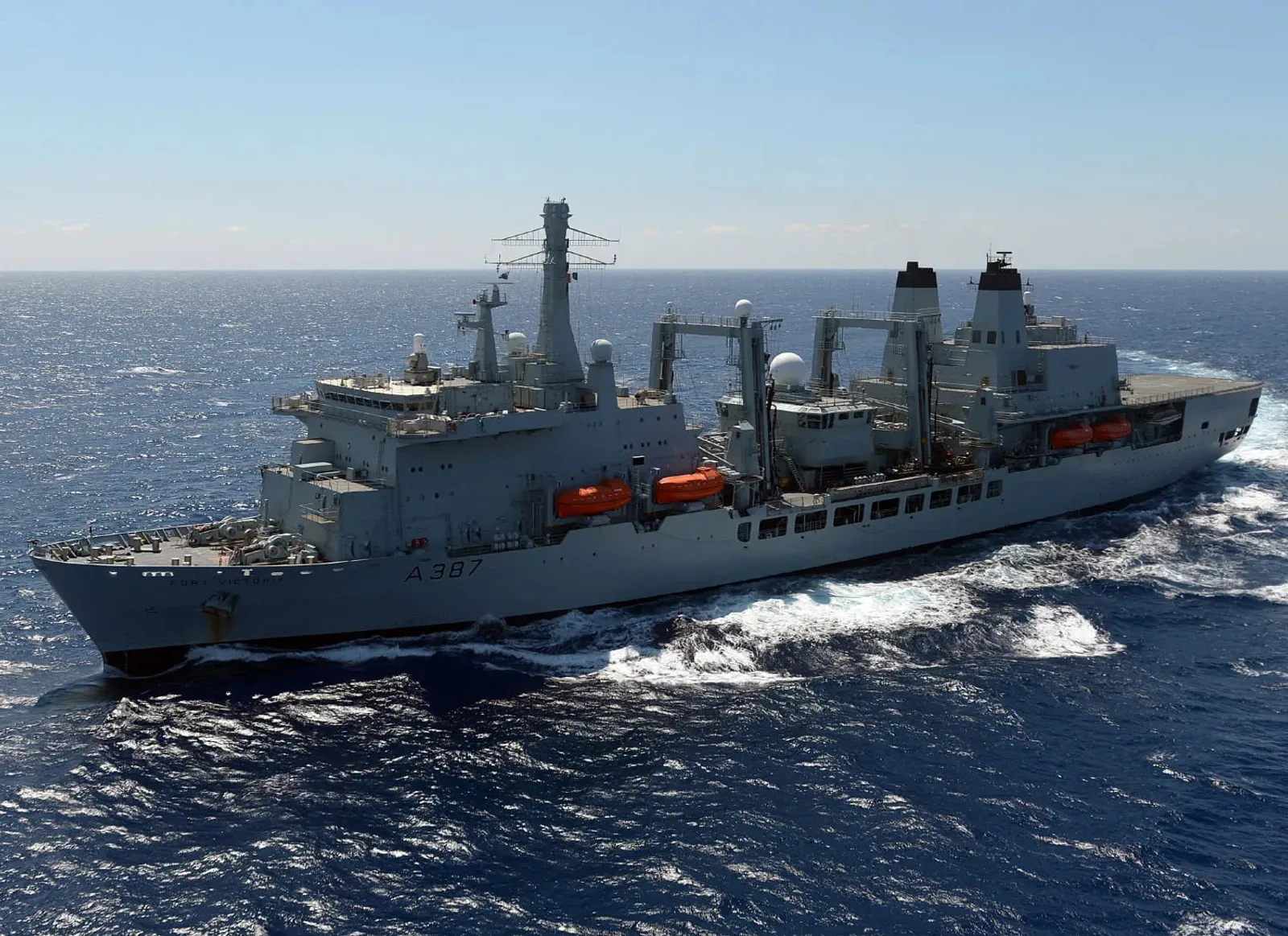
The Military Afloat Reach and Sustainability (MARS) FSS programme was launched in 2017 with the aim of replacing the RFA’s Fort Rosalie-class replenishment ships (Fort Austin and Fort Rosalie) and the combined fleet stores ship and tanker RFA Fort Victoria. The programme was delayed in 2019 and restarted in May 2021.

The decision to acquire separate classes of ship for solid and liquid resupply has been questioned. Opponents of the approach suggest that the RN has neither the mass nor the redundancy to justify the split, but others say that putting a large quantity of solid stores and a large volume fuel in the same hull would introduce significant design and operational complexities.

Because the UK’s carriers are not nuclear powered, the RN is said to need specialised fuel replenishment ships because fuel consumption is high, meaning that it is better to have separate solid supply/support ships.

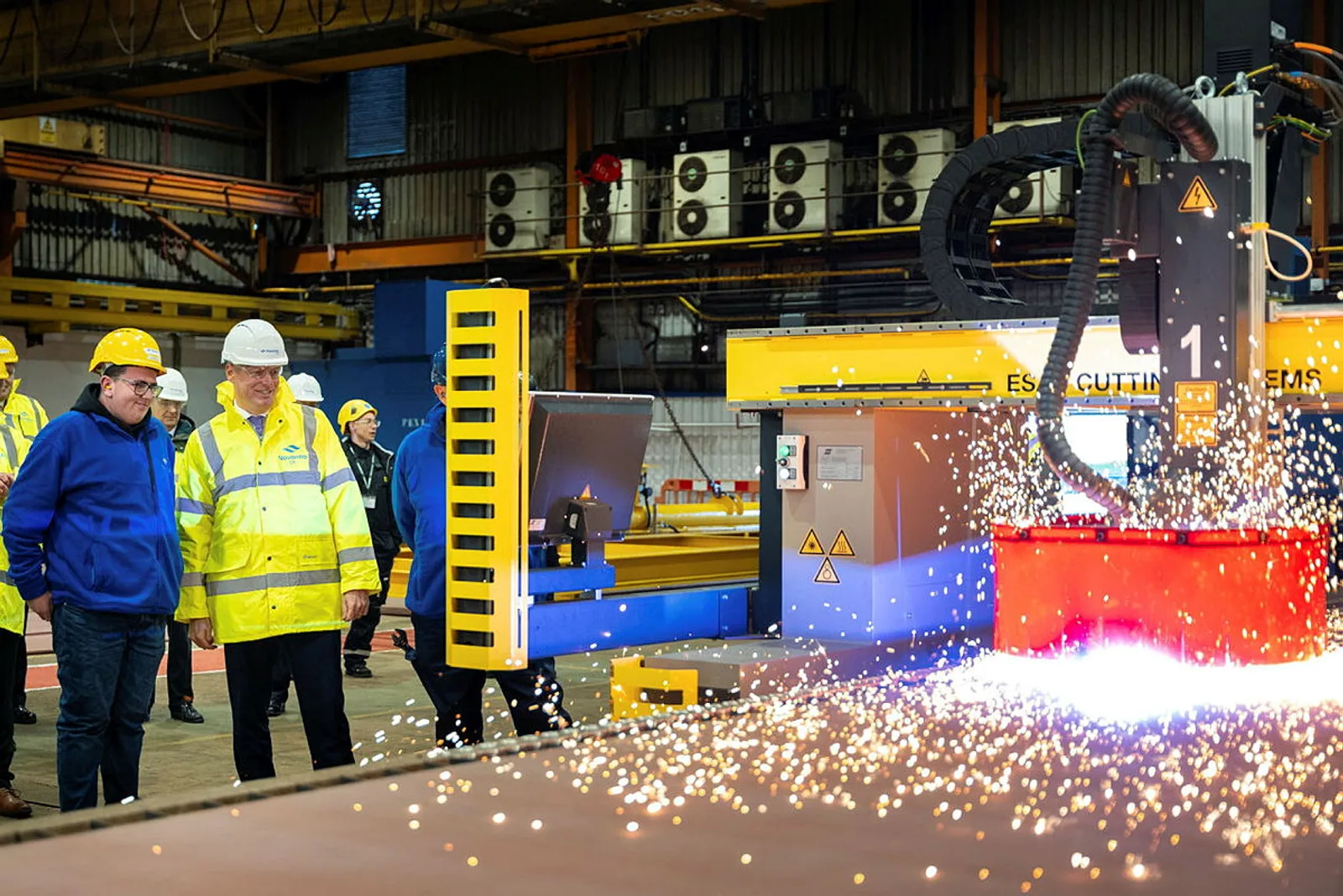
A GBP 1.6 billion manufacturing contract was awarded to the so-called Team Resolute (with Navantia UK as prime contractor alongside Harland & Wolff and naval architects BMT) in January 2023. The first steel for the first ship was cut on 3 December 2025 in the presence of Luke Pollard, Minister of State for Defence Readiness and Industry.

Luke Pollard in gelber Warnjacke beobachtet in der Appledore-Werft den automatisierten Stahlzuschnitt durch eine ESAB-Schneidanlage
Luke Pollard, UK Minister of State for Defence Readiness and Industry, watching the first steel being cut for RFA Resurgent at the Appledore Shipyard in North Devon on 3 December 2025. (Crown Copyright)

At 216 m long and displacing around 39,000 tonnes, the new Resurgent-class FSS vessels will be the largest ships in RN service after the Queen Elizabeth-class aircraft carriers. The ships will have a core RFA crew of 101, but will have accommodation for up to 80 additional 80 personnel operating helicopters and/or boats or undertaking other specialist roles.

The RN has been keen to emphasise that the new ships were designed with some emphasis on minimising carbon emissions, with the goal being for them to achieve carbon neutral status by the end of their 30-year lifespan. They will reduce their carbon footprint by using low-carbon, non-fossil fuels and sustainable energy sources.

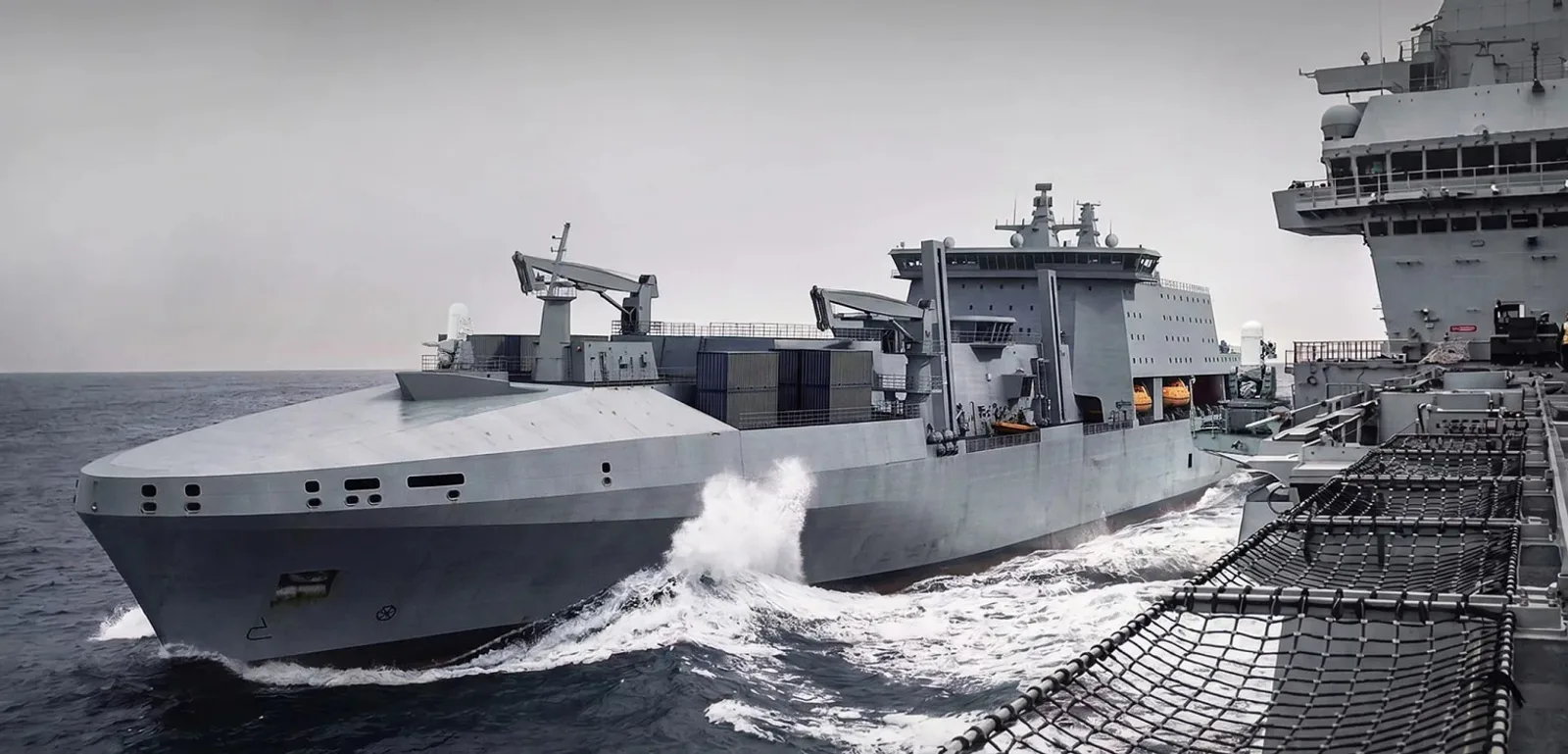
Versorgungsschiff der Fleet-Solid-Support-Klasse der Royal Navy bei einem Versorgungsmanöver neben einem Flugzeugträger der Queen-Elizabeth-Klasse
A CGI of a future UK Fleet Solid Support vessel alongside a Queen-Elizabeth-class aircraft carrier for a replenishment-at-sea operation. The ship is designed to transport containers and solid stores to support carrier strike groups and other naval operations. (Navantia UK)

Closing the fleet support gap

Resurgent is due to be delivered in 2031, closing what will have been a lengthy capability gap during which the UK CSG will have leaned almost entirely on allies for fleet solid support. RFA Fort Victoria, the RN’s last remaining fleet replenishment ship, has been laid up since 2021 and will return to service only briefly, primarily as a means of regenerating FSS replenishment skills for the initial crew of Resurgent.

This will reportedly require a further refit (on top of a GBP 50 million refit undertaken in 2014 and a GBP 44 million undertaken in 2019). The work will reportedly form part of a larger umbrella contract with Cammell Laird.

Many question the cost effectiveness and value for money of this latest refurbishment, the price of which has not been revealed, and which will support only a limited number of days at sea. Some believe that Fort Victoria is a “dockyard queen: a profit centre to anyone with a spanner” and that the UK is “continually spending money on a resource that we either don’t or can’t use”. The plan has been described as “a bad joke — waste on an industrial scale”, while one observer suggested that it was akin to “spending money on a corpse by performing cosmetic surgery and getting out the sunbed”.

Numerous observers have suggested that ‘hiring in’ a more modern ship from another navy would be cheaper and provide better training value.

Das britische Versorgungsschiff RFA Fort Victoria (A387) fährt auf offener See
RFA Fort Victoria, one of the fleet auxiliaries being replaced by the FSS ships, is currently awaiting refurbishment by Cammell Laird at Birkenhead. (Royal Navy)

Share post

You may be interested in

Categories

All NewsSea

Used tags

Fleet Solid Support (FSS) shipsNavantia UKRFA ResurgentRoyal Fleet Auxiliary (RFA)UK Royal Navy
Ad

Similar posts