The West’s two main tanker programmes have each clocked up significant milestones this summer. The KC-46A saw the emergence of a new customer, while Airbus celebrated new sales and rolled out a new A330 MRTT variant.


The West’s two main tanker programmes have each clocked up significant milestones this summer. The KC-46A saw the emergence of a new customer, while Airbus celebrated new sales and rolled out a new A330 MRTT variant.
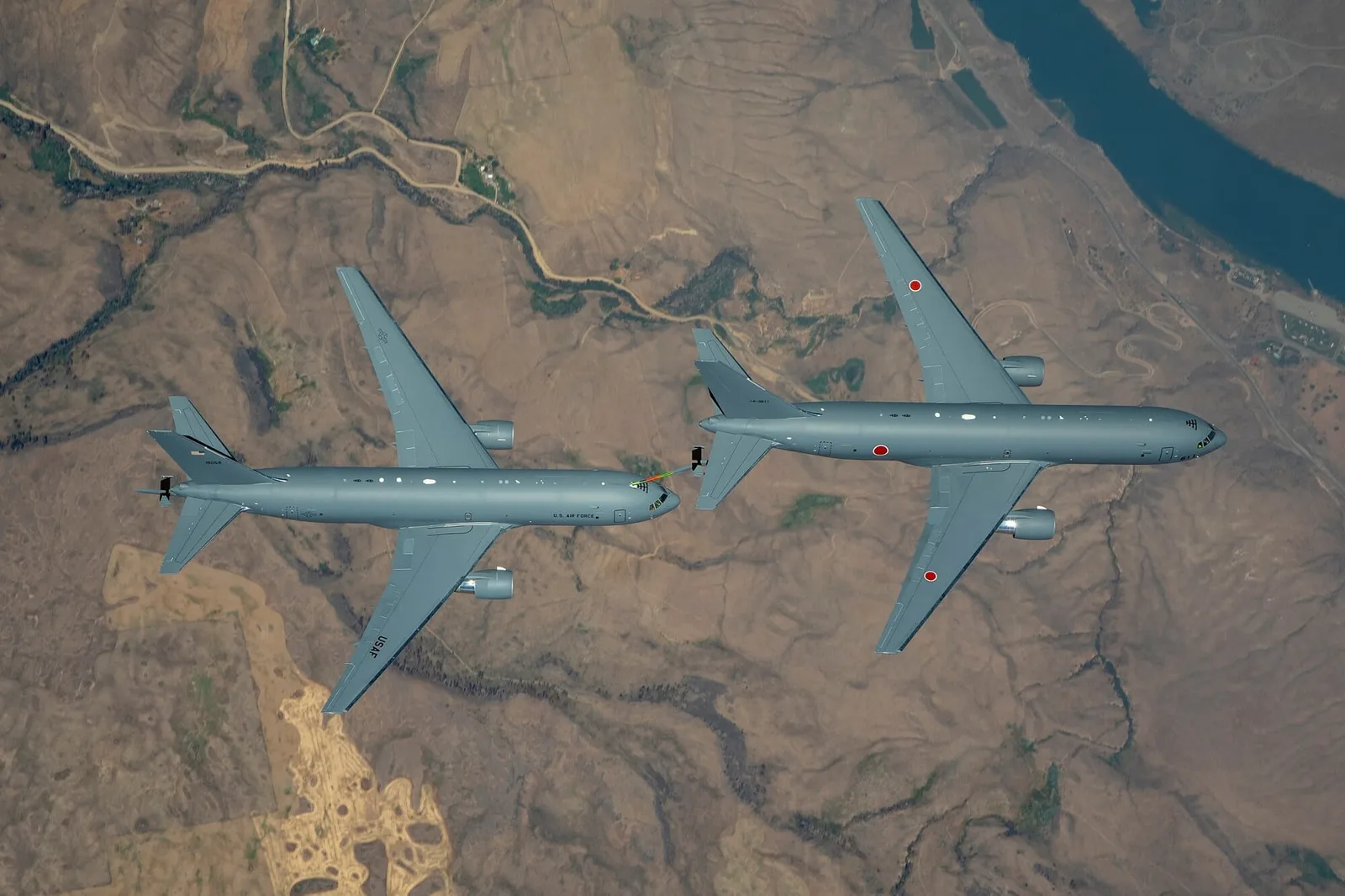
Until now export customers for the Boeing KC-46 air-to-air refuelling aircraft have been existing operators of the original Boeing KC-767 tanker. Japan procured four E-767 Airborne Warning and Control System (AWACS) aircraft (which entered service in 2000) and took delivery of four KC-767J tankers in 2008-2010. Japan selected the KC-46 in October 2015, after Airbus declined to bid, viewing Japan’s request for proposals as being written around the KC-46. Japan ordered six KC-46As in pairs between 2016 and 2022 and the US State Department has authorised the purchase of up to nine more.
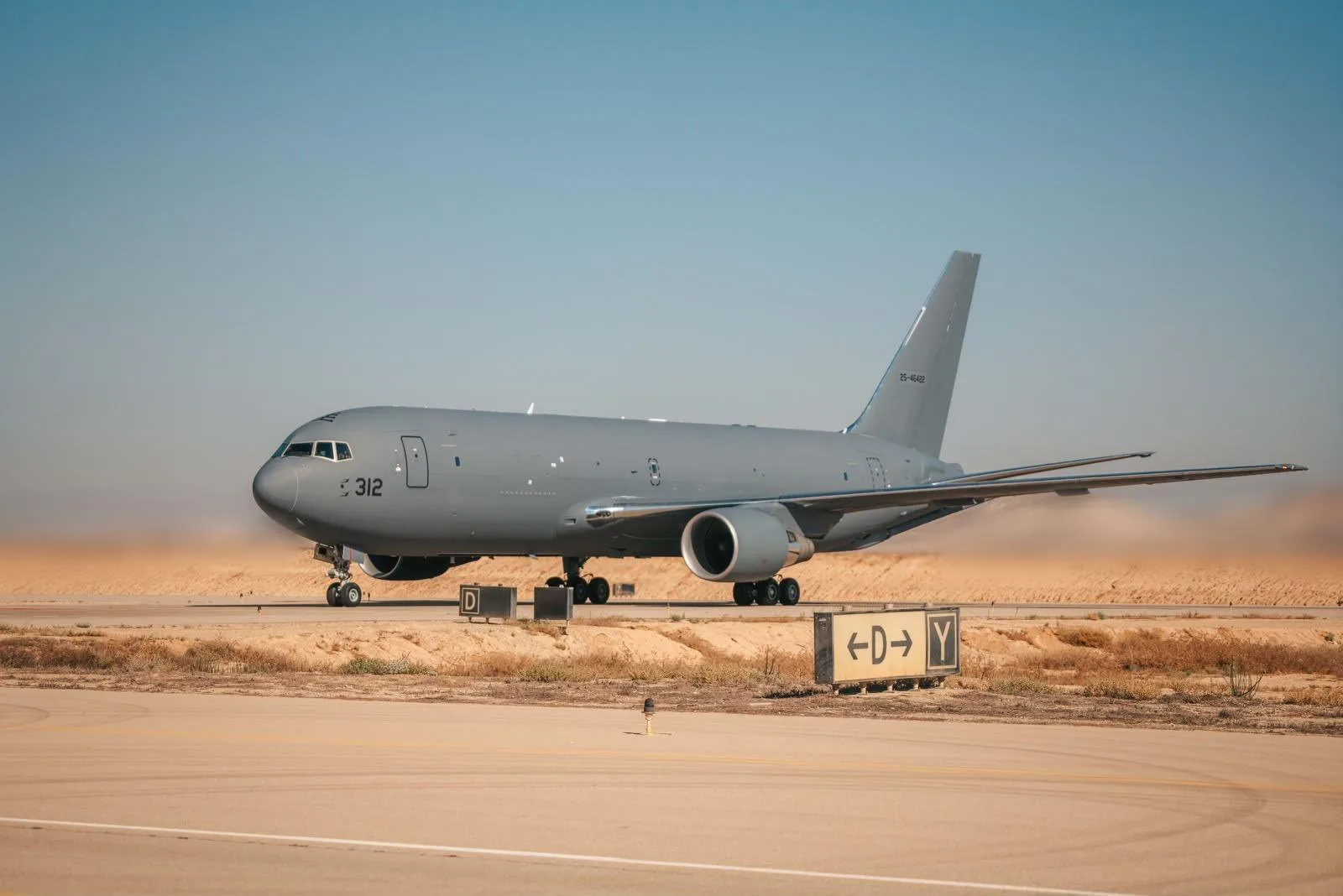
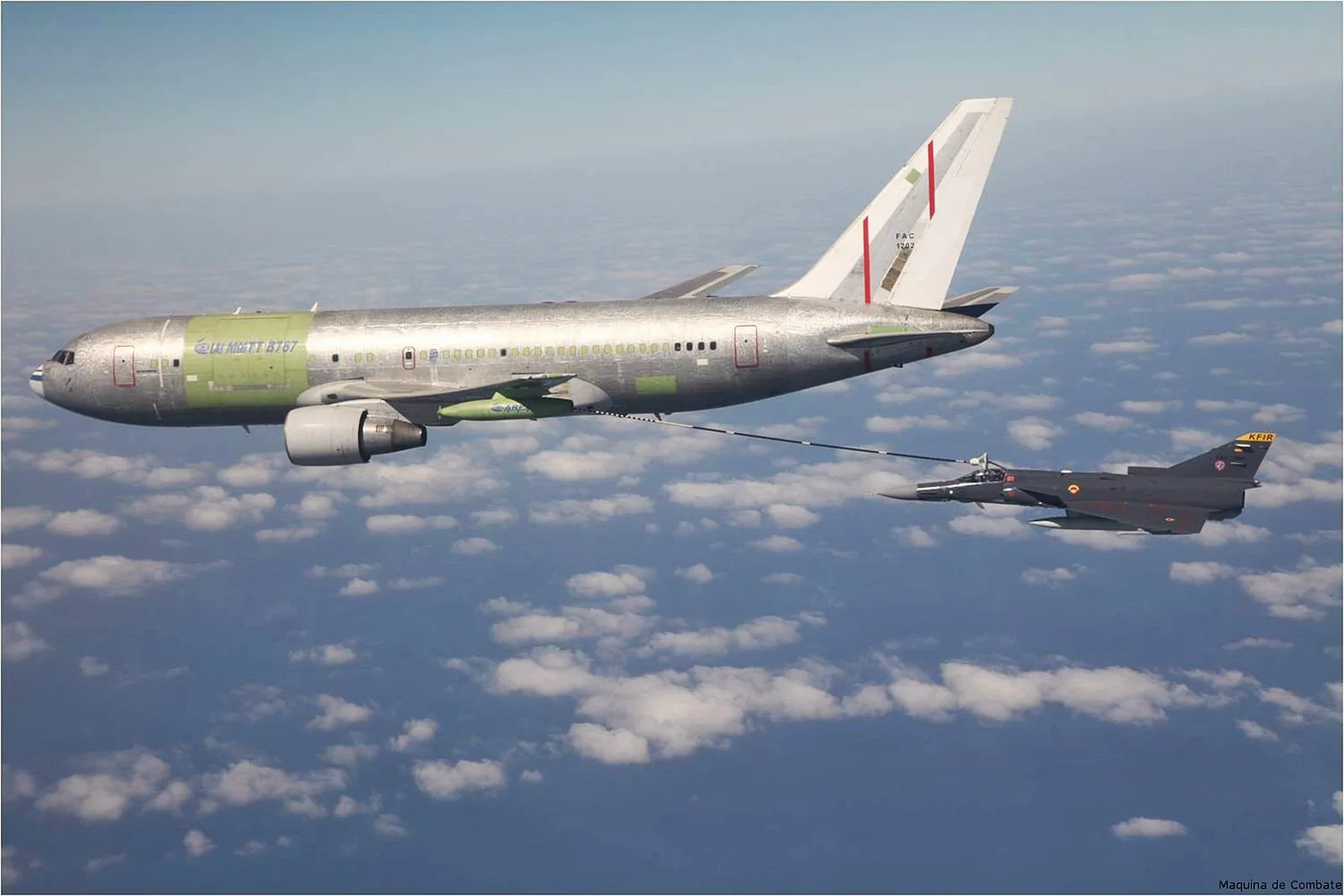
In March 2020 the US State Department approved a Foreign Military Sale of up to eight KC-46 tankers to Israel at a reported a cost of USD 2.4 billion (EUR 2.14 billion). Four were purchased in September 2022 and in April 2026, when the first of these made its maiden flight, the Israeli Ministry of Defense announced that six had been purchased, using the name KC-46 Gideon. Israel Aerospace Industries (IAI) had previously developed the KC-767 MMTT as a multi-purpose tanker/cargo transport conversion of second-hand Boeing 767s, supplying one to Colombia. The type did not enter service with the Israel Defense Forces (IDF). Boeing delivered the first KC-46 Gideon (301) to the Israeli Air Force on 27 May 2026 and delivered a second (312) to Nevatim Air Base on 21 August 2026.
Boeing gained its first all-new export (non-KC-767) customer for the KC-46A in August 2026, when the US State Department approved a possible USD 4.5 billion Foreign Military Sale of up to four Boeing KC-46A Pegasus aerial refuelling aircraft and related equipment to Qatar.
One KC-767 customer, Italy, failed to order the KC-46A when ‘push came to shove’. Four KC-767 tankers entered service with the Italian Air Force (AMI) in 2011, while in 2021 Italy announced plans to purchase two further KC-767s. The plan to increase the KC-767 fleet came as a surprise, as the aircraft had not enjoyed a particularly successful record in Italian service and had been reportedly unable to operate from the 14° Stormo, 8° Gruppo base at Pratica di Mare with full fuel. In 2022 plans changed and Italy announced plans for the EUR 1.1 billion (USD 1.3 billion) purchase of six Boeing KC-46 Pegasus tankers to replace the KC-767s.
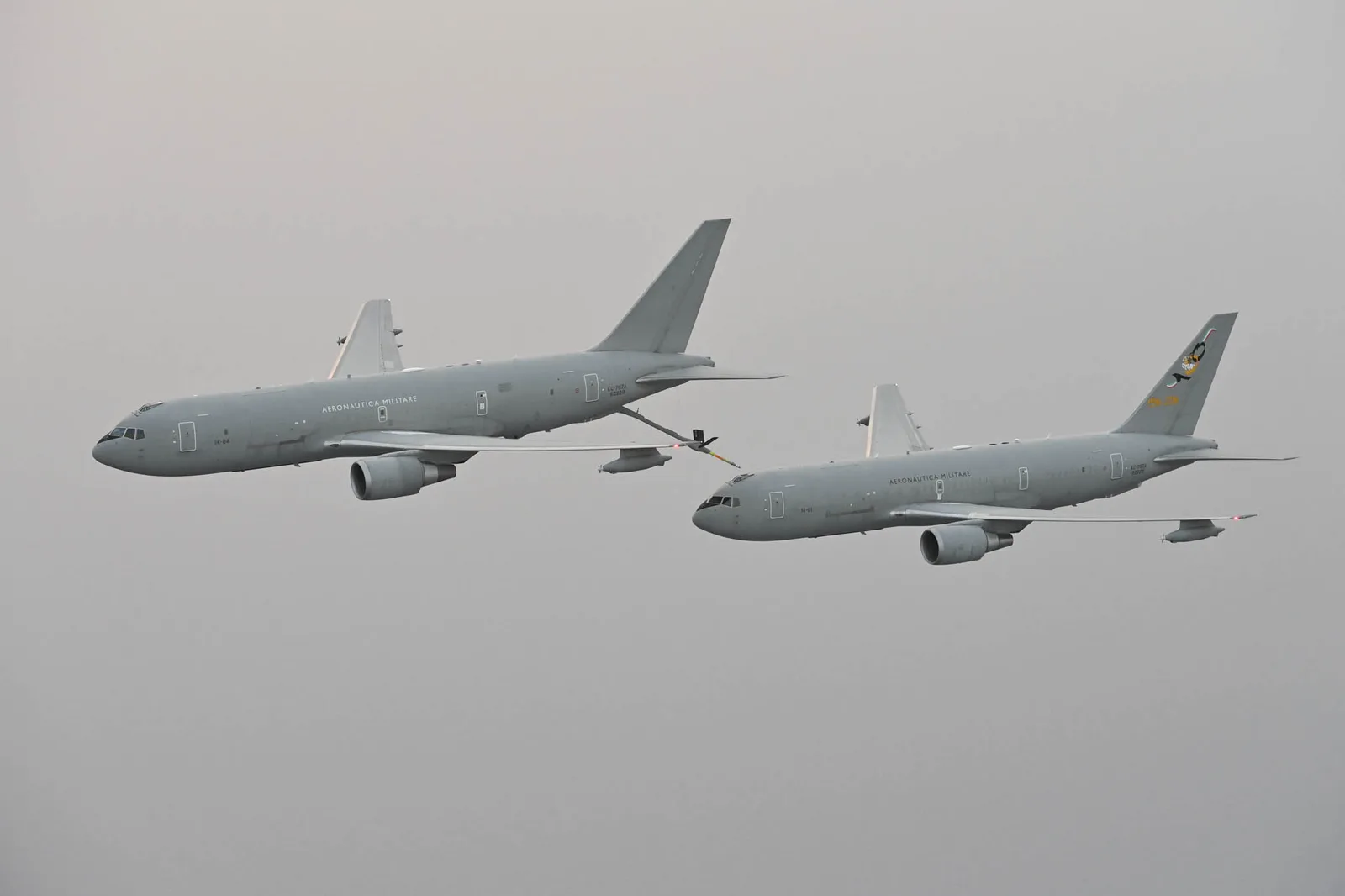
That all changed in 2024, when the AMI suspended the KC-46 plan, citing “changed and unforeseen needs”, and reopened the competition for a new tanker. On 19 May 2026 Italy announced a EUR 1.4 billion (USD 1.6 billion) order for six Airbus A330 Multi Role Tanker Transport (MRTT) aircraft, with 10 years of integrated logistic support.
On 25 August 2026 Spain authorised a seven-year framework agreement for the EUR 5.4 billion (USD 6.3 billion) joint acquisition of at least seven Airbus A330 MRTT aircraft, including four for the Polish Air Force. These are expected to enter service by 2030.
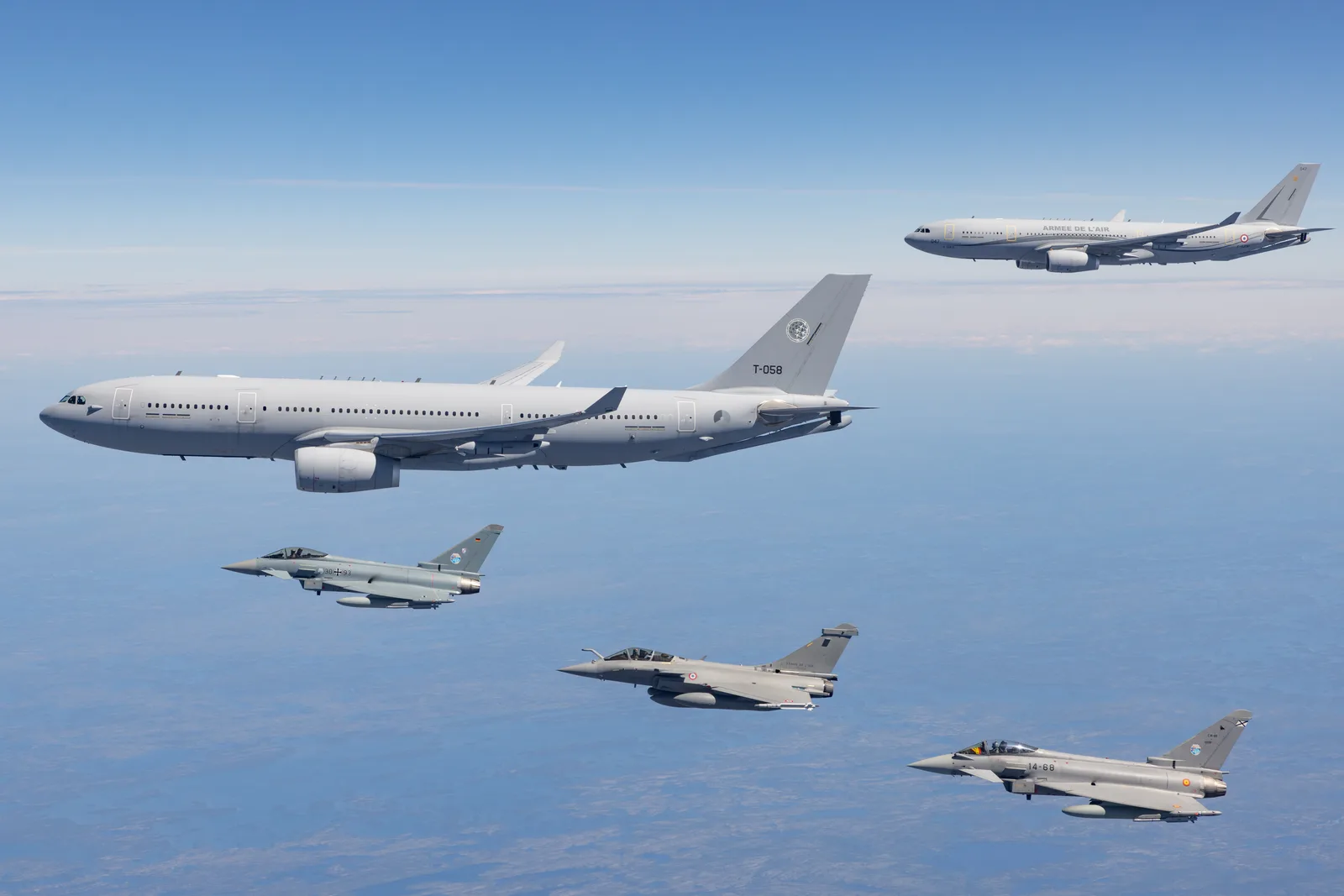
In September 2026 NATO announced that it had received its tenth Airbus A330 MRTT aircraft (T-063). This is the tenth of 12 tankers on order for the NATO Multinational MRTT Fleet (MMF) based at Eindhoven in the Netherlands, with a forward operating base in Cologne, Germany, and an additional ‘footprint’ planned in Denmark. The MMF allows member countries to share costs and receive proportional flight hours. Those members include the Netherlands, Germany, Belgium, Luxembourg, Norway, the Czech Republic, Denmark, Finland and Sweden.
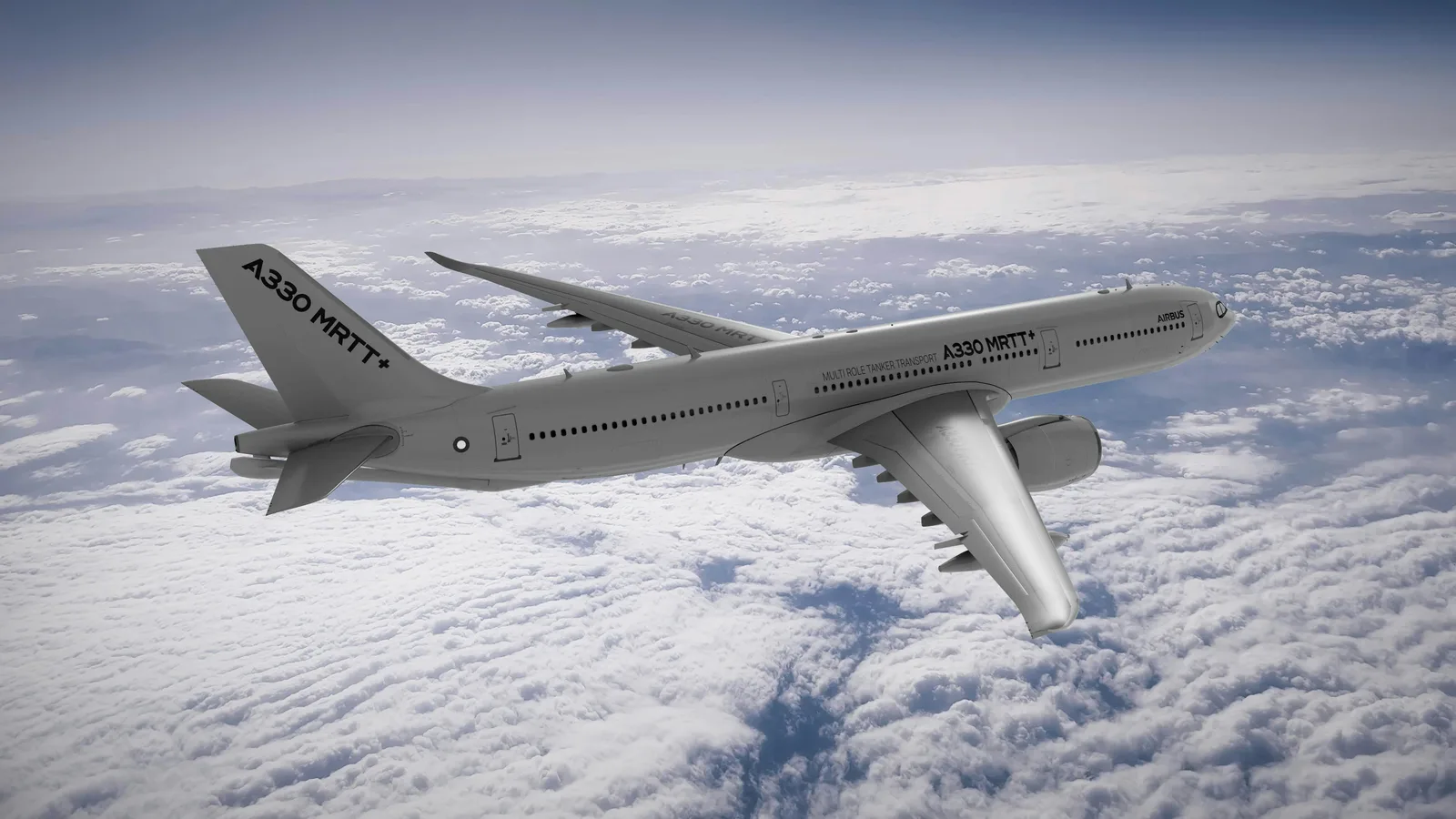
September 2026 also saw the emergence of the first A330 MRTT+ at Toulouse. The MRTT+ is an improved variant, based on the A330-800neo: the newest commercial version of the A330, powered by Rolls-Royce Trent 7000 engines and featuring an improved wingtip design and pylon/nacelle refinements. Together, these changes provide an 8% reduction in fuel consumption and a commensurate extension in range/endurance. The aircraft (MSN 2140) was still in primer, with a painted tail with MRTT+ markings and is destined for the Royal Thai Air Force (RTAF), which ordered a single A330 MRTT+ for delivery in 2029.
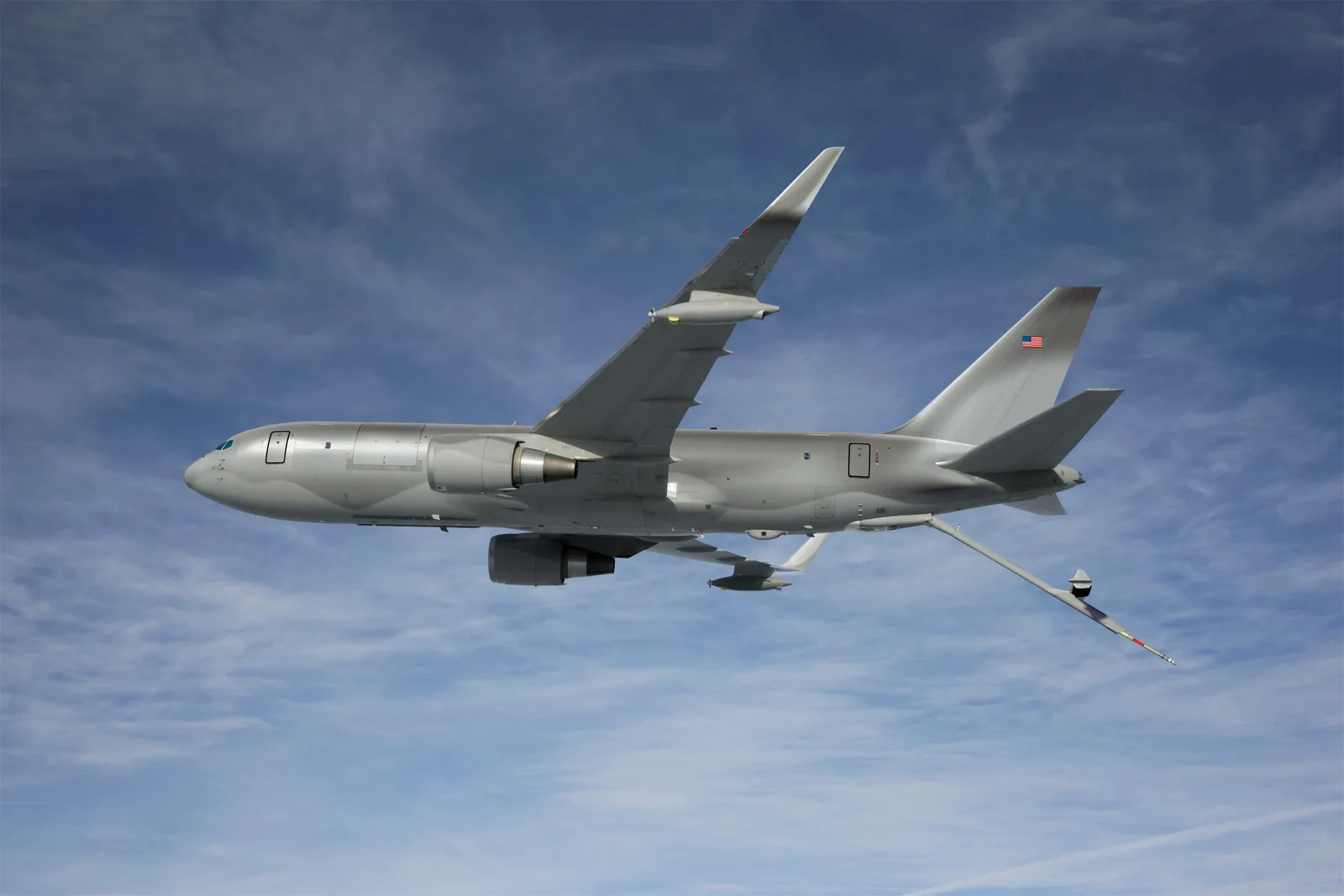
Thanks to US Air Force (USAF) orders, the Boeing KC-46A Pegasus is far and away the world’s best-selling new-generation tanker aircraft.
With 105 aircraft delivered, 258 tankers now on order and a programme of record for 263, the USAF KC-46A programme is of a different scale to that of the rival A330 MRTT, but take the USAF totals away and the KC-46A’s success has been much more modest, with just three export customers signed up for 16 aircraft in total. Six were ordered by both Japan and Israel, while four more have been approved for Qatar.
However, total numbers give a somewhat misleading impression.
The KC-46A is yet to win an open competition against its Airbus rival and even the USAF at one time favoured the European tanker over a Boeing 767-based platform. The USAF announced the selection of the KC-30 on 29 February 2008, but Boeing protested the decision and the USAF was forced to rebid the contract. Northrop Grumman withdrew from the competition on 8 March 2010, claiming that the new criteria were skewed in Boeing’s favour. With no US partner, what was then EADS was unable to defeat Boeing’s bid.
Despite this setback in the US, EADS and now Airbus have delivered 66 A330 MRTT tankers of 91 ordered and the European company has 16 export customers so far. That represents more than 90% of the addressable market outside the US, which has demonstrated that it is effectively closed to foreign competitors – even when backed by a US prime.
However, numbers of customers and market share give a somewhat incomplete picture.
No-one kicks ass without tanker gas
The A330 MRTT is a larger aircraft than the KC-46A, 27 ft (8.2 m) longer with a 40 ft (12.2 m) greater wingspan, and has an empty weight 95,000 lb (43,000 kg) higher. The MRTT carries 33,000 lb (14,969 kg) more fuel: 245,000 lb (111 tonnes) compared to 212,299 lb (96 tonnes) for the KC-46A, although figures of 113 and 93 tonnes have also been cited by credible sources.
The difference becomes more significant at longer ranges from base. At 1,000 nautical miles (1,852 km) the A330 MRTT can offload 39% more fuel than the KC-46A, while at 2,000 nautical miles (3,704 km) it transfers 55% more, and at 3,000 nautical miles (5,556 km) it can provide 127% more fuel than the KC-46A.
When Lockheed Martin was offering the LMXT derivative of the MRTT to the USAF, it calculated that a fleet of 140-160 LMXT tankers would provide 80% more coverage in the Pacific than the same number of KC-46As, but refuelling capabilities alone also give a somewhat incomplete picture.
KC-46A supporters often cite the aircraft’s ability to carry more 88×108-inch (2.24×2.74 m) military 463L pallets than its rival, but this is a highly selective ‘stat’. It is true that the KC-46A can carry 18 463L cargo pallets on its main deck (matching the pallet capacity of a C-17A Globemaster airlifter) while the A330 MRTT carries only eight in its underfloor cargo bays.
However, this is because the Boeing KC-46A Pegasus cannot carry any freight under its floor; the lower lobe (underfloor area) of the KC-46A fuselage is entirely occupied by auxiliary fuel tanks, unlike a standard commercial airliner or pure cargo freighter. The KC-46A has also inherited the ‘not-quite-widebody’ fuselage of the Boeing 767, while even dedicated freighter variants of the 767 cannot support the LD3 lower-deck cargo containers that the A330MRTT can swallow, instead using smaller LD2/LD8 units.
The A330 MRTT is a true wide-body aircraft and carries all of its 111 tonnes of fuel inside its existing wing and fuselage tanks, meaning that no auxiliary fuel tanks are required in the lower deck, which retains its three cargo holds. The aircraft can thus carry up to four 463L pallets (or 12 standard LD3 containers) in its forward cargo hold and up to four 463L pallets (or 14 standard LD3 containers) in the rear cargo hold. There is also a 19.7 m³ (696 ft³) bulk compartment that can be used for loose baggage and non-palletised freight. If required, Airbus could configure an MRTT with a cargo door and floor for the main cabin, which is significantly more voluminous than that of the KC-46A.
In total, the A330 MRTT can carry a maximum payload of roughly 43 to 45 tonnes, whereas the KC-46A Pegasus carries a maximum payload of 29-29.5 tonnes.
It is often assumed that the smaller overall dimensions and lighter weight of the KC-46A would make it compatible with more airfields, using narrower taxiways with smaller wingtip clearances, lower-strength surfaces (including runways) and taking up less space thanks to its smaller footprint. This is all true in theory, although in practice it rarely makes a difference, and there are few airfields that can operate a KC-46A that cannot accept an A330 MRTT. The reverse is not always the case, however.
Although the KC-46A needs a slightly shorter take-off run than the A330 MRTT, it requires a longer runway for safe operation. This is because, counter-intuitively, the A330 MRTT requires a shorter ‘balanced field length’ than the KC-46A because it can stop more quickly.
The balanced field length is the shortest runway length required for an aircraft to either abort a take-off and stop safely or to continue the take-off and climb away safely even with an engine failure. If a runway is shorter than the required balanced field length, there will be a window within which the aircraft cannot safely stop or complete a safe take-off if an engine fails.
If the balanced field length is available, no matter when an engine might fail during the take-off roll, it will either be possible to stop safely on the remaining runway or continue the take-off and climb away safely.
The A330 MRTT has a balanced field length requirement of 7,280 to 8,040 ft (2,219 to 2,451 m) under standard conditions, whereas the smaller KC-46A needs 9,200 to 9,800 ft (2,804 to 2,987 m).
Lockheed Martin calculated that there were only 106 airfields in the Pacific region that would allow the MRTT to take off with its maximum fuel load, compared to 150 for the KC-46A. If, however, the MRTT were carrying the same fuel as a fully loaded KC-46, it would be able to operate from 196 regional airports!
The worst of the KC-46A’s (once formidable) production woes and technical problems appear to be behind it, but loose items left in airframes during production, fuel leaks, structural cracks in new aircraft, cargo locks that ‘unlatched’ in flight and a ‘stiff boom’ that made it hard for slower, lower-powered receivers are still fresh in people’s memory, and Boeing has booked USD 7-8 billion of losses on the programme.
Meanwhile, some lesser issues remain unsolved, with a number of outstanding safety-critical ‘Category I’ defects. Glare-induced distortion under certain conditions in the remote vision system (RVS) required a system redesign. The redesigned RVS 2.0 made its first flight in November 2025, but it is still to be incorporated across the fleet and service introduction is expected in 2027. Other Category I defects involve the boom actuator, drain lines and ducts, and availability remains poor: in the low 60% figures when the target was 90%.
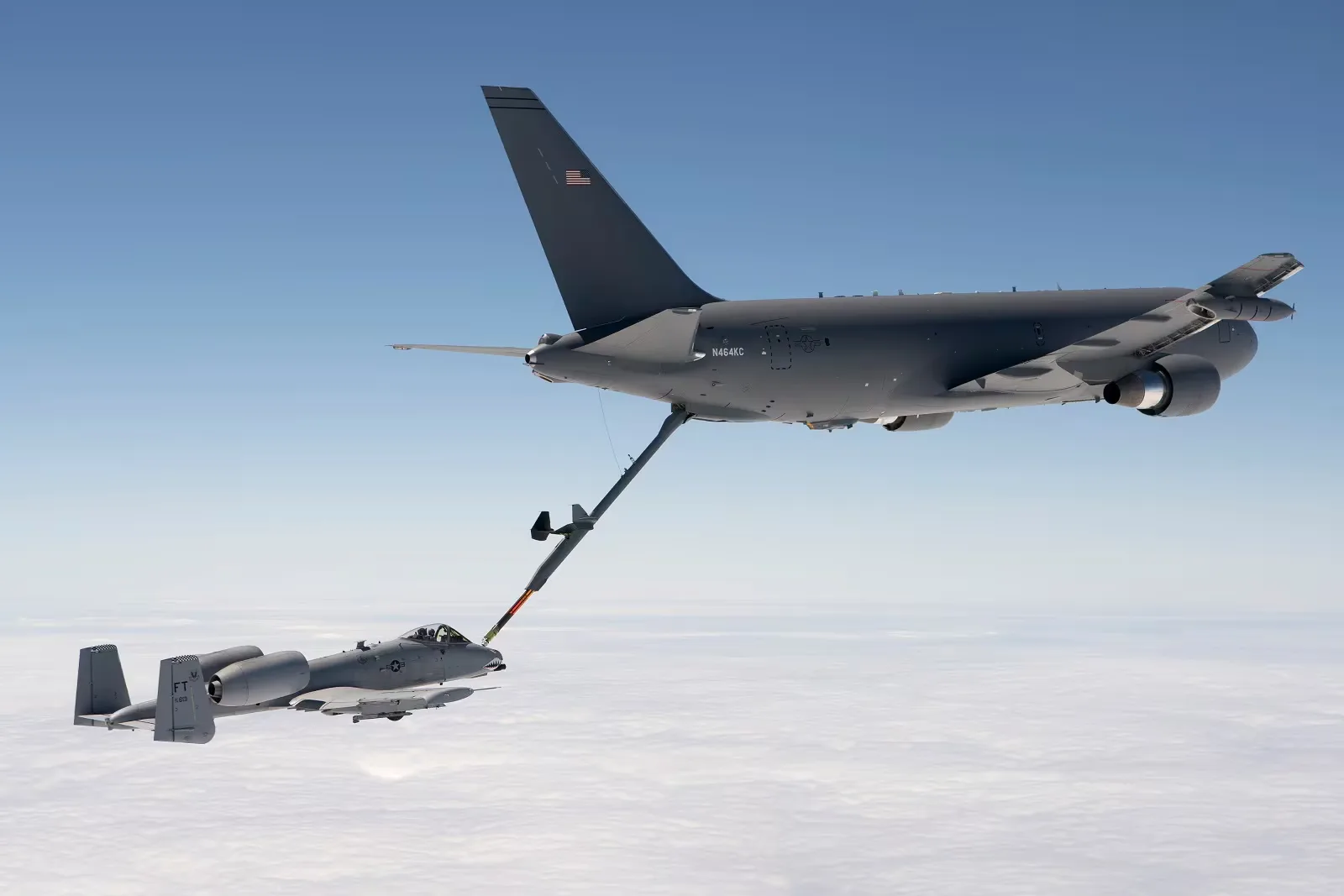
The KC-46A is proving to be a marked improvement over the 1950s-vintage KC-135 Stratotanker, carrying 10% more fuel and providing improved automation and stability. Infrared countermeasures and limited electronic warfare capabilities give enhanced survivability, while the KC-46A’s aeromedical and cargo capabilities are significantly better than those of the KC-135.
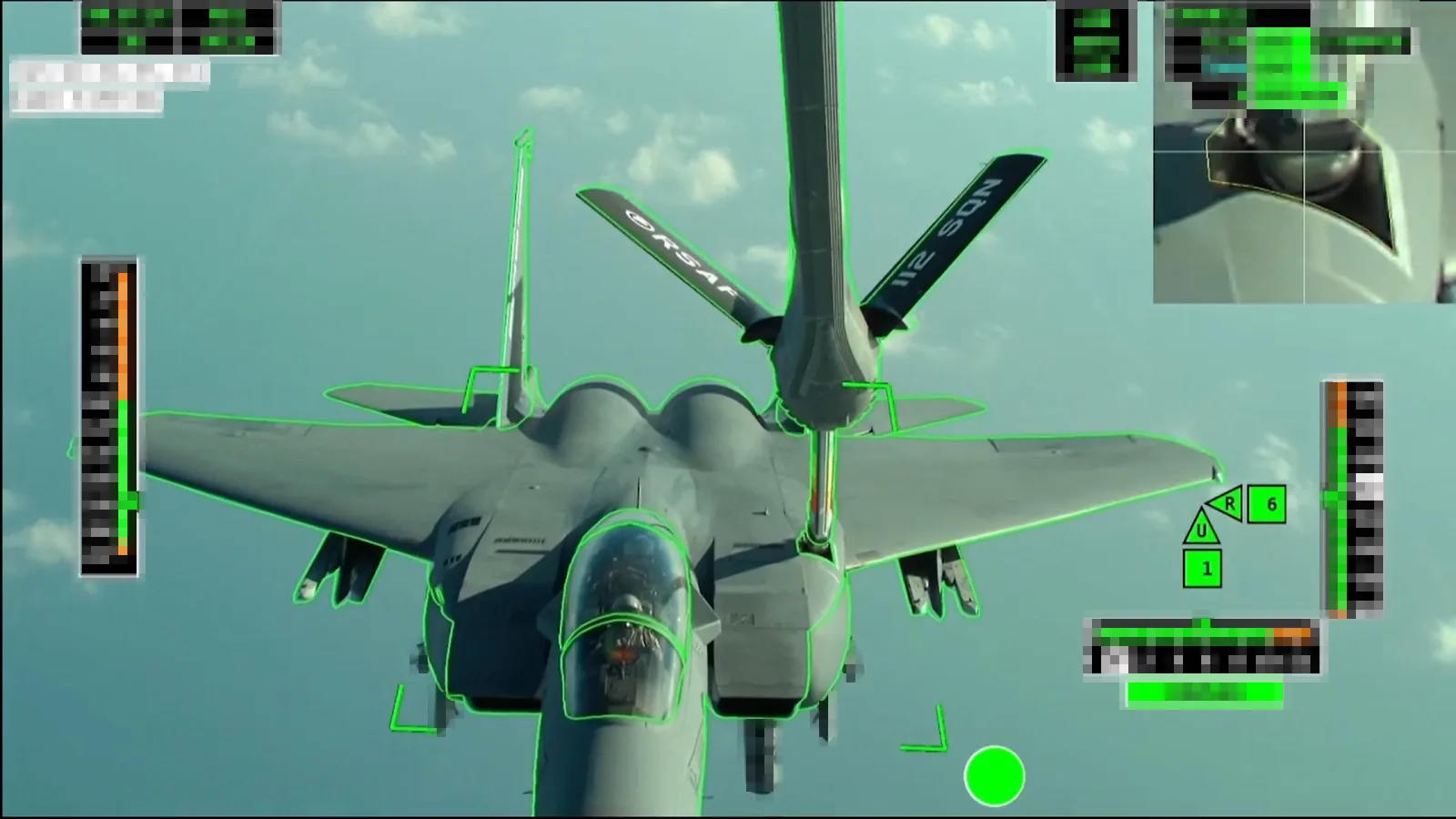
By contrast, the combat-proven A330 MRTT sets the benchmark for modern multi-role tanker aircraft, with fly-by-wire controls for the refuelling boom and a high-resolution 2D/3D digital system that improves visibility for refuelling operators. The A330 MRTT is the world’s first tanker certified for automatic air-to-air refuelling (A3R) operations, using advanced computer vision and control systems to allow the fully automated boom to track and securely engage the receiver aircraft, although the human air refuelling operator (ARO) can instantly retake manual control at any time simply by touching the control stick. Initial daylight A3R certification was achieved in July 2022 following trials with the Republic of Singapore Air Force (RSAF) using F-15SG and F-16 fighters as receivers. The offset refuelling receptacle of the F-15SG caused no difficulties and a full day and night clearance followed in February 2026.
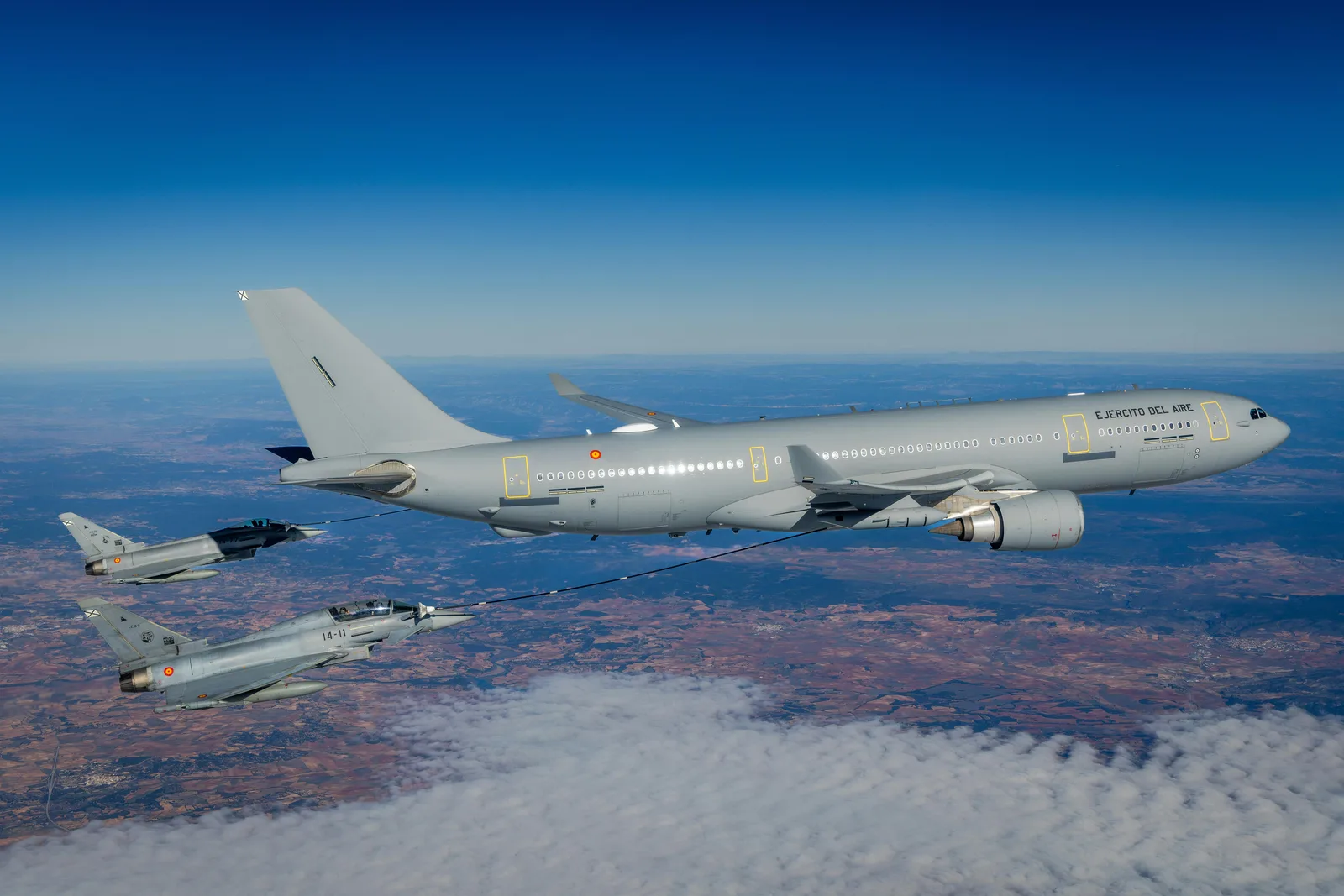
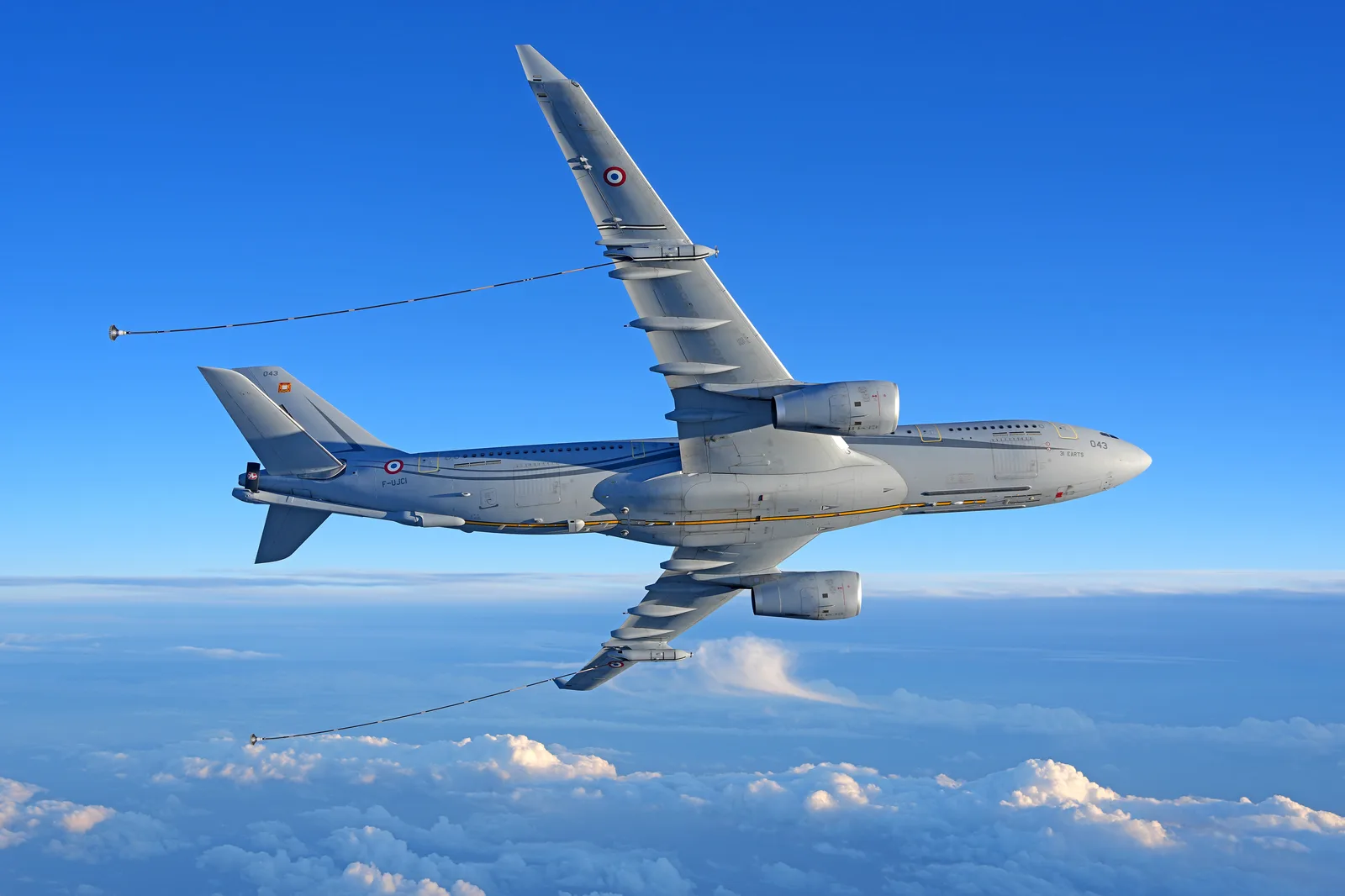
Airbus is working to expand the connectivity of the A330 MRTT, aiming to transform the tanker into a battlefield communications node, while a Royal Air Force Voyager MRTT variant became the first military aircraft to fly on pure sustainable aviation fuel in November 2022.
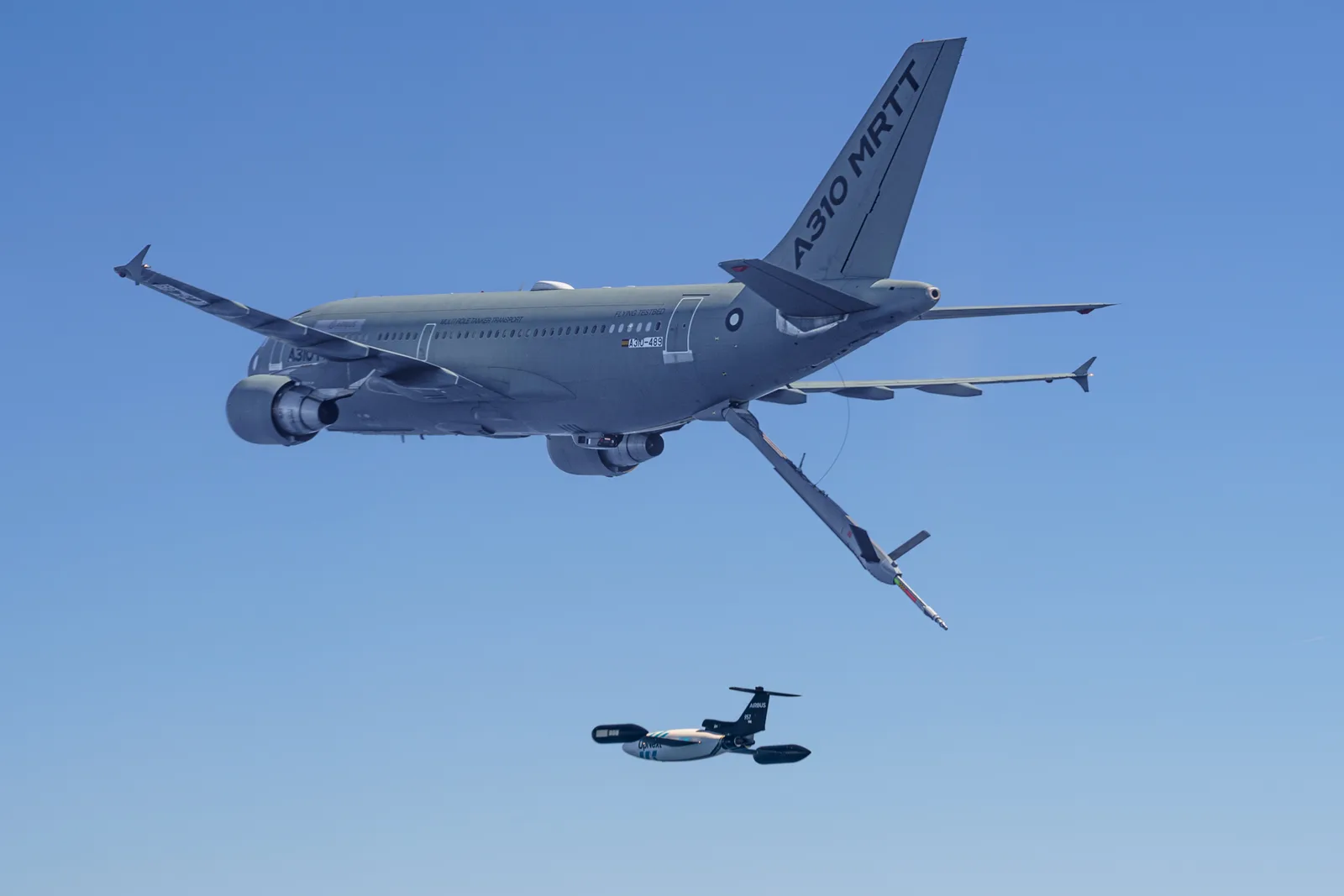
Airbus has explored the development of the increased levels of automation that will be necessary to allow future MRTTs to control and refuel unmanned receivers. The company’s 18-month Auto’Mate campaign used the A310 MRTT technology demonstrator to explore and develop autonomous assets air-to-air refuelling (A4R) and autonomous formation flight (AF2) operations. This saw the automation of the entire refuelling process, autonomously guiding an unmanned receiver aircraft into position and then transferring fuel before ensuring a safe separation. The A310 MRTT also guided and controlled eight DT-25 target drones during the experiment.
These capabilities are expected to eventually be fielded by the A330 MRTT.
Spain, Germany, and Belgium launched the second, EUR 8 million phase of a European Defence Agency (EDA) project on 8 October 2026, following a EUR 4 million first phase launched by Spain with support from Germany in 2022. The project had the aim of automating hose-and-drogue mid-air refuelling for military drones, co-ordinating multiple unmanned receivers with a single tanker, with input from industrial and research partners Airbus Defence and Space, GMV, DLR (German Aerospace Center), AES Technology, ScioTeq and the Von Karman Institute. The project aims to bridge the technical gaps in the automation of air-to-air refuelling operations for unmanned aircraft.
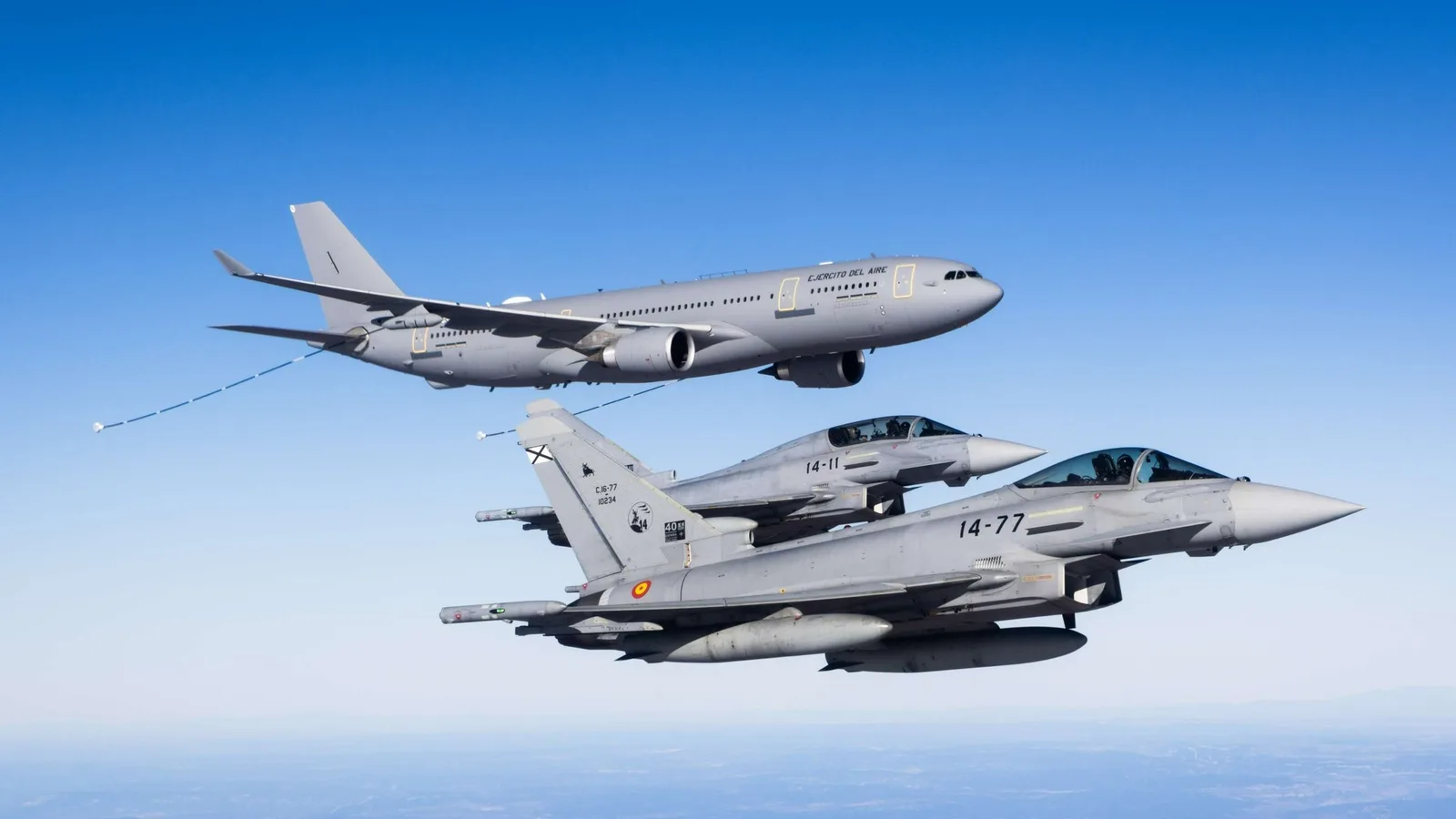
Phase One proved that automation of hose-and-drogue refuelling was technically feasible, developed camera-based tracking of the drogue and receiver aircraft and tested ways of stabilising the drogue in flight. It used an Airbus A330 MRTT tanker with a German Tornado and a Spanish F/A-18 serving as receivers.
Phase Two will explore relative navigation technologies that allow one aircraft to determine its position and motion relative to another, rather than to a fixed GPS reference. It will also cover sensors, connectivity between assets and processing hardware needed to process sensor data and run tracking algorithms. The project is intended to enable future A4R operations using European technology.