The foreign policy of the Trump Administration is making its impression on the US armed forces, from leadership to procurement.

Saudi Arabia’s F-35 option: what next for Saudi combat aviation?
The announcement by the US…

The foreign policy of the Trump Administration is making its impression on the US armed forces, from leadership to procurement.

As the 45th and now the 47th president of the United States, Donald J Trump has not always conferred on the US military and the heritage of its service personnel the respect that is deserved.
During his first presidential term, for example, Trump reportedly cancelled a visit to a US cemetery outside Paris in 2018 because he said it was “filled with losers” and allegedly referred to 1,800 US soldiers who died at Belleau Wood as “suckers”.
Trump’s second term as president, meanwhile, kicked off with a ‘war on woke’ within the US military, spearheaded by Defense Secretary Pete Hegseth. This led to numerous senior military leaders being fired, including the commandant of the US Coast Guard, Admiral Linda Fagan, on 21 January 2025 (Trump’s first day in office), while 21 February 2025 also saw the dismissal of Chairman of the Joint Chiefs of Staff General C Q Brown, Chief of Naval Operations (CNO) Admiral Lisa Franchetti and USAF Vice Chief of Staff General James Slife. Gen Brown was the first African American to lead a branch of the US military, while Adm Fagan was the first woman in US history to lead a military service and Adm Francetti was the first woman to be the US CNO.
The 2025 ‘war on woke’ under Hegseth also saw the reverting of two major US military bases back to their original names after they had previously been renamed under the Biden Administration to expunge the names of Confederate American Civil War generals after whom they had originally been dedicated.
Breaking the guardrails of the US military being used domestically, Trump has ordered the deployment of the US National Guard in multiple US cities during his second administration – including Los Angeles, Memphis, Portland, New Orleans and Washington, DC, on the premise of cracking down on crime, protests, civil unrest, illegal immigration and homelessness.
During both his administrations, Trump has clearly recognised the power of the US military, alongside economic pressure, as an instrument of foreign policy exertion and, further to that, has demonstrated his preparedness to use it.
During Trump’s first term he significantly accelerated operations against the Islamic State, with its collapse declared in March 2019, and ordered the assassination of Qasem Soleimani, the leader of the Iranian Islamic Revolution Guard Corps’ Quds Force, through a drone strike on 3 January 2020 in Baghdad. Trump also directed the creation of the US Space Force, which was officially established on 20 December 2019.
Trump’s second term, meanwhile, has seen Operation ‘Midnight Hammer’, in which US strike aircraft and cruise missiles struck multiple Iranian nuclear and military facilities on 22 June 2025; Operation ‘Southern Spear, which since 1 September 2025 has led to the destruction of multiple dozens of suspected drug-trafficking vessels by the US Navy in the Caribbean Sea; Operation ‘Absolute Resolve’, which on 3 January 2026 led to the successful capture and rendition back to the United States of Venezuelan President Nicolás Maduro and his wife to face charges of narco-terrorism and drug trafficking; and Operation ‘Epic Fury’, in which US air and naval forces combined with the Israel Defense Forces on 28 February 2026 to initiate a bombing campaign against the Iranian Islamic regime.
At this point it is unclear how Operation ‘Epic Fury’ will develop. Indeed, the Trump Administration has sent conflicting signals over its objectives, ranging from the destruction of Iran’s missile capabilities and nuclear programme – which Trump had already declared oblitered after Operation ‘Midnight Hammer’ – to actual regime change in Tehran.
However, Trump has frequently campaigned on his ‘America First’ focus, vowing not to entangle US forces on ‘senseless’ or ‘endless’ foreign conflicts and reducing the US burden on foreign military initiatives. It was Trump’s first administration, after all, that, signed a peace deal with the Afghan Taliban in 2020, which paved the way for the withdrawal of US troops in Afghanistan.
Trump has also reduced US support to Ukraine’s resistance to Russia’s 2022 invasion to a much more transactional approach, announcing on 14 July 2025 that the transfer of US weapons to Ukraine would be paid for by NATO nations.
Thus, any involvement of US military ‘boots on the ground’ in Iran or any other foreign military operations will likely incur strong opposition from Trump’s Make America Great Again (MAGA) political base. Operation ‘Absolute Resolve’, of course, did see US military boots on the ground, but only for a matter of hours. Moreover, the apprehension of Maduro was framed as a law-enforcement-led operation by the US authorities that did not require Congressional approval in the way that an overt military operation would have done.
So far – and it is, of course, early days – Operation ‘Absolute Resolve’ appears to be paying off. While Venezuelan Acting President Delcy Rodriguez – a lifelong socialist Chavista – has maintained an anti-imperialist rhetoric following Maduro’s rendition and stated that Maduro remains the legitimate Venezuelan president, even Trump acknowledged in a statement to reporters on 16 February, “I think she probably has to say that.”
Meanwhile, Venezuelan co-operation with the US government under Rodriguez appears to be progressing. On 11 February Rodriguez hosted US Secretary of Energy Chris Wright in Caracas, touring Venezuelan oil facilities the following day. An article by CNN reporter Stefano Pozzebon pointed out that Rodriguez and Wright travelled in the same vehicle with minimal staff and additionally noted multiple oil tanker movements between the Venezuelan port of Barcelona and US Gulf Coast ports since Maduro’s rendition on 3 January.
The US exerting control of Venezuelan oil exports has also had the secondary effect of putting significant pressure on Cuba: a communist thorn in the US back yard since 1959 that was substantially dependent on heavily subsidised Venezuelan oil, which has now been cut off.
Operation ‘Absolute Resolve’ could thus yet turn out to be a successful manifestation of the Trump Administration’s ‘Monroe Doctrine 2.0’ to exert US hegemony in the Western hemisphere – or Donroe Doctrine, as Trump has called it. This contrasts sharply with Trump’s crass political moves to persuade Denmark to cede sovereignty of Greenland to the US, which, as well as exacerbating the Trump Administration’s fractious relations with Europe, even threatened the very integrity of the NATO alliance.
US military operations in relation to Iran, however, are another matter entirely. Some analysts had observed prior to Operation ‘Epic Fury’ being initiated that, with the Trump Administration having ordered such an extensive force deployment in the Gulf region – which included two carrier strike groups plus significant numbers of US strike and combat support aircraft deployed to US bases in the Middle East – a failure to make use of them could have been perceived as a failure. Now, instead, the real question is what can be presented by the Trump administration as a success, given that the whole Middle East has been sucked into a conflict – for which Trump never sought authority from Congress to wage – that could easily get geopolitically messy.
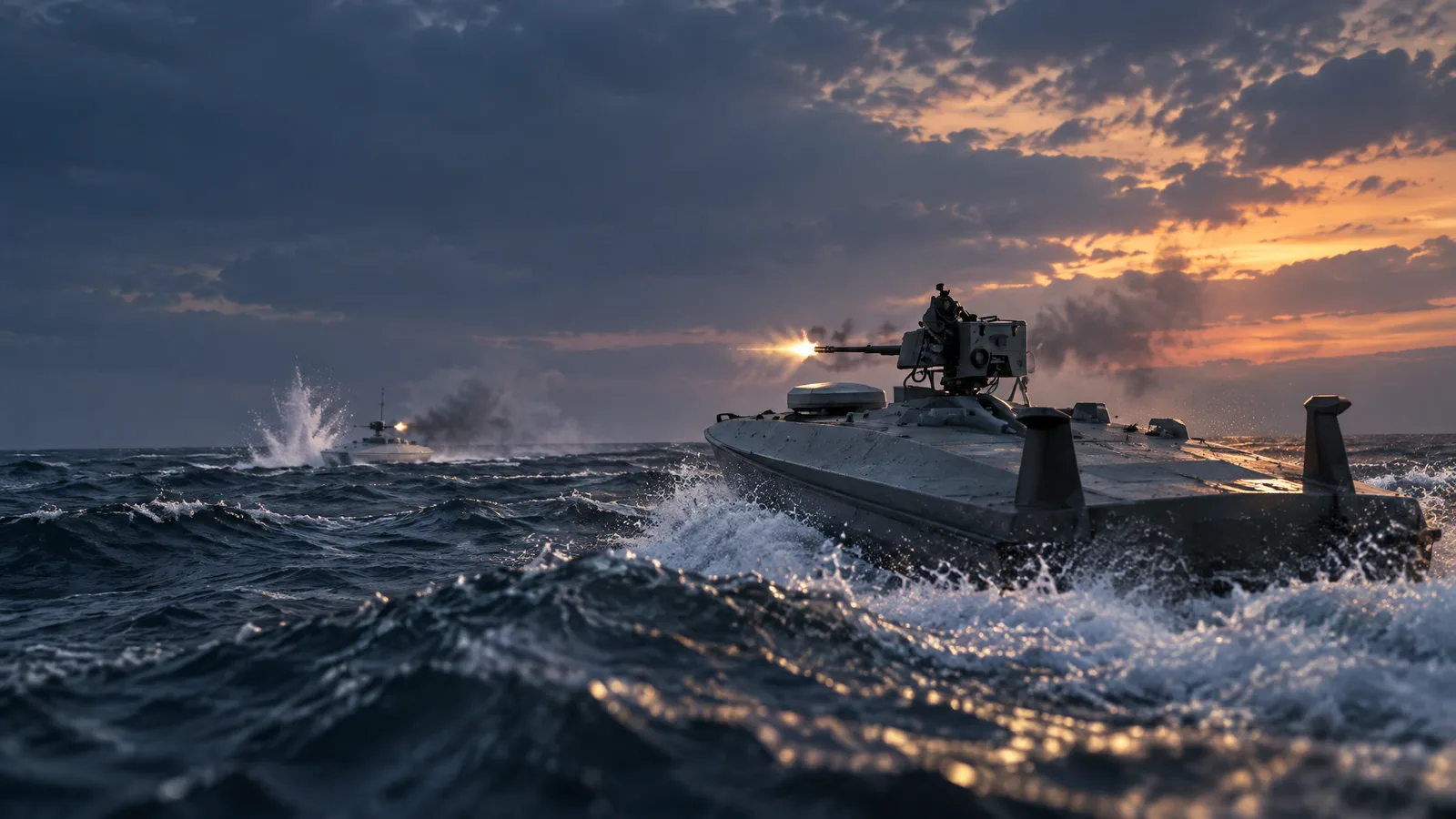
Given Trump’s preparedness to exploit the projection of US military power while avoiding potentially costly military entanglements on the ground, it is unsurprising that his administration has put a particular focus on US naval programmes in what has been termed the ‘Golden Fleet’ strategy.
On 25 November 2025 US Secretary of the Navy John C Phelan announced the termination of the US Navy’s troubled Constellation-class frigate programme, under which the first two ships have been under construction by Fincantieri Marinette Marine (FMM) in Wisconsin.
The contract for the lead Constellation-class ship (FFG-62) was awarded to FMM in April 2020 for a modified design based on the Italian version of the FREMM frigate. At the time the contract for the lead frigate and nine options, plus a support and training package, had a cumulative value of USD 5.5 billion (EUR 4.75 billion), while by May 2024 a total of six ships had been ordered.
However, by April 2025 the programme was behind schedule and over budget after multiple changes to the original Italian FREMM design were deemed necessary. This put the US Navy in a position it specifically said it would avoid: spending too much and taking too long with a bespoke design, as had happened with the previous Littoral Combat Ship programme. Moreover, the fact that the Constellation class was not being build to an originally US design was not really aligned with the Trump Administration’s ‘America First’ policy.
With the announced termination of the Constellation-class programme the four ships yet to be started have been scrapped, while work on the first two ships will continue while remaining “under review”, Phelan noted.
In the wake of the Constellation-class cancellation Phelan and US Chief of Naval Operations Admiral Darryl Caudle announced on 19 December 2025 that the US Navy’s new small surface combatant, FF(X), would be built by the Ingalls Shipbuilding division of Huntington Ingalls Industries based on the latter’s Legend-class National Security Cutter design. Phelan described this as “a proven, American-built ship that has been protecting US interests at home and abroad”, asserting that “We will deliver on a wartime footing and we will unleash the American industrial base to do it.”
The FF(X) is to be designed as a highly adaptable vessel. While its primary mission will be surface warfare, its ability to carry modular payloads and command unmanned systems is intended to execute a broad spectrum of naval operations.
“Small surface combatants have always been essential to the fleet, handling a wide range of missions where a large warship isn’t required,” the US Navy stated. “The FF(X) will continue this vital role and will take on more routine operations, enhancing the fleet’s operational flexibility, adaptability and mission readiness.”
“The frigate will follow the same proven approach we’ve used with the Arleigh Burke destroyers: building it smart from the start, then upgrading it in steps over time as the threat and technology evolve,” Adm Caudle explained.
Just two days after the FF(X) announcement, on 21 December 2025, the US Navy declared that a new ‘Trump-class’ large surface combatant would be introduced as a signature component of the ‘Golden Fleet’. Billed as the largest surface combatant the United States will build since the Second World War, Trump declared on 22 December, during a presentation at his Mar-a-Lago residence in Florida, that the US Navy will start by purchasing two ships – the first being called USS Defiant (BBG-1) – and eventually purchase 10, with a goal of 20 to 25 in total for the class, with the start of construction planned for 2030.
“The future Trump-class battleship – the USS Defiant – will be the largest, deadliest and most versatile and best-looking warship anywhere on the world’s oceans,” Phelan said at Mar-a-Lago.
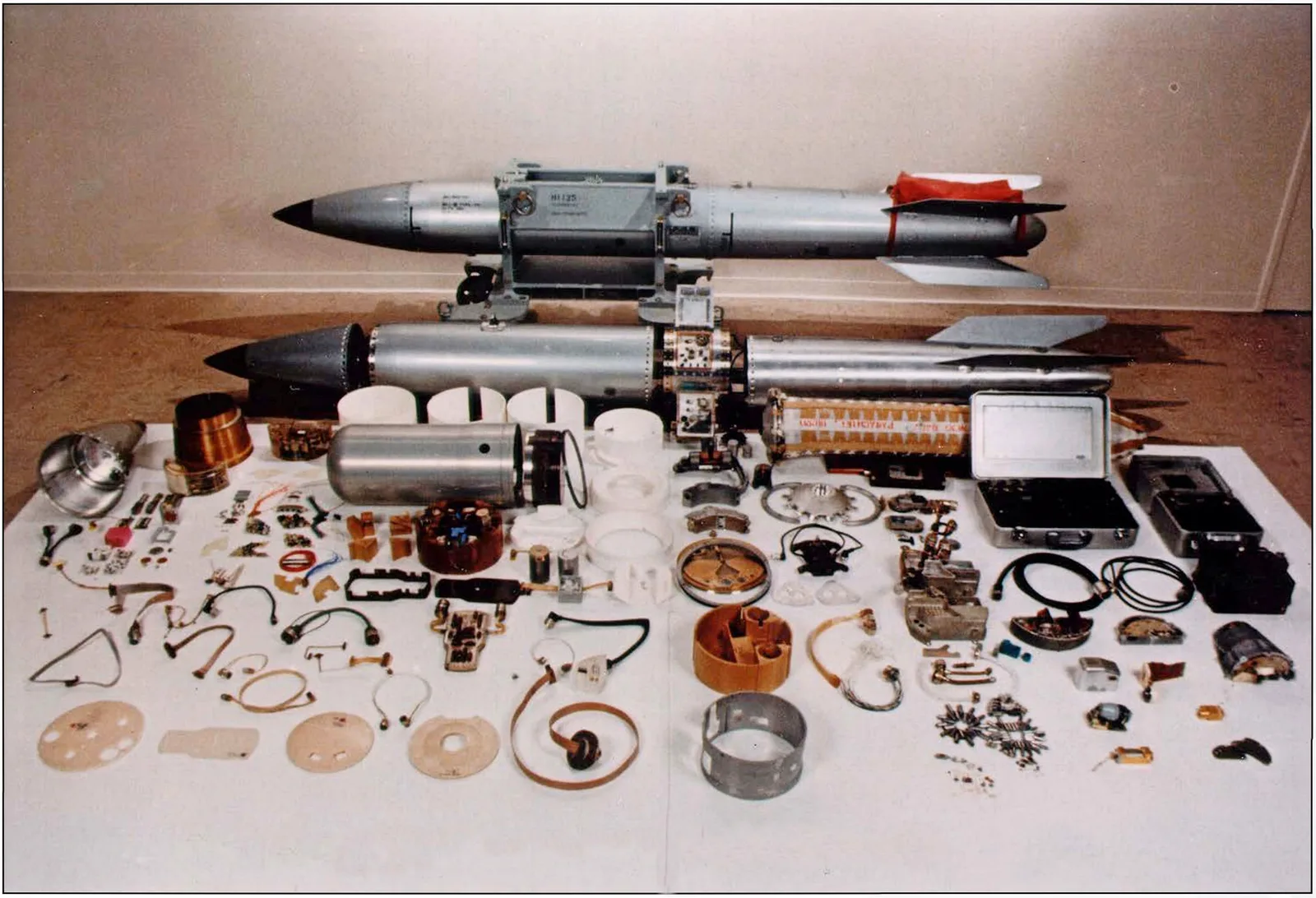
This new warship would displace more than 35,000-tons – more than double the size of the US Navy’s 15,000-ton Zumwalt-class destroyers. As well as featuring existing US combat systems and weapons, including Conventional Prompt Strike hypersonic missiles, the Trump class is also expected to accommodate directed-energy weapons, nuclear armed sea-launched cruise missiles (SLCM-Ns) and potentially a 32 MJ rail gun firing hypervelocity projectiles, according to the US Navy.
The US Naval Institute News (USNI) website has estimated the cost of building such a warship in a US shipyard yard could range from USD 10-15 billion, with US shipyards Ingalls Shipbuilding and General Dynamics Bath Iron Works telling USNI News that they are standing by to support the effort.
Somewhat nonsensically, Trump has even claimed to have had design input into the new US battleship. During a speech to military families at Fort Bragg, North Carolina, on 13 February 2026, Trump asserted, “The new battleship that we have, which I’ve seen and helped design, I put a little more spirit in the hull, a little bit more, give me a little bit more hull; I want that ship to look gorgeous.
“Forget about stealth. They say, ‘Oh, it’s stealth’. They design ugly equipment for stealth. Well, we’re designing great looking equipment, also stealth.”
That led to numerous memes on social media channels imagining what a Trump-designed warship would look like.

More crucially, however, Trump’s assertion that ‘bigger is better’ flies in the face of modern naval thinking, where many major international naval forces are already planning for the disaggregation of naval platforms in favour of fielding numerous smaller ships, including unmanned vessels. A 23 December 2025 article published by the Washington, DC-based Center for Strategic and International Studies (CSIS) think tank asserted that Trump’s battleship “will never sail. It will take years to design, cost USD 9 billion each to build, and contravene the navy’s new concept of operations, which envisions distributed firepower.
“A future administration will cancel the program before the first ship hits the water,” the CSIS predicted.
The Trump Administration’s predisposition to act militarily by air and sea to achieve its foreign policy objectives has also provided a favourable climate for the two main next-generation combat air platforms of the US Air Force (USAF): the Northrop Grumman B-21 Raider strategic bomber and the Next Generation Air Dominance (NGAD) platform.
Initiation of the B-21 programme predates the first Trump Administration, with its development contract issued to Northrop Grumman in 2015. Construction of the first B-21 was underway by 2019, in the middle of Trump’s first term, while the type’s first flight took place on 10 November 2023 and a low-rate initial production contract was awarded on 23 January 2024. The first B-21 Raider is slated to enter service around 2027, in the middle of Trump’s second term.
While the B-21 programme has progressed without any assistance or intervention from the Trump Administration, the US president took more of an active interest in spurring on the NGAD programme.
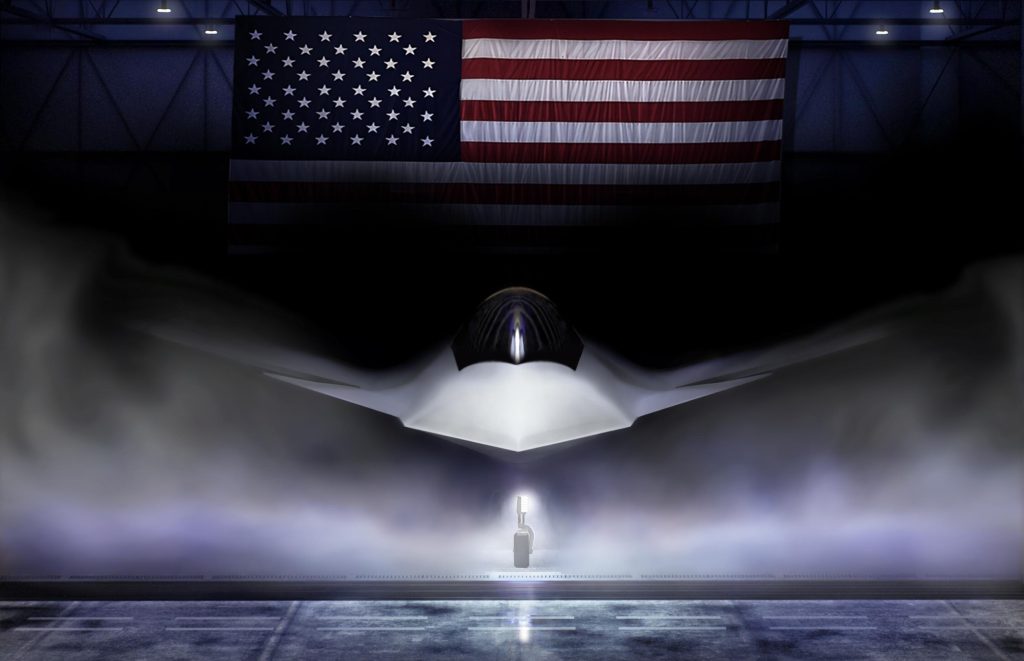
Emerging from USAF air dominance studies as far back as 2014, the NGAD concept became a fully fledged platform initiative by 2018 as an effort to succeed the F-22 air superiority fighter. However, during the Biden Administration between Trump’s two terms the NGAD effort stalled as the USAF took a pause to review its sixth-generation combat aircraft plans over cost concerns. On 21 March 2025, however, Trump and Hegseth announced during a press conversation at the White House that the NGAD programme would proceed into production, with a new sixth-generation fighter at the heart of it designated the F-47, with Trump declaring that a fleet of F-47s would be “built and in the air” during his current administration. Boeing was that day issued with an NGAD engineering, manufacturing and development contract worth more than USD 20 billion, beating out Lockheed Martin after Northrop Grumman had dropped out of the contest in 2023.
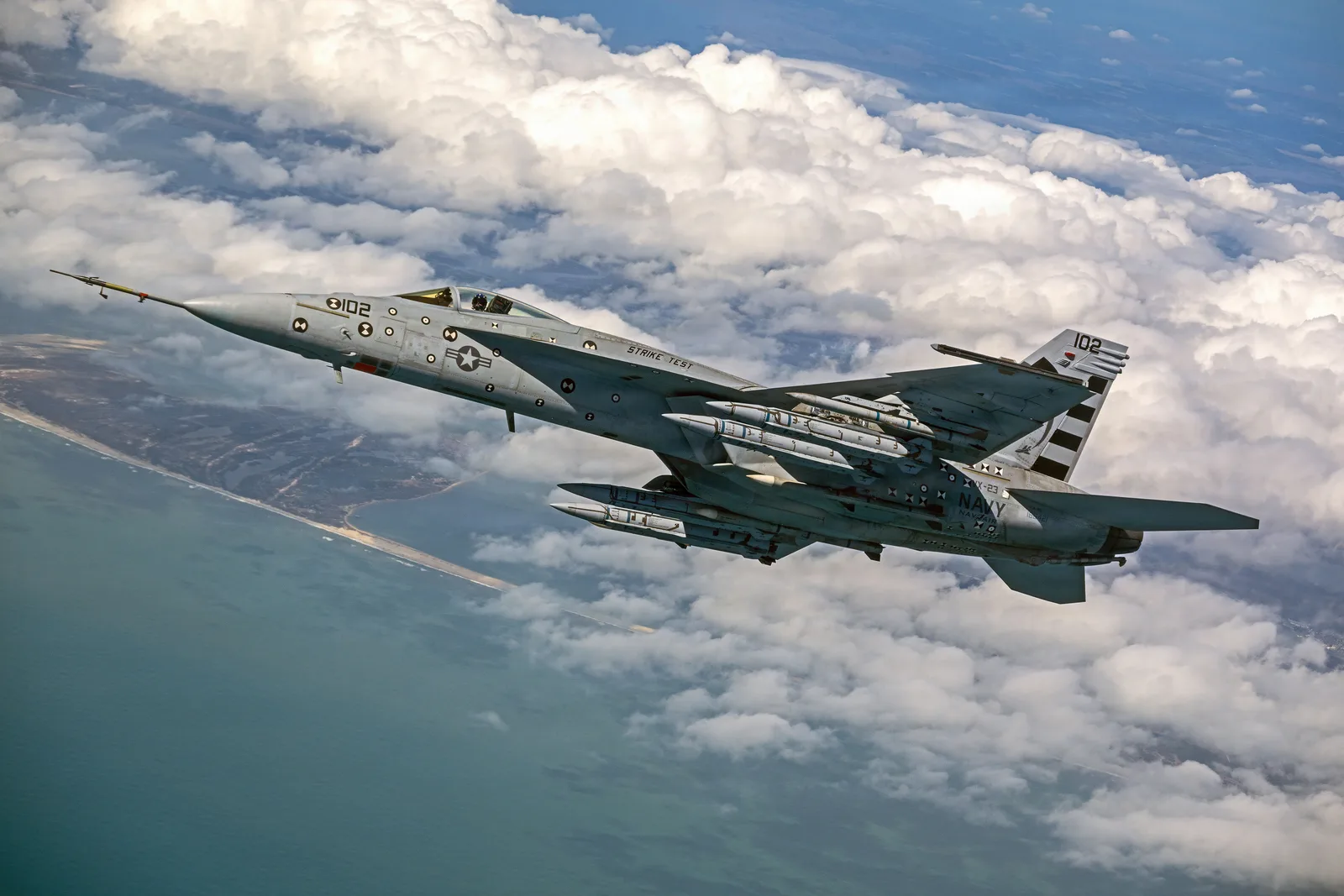
The backstory behind why the NGAD fighter platform was designated the F-47 is an interesting one, since it clearly breaks from the USAF’s designation protocols, which had got to ‘23’ with the Northrop/McDonnell Douglas YF-23 prototype before first breaking sequence with the F-35 Joint Strike Fighter (which retained its X-35 prototype number).
USAF officials, most notably Air Force Chief of Staff General David Allvin, were reportedly caught off guard by Trump selecting his term in office as the 47th US president as the reason for naming the NGAD fighter the F-47 and scrambled to come up with a more presentable rationale for the designation.
Subsequent to Trump’s announcement on 21 March 2025, the USAF issued a statement explaining that the designation “honors the legacy of the P-47, whose contributions to air superiority during World War II remain historic. Additionally, the number pays tribute to the founding year of the Air Force, while also recognizing the 47th President’s pivotal support for the development of the world’s first sixth-generation fighter.”
The invocation of the Republic P-47 Thunderbolt to justify the F-47 designation is something of a stretch, since the P-47 is mostly remembered as a Second World War ground attack aircraft and the USAF’s Fairchild Republic A-10 close air support aircraft was officially named after the P-47 as the A-10 Thunderbolt II.
Still, while USAF leaders might privately have bristled at Trump’s preponderance to put his name on everything messing up the designation protocol, the fact that he has done so with the NGAD fighter surely means that the programme is safe at least until Trump leaves office in January 2029.
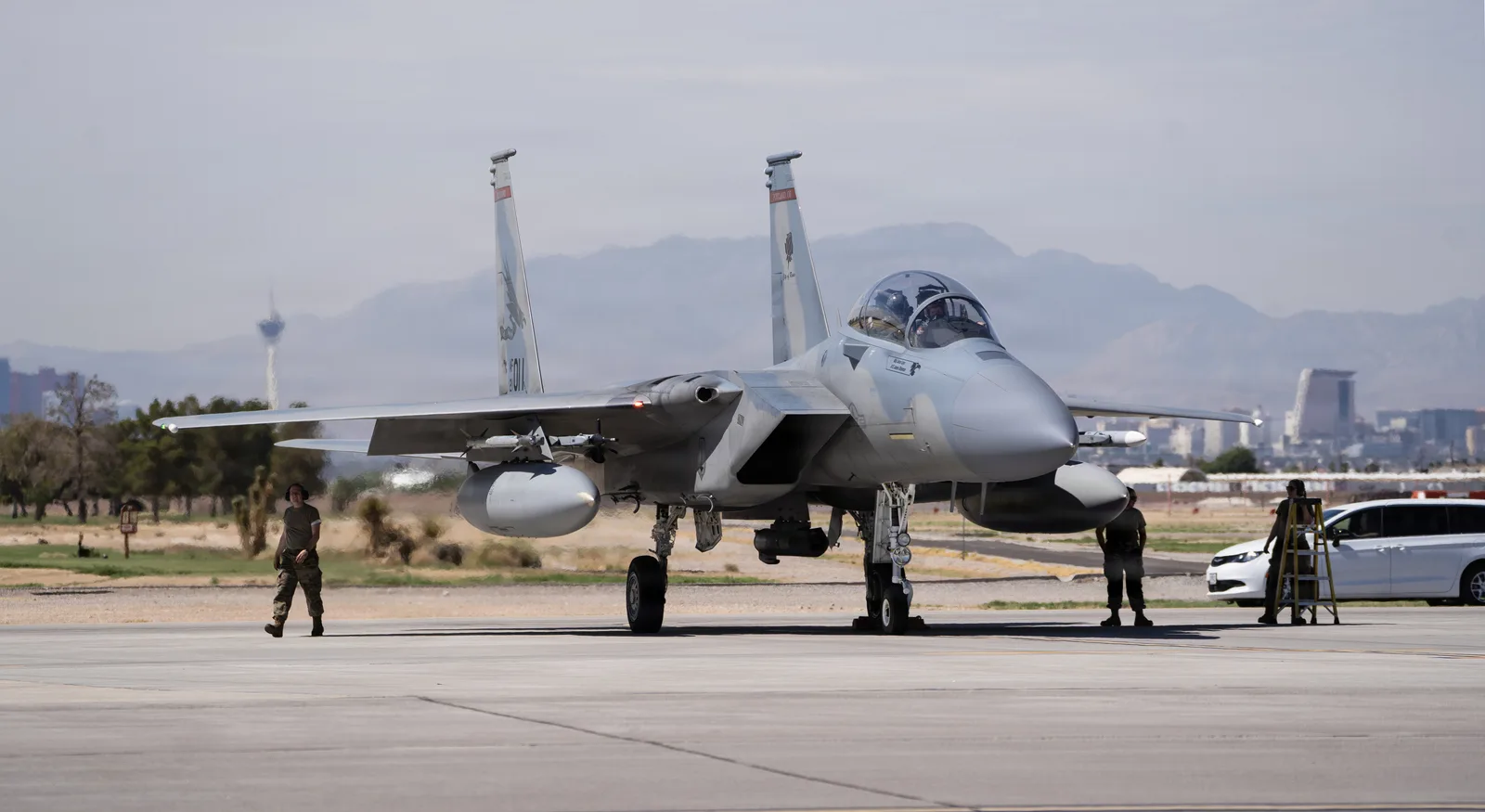
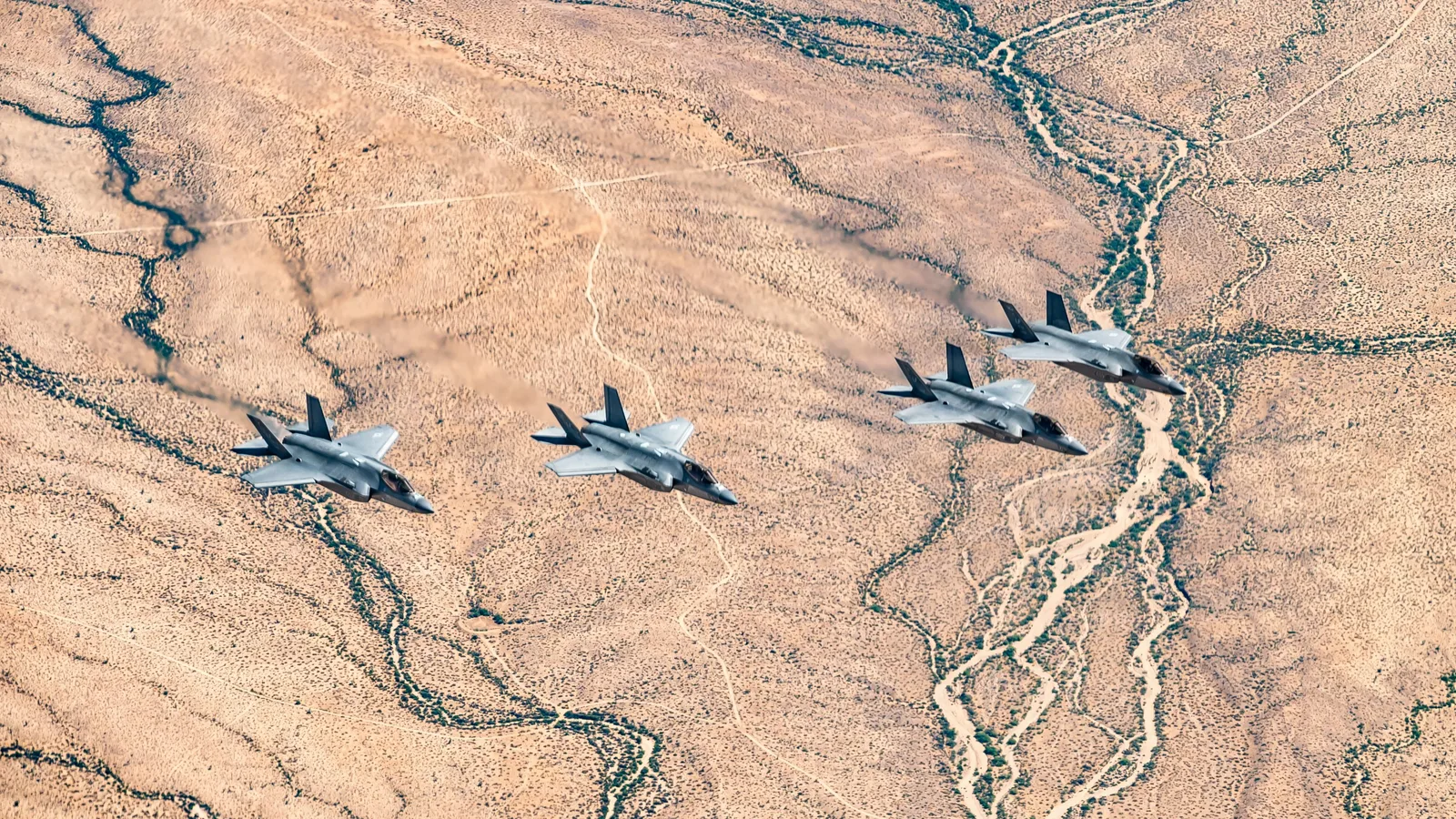
Meanwhile, the US military’s largest current procurement effort, that for the F-35 Lightning II Joint Strike Fighter programme, is clearly too well established and too international in its construct (there are 19 international partners/customers in the F-35 programme) to be in danger of cancellation. That said, the USAF cut its planned F-35A buy by half in the FY26 Defense Appropriations Bill, which was signed into law in early February 2026.
One major USAF effort that was targeted for cancellation by the US DoD during the latest Trump administration was the Boeing E-7 Wedgetail airborne early warning and control (AEW&C) aircraft programme. In December 2025, however, US lawmakers moved to block US DoD plans to cancel the E-7 programme and the FY26 Defense Appropriations Bill included funding for the USAF to continue its E-7A prototyping effort despite the service’s request to cancel the programme.
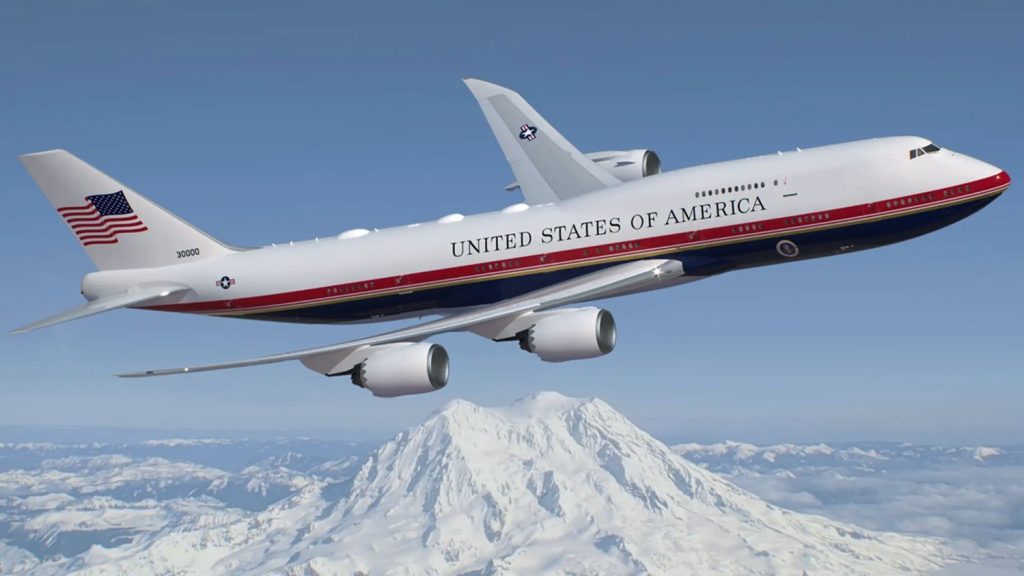
Notwithstanding the award to Boeing of the NGAD programme, the company has previously drawn the ire of President Trump. While Boeing suffered significant issues with the development and delivery of its KC-46 Pegasus air-refuelling aircraft since the type was selected in February 2011, it was issues with the two VC-25B future Air Force One presidential transport aircraft that particularly drew Trump’s ire. In 2018 during his first term Trump had forced Boeing to accept a fixed-price contract that the company subsequently conceded will now cost it hundreds of millions of dollars, Post-contract, supply chain probelms caused by the Covid-19 pandemic, workforce disputes and other issues have conspired to push the delivery of a new Air Force One out to mid-2028 instead of the original 2024 delivery date. This has meant that the first new Air Force One will not become available until late into Trump’s second term, which led the US president to controversially accept in May 2025 the gift of an executive Boeing 747-8 jetliner from Qatar. This aircraft is set to be delivered for use from mid-2026 as a ‘VC-25 bridge aircraft’, but quite apart from the ethical considerations of accepting a gift from a foreign government worth hundreds of millions of dollars, the former Qatari Boeing 747-8’s significant security and communications upgrades will not match the capabilities of the VC-25B platform.
Trump has also controversially changed the livery of Air Force One platforms from the traditional white, blue and robin’s egg used since the 1960s, when John F Kennedy was president, to a red, white, dark blue and gold livery much closer to that of the Trump Organization’s Boeing 757.
Meanwhile, major aspects of a USAF ‘reoptimization plan’ prepared during the Biden Administration, which had been designed to better prepare the air force for conflict against a peer-level threat such as China, were discarded by Trump’s air force secretary and air force chief of staff, Troy Meink and General Kenneth Wilsbach on 2 December 2025. The creation of an Integrated Capabilities Command, the transformation of Air Education and Training Command into a new Airman Development Command and the reorienting of Air Combat Command to focus it more on generating ready forces for combatant commanders have all been scrapped.
The current Trump Administration does not appear to have significantly intervened regarding US land systems programmes. Nevertheless, there have been casualties over the past year at the instigation of the US Army.
On 11 June 2025 the US Army officially cancelled the M10 Booker tracked assault gun after spending more than a billion dollars on the programme.
The M10 Booker, developed by General Dynamics Land Systems (GDLS) and based on its Griffin II tracked platform, had emerged as the winner of the US Army’s Mobile Protected Firepower (MFP) programme in June 2022 and was officially designated as the M10 Booker in June 2023.
The M10 Booker was intended as a direct-fire platform that could allow the US Army’s Infantry Brigade Combat Teams (IBCTs) to overmatch adversaries by targeting fortified positions, heavy weapons and armoured vehicle threats.
An initial USD 1.14 billion low-rate production (LRIP) contract for up to 96 M10s was issued on 28 June 2022, with the first vehicle delivered in late February 2024, but on 11 June the following year the US Army announced the cessation of the programme “in response to current world events and in support of the strategic objectives outlined in the Army Transformation Initiative”.
While a US Air Force C-17 transport can only airlift one M1 Abrams main battle tank, the M10’s 38-ton weight would have allowed a C-17 to airlift two such vehicles, yet the M10 was ultimately deemed too heavy for the ‘light tank’ ideal that was originally envisaged.
The army’s original plan was to acquire between 362 and 504 M10s at a cost of more than USD 4 billion.
The fate of the dozens of M10s already delivered remains unknown, with the army stating on the programme’s cancellation that it “will request to reallocate the remaining funds in fiscal 20205 to accelerate fielding of war-winning capabilities and anticipates additional significant savings to be fully realized within the next 18-24 months”.
In May 2025 the US Army also cancelled the Future Tactical Unmanned Aircraft System (FTUAS) programme, which was intended to replace the Textron Systems RQ-7 Shadow unmanned aerial vehicle to provide brigade-level intelligence, surveillance, and reconnaissance (ISR) capabilities.
US Army plans to scale back the Improved Turbine Engine Program (ITEP), intended to develop an improved powerplant for the UH-60 Black Hawk, AH-64 Apache and now-cancelled Future Attack Reconnaissance Aircraft (FARA) helicopter programmes, was reversed by US Congress in the FY26 Defense Appropriations Bill. Instead, US lawmakers added USD 175 million to continue development of the programme.
Similarly, while the US Army intended to halt future purchases of the General Atomics MQ-1C Gray Eagle unmanned aerial vehicle, deeming it obsolescent, US Congress added USD 240 million in the FY26 Defense Appropriations Bill for the procurement of MQ-1Cs for the Army National Guard.
Investment in the US Army’s Robotic Combat Vehicle (RCV) programme has been scaled back, rather than cut entirely, under the FY26 Defense Appropriations Bill, while the procurement of new Stryker Combat Vehicles (DVH A1s) has been curtailed.
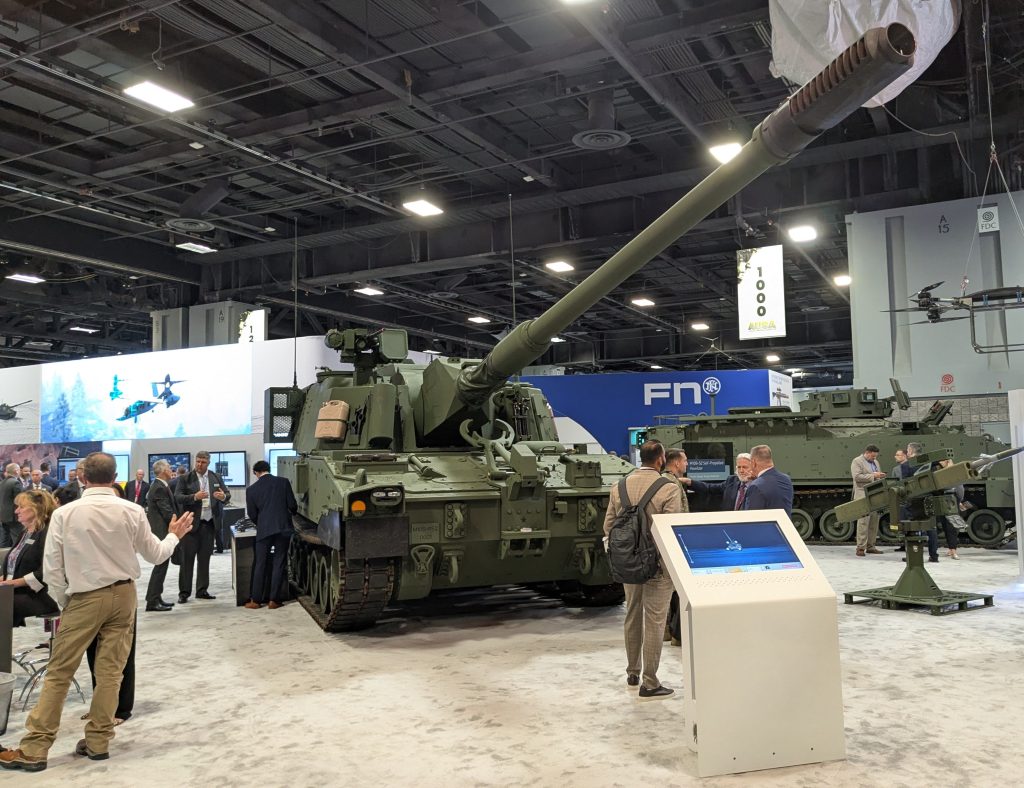
Regarding future US land system procurements, it will be interesting to see how the US Army’s Self-Propelled Howitzer Modernization (SPH-M) programme pans out: an effort that has already become subject to delays to align it with the Army Transformation Initiative that began in early 2025. This is the fourth attempt to develop a new SPH to support the army’s Armored Brigade Combat Teams (ABCTs) and followed the discontinuation of the US Army’s Extended Range Cannon Artillery (ERCA) prototyping effort in April 2024 when it ran into insurmountable engineering issues.
Although the SPH-M platform is required to be produced in the United States, the competition has substantially been a contest in recent years between off-the-shelf foreign-designed solutions. In October 2024, for example, the US Army issued SPH-M performance demonstration contracts five potential SPH-M suppliers – American Rheinmetall Vehicles, BAE Systems Bofors, Hanwha Defense USA, General Dynamics Land Systems and Elbit Systems USA – of which most had foreign parent companies. Those demonstrations, which began in November 2024, were intended to inform multiple SPH-M lines of effort as identified in the US Army’s Cannon Transformation Strategy.
While a list of the latest SPH-M competitors is yet to be published, it is easy to see how a foreign solution does not exactly align with the Trump Administration’s ‘America First’ mantra, perhaps putting more wind in the sails of a more substantially US-sourced platform. BAE Systems, for example, continues to make progress with its M109-52 SPH, which involves integrating the proven Rheinmetall L52 155 mm gun onto the US Army’s current M109A7 SPH (for which BAE Systems is the design authority) with a view to addressing the SPH-M requirement.
President Trump has frequently pushed for the development of an all-encompassing national air and missile defence umbrella – inevitably called the ‘Golden Dome for America’ – to protect the continental US, which he enshrined legislatively through Executive Order 14186 on 27 January 2025. In the FY2026 Defense Appropriations Act this initiative was allocated around USD 13.4 billion, split between USD 9.6 billion for US Missile Defense Agency programmes and USD 3.8 billion for US Space Force programmes.
More generally, Congress approved USD 858.9 billion in base discretionary spending for the Pentagon in FY26 – around USD 10.6 billion more than requested – with procurement funding gains amounting to an extra USD 7 billion for the US Navy, an extra USD 3.7 billion for the USAF and an additional USD 1.7 billion for the US Army.
Overall, the main emphasis in the FY2026 Defense Appropriations Act was on the production of more ships, aircraft and missiles, according to analysis provided by Shaun McDougall, writing for Forecast International’s Defense and Security Monitor. Research and development programmes, meanwhile, accounted for 21% of the additional acquisition funding added to the bill, driven by money allocated to major developmental aircraft programmes, like the US Navy’s future F/A-XX fighter and the USAF’s E-7 AEW&C platform, as well as to a wide range of future technologies, including materials research, artificial intelligence, hypersonic propulsion, counter-unmanned aerial system (C-UAS) capabilities and advanced sensors, McDougall reported.
In November 2025 the US DoD announced that it would focus on six key technology areas to ensure that US warfighters can prevail in the future battlespace: applied artificial intelligence (AI), biomanufacturing, contested logistics technology, quantum battlefield information dominance, scaled directed energy and scaled hypersonics.