US President Donald Trump’s war plan for Iran is certainly not 3D chess; it’s not even checkers. And now the US/Israeli conventional campaign against Iran has come up against Tehran’s asymmetric response.


US President Donald Trump’s war plan for Iran is certainly not 3D chess; it’s not even checkers. And now the US/Israeli conventional campaign against Iran has come up against Tehran’s asymmetric response.

Over the last several days it will have finally dawned on US President Donald Trump that successfully concluding a war is a lot more difficult than starting one.
While US and Israeli air power continues to pulverise Iranian conventional forces, command and leadership targets and nuclear facilities under Operation ‘Epic Fury’ and Operation ‘Roaring Lion’ respectively, which began on 28 February 2026, the Iranian counter to such an air offensive was always going to be an asymmetric one.
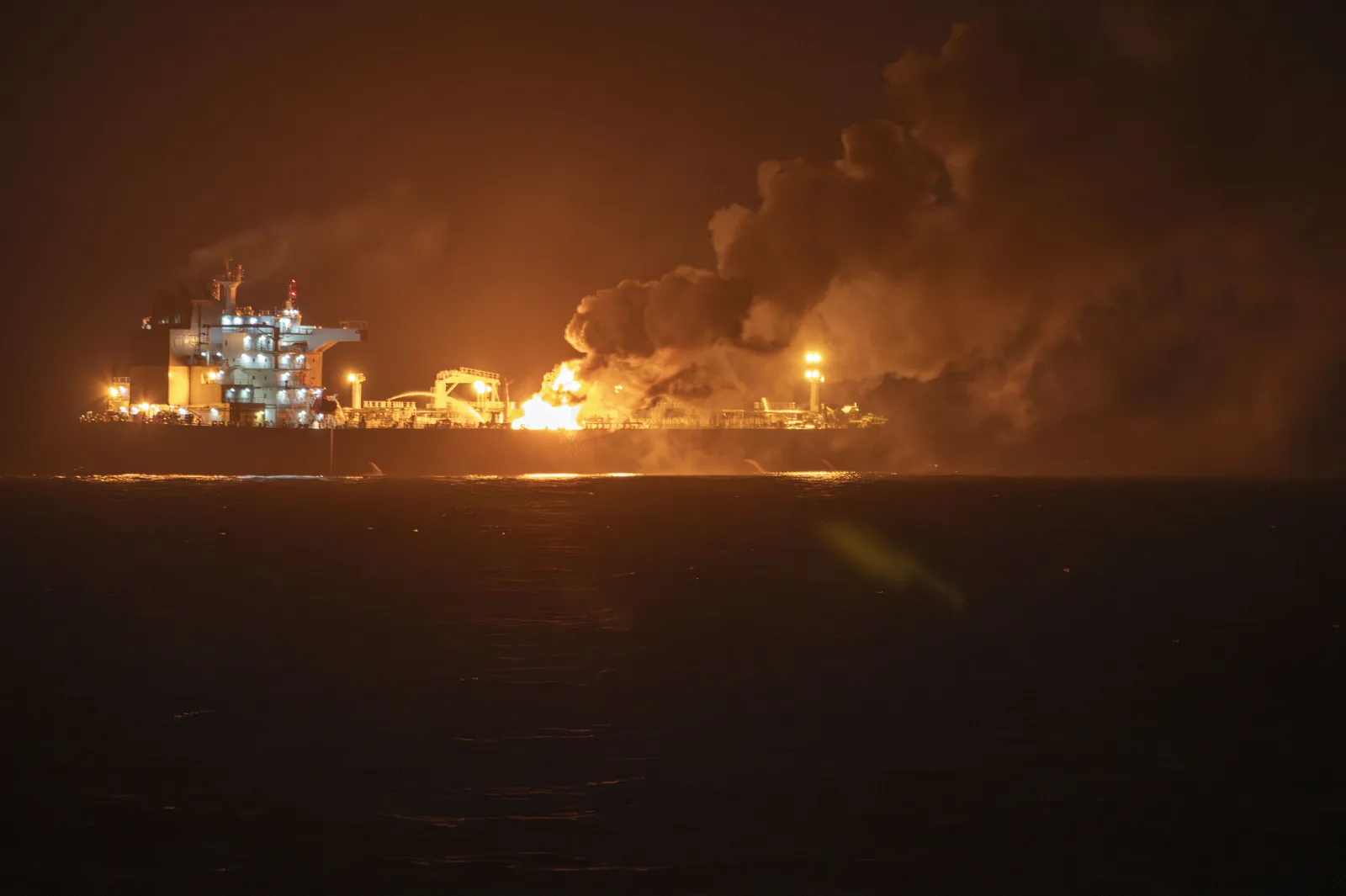
Iran’s gameplan in riding out the US-Israeli onslaught from the air is to keep the regime in Tehran intact while inflicting as much political and economic pressure on the US, Israel and their allies as possible. This Tehran intends to achieve through missile and bomb-laden drone attacks across the Gulf region to inflict casualties and economic damage, but most crucially through the denial of the Strait of Hormuz as a shipping route, again using missile and bomb-laden drone strikes but also potentially naval mines and fast boat attacks.
Around a fifth of global seaborne oil trade passes through the Strait of Hormuz, which is only 34 km wide at its narrowest point between Iran and Oman. If the Gulf states cannot get their tankers through the strait, it is possible they could run out of oil storage capacity, forcing refineries to cease operations and severely trying the patience of the US’ Gulf allies.
By mid-March the price for Brent crude oil surpassed USD 100 per barrel for the first time in four years and the onset of the Ukraine war.
Between 28 February and 17 March the Dubai-based UK Maritime Trade Operations organisation received 21 reports of incidents affecting shipping operating in and around the Gulf, Strait of Hormuz and Gulf of Oman, including 16 attacks (almost all of which cited vessels being struck “by an unknown projectile”). These attacks forced six of the ships to be abandoned.
On 16 March the commander of US Central Command (CENTCOM), US Navy Admiral Brad Cooper, noted that US air force and navy aviators had collectively mounted “more than 6,000 combat flights” over Iran. In operations on 13 March, Adm Cooper noted, these included a large-scale strike on Kharg Island off Iran’s northern Gulf coast, “destroying more than 90 Iranian military targets, including storage bunkers for naval mines and missiles, and other military infrastructure”.
Several days into the initiation of Operation ‘Epic Fury’, CENTCOM’s briefings began to make much of the drop-off in the launch frequency of Iranian missiles and drones. However, as long as Iran has enough of these to launch at shipping in the Strait of Hormuz, it does not need to maintain a concerted, high-intensity barrage to deny the passage of shipping.
Furthermore, although US and Israeli aircraft continue to target Iranian missile and drone production facilities, the latter could be especially difficult to eradicate. As Warsight contributor Dr Sidharth Kaushal has already pointed out, while ballistic missiles require complex components to be produced, such as high-tensile motor casings and rocket motors, Iran’s Shahed-type drones can be produced far more easily and despite the US/Israeli air offensive.
That Iran would respond to being attacked by choking the Strait of Hormuz would appear to have been obvious, yet, whether by some grossly over-optimistic notion that Tehran would soon capitulate or by sheer incompetence, the Trump Administration does not seem to have planned for it.
The Iranian regime’s defiance was signalled early on when, following the assassination of its supreme leader, Ayatollah Ali Khamenei, in the opening US/Israeli air strikes, his equally hardline son, Mojtaba Khamenei, was appointed by Iran’s Assembly of Experts to replace him on 8 March. Rumours and reports that Mojtaba Khamenei has also been gravely injured by an air strike have so far not been confirmed.
Meanwhile, the US rationale for joining Israel in attacking Iran has been wildly inconsistent, vacillating from destroying Iran’s nuclear capabilities (which Trump had already claimed on 25 June 2025 were subjected to “Obliteration” by Operation ‘Midnight Hammer’), to regime change, and also to vague, confidential objectives and timelines that US ‘Secretary of War’ Pete Hegseth has maintained will not be disclosed, lest the ‘liberal media’ hold the Trump Administration to account over them.
By 17 March Trump himself was claiming, without offering any evidence, that the US/Israeli offensive was initiated due to evidence that Iran was about to attack first.

In the late February lead-up to Operation ‘Epic Fury’, the UK government initially declined to allow US forces to use UK military bases to support potential US strikes on Iran. However, after an Iranian drone struck RAF Akrotiri on Cyprus on 1 March, the aircraft carrier HMS Prince of Wales was placed on five days’ readiness to sail to the Eastern Mediterranean or beyond on 7 March. Later that day, rather than welcoming this news, Trump – erroneously claiming that the UK was considering sending two aircraft carriers to the Middle East – instead tore into UK Prime Minister Sir Keir Starmer.
“That’s OK, Prime Minister Starmer, we don’t need them any longer,” Trump wrote in a post on his Truth Social media channel. “But we will remember. We don’t need people that join Wars after we’ve already won!”
Eight days after that jibe, however, as Iran’s choking of the Strait of Hormuz began to bite and with the price of Brent Crude exceeding USD 100 per barrel, Trump had gone from premature declarations of victory to threatening NATO European allies if they did not deploy naval forces to escort shipping through the strait.
On 15 March, in an interview with the Financial Times, Trump warned that NATO would have a “very bad future” if its members did not help free up the Strait of Hormuz.
The response from NATO’s European allies, who are not new to castigations from the Trump Administration, was unsurprisingly negative.
On 16 March UK Prime Minister Starmer stated that, while he is working with allies on a plan to reopen the strait, the UK “will not be drawn into the wider war”.
The same day Stefan Kornelius, the spokesperson for German Chancellor Friedrich Merz, stated that the German government “will not participate in this war. … Nor will it participate in a military operation to enable ships to pass the Strait of Hormuz.”
“This is not our war; we have not started it,” German Defence Minister Boris Pistorius added to reporters on 16 March.
While the French government had previously stated it was willing to escort shipping in the Strait of Hormuz, this offer was predicated on the conflict being over.
A day after these rejections, Trump asserted on social media, “Because of the fact that we have had such Military Success, we no longer ‘need’, or desire, the NATO countries’ assistance – WE NEVER DID!
Spain, Poland, Japan and Australia have also ruled out any naval participation in Strait of Hormuz escort missions.
The absence of any sign that the Trump Administration had a credible war plan for Operation ‘Epic Fury’ lends credence to the assertion by some analysts that, along with Operation ‘Midnight Hammer’ and the Twelve Day War in June 2025, the Trump Administration was effectively manipulated by Israeli Prime Minister Benjamin Netanyahu into joining his assault on Iran. The Israeli premier, after all, has long seen eliminating the Islamic regime in Tehran as a central pillar of his political career.
This theory was given added credibility on 17 March when the Trump-appointed director of the US National Counterterrorism Center, Joe Kent, resigned from that position, stating in a post on X, “I cannot in good conscience support the ongoing war in Iran. Iran posed no imminent threat to our nation, and it is clear that we started this war due to pressure from Israel and its powerful American lobby.”
Kent, a staunch Trump supporter and US special forces veteran, stated that Trump had been deceived “into believing that Iran posed an imminent threat to the United States”, adding, “This was a lie.”
Perhaps the only immediate winner in the current US/Israeli conflict with Iran is Russian President Vladimir Putin. On 12 March the US Treasury issued a temporary 30-day lifting of sanctions on the sale, delivery or offloading of Russian crude oil and petroleum products currently stranded at sea to counter-act soaring crude prices caused by the Iranian conflict. Putin will thus be able to sell more oil at higher prices and direct the proceeds to the war against Ukraine.
The move was negatively received by European leaders, while Ukrainian President Volodymyr Zelenskyy warned on 13 March, “This easing alone by the United States could provide Russia with about USD 10 billion for the war,” adding, “This certainly does not help peace.”
The current US/Israeli conflict with Iran – regardless of whether or not it came about due to coercion by Netanyahu – is very much perceived as being Trump’s war. If it cannot be billed by the Trump Administration as being adequately resolved by the time of the US mid-term elections in November, US Democrats will be certain to make Trump truly own it. That will not be a good look for a US president who originally campaigned on not involving the US in foreign ‘forever wars’.
Meanwhile, the notion of regime change in Iran currently still seems fanciful. The demographic within Iran who are opposed to the hardline Islamic regime, most notably among the country’s younger population, are disenfranchised and – most obviously – unarmed. There is no ‘army in the shadows’ and the Islamic regime’s Basij militia still own the streets.
However, while Trump and Netanyahu were responsible for starting the conflict, from an international perspective regarding Iran’s choking of the Strait of Hormuz, it is everybody’s problem.