With the Democrats set to take up a majority in both houses of the US Congress in January 2027 following their overwhelming victory in the November Mid-Term Elections, cancellations and reversals are on the cards for some of US President Donald Trump’s signature defence projects. Moreover, US defence and security strategy could start to shift, even while Trump serves out the final two years of his presidency.
Trump’s narcissism and inflated regard for his own capabilities – in any field, at any point – has not done the US military any favours. His second term as president, however, has had a particularly detrimental effect on both current and future US military capabilities; not only has he embroiled the US military in a war with Iran that, now approaching the nine-month stage, has failed strategically while wearing down US weapon stocks, but Trump’s meddling in defence programmes has, at the very least, wasted billions of dollars through the implementation of very bad ideas. And, as has been typical within the Trump Administration, no one stopped him from making those decisions.
The Trump-class battleship
The president’s most obviously ill-conceived idea was the Trump-class battleship, which resurrected a class of capital warship last operated by the US Navy (USN) in March 1992, when the last Iowa-class battleship, USS Missouri, was decommissioned (and there was, of course, a reason for the USN not ordering any more).
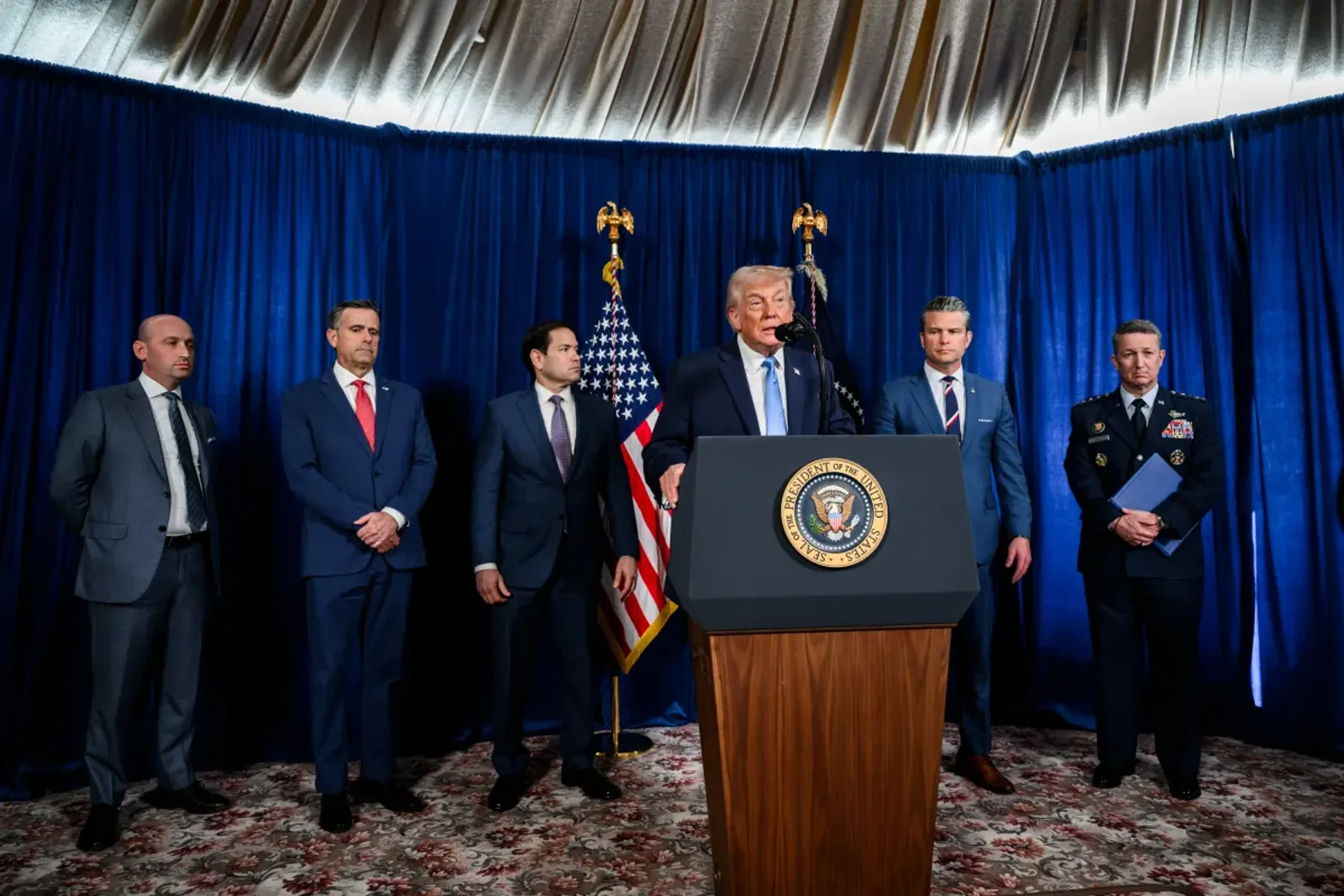
Trump first announced the plan to initially build “two brand-new, very large – largest we’ve ever built – battleships” from his Mar-a-Lago residence in Palm Beach on 22 December 2025. These would be followed by eight more: the centrepiece of what Trump has termed the future ‘Golden Fleet’.
Trump’s apparent notion that ‘bigger is better’ with regard to capital warships came at a time when European navies were already looking to disaggregate their naval assets – for example by using manned ‘motherships’ in conjunction with multiple unmanned effector platforms – to make them more survivable and to take full advantage of autonomous technology. Instead of also following this doctrine, the USN was going back to putting all its eggs – including rail guns, laser weapons and all kinds of missiles and other weapons – in one missile magnet of a basket by creating a naval behemoth.
Somewhat nonsensically, Trump even claimed to have had design input into the new US battleship. During a speech to military families at Fort Bragg, North Carolina, on 13 February 2026, Trump asserted, “The new battleship that we have, which I’ve seen and helped design, I put a little more spirit in the hull, a little bit more, give me a little bit more hull; I want that ship to look gorgeous.
“Forget about stealth. They say, ‘Oh, it’s stealth’. They design ugly equipment for stealth. Well, we’re designing great looking equipment, also stealth.”
When the battleships were first announced it was stated that they would have a full-load displacement of 35,000 tons (31,751 tonnes) or more, a length of 840 to 880 ft (256 to 268 m), and a sustained speed in excess of 30 knots (55.6 km/h), making them the largest surface combatants in the world and, indeed, larger than any surface combatant built for the USN since the Second World War. They would be more than three-and-a-half times the size of the USN’s Arleigh Burke-class guided missile destroyer and more than twice the size of the navy’s Zumwalt-class guided missile destroyer.
Then, at the National Symposium of the Surface Navy Association the following month, it was announced that the Trump Battleship programme would ultimately include 15 ships over the next 30 years and potentially a total of 25 battleships in all.
Even while the cost and shipbuilding capacity issues regarding the Trump-class battleship programme were being raised, the situation got a whole lot worse on 11 May 2026 when, in announcing its annual 30-year shipbuilding plans, the USN declared that the new battleships would be nuclear powered, thus adding significantly to the programme’s up-front costs.
A US Congressional Budget Office (CBO) report on the Trump-class battleship programme, released on 5 August 2026, confirmed what numerous observers had predicted when Trump first announced it: that building a new battleship class would be excessively expensive and tie up US naval shipbuilding capacity for other more modestly sized, but more operationally useful, naval platforms.
The CBO estimated that, with the Trump-class battleships now to be nuclear powered, the programme would cost about USD 275 billion in 2026 dollars (EUR 238 billion) over the 2027–2056 period. The first ship would cost about USD 23.4 billion, with subsequent ships of the class averaging a cost of USD 18 billion, giving the total cost of around USD 275 billion for 15 battleships built between 2028 and 2056. This was about 13% more expensive than the CBO’s original estimates for the Trump-class battleships when they were to be conventionally powered, which it pegged at USD 21.3 billion for the lead ship and an average of USD 15.9 billion for the 14 follow-on ships in the class.
By comparison, when procured at a standard rate of two ships per year (as per the USN’s FY 2026 budget request), the cost of a Flight III Arleigh Burke-class destroyer is around USD 2.7 billion (EUR 2.43 billion).
There can be little doubt that building the Trump-class battleship fleet would have a detrimental effect on other, already-delayed build programmes for US surface combatants, which include Flight III Arleigh Burke-class destroyers, America-class amphibious assault ships, San Antonio-class amphibious transport docks and US Coast Guard Offshore Patrol Cutters. While the Constellation-class frigate programme was curtailed in November 2025, the following month it was announced that the USN’s new small surface combatant, FF(X), would be built by the Ingalls Shipbuilding division of Huntington Ingalls Industries based on the latter’s Legend-class National Security Cutter design.
At any rate, the fact that the Trump-class battleships would be nuclear powered requires their final assembly to be conducted by Newport News Shipbuilding: the only US new-construction shipyard certified for work on nuclear-powered surface ships. This, then, would have a detrimental effect on the build programme for Gerald R Ford-class nuclear-powered aircraft carriers, as well as the yard’s work on building Virginia-class nuclear-powered attack submarines and Columbia-class nuclear-powered ballistic missile submarines (the construction of which is shared with General Dynamics Electric Boat).
On 23 December 2025 an article published by the Washington, DC-based Center for Strategic and International Studies (CSIS) think tank prophetically asserted that Trump’s battleship “will never sail. It will take years to design, cost USD 9 billion each to build [that was even before the nuclear propulsion was announced], and contravene the navy’s new concept of operations, which envisions distributed firepower.
“A future administration will cancel the program before the first ship hits the water,” the CSIS stated.
Sure enough, the Trump-class battleship looks dead in the water.
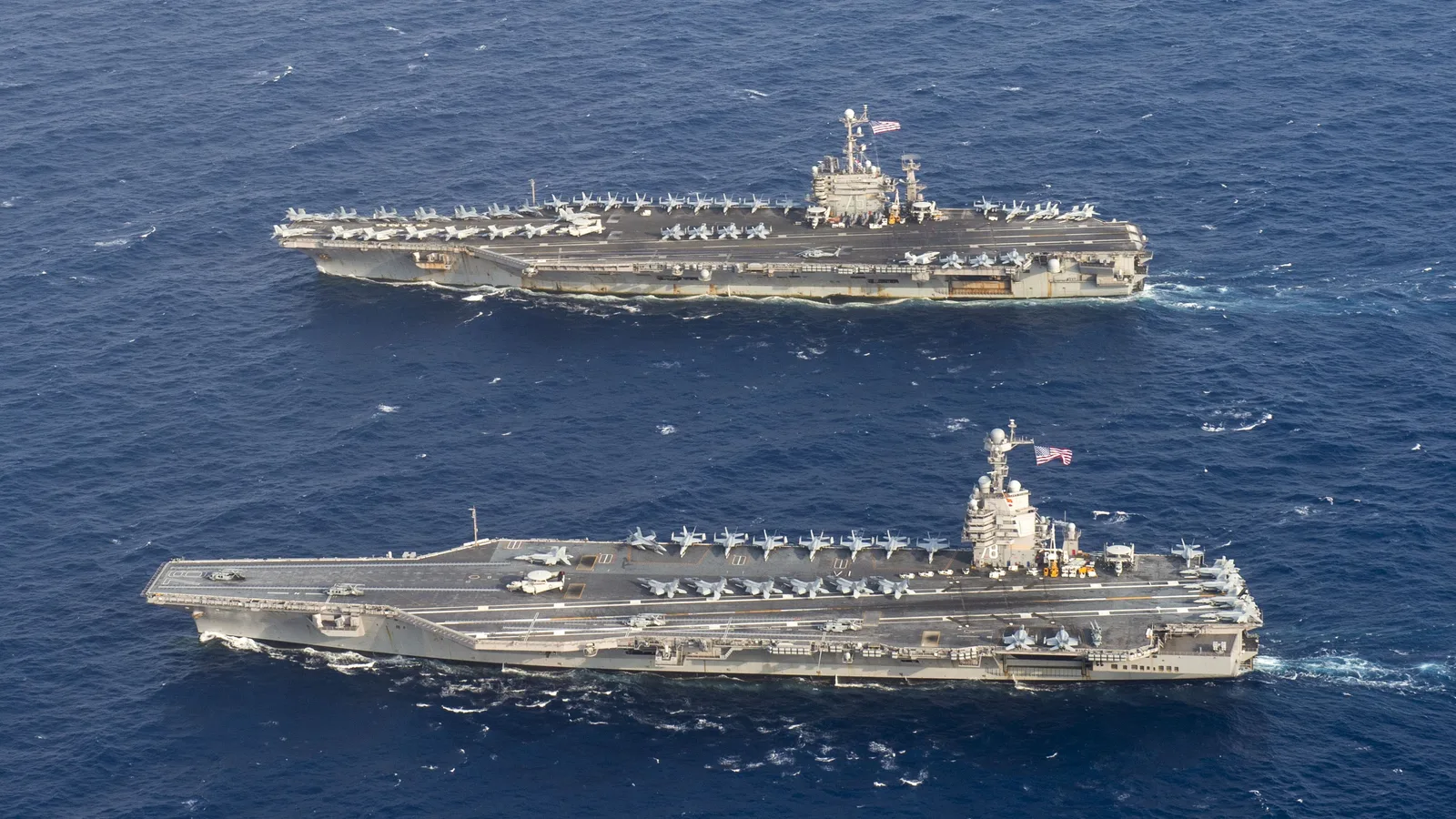
Messing with the Ford-class carriers
Unfortunately, Trump’s plan for a new fleet of outlandish battleships named after himself – the only instance of a US capital warship to be named after a still-sitting president – was not the only intervention the US president made that directed USN shipbuilding plans down an expensive naval architecture cul-de-sac.
A ‘Memorandum for the Secretary of War’ issued by the White House on 13 August 2026, which otherwise focused on rebuilding the US naval shipbuilding industrial base, stated, “Within 60 days of the date of this memorandum, the Secretary of War, in consultation with the Secretary of the Navy, shall provide to the President, through the Director of the Office of Management and Budget (OMB) and the Assistant to the President for National Security Affairs (APNSA), a plan on the required measures to replace the Electromagnetic Aircraft Launch System [EMALS] and Advanced Weapons Elevators [AWEs] with steam and hydraulic systems for the construction of CVN 81 [the future USS Doris Miller, the fourth Ford-class aircraft carrier], including timelines and resourcing requirements.”
Implementation of this directive would represent an astonishing reversal of technological progress for the USN, which first implemented EMALS, designed and manufactured by General Atomics, on the first-of-class carrier USS Gerald R Ford, which was commissioned – by President Trump himself during his first term – on 22 July 2017.
Moreover, the directive to change from EMALS to steam catapults from the fourth Ford-class carrier onwards directly flies in the face of another point contained in the memorandum, which directs that the USN “shall not impose iterative design changes upon … original mature parent designs”.
Ditching EMALS would also be an international embarrassment for the USN, given that China’s People’s Liberation Army Navy has implemented its own electromagnetic launch system on Fujian: its first indigenously designed aircraft carrier. Video imagery emerged of Fujian conducting dead-load launch testing of its three electromagnetic catapults on Chinese social media channel Weibo on 26 November 2023. Footage released by Chinese state broadcaster CCTV on 22 September 2025 showed multiple aircraft types conducting catapult-assisted take-off and arrested landing training on Fujian and the carrier was officially commissioned into active service on 5 November 2025.
It’s true that EMALS had an uneasy introduction. Along with numerous new technologies introduced on USS Gerald R Ford (CVN-78) and subsequent carriers of the class, EMALS suffered from development issues and contributed to significant delays to the Ford-class build programme, which is now years behind schedule and billions of dollars over budget. A few months before Gerald R Ford was commissioned, Trump railed against EMALS during an interview with Time magazine published on 11 May 2017, stating, “I realised they’re going to digital. I said, ‘No, digital is no good. It’s got to be goddamn steam.’”
As with all new technologies, the issues with EMALS as well as others, such as the Ford-class carriers’ Advanced Weapons Elevators and Advanced Arresting Gear (AAG), which replace the older hydraulic systems of the USN’s Nimitz-class carriers, are being worked through.
Compared with steam catapult technology, which was developed in the 1950s, EMALS is more efficient, smaller, lighter, more powerful, less manpower intensive and much easier to fine tune. The system can launch aircraft that are both heavier and lighter than those launchable by a steam catapult and, due to the way EMALS can be controlled, it puts less stress on the airframes that it launches. EMALS, moreover, is designed to deliver sortie rates that steam catapults could never match.
Apart from the USN throwing away those advantages if it ditched EMALS, any return to steam catapult technology will be extremely difficult and very costly. The last of the USN’s Nimitz-class carriers, USS George H W Bush, was launched in October 2006, meaning that no US company has manufactured steam catapults in 20 years.
Furthermore, the Ford class and its operational systems have been designed specifically to take advantage of the ship’s nuclear powerplant’s ability to generate much larger volumes of electrical energy than the Nimitz class, meaning that significant design alterations would be required to retrofit a steam catapult system, adding multiple tens of millions of dollars to the cost of the Ford-class carrier programme and delaying it by years.
Construction of Doris Miller began in August 2021 and the carrier was expected to be delivered to the USN in February 2034, according to the USN’s FY 2027 budget justification books: a delay of two years from the previously projected delivery date of February 2032. However, if the carrier were to be reconfigured for a new steam catapult system, the USN could certainly say goodbye to that revised delivery date.
If that were not enough, Trump has reportedly requested the entire ‘island’ superstructure of future Ford-class carriers further forward, according US media reports in August 2026: a design change that would cost several billion dollars on top of the Ford class’s unit price of at least USD 13 billion. The reason for this was reportedly simply because Trump doesn’t like the way the carriers look compared to Second World War-era designs.
As Warsight has reported, there are specific reasons why the Ford-class carrier’s superstructure is where it is. Moreover, as The National Interest reported on 18 August 2026, “moving the island could only be made beginning with CVN-82, the planned future USS William J. Clinton [the fifth Ford-class aircraft carrier]”.
The National Interest further reported, “A formal detail design and construction (DD&C) contract has to be awarded, and even once that happens, it will be years before construction on the aircraft carrier could begin. That won’t happen until at least the end of the decade, and so the new carrier wouldn’t enter service – if it is even built – until the middle to late 2030s. By that time, Trump would be out of office and in his 90s, if still living.”
Suffice to say that both the EMALS/AWE and superstructure redirections for future Ford-class carriers by Trump are very unlikely to be implemented by a Democrat-controlled Congress, but even pandering to them up until now has cost the USN both time and money.
At this point it is worth considering why senior USN leaders stood still for all of this and, clearly knowing better, said nothing – at least in public. A generous interpretation of that situation would be that, having seen their Chief of Naval Operations, Admiral Lisa Franchetti, dismissed by US Secretary of War Pete Hegseth on 21 February 2025 – one of many senior US military leaders who were casualties of Hegseth’s ‘War on Woke’ or otherwise dismissed for not obediently following the Trump Administration’s direction of travel – they simply chose to ‘go along to get along’ and preserve their positions. Perhaps they simply hoped that, at some point – whether through a ‘Blue Wave’ at the November Mid-Terms or otherwise – sense would finally prevail.