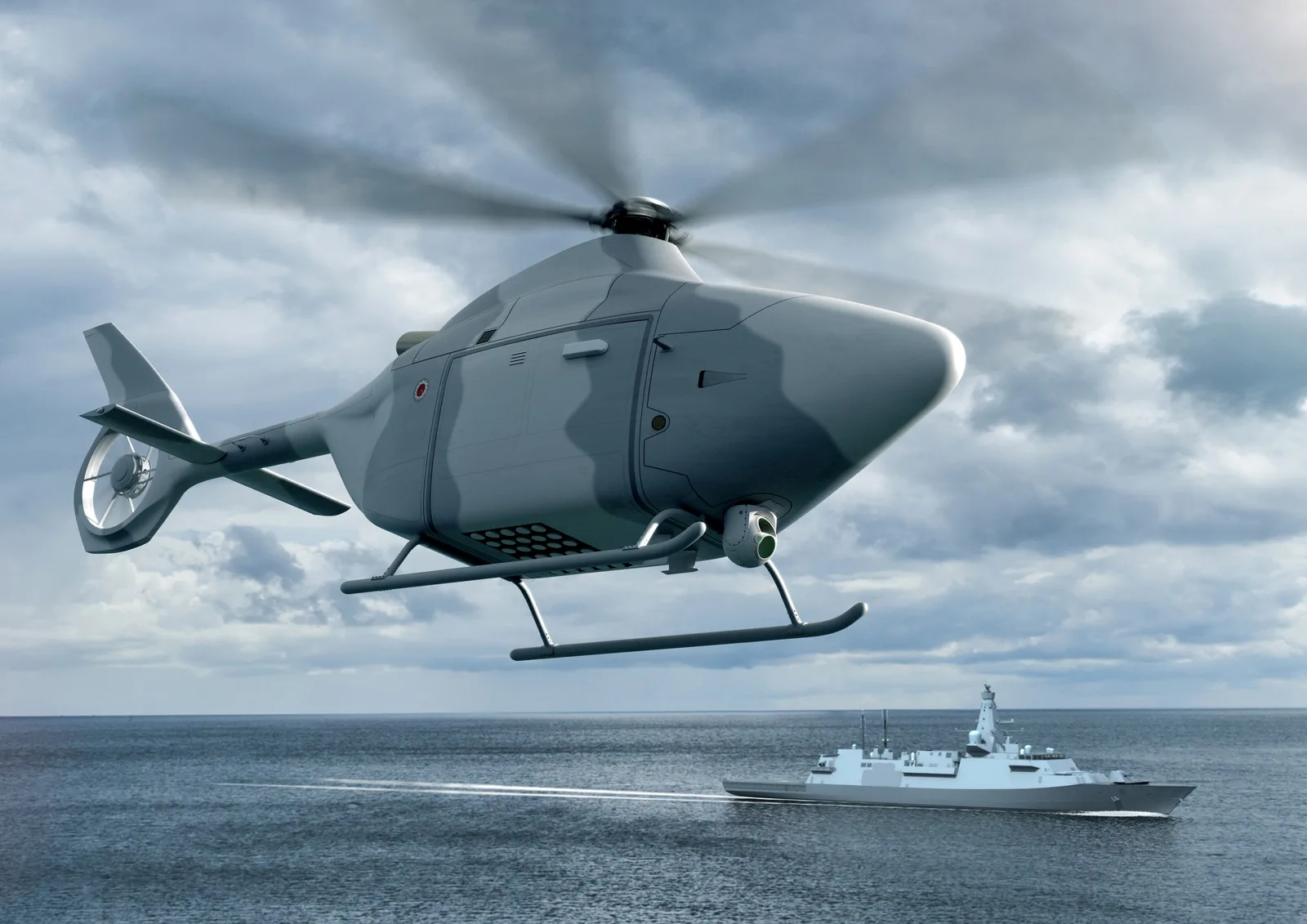
Leonardo is to integrate the Hivemind autonomy software from San Diego-headquartered Shield AI onto its Proteus autonomous uncrewed rotorcraft, Shield announced on 29 October 2026.
Using the Hivemind Software Development Kit (SDK), the two companies will work together to integrate the software so that Leonardo engineers can develop new autonomy capabilities for rotary-wing operations, including anti-submarine warfare; intelligence, surveillance, and reconnaissance; and contested logistics helicopter missions.
Hivemind
Using Hivemind, partners can develop, integrate, test, deploy and continuously update their own autonomous pilots. They build mission autonomy tailored to their platforms and missions, then refine it as operations, environments and threats evolve. Partners own what they build and can sustain and adapt those capabilities independently, lowering lifecycle cost through reuse and rapid iteration.
Proteus
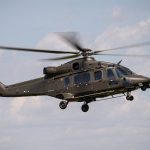
Proteus is Leonardo’s advanced uncrewed vertical take-off and landing (VTOL) technology demonstrator, which was developed by the company in conjunction with the Royal Navy and UK Defence Innovation (UKDI) under the Rotary Wing Uncrewed Air System (RWUAS) CCD Phase 3B Technology Demonstrator programme.
Proteus informs the Royal Navy’s Maritime Aviation Transformation (MATx) strategy, which outlines the evolution of maritime aviation out to 2040. It has been designed with a large modular payload bay to accommodate a roughly one-tonne payload or two standard NATO pallets (463L). This flexibility allows the operator to integrate customer and mission-specific payloads for various operations, such as anti-submarine warfare, airborne early warning or intra-theatre lift. Following demonstrations in all-synthetic operational scenarios, a real aircraft successfully carried out its maiden flight in early 2026 with Leonardo-designed autonomy capability embedded. Shield’s Hivemind will sustain a further development of those capabilities.
The Hivemend agreement between Shield and Leonardo provides a pathway for greater future collaboration between the two companies, drawing on Shield’s expertise in autonomy and the large product and service portfolio of Leonardo.