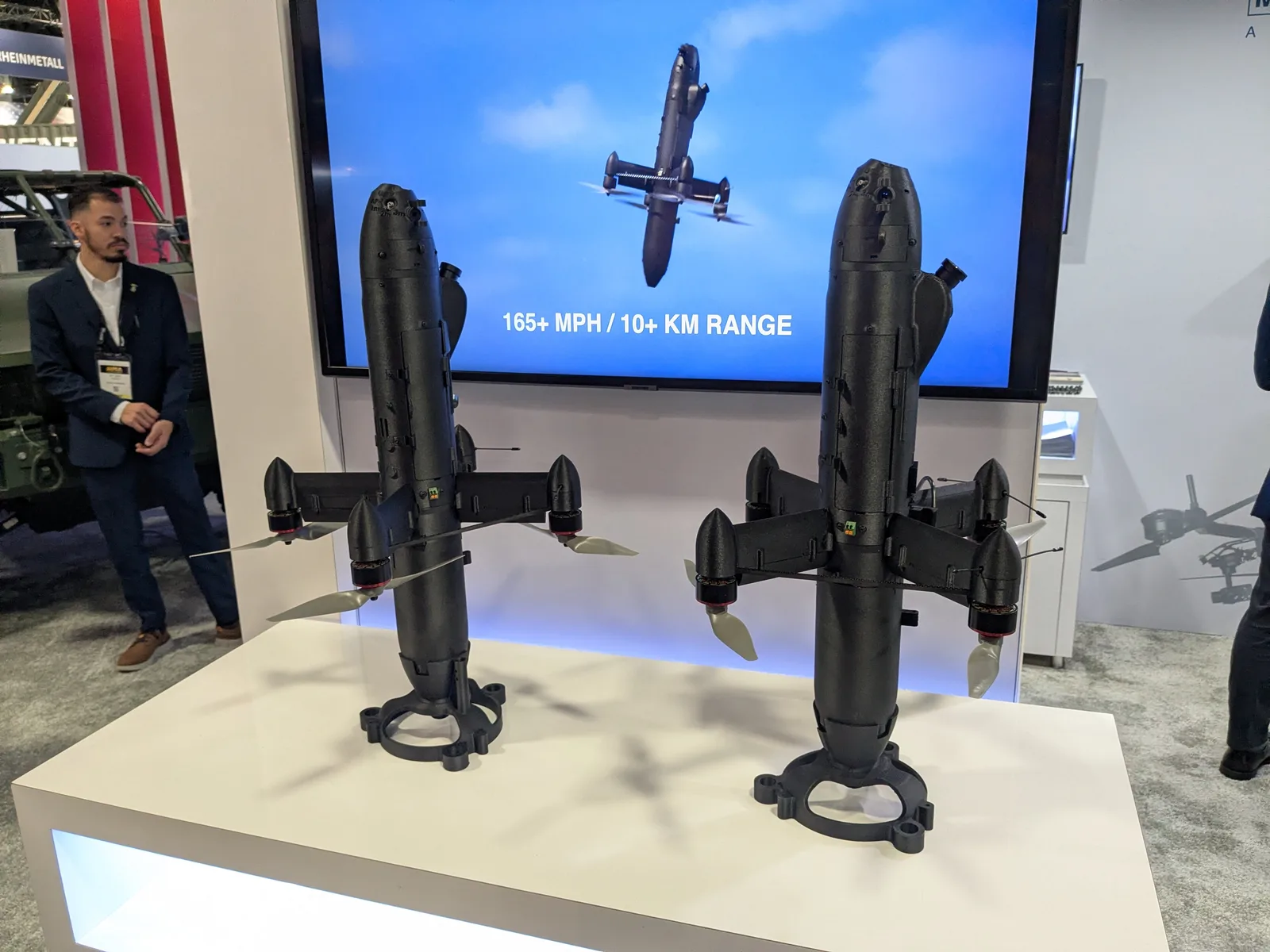
US mission-critical equipment supplier Mountain Horse Solutions announced on 12 October, the opening day of the Association of the US Army (AUSA) 2026 symposium in Washington, DC, that it is delivering additional FD-1 drone interceptors to the US Army under a second contract awarded by the US Army’s Global Tactical Edge Acquisition Directorate (G–TEAD).
The award, issued on 8 October under an Other Transaction Agreement (OTA), follows an initial G–TEAD OTA awarded in the spring of this year. The company noted in a press release that it has now fielded a capability based on the FD-1 system within a single year, reflecting G-TEAD’s emphasis on accelerating the delivery of new systems to soldiers.
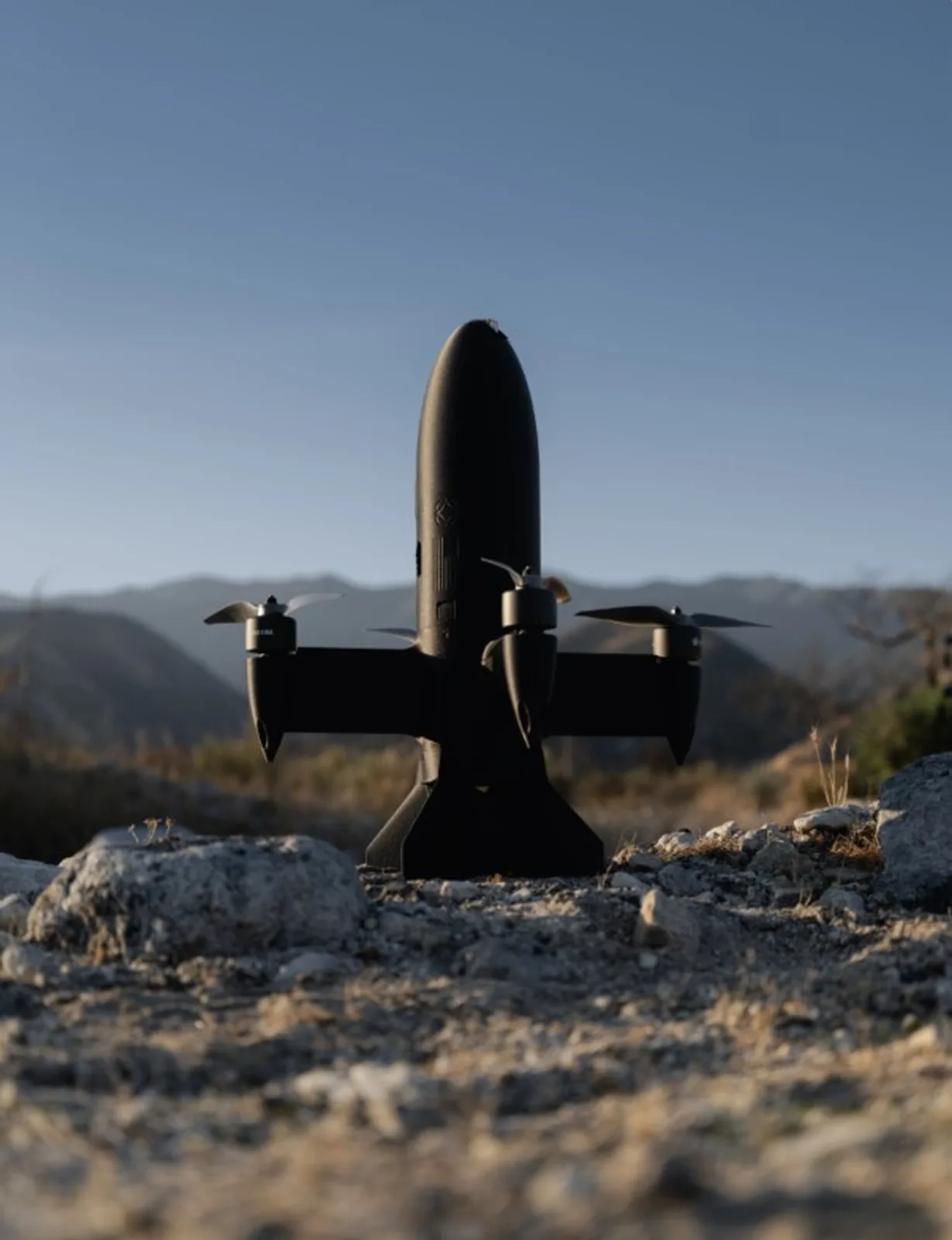
The FD-1 is a compact, dual-use interceptor designed to defeat Group 1 to 3+ unmanned aerial systems (UASs) as well as ground targets.
In fact, as Richard Budniewski Jr, director of the company’s UAS/C-UAS programme told Warsight at AUSA 2026, the FD-1 was originally designed to attack ground targets.
“The initial FD-1 concept was as a ground-to-ground drone that would fly from the ground, target whatever ground opportunities [required by US forces] or allies, and then destroy those targets,” he explained. “As we made that and we developed it and we showcased it, that’s when the transition started happening where there was a bigger demand on counter-UAS and mitigating enemy UAS threats. so then we decided to change that concept a little bit. Instead of going after ground targets, we’ll do aerial targets.
“We thought big at first, so we were thinking Group 3 [UASs],” said Budniewski, “but there is not a lot of Group 3-size target drones to try to take down in tests, so after that we started targeting the Group 1 to 2 [UASs], finding out they’re a little bit harder to do. And so that’s our niche right now. We’re doing Group 1 to 3, but our biggest niche is the Group 1s and 2s.”
Budniewski explained that the company then entered the US Army’s xTech Counter Strike competition with the FD-1 in 2025: a contest in which it was a first-prize winner in November of that year.
The FD-1 has been evaluated by G-TEAD, the US Army’s 52nd Air Defense Artillery and the Army Test and Evaluation Command (ATEC), with Mountain Horse Solutions incorporating feedback throughout the system’s development. Following the initial operational assessment, the company delivered a series of user-driven upgrades within five weeks: a cycle it repeated after each subsequent assessment.
Having now received two FD-1 contracts from G–TEAD, for which final deliveries are targeted for the end of October, Mountain Horse Solutions is now able to scale up production of the FD-1, Budniewski said.
While the FD-1 is not yet a US Army programme of record, with Budniewski noting that the company has additional refinements and testing to complete, he said the system is ramping up toward that end.
The FD-1 is thus a procurement success story, but Budniewski explained that this is out of necessity.
“We have to be fast moving; we have to be agile,” he explained. “We’ve got to be able to make changes quickly, which is great for Mountain Horse as we can do that, and we understand that’s what’s needed. So instead of taking months to make changes, our [iterations] are days and weeks to receive that feedback from the customers, make those changes to what we have now, and then do continuous testing with the customers to make sure it’s at the level of what they want.”
FD-1 characteristics
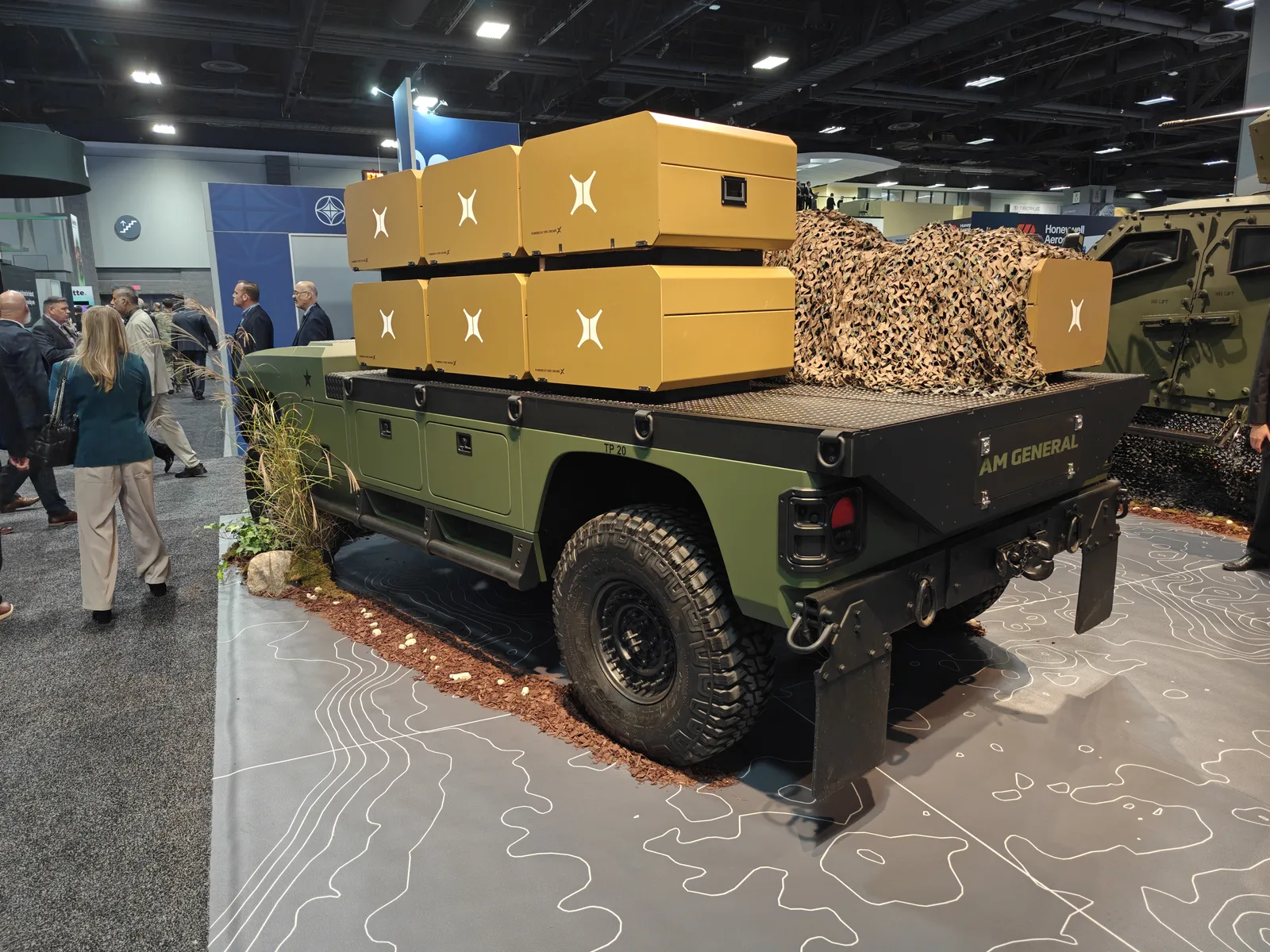
Compact enough to be manportable, the FD-1 Interceptor can also be launched from a self-contained case if being used for base perimeter protection, for example.
From an inert state the system can be set up, armed and launched in under two minutes. While official company literature states the FD-1 reaches speeds exceeding 165 mph (266 km/h), Budniewski noted that “so far we’ve tested it to go at terminal engagement speeds as fast as 195 mph.”
In terms of its initial cueing, Budniewski said, “We are trying to be as modular and open as possible, so that we’re not limiting any of the service branches or any of our allies on what they have to use for that sensor cueing. So at its most basic, you can use whatever you want to pick [a target] up.”
“Right now, when you receive that sensor data, it’s still the operator doing the work: visual and verbal cueing to get the drone where it needs to go,” Budniewski explained. “We’re developing the next iteration that tightens that sensor-to-shooter loop considerably and takes a lot of that burden off the operator. It’s in development now, and we’re hoping to show more on it soon.”
The FD-1’s pixel-lock terminal guidance system allows the operator to establish positive identification before handing off targeting for terminal engagement, which is effected using a C4/binary energetics/fragmentation kinetic payload. The system has a maximum range that exceeds 10 km.
Featuring a low radar cross-section, the FD-1 interceptor also has an electronic countermeasures/electronic warfare defeat capability via frequency switching, while its ability to engage targets at low altitudes also makes it nearly invisible to conventional countermeasures, according to company literature.
Here’s a preview of what your website’s text will look like by default. You can also adjust the typography of most elements separately. Note that the Font Size setting affects all the sizes defined in “rem” units, that is, almost all areas of your site.