UK company SEA will demonstrate its Underwater Acoustic Modelling Toolset for Acoustic Communications (AComms) software at an Australia/UK/US (AUKUS) ‘Maritime Big Play’ exercise set to get underway in San Diego in early October 2026.
SEA’s participation will be the culmination of work conducted to evolve the software, following a one-year funding contract award from the UK National Armaments Directorate Group’s UK Defence Innovation (UKDI) agency under the 2025 AUKUS Maritime Innovation Challenge.
SEA – a Cohort technology group advanced defence systems company with naval specialisation in fleet protection and underwater warfare capabilities – was one of four companies contracted by UKDI. It commenced work in September 2025, and will conclude activities with the software’s employment in the ‘Maritime Big Play’ event.
The company and its capability will be participating in ‘Maritime Big Play’ for the first time, Marcus Donnelly – an ocean environment and acoustics scientist and subject-matter expert at SEA – told Warsight in an interview.
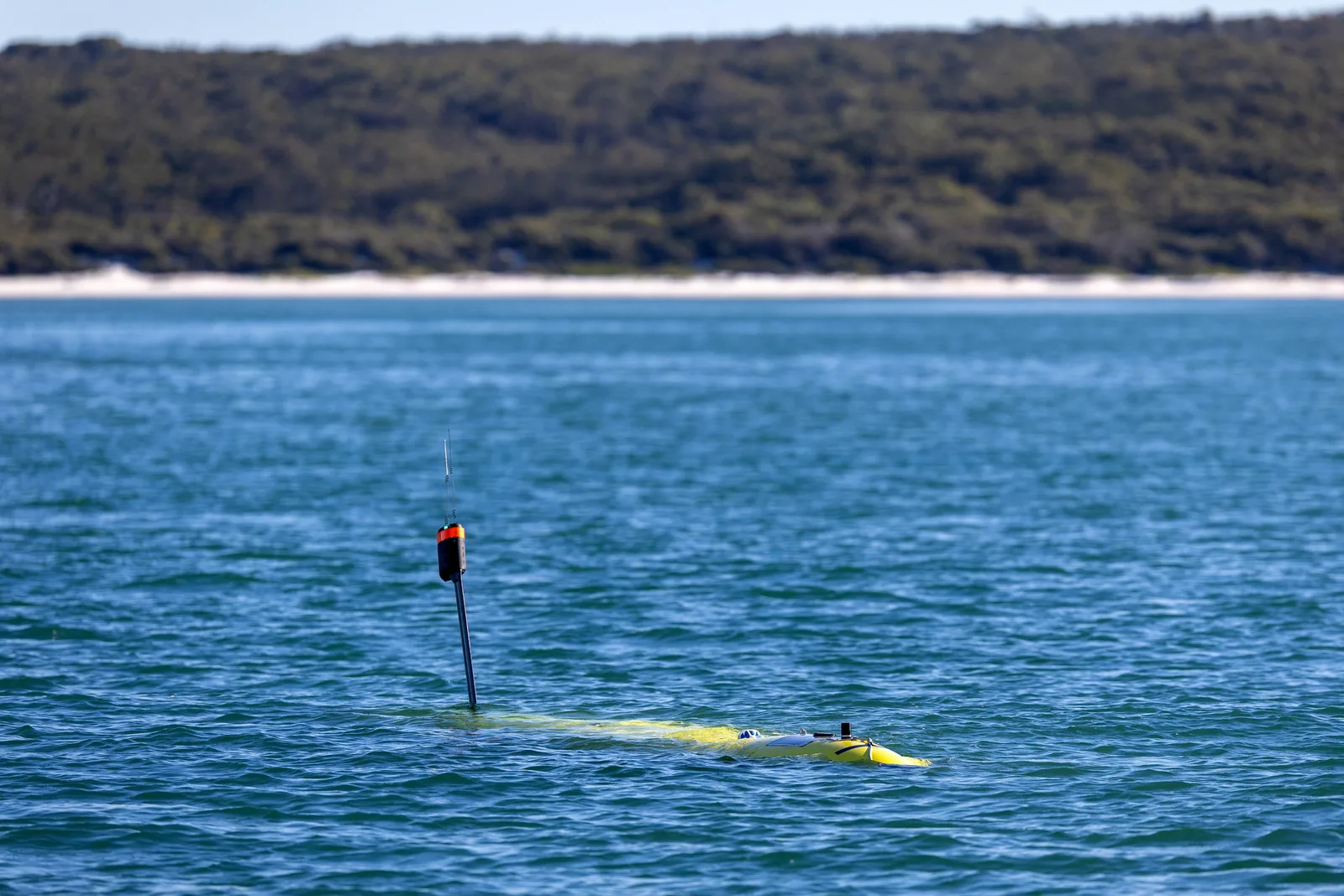
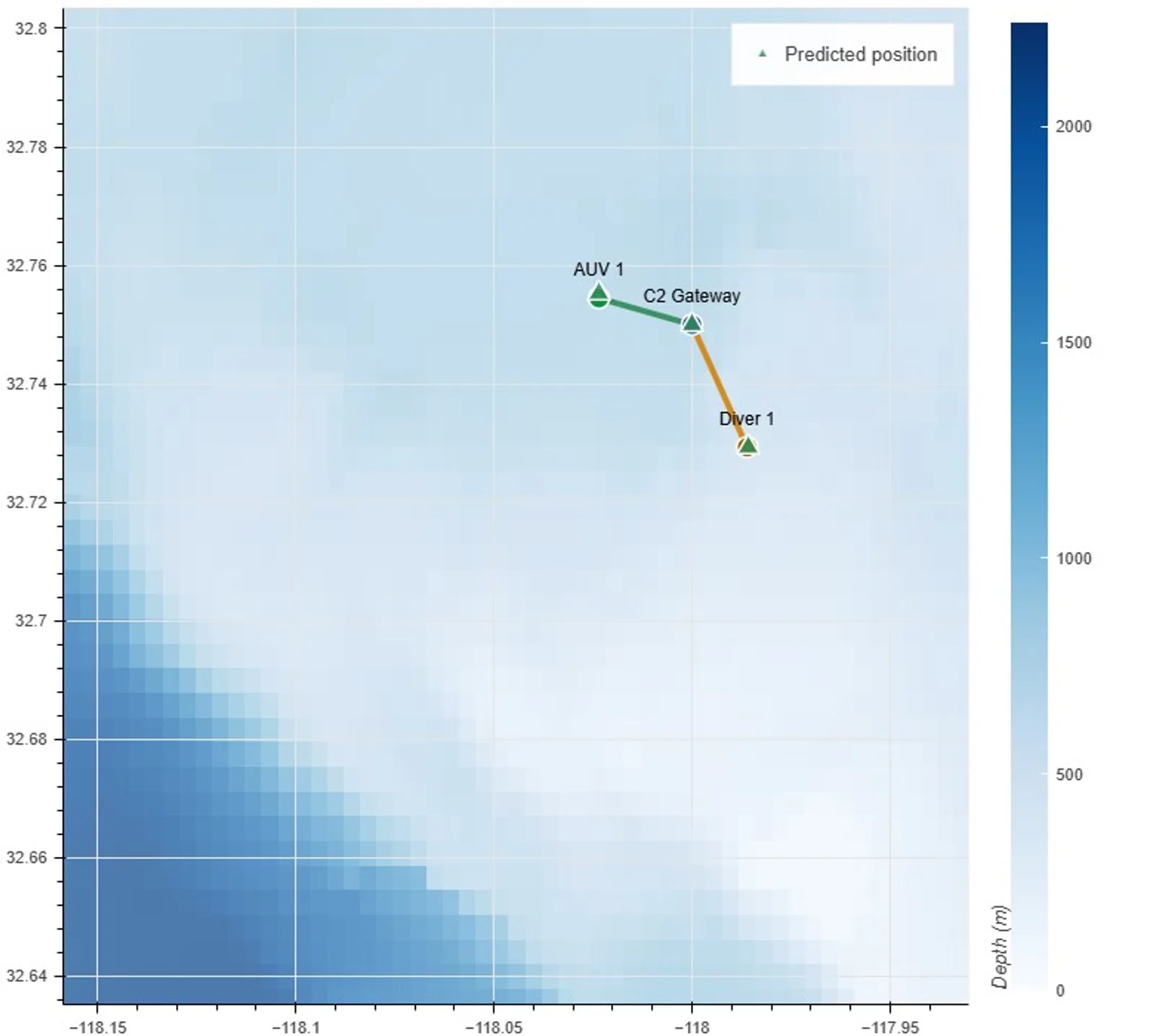
During the ‘Maritime Big Play’ activities, the software will support capability demonstrations, prospectively involving maritime uncrewed systems like autonomous underwater vehicles (AUVs) fitted with acoustic modems, Donnelly explained. “We’ll be trying to predict acoustic communications performance for the equipment that’s deployed during the trial,” he added. “We’re hoping to get some real-time updates of [AUV] positions, etc, so we can conduct real-time prediction of what the AComms performance looks like and how you might want to change things like platform depth etc to improve performance.”
As regards readying the software for the exercise, “We’re making it as configurable and flexible as we can so it can cover a number of [needs] with relatively small modifications,” Donnelly said.
Underwater capability
The presence of SEA’s software at ‘Maritime Big Play’ reflects the increasing operational focus across the three AUKUS partner navies on improving underwater sensing. This necessarily includes improving acoustic communications, which can be used for several purposes including command and control (C2) and transmitting data such as imagery. It is important for maritime situational awareness as well as autonomous system operations.
The AUKUS navies’ focus on trilateral operational integration of their capabilities including uncrewed systems means that, in underwater warfare, there is a need to conduct command, control and communications (C3) of multiple vehicles. “Having good, reliable acoustic communications can be critical to operational success,” said Donnelly. “You want to be maintaining communications between two assets for everything from C2 to passing data, so constantly maintaining a good posture to give you good communications is an important thing.”
AUKUS driver
The AUKUS strategic partnership’s Pillar 1 line of effort will deliver a new nuclear-powered attack submarine (SSN) for Australia and the UK.
Pillar 2 also has a maritime focus, integrating defence requirements with industry and research sector capabilities to develop a range of advanced and interoperable technologies. The ‘Maritime Big Play’ programme involves multiple events annually, within an iterative trials and testing process designed to harness technologies like autonomous systems around common, open standards and architectures to accelerate operational adoption, capability co-operation and system integration in complex maritime force structures and missions.
The AUKUS 2025 Maritime Innovation Challenge prioritised underwater warfare, including advanced C3 capabilities relating to autonomous systems operation. This is reflected in the 2026 ‘Maritime Big Play’ focus.
According to a UK Royal Navy (RN) news story published earlier in 2026, ‘Maritime Big Play’ focal points for 2026 as a whole include developing a shared approach to C2 software that will create a common system for managing the increasing scale and diversity of maritime uncrewed systems in order to improve efficiency in operations and wider collaboration.
Underwater software
According to SEA, its AComms Underwater Acoustic Modelling Toolset provides performance prediction to enable acoustic system optimisation in complex ocean environments. The software imports high-resolution environmental data, harnessed with acoustic modelling, to maximise performance by enhancing sensor placement and frequency band selection relative to the prevailing operational environment.
The toolset leverages the company’s Ambient Noise Prediction System (ANPS), which provides global ambient noise forecasts. This system is already in RN service.
SEA previously integrated ANPS elements and other acoustic modelling components to generate the acoustic deployment environmental planning tool software, which was designed originally for anti-submarine warfare (ASW)-focused acoustic modelling. The tool itself provided a baseline from which to develop the AComms toolset, again integrating additional elements, Donnelly explained. “We’re adding the ability to predict underwater acoustic comms performance to the existing abilities we had to predict ASW surveillance detection performance,” he said.
The technical concept behind AComms prediction involves understanding how environmental conditions – both signal propagation and background noise – affect optimum positioning of the acoustic transmitters and receivers. “We can look at how you vary a receiver location, particularly in terms of depth, and assess at what sort of depth you are likely to get a good signal received … [or] a poor signal,” said Donnelly. “Like any acoustic system, the signal has to be sufficiently high above the background noise for it to work.”
Further steps at SEA
Under its UKDI contract SEA has taken further steps in developing and testing the toolset. Such steps include enhancing the software’s performance prediction, especially to maximise capability range and mission coverage and to augment response capacity against variations in requirement and operational scenario constraints, the company said.
In evolving the capability for the contract, SEA worked with other stakeholders to capture the operational requirements and is now writing and implementing the software needed to meet those requirements; implementation of this capacity into the system will provide a technical demonstrator, Donnelly explained. “[The idea] is to go out there [to ‘Maritime Big Play’], demonstrate it, use it during the trial, find out how useful it is and how it might be improved, etc. If it gets taken forward after that, you can pull in those improvements,” he added.
Alongside preparing the software for ‘Maritime Big Play’, under the contract SEA has been continuing to develop and test the software more generally, Donnelly noted. For example, adjustments to the acoustic models have been introduced.
“We’ve had to make our acoustic models work at higher frequencies because some acoustic communications systems use higher frequencies than those typically used in ASW surveillance sonar,” Donnelly explained. Modifications have included, for example, noise source level or acoustic absorption formulae. Acoustic communications are conducted between platform transmitters and receivers. These can work at different frequencies, depending on the equipment type, “So it’s really just making sure you can model accurately the frequencies they use,” said Donnelly.
SEA’s model also considers practical constraints on board the vehicles themselves, such as certain platforms having certain depth windows, Donnelly added.