Spreading risk in US defence contracts

The value announced in a US defence contract reveals little about who pays when costs increase. Various arrangements, such as ‘fixed-price’, ‘cost-reimbursable’ and ‘time-and-materials’, allocate financial exposure differently, as Boeing’s loss-making VC-25B programme demonstrates.

Boeing's VC-25B contract illustrates contractor risk in procurement.
Artist’s impression of the VC-25B in its updated livery announced in February 2026. The loss-making programme is illustrative of how some contracts involve with high levels of financial risk for the contractor. (USAF)
Anton Levin

Risk is inherent in defence procurement, but its scale and allocation vary according to the maturity, complexity and duration of the work being purchased. A contract’s headline value therefore says little about which party will ultimately bear the financial consequences when costs increase, schedules slip or technical problems emerge.

Boeing’s VC-25B programme illustrates how those differences can become material. In 2018, the company agreed to develop and deliver two VC-26B (modified 747-8Is) Air Force One aircraft to replace a pair of VC-25As (modified 747-200Bs) under a USD 3.9 billion firm fixed-price contract. Yet by the end of 2025, Boeing had recorded almost USD 2.9 billion in reach-forward losses (accounting charges where the company expects the contract to lose money over its remaining life) on the programme.

The contract did not cause the engineering, scheduling or supplier difficulties, but it ensured that Boeing absorbed most of their financial consequences.

How contract types allocate risk

This article will detail the main contract types, disclosed by large US defence contractors, and recent programmes that can illustrate how these differences operate in practice. These contracts have sub-types, the most common of which are listed in Table 1. In the rightmost column, contractor cost risk refers to the exposure to costs that the contractor may ultimately have to absorb.

Table 1: Contractor risk exposure per contract type
Contract type Contract sub-type Contractor cost risk
 

Fixed-price

Firm fixed-price Very high
Fixed-price incentive High
Fixed-price with economic price adjustment Medium-high
 

Cost-reimbursable

Cost-plus fixed-fee Low
Cost-plus incentive-fee Low
Cost-plus award-fee Low
Time-and-materials Time-and-materials Low-medium

Fixed-price contracts

Of the three fixed-price sub-types, firm fixed-price contracts normally place the greatest risk on the contractor. The agreed price is not adjusted according to the contractor’s cost experience, leaving the contractor responsible for additional expenditure and any resulting loss. Conversely, the contractor has the potential for a higher profit margin if they complete the contract for less than originally estimated.

The Air Force One replacement programme is a clear example of how an originally agreed fixed price (in this case, USD 3.9 billion) can result in additional losses as shown in Table 2 (USD 2.9 billion as of 2025), and Boeing stated in its Q1 2026 report that “we may record additional losses in future periods” on the VC-25B.

Table 2: Boeing’s recorded reach-forward losses on the VC-25B
Year 2020 2021 2022 2023 2024 2025 Total
Losses (USD millions) 168 318 1,452 482 379 60 2,859

The other two sub-types of fixed-price contracts are less risky in the sense that the customer has at least some burden of cost risk.

In fixed-price incentive, the contractor and the customer share the burden of variance around a target cost, but the contractor still bears the full risk if the pre-agreed ceiling is breached. An example of this is the KC-46, contracted to Boeing by the US Air Force in 2011. It had a 60/40 split in terms of cost overruns around the initial target price of USD 4.4 billion, with a USD 4.9 billion ceiling. However, once the ceiling was reached, Boeing became fully responsible for additional development costs unless the Air Force caused them. By 2019, the estimated development cost rose to around USD 6.2 billion.

The Air Force chose fixed-price incentive because it regarded the development effort as low risk: mostly mature military technologies were being integrated onto an already existing commercial aircraft design. Consequently, the fixed-price incentive ceiling protected the taxpayer from unexpected costs, but even choosing a suitable contract in theory does not result in a contractor delivering on time or eliminating technical defects.

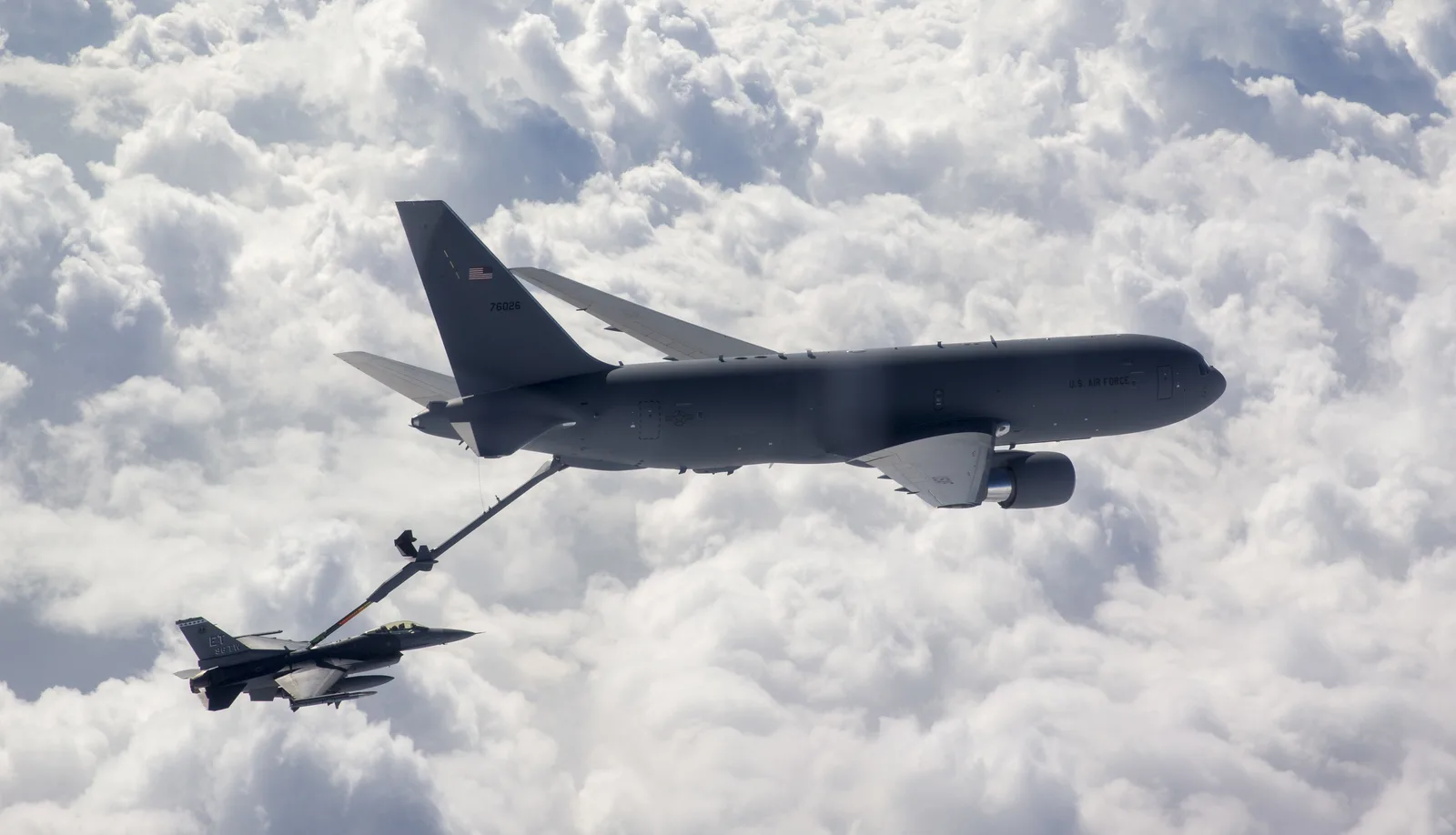
A US Air Force KC-46A Pegasus refuels an F-16 Fighting Falcon during a test mission over Florida in December 2019.
A US Air Force KC-46A Pegasus refuels an F-16 Fighting Falcon during a test mission over Florida in December 2019. (USAF)

A more extreme historical case was the A-12 Avenger II. The US Navy awarded General Dynamics and McDonnell Douglas a fixed-price incentive contract in 1988 with a USD 4.8 billion ceiling. By June 1990, the contractors warned that the programme would exceed that ceiling by an amount they could not absorb. As a result, the Navy completely terminated the programme in January 1991, even despite an attempt to convert the contract into a cost-plus fixed-fee structure. Again, the contract structure itself did not cause the programme’s technical and management failures, but it determined who bore the resulting financial consequences.

A US Navy concept illustration of the A-12 Avenger II, which was under development as an advanced carrier-based attack aircraft before the programme was terminated in 1991.
A US Navy concept illustration of the A-12 Avenger II, which was under development as an advanced carrier-based attack aircraft before the programme was terminated in 1991. (US Navy)

In the final sub-type, fixed-price with economic price adjustment, changes to cost can be covered by a pre-agreed contractual adjustment mechanism. Examples are inflation, labour, or materials cost changes. From the point of view of the customer, fixed-price contracts give the customer greater price certainty.

Cost-reimbursable contracts

With a cost-plus fixed-fee contract, the contractor is reimbursed for allowable costs by the customer, and receives a separate ‘fixed’ fee agreed in advance; it generally does not vary with the actual cost of performing the work.

Likewise, allowable costs are reimbursed under cost-plus incentive-fee and cost-plus award-fee contracts, but part of the contractor’s fee remains at risk. Here, ‘allowable’ refers to a cost that can be reasonably attributed to the contract, permitted by the contract terms and applicable federal rules. Detailed rules governing allowable costs can be found within US Federal Acquisition Regulation (FAR), the set of rules that US government agencies use to buy goods and services.

Specifically, costs such as an engineer’s time spent directly on a particular programme, or a component bought specifically for that programme may be reimbursable. The contractor cannot, however, pass a lobbying bill or a regulatory fine back to the government.

The distinction between the sub-types lies in how the fee is determined: incentive fees rise or fall based on the cost or performance targets, whereas award fees depend on subjective and qualitative evaluations. It is worth noting that these contract sub-types generally do not provide as much profit through cost savings compared to what a successful fixed-price contract can offer.

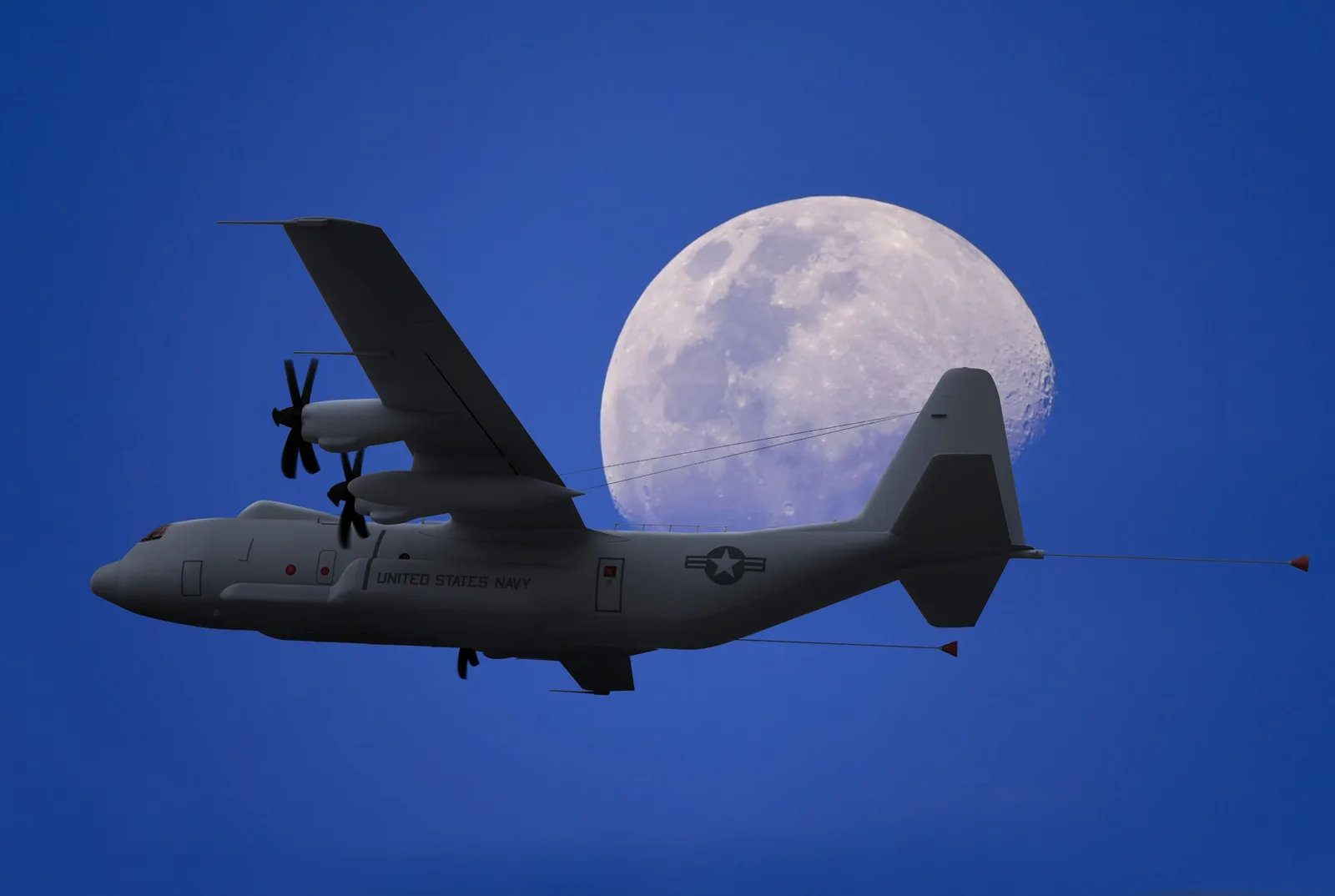
For example, Northrop Grumman was awarded a cost-plus incentive-fee contract for the engineering and manufacturing of the E-130J Take Charge And Move Out (TACAMO) command and control (C2) aircraft in December 2024. The uncertainty of the development work means it is difficult to price the work confidently upfront, but the incentive fees will rise and fall depending on whether the contractor controls costs and meets agreed targets.

A rendering of the US Navy’s future E-130J aircraft, which is intended to succeed the E-6B Mercury in the TACAMO mission.
A rendering of the US Navy’s future E-130J aircraft, which is intended to succeed the E-6B Mercury in the TACAMO mission. (Northrop Grumman)

Another case is the hybrid cost-plus award fee, cost-plus fixed-fee contract awarded to Boeing to continue systems engineering and integration for the Missile Defense Agency. Hybrid contracts are not uncommon in US defence procurement, and they allow for combining various elements of various contract sub-types. Given the breadth and complexity of this work, the award fee element appears well-suited to the contract. This is because the contract covers the integration of many interdependent missile defence systems rather than the delivery of one clearly defined product, so performance is difficult to reduce to a small set of objective targets. The award fee is therefore determined through the customer’s periodic assessment of overall cost, schedule and technical performance.

These examples suggest that fixed-price contracts would have been poorly suited to either programme. Northrop Grumman and Boeing would either have had to price substantial uncertainty into their bids, or risk absorbing losses from problems that could not be estimated reliably at the outset.

Time-and-materials contracts

Lastly, customers with time-and-materials contracts pay the contractor a fixed hourly rate for direct labour costs, and reimburse the contractor for the cost of materials. Large US defence contractors consistently discuss fixed-price and cost-reimbursable contracts in their financial reports, while their treatment of time-and-materials contracts varies. Some contractors classify them alongside fixed-price contracts, as the hourly labour rate is fixed. These contracts leave the customer exposed to the number of hours and quantity of materials ultimately required, although the contractor could still suffer if the agreed hourly rate becomes insufficient.

For example, Lockheed Martin was awarded a hybrid firm fixed-price, time-and-materials contract to upgrade TPS-77 and FPS-117 radars operated by the Royal Jordanian Air Force. Lockheed Martin can charge agreed labour rates and recover material costs for work whose exact scope or duration cannot be confidently determined in advance. Hence, this hybrid contract highlights how time-and-materials can be used when some elements of a contract cannot be predicted, while placing better-defined work under fixed-price terms.

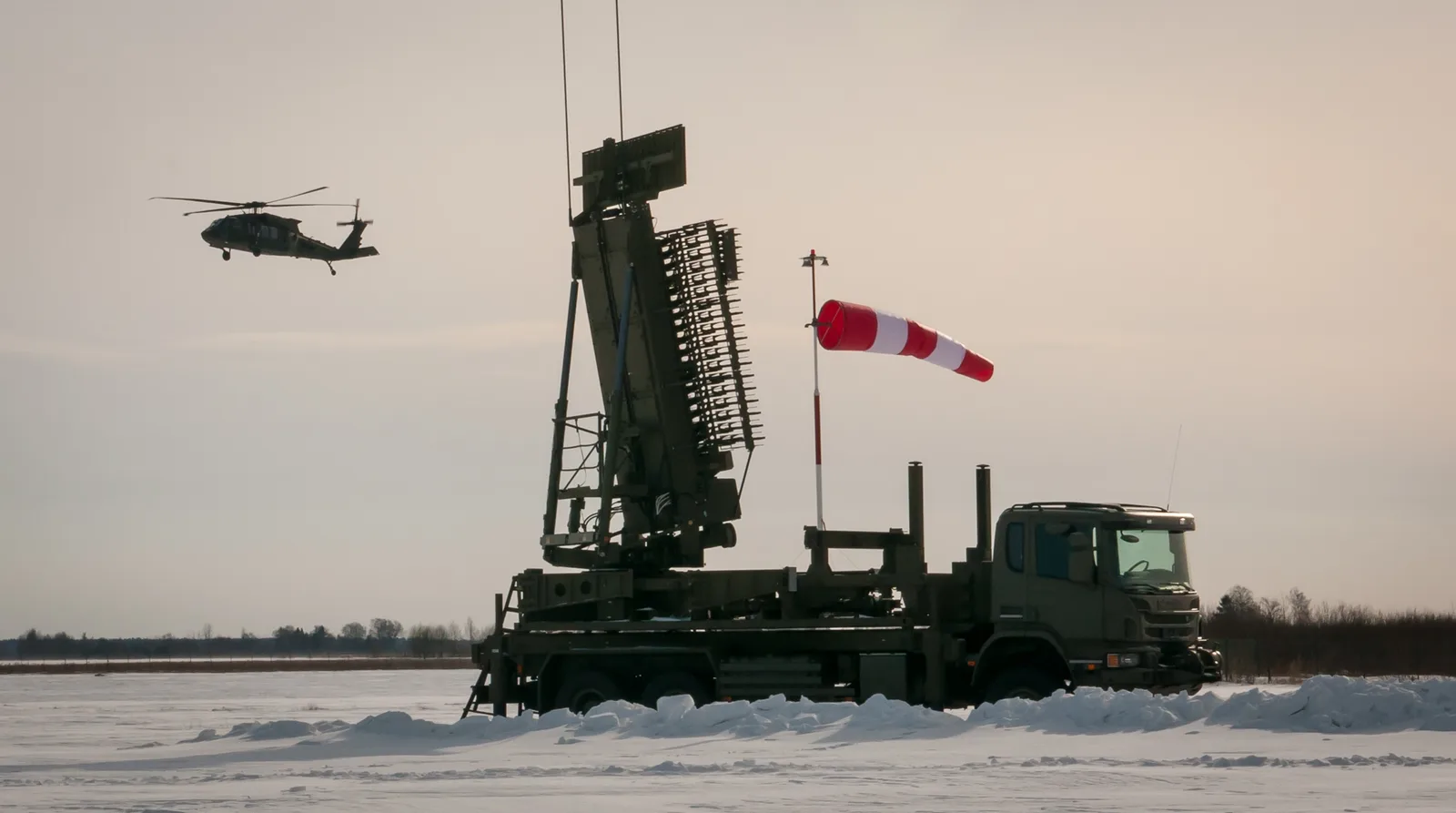
A UH-60 Black Hawk flies nearby a TPS-77 Multi-Role Radar during validation work in Ventspils, Latvia, in March 2018.
A UH-60 Black Hawk flies nearby a TPS-77 Multi-Role Radar during validation work in Ventspils, Latvia, in March 2018. (US Army)

Horses for courses

The central question is not which contract type is inherently best, but whether the selected structure matches the maturity and predictability of the work.

Fixed-price contracts can give a customer greater price certainty, but they may leave a contractor heavily exposed when used for immature or technically uncertain development work – something that both the US and others have experienced in the last decade. Mature, repeatable production, with stable requirements, suits a firm fixed-price contract. In cases where costs can be estimated reasonably well but some uncertainty remains, fixed-price incentive can share that exposure up to an agreed ceiling.

Cost-reimbursable contracts reduce that exposure but transfer more financial risk and oversight to the government. A customer should opt for these for development with substantial uncertainty that cannot be priced confidently.

Time-and-materials arrangements provide flexibility where scope or duration cannot be estimated in confidence, but offer weaker incentives for efficiency. These arrangements are suitable when there is uncertainty over the duration of work or the labour required.

Much of this logic is already contained in the Federal Acquisition Regulation. FAR states that selecting a contract type “requires the exercise of sound judgment”, and directs contracting officers to consider factors including the complexity of the requirement, performance uncertainty, programme duration and acquisition history. Overall, FAR can prescribe the questions to consider, but it cannot provide the institutional introspection required to answer them correctly.

Share post

You may be interested in

Categories

All NewsPolitics

Used tags

ContractsProcurementUSUS ArmyUS NavyUSAF

Similar posts