Buoyed by its AW149 securing the UK’s New Medium Helicopter (NMH) contract in March 2026, Leonardo Helicopters UK is looking to a future where its operation in Yeovil, Somerset – widely known as the ‘home of British helicopters’ – is much more secure that it was last year.
Briefing journalists at the Farnborough International Airshow 2026 (FIA 2026) on 21 July, the company’s managing director, Nigel Colman, also talked up the prospect of future exports, mostly notably in relation to Norway.
Noting that Norway already operates a fleet of 16 Leonardo AW101 helicopters in the search-and-rescue role – a fleet he said was offering a 99% operational availability rate when he visited it last month – Colman pointed to the Royal Norwegian Navy’s pending requirement for new anti-submarine warfare helicopters to deploy on the five Type 26 frigates it has ordered, which are due in service in the 2030s.
“We’re confident that the Merlin [AW101], used extensively by the Royal Navy for anti-submarine warfare, is a strong contender for that requirement,” said Colman. “And there are obvious benefits: the interoperability of platforms between countries would enable shared training and expertise, and the common aircraft type could create opportunities for Norwegian 101 crews to vary their careers between search and rescue and anti-submarine warfare. And as somebody who has operated the Merlin in the land role extensively for many years, I’m very confident that the Merlin AW101 remains the best anti-submarine warfare helicopter [for the requirement].” (Colman had a 32-year career in the Royal Air Force flying helicopters; he served as the commander of the UK’s Joint Helicopter Command from 2020 to 2023 and retired as an air vice marshal).
Leonardo and NMH
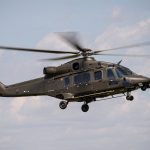
Regarding the NMH programme, under which Leonardo UK has been contracted by the UK Ministry of Defence (MoD) to provide 23 AW149 medium multi-role helicopters, Colman stated, “The UK requirement for a New Medium helicopter represents one of the most significant opportunities for the British rotary-wing sector in a generation. Leonardo’s AW149 is far more than just a modern military helicopter. The New Medium Helicopter programme will see helicopters manufactured in Britain, creating highly skilled jobs, strengthening our sovereign capability and cementing Yeovil as a production hub capable of supporting not only UK requirements but also future export customers. The AW149 already has a growing international customer base and a successful UK programme would position Britain to play a central role in supporting those export opportunities, bringing long-term economic value alongside meaningful national capabilities.”
As the Wildcats fade
Colman noted that Leonardo Helicopters remains committed to supporting the UK’s Merlin HM2 and HC4/4A fleets, as well as the UK’s AW159 Wildcat fleets, although he acknowledged that the UK MoD’s Defence Investment Plan, published on 30 June 2026, had curtailed the service lives of the UK Wildcat fleets, in particular the Wildcat AH1 battlefield utility and reconnaissance variants operated by the Army Air Corps/Joint Aviation Command.
“The UK Defence Investment Plan sets out the government’s intention to begin a phased retirement of the army Wildcat Mark 1 from 2027 onwards, with the Royal Navy’s Wildcat force expected to remain in service well into the next decade, from where the MoD then has intentions and aspirations to replace those with future autonomous capabilities, achieving their objective of uncrewed where possible and crewed only where necessary,” said Colman. He added, however, “Wildcat delivers outstanding operational service for both the British Army and the Royal Navy, and we’re proud of the role it continues to play today. We will continue to work closely with the Ministry of Defence to maximise the capability and availability of the fleet for as long as it remains in service, ensuring the armed forces continue to receive the support they expect. At the same time, the AW159 continues to attract interest internationally and we see opportunities [for future exports].”
Proteus
Leonardo and its operations at Yeovil have not been overtaken by the UK MoD’s shift towards uncrewed platforms where possible. In July 2022 the company received a four-year contract worth GBP 60 million (EUR 70.3 million) to develop a flyable three-tonne technology demonstrator, named Proteus, which made its maiden flight in January 2026.
“All of our work on our technology demonstrator, the aircraft and the digital twin, will lead to products in the future that can operate in the most challenging environments, tasked by crewed platforms and operating autonomously, which ultimately keeps our operators out of harm’s way,” said Colman. “This is not simply about replacing people overnight; it’s about developing technologies, software, sensing and mission systems that will underpin the next generation of aviation capability, whilst ensuring Britain retains the skills and industry that is needed to lead in this rapidly evolving field.”