Türkiye and the US may be on the cusp of a turning point in their defence relations. According to Turkish reports, Ankara is currently selling the Russian S-400 air defence system to a Gulf state – thereby removing the biggest obstacle to its return to the F-35 programme. The sale could also prove beneficial for the US. This story was originally published on Defence-Network.
Türkiye is selling its S-400s
On 10 July 2026, Abdulkadir Selvi, a columnist described as having close ties to the government, wrote in the Turkish daily newspaper Hürriyet that the question was no longer “What will become of the S-400s?”, but rather “What has become of them?”. According to his information, the Russian air defence systems have already been sold to a third country, although this has not yet been officially announced.
Selvi named the UAE or Qatar as possible buyers. Both countries had recently had to fend off Iranian missile attacks. Dwindling stocks of Patriot missiles could therefore plausibly explain the purchase of an alternative air defence system. Russia is reportedly able to ramp up production of interceptor missiles quickly, despite the war in Ukraine.
However, the finalisation of the sale is not solely a Turkish decision. As Hürriyet reported, Kremlin spokesperson Dmitry Peskov confirmed that Moscow and Ankara were in contact regarding the S-400 systems. “This is an extremely sensitive issue for Russia,” said Peskov.
The original purchase agreement from 2017 stipulates that Türkiye may not transfer the S-400 systems to third countries without Russia’s express consent. A transfer to the US, which had been considered in the meantime, was therefore unrealistic (even though Russia stated that the system supplied to Türkiye did not feature the Russian friend-or-foe identification (IFF) system of interest to the US); the possibility of Russia itself buying the systems back, which had also been floated, now appears to be off the table.
The S-400 and the problem for the US
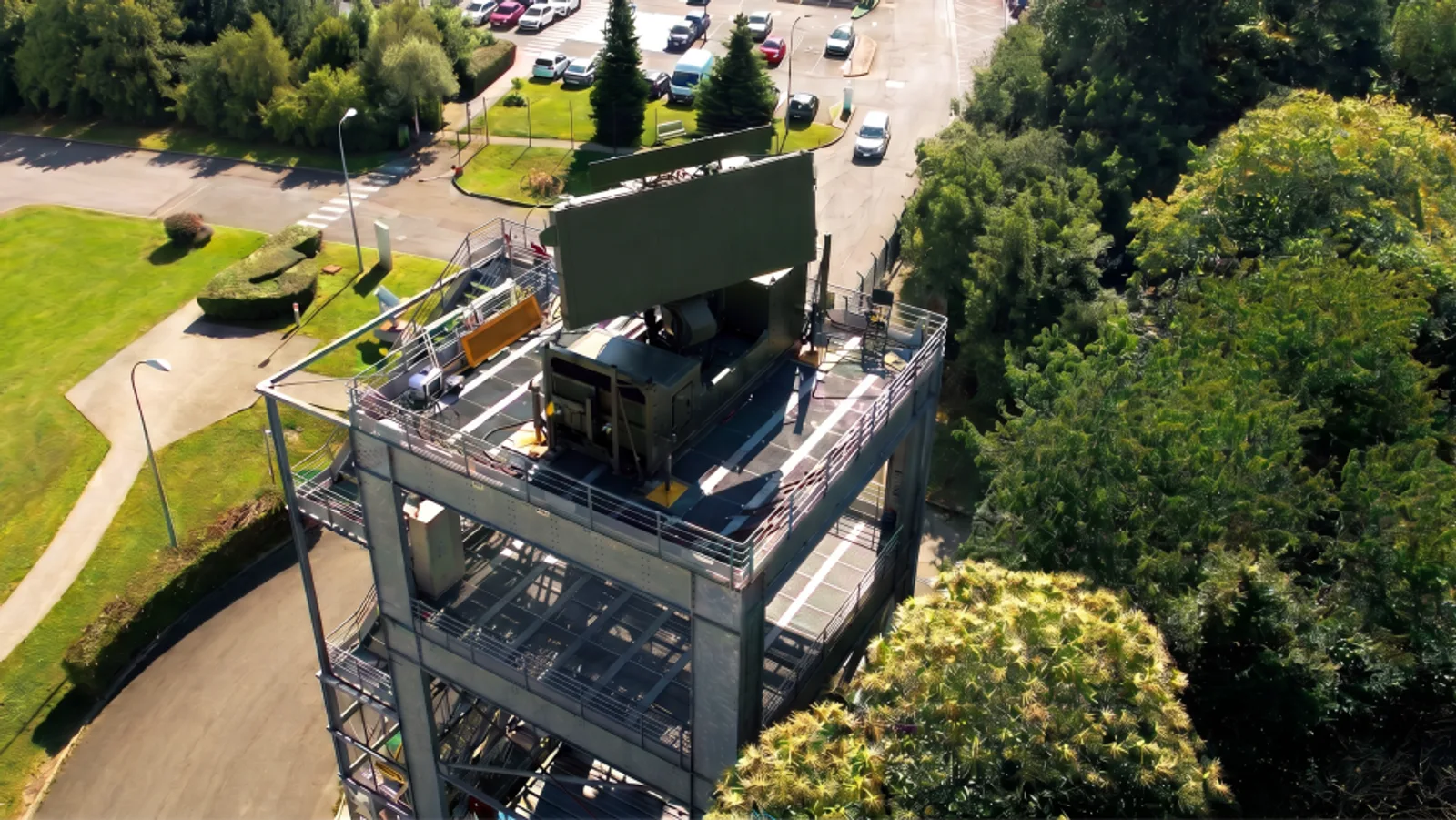
The S-400 Triumf is one of Russia’s most sophisticated ground-based air defence (GBAD) systems. Development by Almaz-Antey commenced in 1986, and the system entered service with the Russian armed forces in 2007. The export variant sold to Türkiye is offered with a range of missiles including the very long-range 40N6E, capable of intercepting aerial threats at ranges of up to 380 km (or 15 km for ballistic threats) and altitudes of up to 30 km.
The system is regarded as highly capable and is able to engage fighter aircraft, drones, ballistic missiles and cruise missiles. In addition to Russia, the system is operated by Algeria, Belarus, China, India, and Russia. Türkiye has, according to its own statements, tested the system since receiving it in 2019, but has not put it into service.

Türkiye’s S-400 acquisition led to its expulsion from the F-35 programme and imposition of sanctions under the Countering America’s Adversaries Through Sanctions Act (CAATSA). The decision was taken just five days after the first S-400 components were delivered. The US was deeply concerned that if Türkiye operated the S-400 alongside F-35 fighter jets, Russian engineers could potentially have used it to gather information on the F-35’s radar signature – a risk deemed unacceptable.
Trump opens the door – without stepping through it
On 7 July 2026, during the NATO summit in Ankara, US President Donald Trump sent a clear political signal. Sitting beside Turkish President Recep Tayyip Erdoğan at the Presidential Palace, Trump said: “We’re going to be taking the sanctions off. It’s time to do that. We don’t want to sanction friends.”
Trump also commented on a possible sale of F-35s to Türkiye: “That is a decision we will make. It is a great aircraft, the best there is – and certainly something we will consider.” Vice-President J. D. Vance had already stated beforehand that Defence Secretary Pete Hegseth and the Pentagon were examining how such a sale could be legally safeguarded.
According to Turkish media reports, Ankara even secured a “3–0” victory at the NATO summit: the lifting of CAATSA sanctions, the commitment to supply GE F110 engines for the Kaan fighter jet, and the door being opened for the purchase of F-35. Trump, however, left Ankara without any formal commitments.
Criticism in Washington – and a possible double success
The Trump administration may have the political will to honour the promises made in Ankara, but the plan is at odds with US law. In the National Defence Authorisation Act (NDAA) for the 2020 financial year, Congress expressly prohibited the delivery of F-35 fighter jets to Türkiye as long as Ankara remained in possession of the S-400 system.
Democratic MPs – as well as those from Trump’s own party – have criticised a potential delivery of the F-35s to Türkiye, regardless of any possible sale of the S-400 system. For example, shortly before the NATO summit, Congresswoman Dina Titus warned against Trump giving a ‘gift’ to Erdoğan.
“The regime of Turkish President Erdoğan has made repeated threats of military action against NATO allies and other partner nations throughout the Middle East and Eastern Mediterranean,” said Congresswoman Titus. Furthermore, she argued that the sale of F110 engines to Türkiye would send entirely the wrong signal.
Sale to a Gulf state may benefit the US
However, if Türkiye is indeed able to sell the Russian air defence system at short notice, the mood in Washington may well shift.
From a US strategic perspective, a Türkiye-friendly approach makes sense: Türkiye is the second-largest NATO member by area, with one of the alliance’s largest armed forces. Closer integration of Ankara into the alliance itself, as well as into Western defence structures, could prove beneficial in countering Russian influence.
Another argument could be that basing the S-400 in a Gulf state would ultimately also protect US soldiers. Following the attacks by Iran and with air defence capabilities exhausted, the numerous US bases in the region are certainly grateful for any protection.
Steel dome: Türkiye is building a domestic air defence architecture
Regardless of the outcome of the S-400 and F-35 negotiations, Türkiye is pressing ahead with the development of a domestic multi-layered GBAD architecture. The concept, known as Steel Dome, was first announced in July 2024 and envisages an integrated, seamlessly networked protective shield against threats ranging from micro-drones to ballistic missiles.
Steel Dome is intended to integrate land- and sea-based systems of Turkish origin. These include components the Korkut 35 mm self-propelled anti-aircraft gun (SPAAG) for the very short-range niche, the Hisar-A short-range and Hisar-O medium-range system, along with the Siper long-range system. The overarching command and control (C2) system, Hakim, is set to coordinate all elements of Steel Dome.
On 10 July 2026, Aselsan, one of the main suppliers for Steel Dome, announced it had signed a EUR 1.47 billion contract to expand the serial production of air defence systems. It was not disclosed which of the 150 Aselsan components of Steel Dome would specifically be funded by this expansion. The news came in the wake of NATO announcing a EUR 26.3 billion integrated air and missile defence initiative, which included Aselsan as a member of the industrial consortium formed for the project.
In 2025, Türkiye awarded contracts worth around EUR 5.7 billion for its new air defence architecture. Of this, around EUR 2.8 billion went to Aselsan.
Will it be the United Arab Emirates?
On 11 July 2026, new rumours circulated through the Turkish media landscape. Several publications, such as Middle East Eye, reported that the United Arab Emirates were the Gulf state said to be the buyer. According to these reports, negotiations have been ongoing for months.
However, both the sources quoted by Middle East Eye and statements by Turkish politicians such as Foreign Minister Hakan Fidan urge caution: The negotiations are not yet concluded, and the sale of the S-400 to the UAE is far from a done deal. Much could therefore depend on Russian President Vladimir Putin, who could yet influence the outcome.
Share post