After selecting Saab’s A26 submarine design to replace its sole ‘Kilo’-class boat in November 2025, Poland has now placed an order for three of the type.


After selecting Saab’s A26 submarine design to replace its sole ‘Kilo’-class boat in November 2025, Poland has now placed an order for three of the type.

Saab signed a contract with the Polish State Treasury Armaments Agency on 29 June 2026 to supply the Polish Navy with three A26-type submarines.
The contract, which also encompasses weapons as well as a training and support package, is valued at around SEK 47 billion (EUR 4.24 billion).
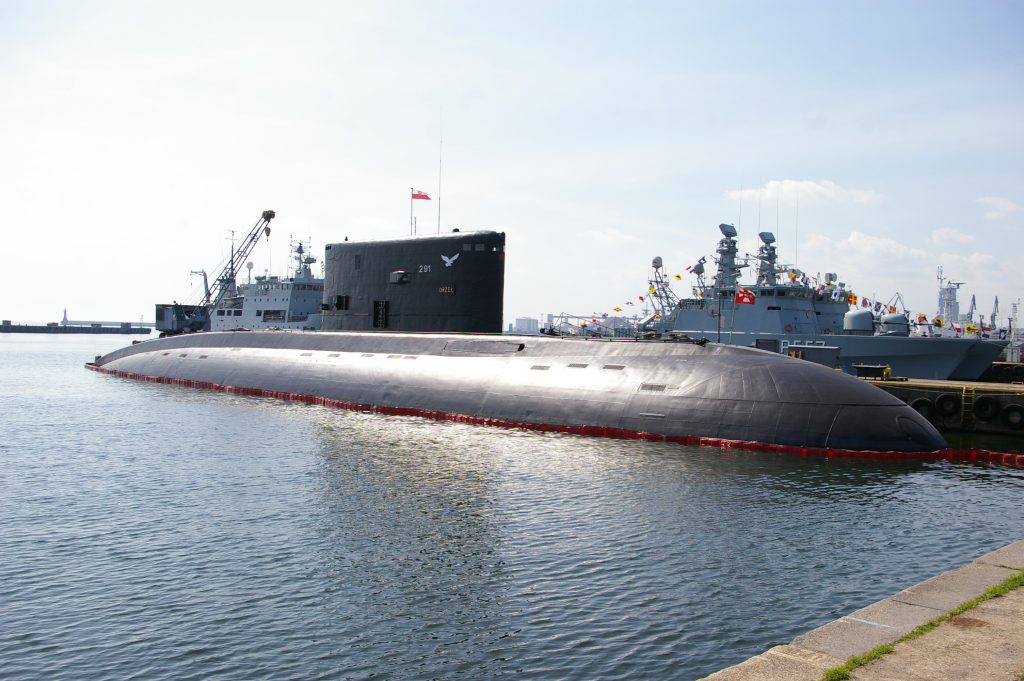
Poland’s selection of the A26 was first announced in November 2025. The ordering of three of these boats will significantly recapitalise the Polish Navy’s underwater warfare capabilities, as it currently operates just one Soviet-designed Project 877E ‘Kilo’-class submarine, ORP Orzel, which is the oldest ‘Kilo’-class boat in service. While the Polish Navy acquired five ex-Norwegian Kobben-class (Type 207) submarines between 2002 and 2003 (four operational and one for spares), the last of these were retired in December 2021.
Swedish Defence Minister Pål Jonson was quoted as saying in a government press release on 29 June, “Poland’s choice of the A26 is based on the submarines’ unique characteristics, specifically developed for the challenging conditions of the Baltic Sea. The shallow waters, complex seabed structures and limited operational space place high demands on stealth, manoeuvrability and endurance – areas in which the A26 offers advanced solutions.”
The Swedish government noted in its press release that, while the first Polish A26 boats are being built, Poland will lease HMS Södermanland, the Swedish Navy’s only remaining submarine of its class, until 2032. This will allow Poland to rapidly reinforce its operational underwater capacity while awaiting delivery of the new A26 submarines, the last of which is due to be delivered by 2038.
“Sweden has also committed to providing support to the New Type Submarine (NTS) programme from approximately 2027 to 2038, with an option to extend,” the Swedish government stated. “This support will include Poland’s participation in Sweden’s test and experiment activities with the HMS Blekinge and HMS Skåne A26 submarines, which will create conditions to accelerate the build-up of Poland’s operational capacity.”
Coinciding with the submarine order on 29 June, Sweden and Poland also launched the Baltic Sea Pact: a deepened bilateral security and defence relationship between the two NATO allies in which maritime co-operation is central. Based on three pillars – co-operation on security and defence policy, military co-operation, and defence industry co-operation – the pact’s objective is to strengthen security in the Baltic Sea region and constrain Russia’s ability to expand its power and inflict harm on the alliance.
The training of Polish submarine crews will begin in August, which is earlier than previously planned. Meanwhile, Sweden’s training capacity has been significantly expanded to meet Poland’s needs.
“This is the most extensive submarine-related training and support initiative that the Swedish Navy has ever implemented in terms of both scope and timeframe,” the Swedish government stated.
Swedish Foreign Minister Maria Malmer Stenergard was quoted as saying, “The ties between Sweden and Poland are stronger than ever, and the agreement signed today is clear evidence of that. In light of the serious geopolitical situation, this is a crucial step for security in the Baltic Sea region.”
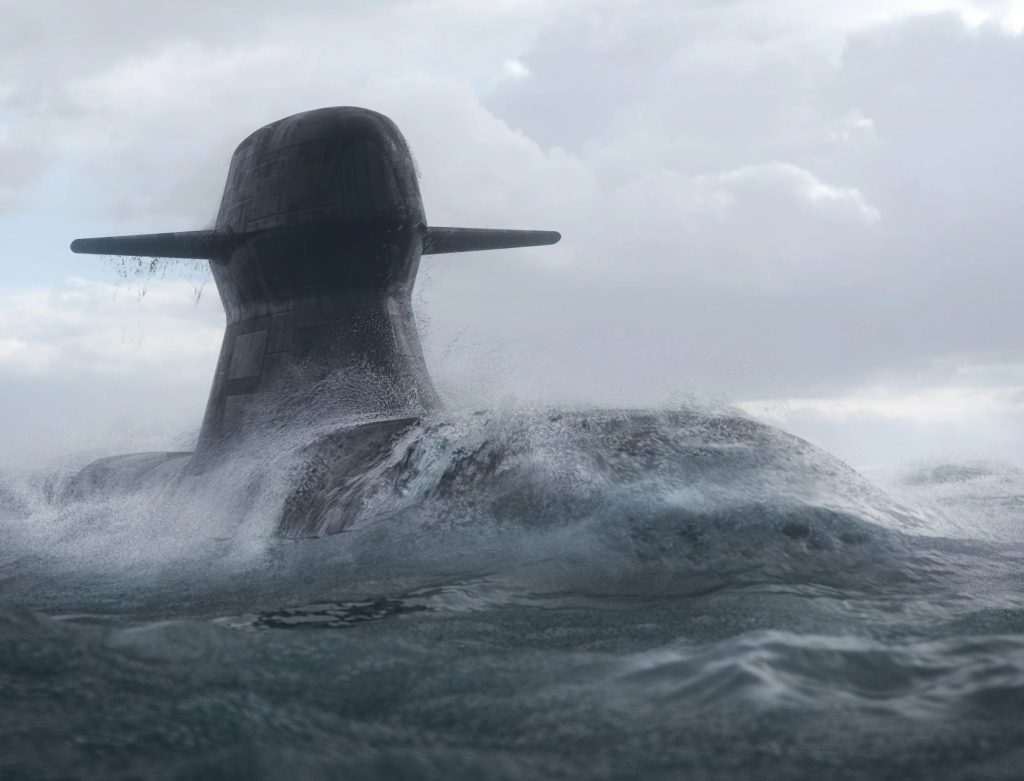
Saab bills the A26 as “the world’s first fifth-generation submarine”, two of which are currently being built for the Swedish Navy as the Blekinge class. The design is diesel-electrically powered but also features Saab’s latest-generation Sterling air-independent propulsion (AIP) system for stealthy and extended submerged endurance.
A number of other features also contribute to enhancing the A26’s stealth characteristics. Magnetic signatures are kept to a minimum by an advanced degaussing system controlled by the submarine’s own sensors; static and dynamic electric signatures are predicted and countered by optimised corrosion control and other measures; and target echo strength is minimised by optimised geometry (as evident in the sail’s distinctive profile) and integrated coating systems.
Saab offers variations of the A26 design, but a Saab spokesperson confirmed to Warsight that Poland has ordered the Oceanic version. This effectively equates to the baseline Swedish A26, which has a length of 66.1 m, a width of 6.75 m and displaces 1,925 tonnes surfaced and 2,100 tonnes submerged.
Typically crewed by 17 to 26 personnel (although it can accommodate up to 35), the baseline A26 has an endurance of 45 days in total, including 18 days submerged).
The A26’s main armament consists of four 533 mm forward torpedo tubes that can deliver Saab Torped 62 heavyweight torpedoes, although the boat’s modular design allows the future accommodation of vertical launch tubes for cruise missiles. Additionally, centred between the boat’s torpedo tubes is a multi-mission portal than can deploy remotely operated vehicles, unmanned underwaters vehicles or special forces and their delivery vehicles.