US President Donald Trump continues to falter in attempting to find an off-ramp to the conflict he instigated with Iran.


US President Donald Trump continues to falter in attempting to find an off-ramp to the conflict he instigated with Iran.

On 25 April 2026 US President Donald Trump, having announced that special envoy Steve Witkoff and son-in-law Jared Kushner would travel to Islamabad, Pakistan, for peace talks with Iran the previous day, cancelled the trip.
Posting on his Truth Social media channel Trump stated that the cancellation was because “we have all the cards, they have none”, and that if Iran wants to talk, “all they have to do is call”.
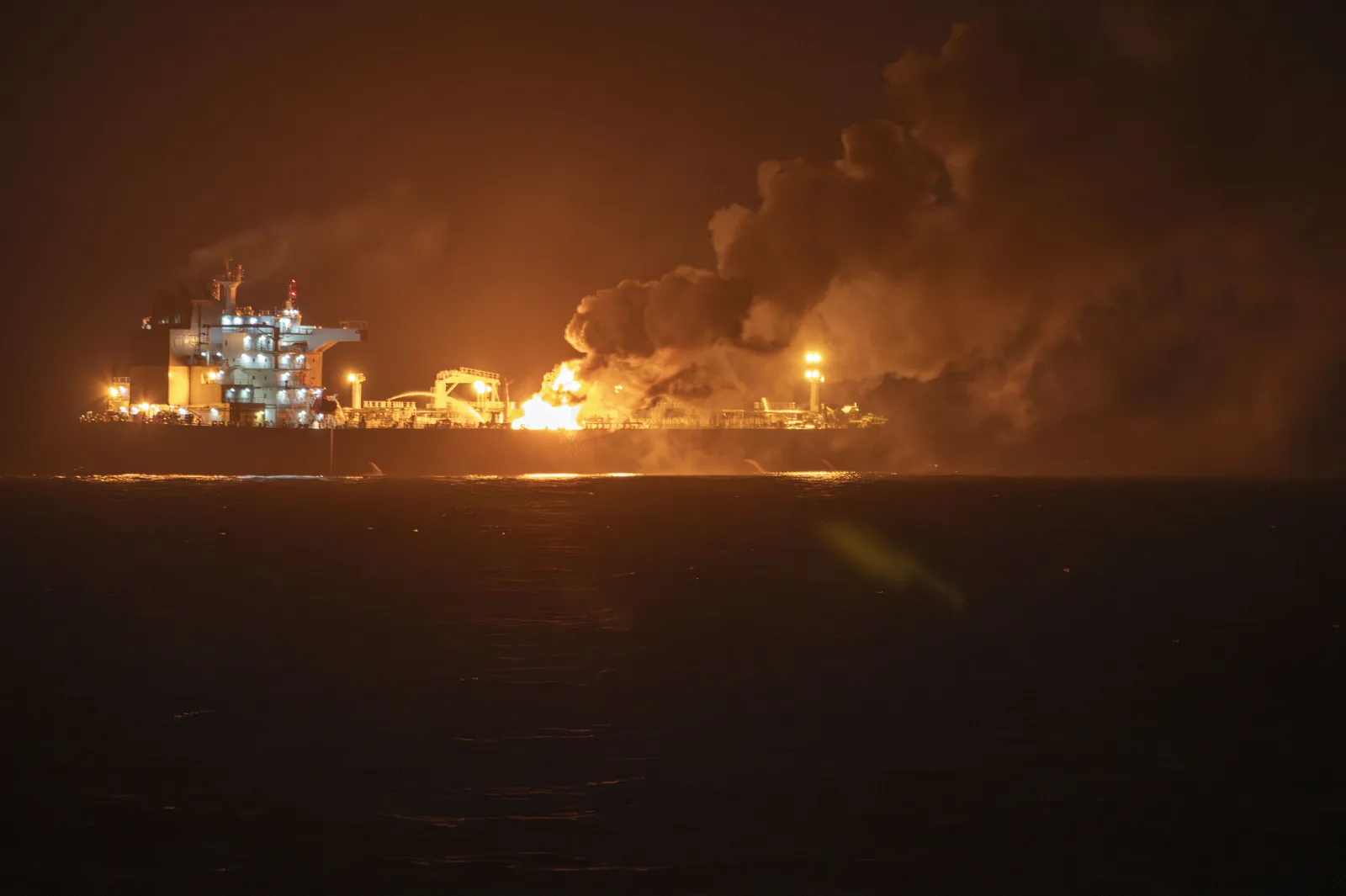
The notion that the United States has “all the cards” is unlikely to be believed by many outside the Trump Administration, not least by the Iranians, whose ‘ace up the sleeve’ is their continued ability to choke international shipping in the Strait of Hormuz.
Unlike the US, Iran has sent dignitaries to Islamabad. Iranian Foreign Minister Abbas Araghchi, for example, visited the Pakistani capital on 24 and 26 April, while also travelling to Oman on 26 April and visiting Russian President Vladimir Putin in St Petersburg on 27 April.
A two-week ceasefire announced by Trump was scheduled to end on 22 April, but the US president then extended it indefinitely. This surely suits Tehran more than it does Washington, DC. While Trump’s war of choice lingers on, the Iranian regime must be aware of the damage this could cause Trump’s Republican Party in the US mid-term elections in November – including among Trump’s Make America Great Again (MAGA) political base, who were promised no more endless foreign wars – while in underground sites across Iran the Tehran regime is no doubt replenishing its stocks of missiles and bomb-laden drones.
Meanwhile, there is increasing evidence to support the premise that Trump was effectively hoodwinked by Israeli Prime Minister Benjamin Netanyahu into joining an attack on his nemesis. Multiple news agencies have reported that Netanyahu, while temporarily accepting US attempts to curb Iran’s nuclear ambitions through diplomacy, effectively persuaded Trump that a dual US-Israeli strike on Iran would be an easy war against a regime that, shaken by internal protests, was ripe for toppling. This appears to be a key reason why the prospect of Iran choking off the Strait of Hormuz was not adequately considered as a potential consequence of the US/Israeli onslaught against Iran that began on 28 February 2026 as Operation ‘Epic Fury’ and Operation ‘Roaring Lion’ respectively.
Since 13 April US Central Command (CENTCOM) forces began implementing a blockade of all maritime traffic entering and exiting Iranian ports: an operation that has led to shots fired and the boarding of shipping deemed tied to Iran. Beyond these operations, however, the general absence of open conflict amid Trump’s attempts to deliver an ‘off-ramp’ for Operation ‘Epic Fury’ surely only works in Iran’s favour.
On 14 April US Secretary of War Pete Hegseth, speaking at a Pentagon press briefing, again tried to push responsibility for opening the Strait of Hormuz onto US allies in Europe and Asia, asserting that the “time for free riding is over”.
“We are not counting on Europe, but they need the Strait of Hormuz much more than we do and might want to start doing less talking and having less fancy conferences in Europe and get in a boat,” Hegseth stated.
These are allies who were not consulted in the US decision to go to war with Iran and – especially with regard to the US’ NATO allies in Europe – have been constantly disparaged by numerous senior members of the Trump Administration.
Further to this, the Trump Administration has even moved to try to punish its erstwhile European allies for not being at its beck and call, threatening, for example, to cut off trade with Spain and move to suspend it from NATO, while suggesting that Washington will revise its attitude to UK sovereignty of the Falkland Islands.
While none of these threats really have any teeth in reality, they only serve to make it increasingly likely that the US will remain on its own in grappling to resolve its war of choice against Iran.