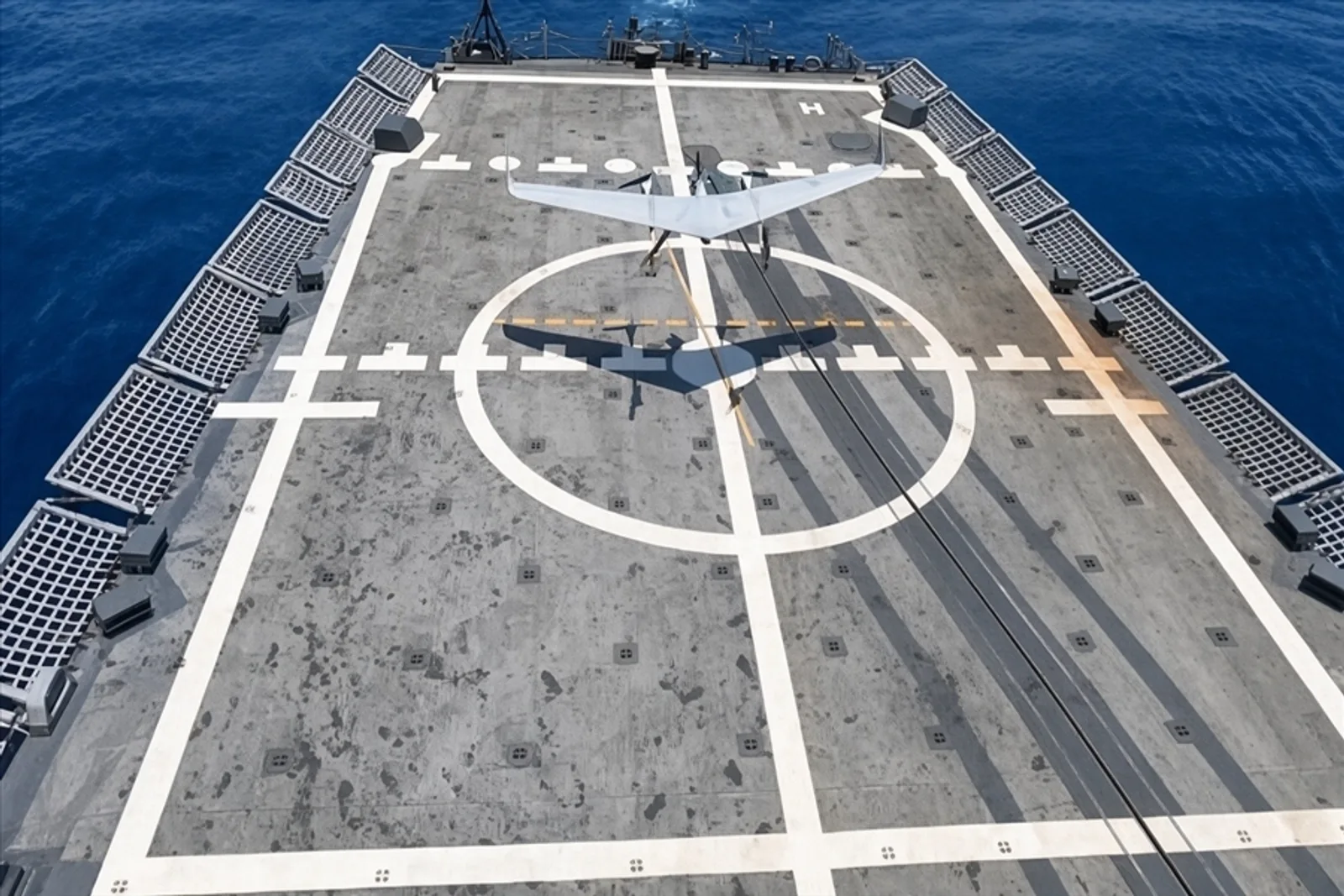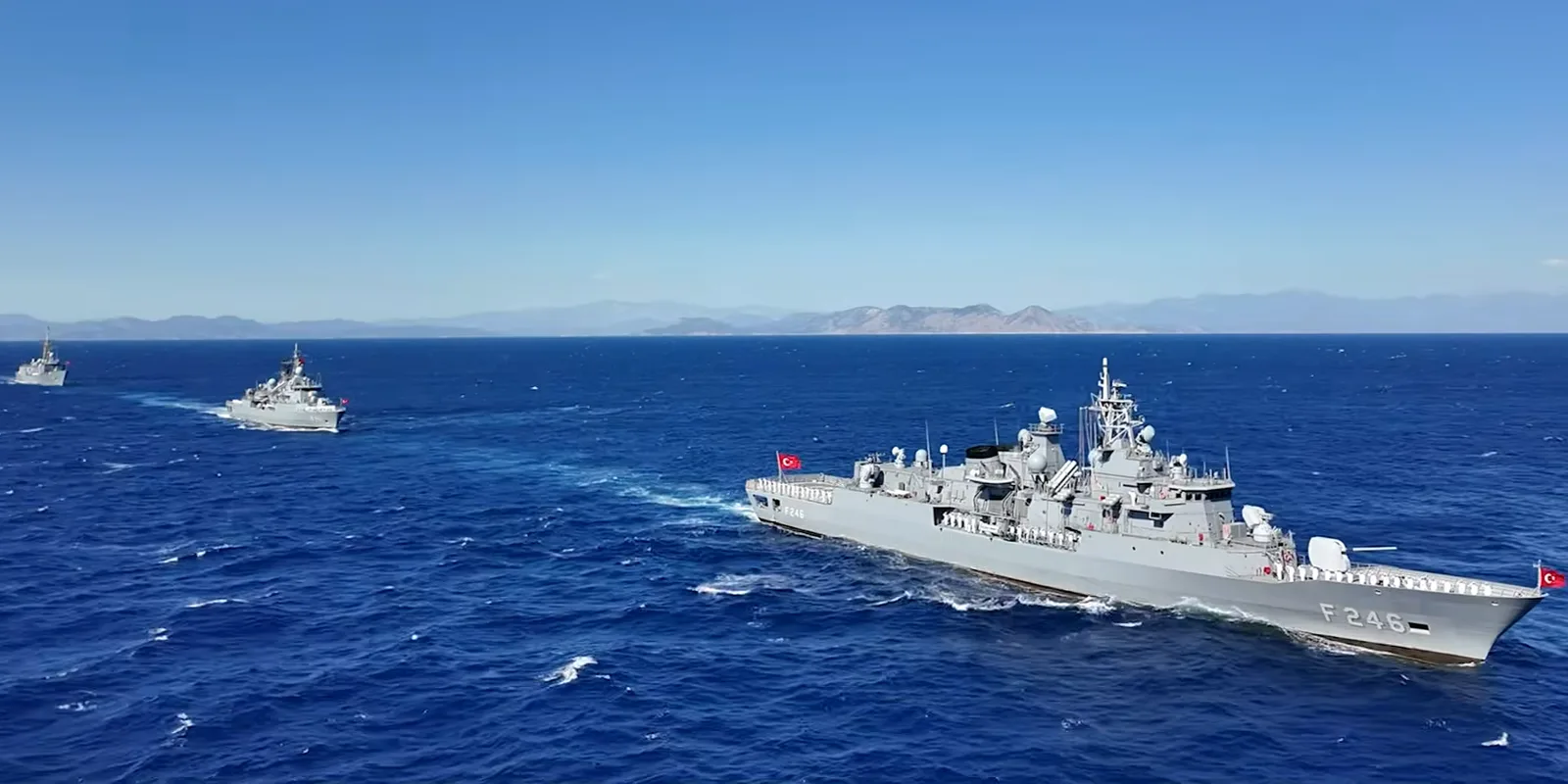
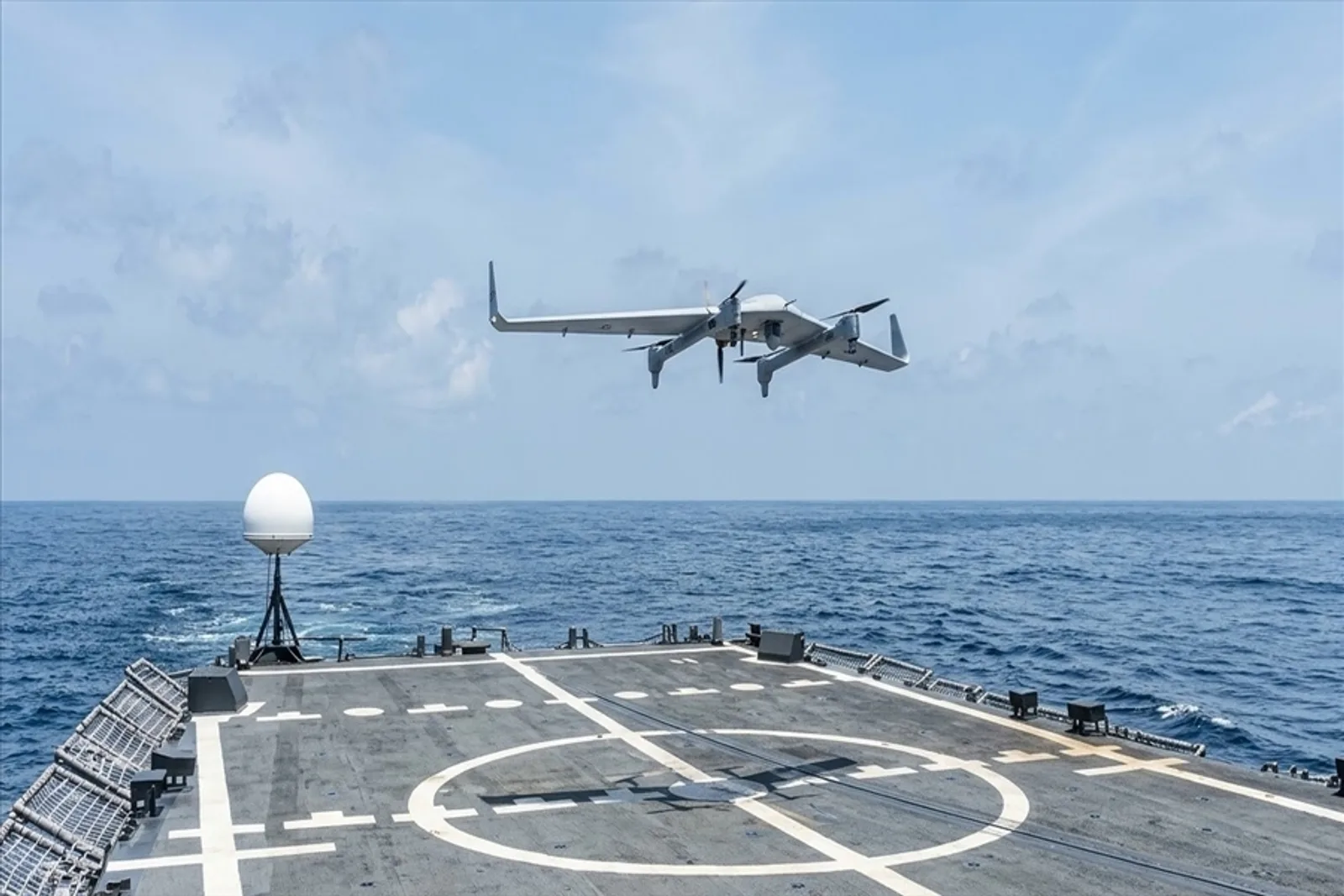
The first at-sea flight tests of the Kalkan vertical take-off and landing (VTOL) unmanned aerial vehicle (UAV) have been conducted off the frigate TCG Gelibolu, the Turkish Naval Forces announced on 25 October 2026.
The flight tests were conducted while TCG Gelibolu, a former US Oliver Hazard Perry-class guided missile frigate transferred to Türkiye on 5 January 1999, was operating as part of the Turkish Somali Naval Task Group in the Indian Ocean.
While posting a number of images of the flight tests, the Turkish Naval Forces did not disclose further details.
Kalkan UAV characteristics
Developed by Turkish UAV specialist Bayraktar, the Kalkan VTOL UAV is designed to be a highly versatile platform for intelligence, surveillance and reconnaissance (ISR) missions. Featuring a fixed wing with a span of 5 m, the Kalkan is powered in level flight by an internal combustion engine but uses four electrically powered rotors to take off vertically. The UAV has a cruise speed of 58 KIAS (89 km/h), a maximum speed of 55 KIAS (102 km/h), a service ceiling of 10,000 ft (3,048 m), an endurance of six hours and a payload capacity of 3 kg. Its typical payload includes the BG160 opto-electronic/infra-red sensor with laser rangefinder developed by Baykar.
The Kalkan is capable of fully autonomous take-off, cruise and landing operations, as well as semi-autonomous cruise missions, and has a 70 km+ communication range. It features an advanced flight control architecture, enabling autonomous route tracking, object tracking, loitering and return-to-home functionality.
Türkiye’s assistance to Somalia
Türkiye’s Somali Naval Task Group is part of the country’s initiative to strengthen Somalia’s capacity to protect its waters from piracy, illegal fishing and other maritime threats. It was established following a defence and economic co-operation framework agreement signed by Türkiye and Somalia in February 2024. This 10-year partnership includes Turkish assistance for the construction, training and equipping of the Somali Navy.