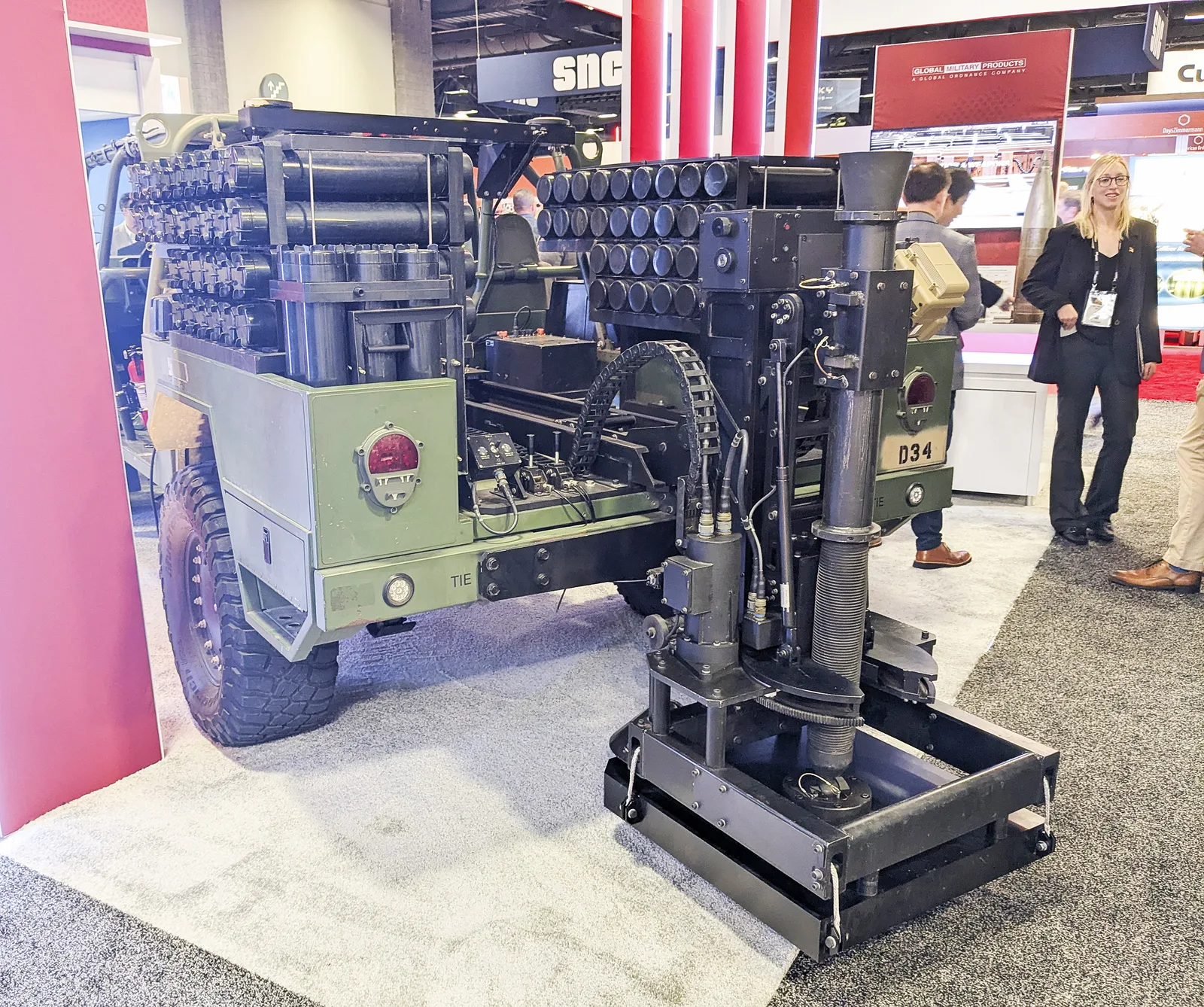
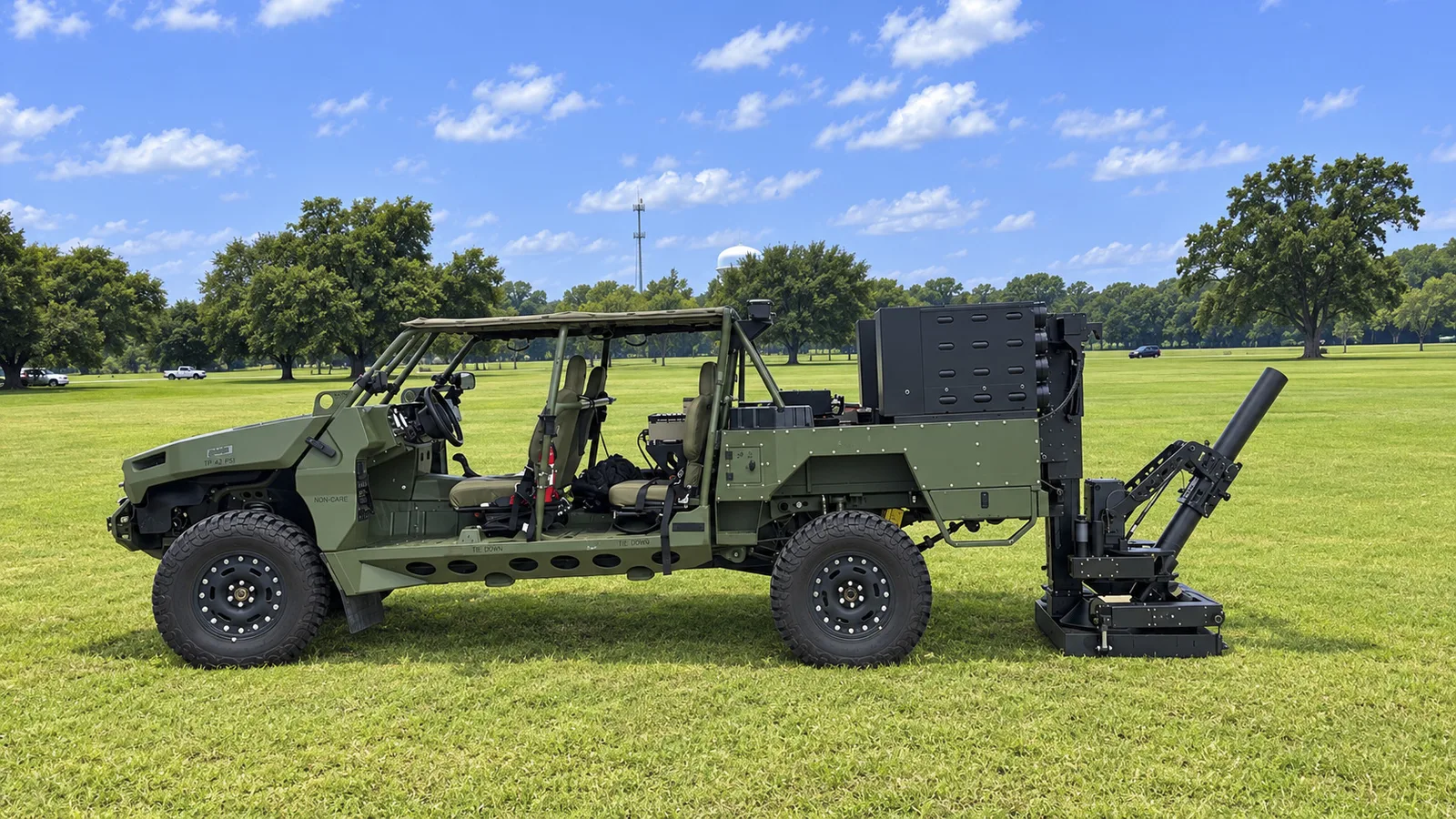
US company Global Military Products (GMP) has made significant progress in recent weeks with its Scorpion mobile mortar systems, having recently introduced its 120 mm Scorpion Medium system to add to the previously developed Scorpion Light 81 mm system.
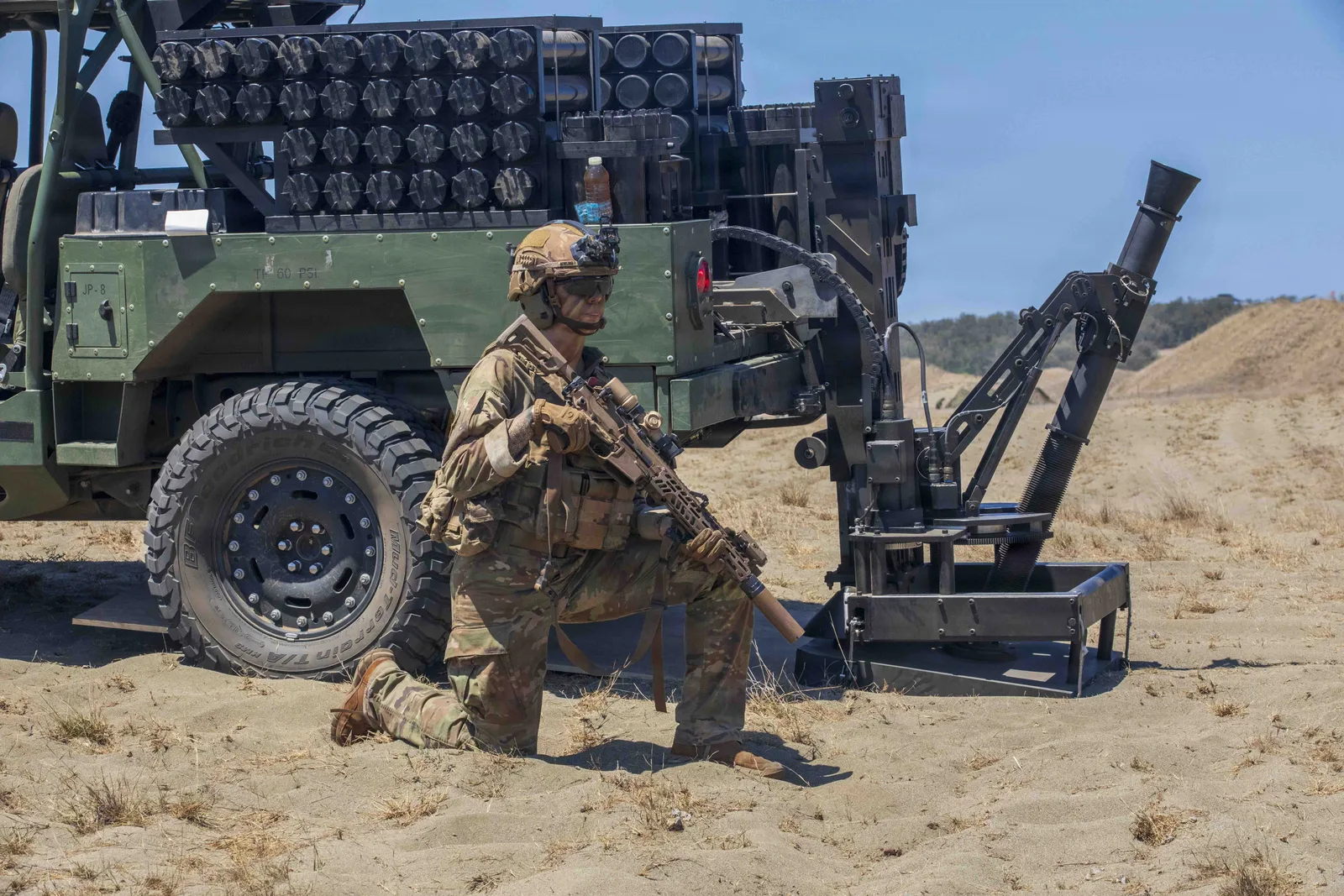
In early September 2026 it was announced that the US Army had awarded GMP a USD 12.9 million (EUR 11.5 million) contract for the procurement and integration of 16 Scorpion Light mobile mortar systems under the Department of Defense Ordnance Technology Consortium (DOTC) Other Transaction Authority (OTA) framework. The systems will each be integrated onto a GM Defense Infantry Squad Vehicle – Utility (ISV-U) and employ US Army digital fire control technologies and government-furnished M253 mortar barrels.
GMP then unveiled the Scorpion Medium mortar system, also integrated onto an ISV-U, at this year’s Army Maneuver Warfighter Conference, held at Fort Benning, Georgia, from 15-17 September 2026.
Scorpion Medium has the same architecture and shares 95% parts commonality upgrade capability as the Scorpion Light, thus streamlining training and logistics. When mounted on an ISV-U, the Scorpion Medium is still light enough for the vehicle to carry 16 120 mm mortar rounds (an ISV-U can carry at least 42 81 mm rounds ready to fire).
As the 16 Scorpion Light systems are received and trialled by the US Army, the Scorpion Medium system is now going into a demonstration phase, initially with an unnamed East Asian country in November 2026 and then with the US Army in the first quarter of 2027, according to James Knight, director of business development at GMP.
Scorpion mortar origins
Speaking to Warsight at AUSA 2026 on 13 October, Knight explained how the Scorpion Light and Medium systems came about.
“It was through our partners NTGS [New Technologies Global Systems] in Spain that we introduced Scorpion into the United States,” he said. “It was a 120 [mm system], it was pneumatic, it had some different ergonomics to it, and over the past five years that has morphed into Scorpion Light. We took a lot of soldier feedback; we did testing with the army; we upgraded things; we changed it out. We just really changed the entire feel of the vehicle due to the army’s feedback and we listened to them, and obviously they liked it enough to purchase it and take it and do some prototyping.
“We’ve taken all of that feedback, and now we have put that into a 120 mm version in Scorpion Medium,” said Knight. So everything that we’ve taken from soldier feedback, lessons learned, obviously integration and change, we’ve now done that in a 120 mm version as well, and we’re the only ones that have the ability to integrate that type of platform on an ISV-U and to do that with a 120 mm system.”
Although GMP has mounted its Scorpion systems onto ISV-Us, the systems are designed to have simple installation features and are vehicle agnostic.
“It’s basically six to eight carrier bolts that allow it to be installed on any vehicle and we can adapt it to any payload,” said Knight. “So taking it from an 81 to a 120 and putting it on the ISV was a very simple process because we already had a lot of that engineering work already done.”
Knight explained that, because Scorpion Light and Scorpion Medium are hinged mortar systems, where the mortar’s baseplate is lowered off the back of a vehicle all the way to the ground, the recoil force when the weapon fires is transferred directly into the ground and is not through the vehicle. It therefore does not cause the kind of maintenance issues with vehicle components that a fully mounted mortar might cause with a lighter, tactical vehicle. Knight additionally noted that the Scorpion system employs a novel non-seating baseplate rather than a traditional spaded baseplate, since the weapon is stabilised by its connection to the vehicle, and that this additionally means that the Scorpion systems can readily be fired hard terrain such as concrete rather than requiring softer ground to be found.
If for any reason the carrier vehicle becomes disabled, Scorpion mortar systems can be dismounted in 30 seconds and operate in the traditional way, said Knight.
For fire missions the Scorpion systems are integrated with US Army proprietary digital fire control technologies that link them to the army’s digital battle management system. Knight also noted that GMP is collaborating with Thales Defense & Security to integrate the latter’s Low Cost Data Architecture (LOCODA) Radio Adaptable Transport (RAT) and AN/PRC-170 Javelin lightweight radio systems onto its ISV-U-based Scorpion systems.
Thales secured an order for more than 5,000 LOCODA RAT systems in June 2026 as part of the US Army’s tactical communications transformation effort. The Thales LOCODA RAT and Javelin systems are Mobile Ad Hoc Network (MANET) radios that create a decentralised, self-forming and self-healing mesh network that does not require cell towers, routers or a central base station.