Newcastle-based Pearson Engineering, known most universally for its capabilities in mine-clearing and combat engineering, has been deepening its co-operation with various Ukrainian entities, most recently with the company’s third visit to Ukraine since the Russian invasion there in February 2022.
During a press facility in Newcastle on 10 September 2026 the two company staffers who made the latest trip to Ukraine, which began on 24 August, briefed select journalists on their objectives.
Douglas Muir, the company’s head of sales for defence manufacturing, explained first and foremost that the Ukraine conflict has revolutionised the tactics, doctrine and technology used in 21st century to such an extent – including in mine warfare and mobility/counter-mobility considerations – that it became imperative for Pearson to keep up with these trends.
“Just from our first week there we learned a lot about what works and what doesn’t work. And the closer we can stay to the end users in Ukraine and other Ukrainian industry partners, the more we’ll understand about what works and what doesn’t work,” said Muir, adding, “Obviously, that aligns very well to NATO and the UK’s strategy regarding Ukraine.”
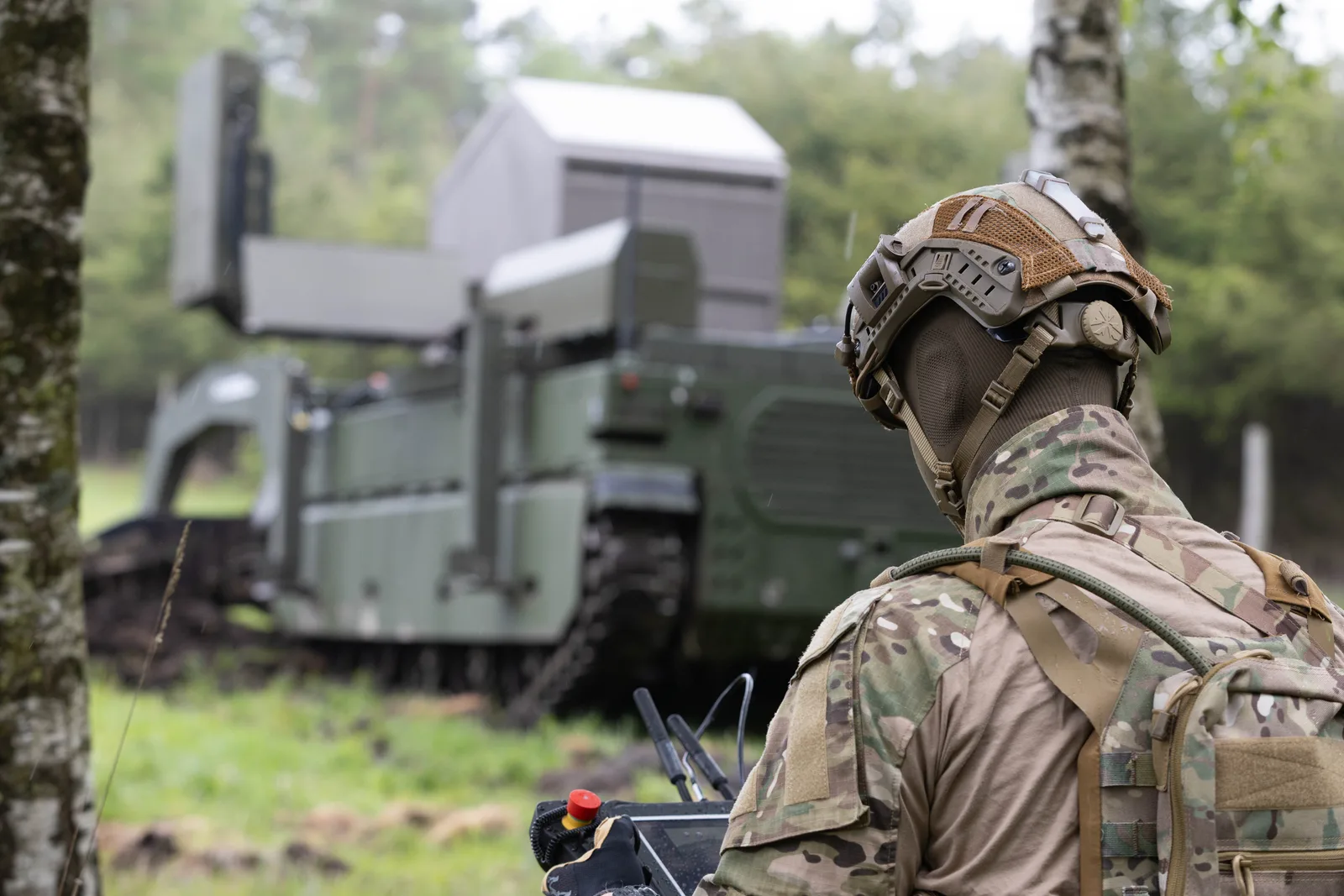
Since the Russian invasion Pearson Engineering has delivered hundreds of pieces of equipment into Ukraine, including mine ploughs, mine rollers and the company’s Minewolf uncrewed mine and route clearance platforms. These have been sent both via the UK Ministry of Defence’s Taskforce Kindred, which co-ordinates military support, equipment donations and procurements for the Ukrainian armed forces, and through the US Foreign Military Sales mechanism.
However, while Ukraine is obviously a very large market for Pearson Engineering and its capabilities, Muir added that the company’s assistance to and co-operation with Ukraine “is also the right thing to do” from a moral perspective.
In Pearson’s latest visit to Ukraine Muir and Eifion Foster, the company’s support engineer for Ukraine, visited numerous Ukrainian entities, including the country’s Central Directorate for Innovations, Mine Action Department and various military and other organisations concerned with dealing with the threat from Russian mines. In particular the company met with defence-industrial concern Ukrainska Bavovna (UB), with whom Pearson entered into a memorandum of understanding in September 2025, following this up with a licensing agreement in June 2026 that will support the provision of high-quality repair and maintenance services for Pearson systems already delivered to Ukraine, the training of users of engineering equipment, and the further development of in-country support capability for Pearson Engineering systems, in relation to both the current military campaign and the restoration of land for domestic and agricultural purposes should a ceasefire to the conflict ultimately ensue.
With regard to Pearson’s future relationship with UB, Muir said that the company is “currently in the process of having discussions about trying to develop that further”.
The Pearson representatives also observed demonstrations of unmanned ground vehicles (UGVs) being used to counter the Russian mine threat, such as those provided by Ukrainian company Trembita.
As Muir explained, the takeaways from the visit were numerous. Muir reported that around 60% of the mines encountered on the Ukrainian battlefront are magnetically activated, prompting Ukrainian forces to install as many magnetic mine activation devices on the front of manned vehicles and UGVs as possible.
Muir also noted that in Ukraine “the end user, the soldier in the front line, also seems to have quite a lot of say in what kit and equipment’s used”. He explained that the Ukrainian armed forces are essentially brigade centric, with the brigades having their own funding.
“Quite a lot of companies have gone directly through a brigade, got equipment to the front line,” said Muir. “The soldiers have really liked it. They send the demand signal back up, and then they’re like, ‘Well, we want lots of this, please, because it works really well.’”
However, Muir caveated this with the fact that Russian forces then find a counter to the Ukrainian developments.
“It works really well for potentially about two months until the Russians find a counteract for it. That might work for another for two months until Ukraine finds a counteract for it,” he said, emphasising the continual advances and counter-advances of innovation on the Ukrainian battlefront.
In terms of what the Ukrainian military requires, Muir said that this equated to mass volumes of systems that are cheap, fast to procure, easy to repair and service and that are uncrewed.
Muir also noted the joint endeavour being mounted by Ukrainian industry. “There’s no rivalries between companies in Ukraine,” he said. “Everyone is literally just working together, sharing experiences, sharing information, trying to obviously win the war in the shortest possible timeframe.”
Muir additionally reflected on that character of the Ukrainian battlefront, where he noted that “it’s almost like the no man’s land is now behind you because of the drone threat …. You’ve got your front line, which can be about maybe a kilometre deep, you’ve got your enemy forces, but actually 20-30 km behind you not too much is happening in that area, and if anyone’s in that area they’re hiding because of the drone threat that’s being sent over. And so the challenge is getting stuff from the rear echelon safely forward to the front line, safely back again – and you could probably mirror that onto the other side; the Russians will be experiencing the same.”
The prevalent Russian mine threats
Asked by Warsight what the main Russian mine threats encountered in Ukraine are, Foster listed TM-62 anti-tank mines and PTM-3 anti-vehicle mines dropped from drones (both magnetically influenced), PFM-1 scatterable air-dropped ‘butterfly’ anti-personnel mines (pressure detonated), PMN-2 pressure-actuated anti-personnel mines, as well as POM-2 and POM-3 air-dropped scatterable anti-personnel mines (the former deploying tripwires while the latter uses seismic sensors).
In addition to these threats however, Muir and Foster referred to what are called ‘waiter drones’: FPV-drone-like loitering munitions that can be situated and detonated in place – on a road for example – or can take off to pursue a target, presenting a particularly lethal, mobile mine threat that could proactively attack any attempt to clear it.
Warsight has previously reported that Ukrainian army units are training their personnel to employ combat shotguns as a rudimentary counter to Russian FPV drones.
Muir and Foster additionally noted that the Russians are increasingly using cheap printed circuit boards imported from China to convert mechanical- or pressure-activated ‘dumb’ mines into more sophisticatedly activated devices.
Pearson Engineering and the Armstrong Works
Pearson Engineering and its wholly owned subsidiary, Responsive Engineering, operate out of Newcastle’s famous Armstrong Works, the location of which was originally procured by Armstrong-Whitworth in 1897. Initially a site for the production of naval vessels, the advent of the First World War saw Armstrong-Whitworth produce 102 tanks, more than 13,000 artillery pieces, 14.5 million shell cases and 47 warships between 1914 and 1918.
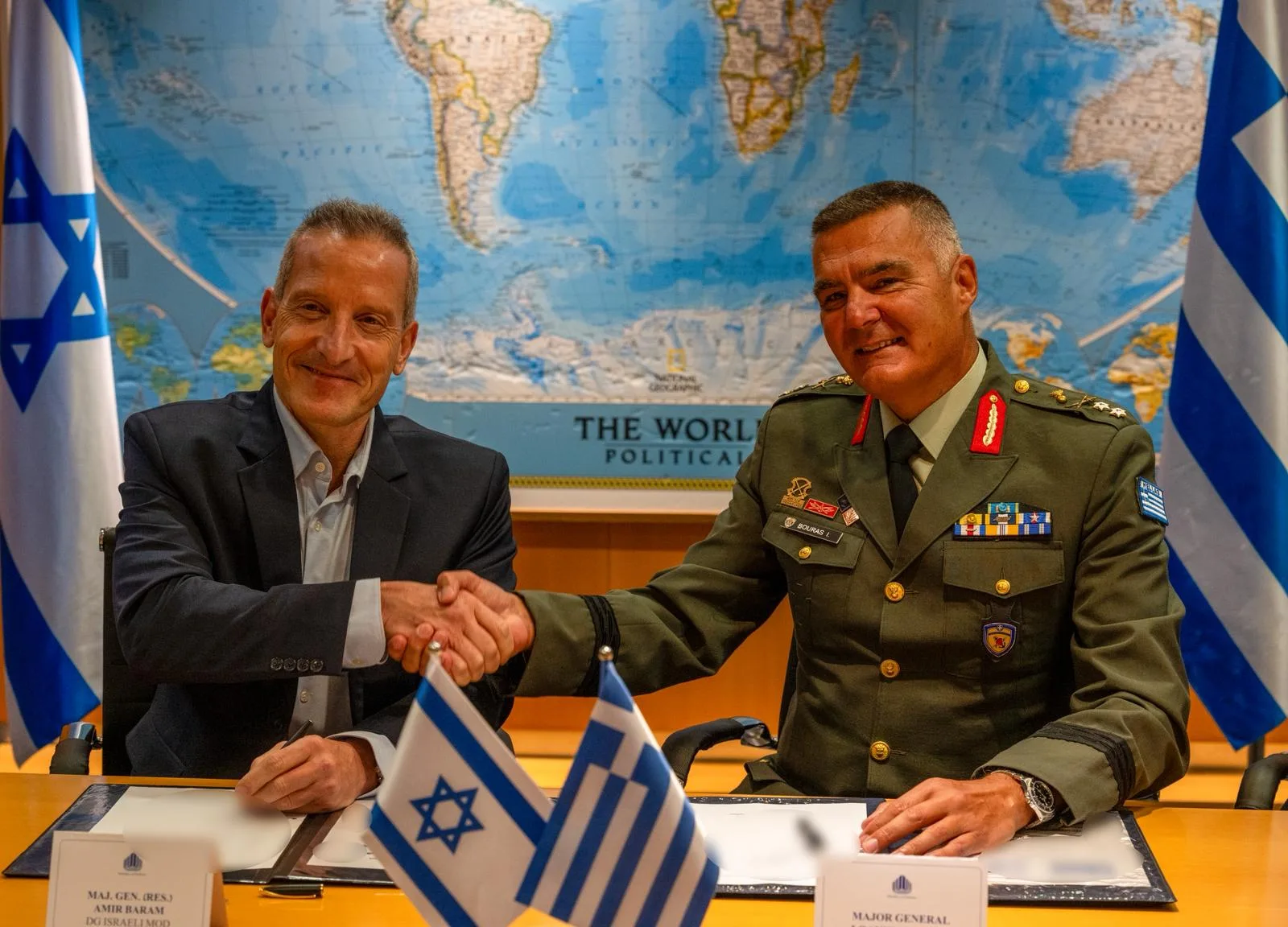
While Responsive Engineering first moved to the Armstrong Works in 2014, Pearson Engineering followed in 2015. After both companies were acquired by Israel’s Rafael Advanced Defense Systems in September 2022, the actual Armstrong Works site itself was acquired in April 2024.
Although AFV manufacturing operations at the Armstrong Works entered a hiatus in 2014, it returned in 2022 when the production of turret structures for the British Army’s Challenger 3 main battle tank was initiated. This AFV construction work is currently complemented by the production of armour packs for the British Army’s Ajax family of tracked AFVs and infantry carrier mission modules for the army’s fleet of Boxer 8×8 AFVs. In addition, the site produces structures for the Dry Support Bridge produced by KNDS UK as well as conducting various heavy engineering work for other defence platforms, including UK nuclear submarines.
The modern Armstrong Works building, which stretches for more than half a kilometre along the banks of the Tyne, has seen significant investment from Rafael, amounting to GBP 8 million (EUR 9.34 million) over the last two years.
Ian Bell, group CEO of Pearson Engineering and Responsive Engineering, noted that this has especially included a heavy investment in new factory equipment, including a machine called the Mazak Versatech V-140N that reportedly cost the best part of GBP 1 million on its own and requires an 11 m base to fully stabilise its operation (the dozens of engineering machines in the Armstrong Works are typically working to tolerances of within 0.01 mm). The Mazak V-140N – the largest such machine in Europe – allows the final machining work to be conducted on two full Challenger 3 turrets at once: a capability that will soon be doubled by the acquisition of a second machine.
Regarding the investment from Rafael, Bell noted, “We’ve I’ve never been told ‘No’ if we need some equipment, so I think we’re very privileged in that respect, that we have we have an owner who is not at all afraid to spend money and invest … and maintain that sovereign capability for us.”