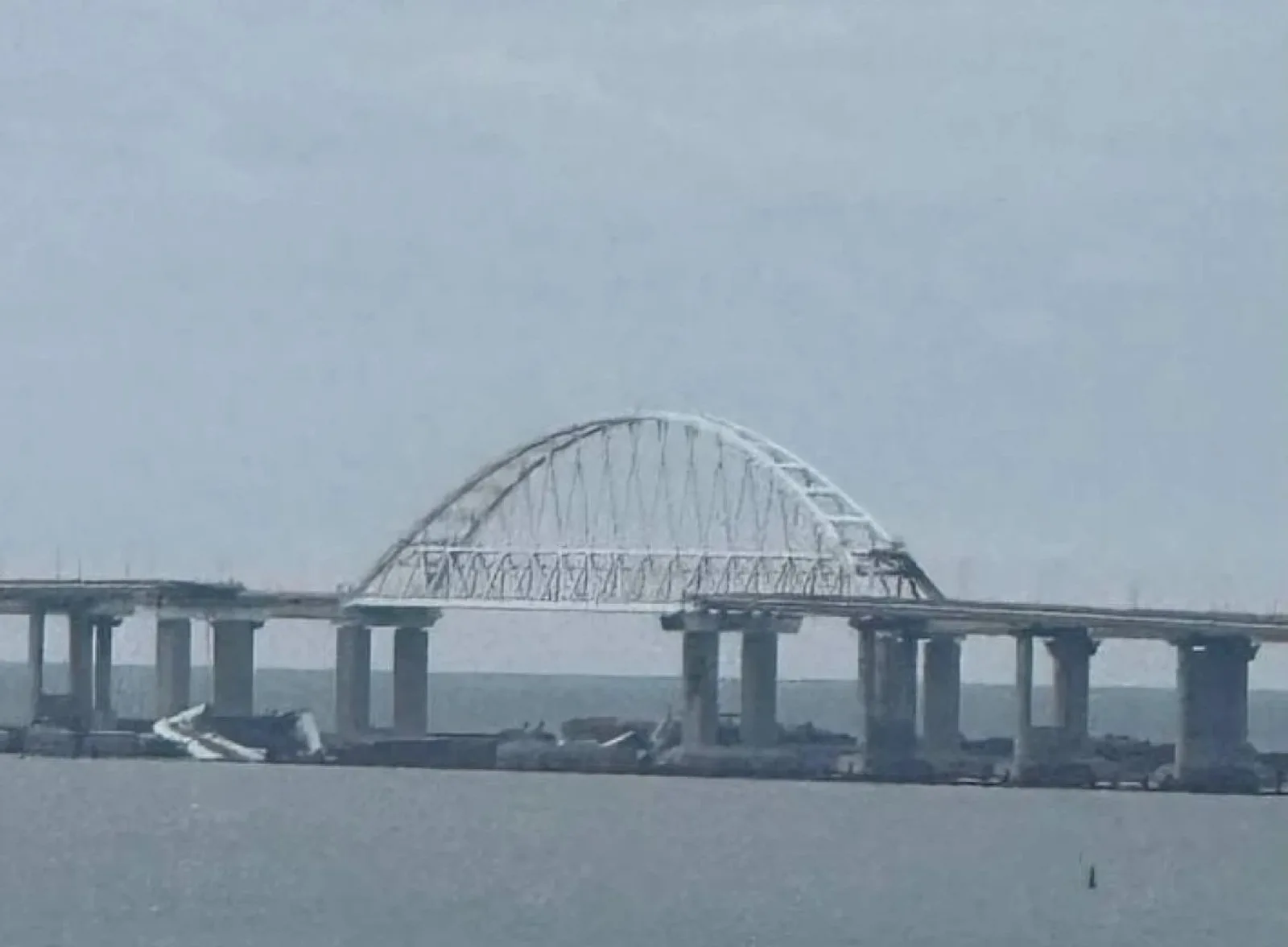
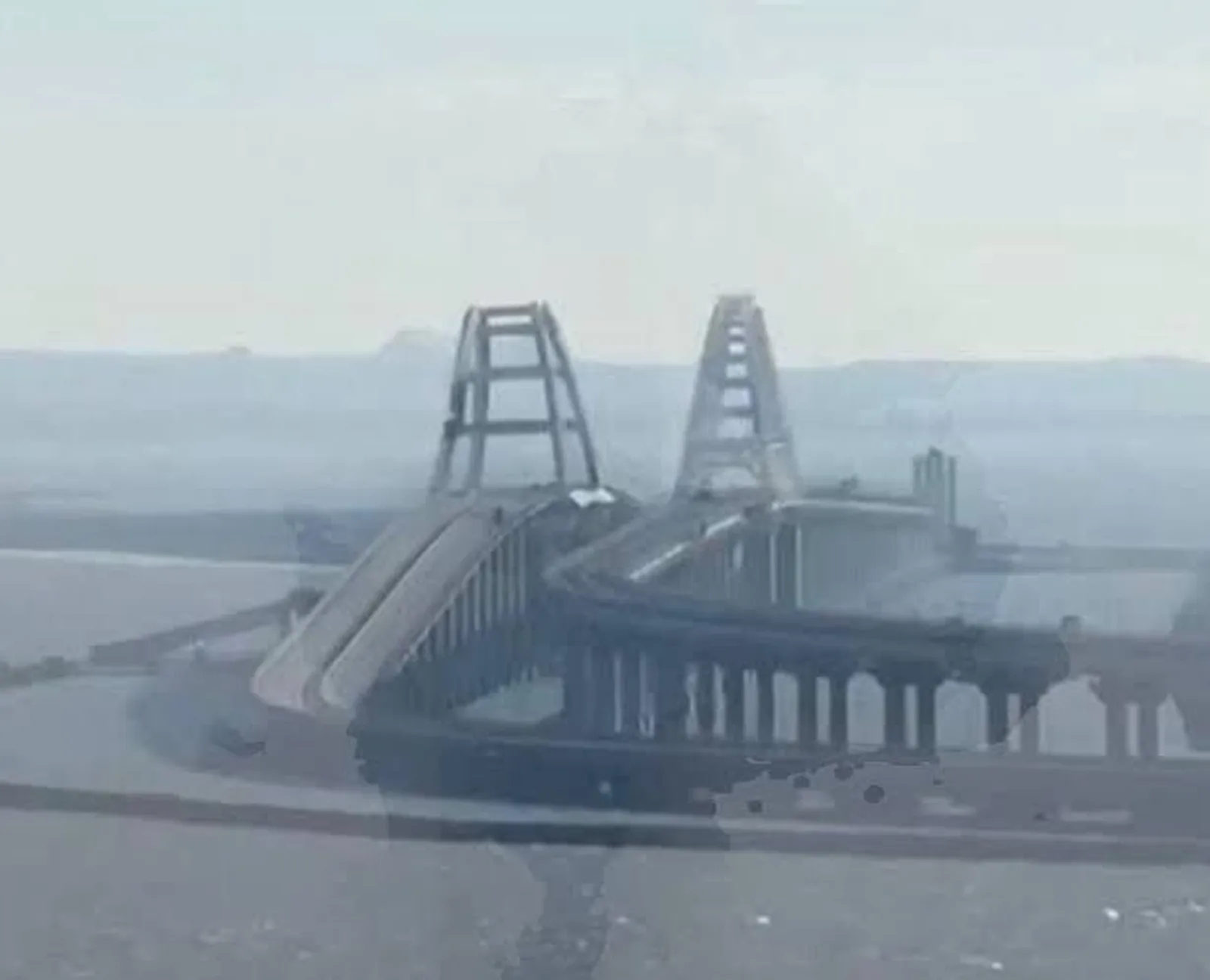
Ukrainian forces successfully struck and partially collapsed Russia’s Crimean bridge (also known as the Kerch Bridge) during two waves of attacks taking place on the nights of 15-16 and 16-17 November 2026, according to Ukrainian media reports. The event marks a significant disruption to a key Russian supply line into the Crimean peninsula.
On the night of 15-16 November, Ukrainian drones hit the bridge’s roadway. Traffic was then restricted, and around 2,000 vehicles had to wait on either side of the bridge while Russia inspected the damage. The Kremlin still spoke of “only minor damage” at that point.
The second strike followed on the night to Tuesday: Several hits destroyed the road bridge portion of the two-part Crimean Bridge and sent debris plunging into the strait below. According to media reports, Russia’s Investigative Committee then acknowledged structural damage and opened a terrorism case.
Crimean bridge operation: Weeks of preparation
According to President of Ukraine Volodymyr Zelenskyy, the attack on the bridge marked the seventh stage, and thus the culmination, of an operation lasting several weeks that the country’s SBU intelligence service had developed together with the General Staff.
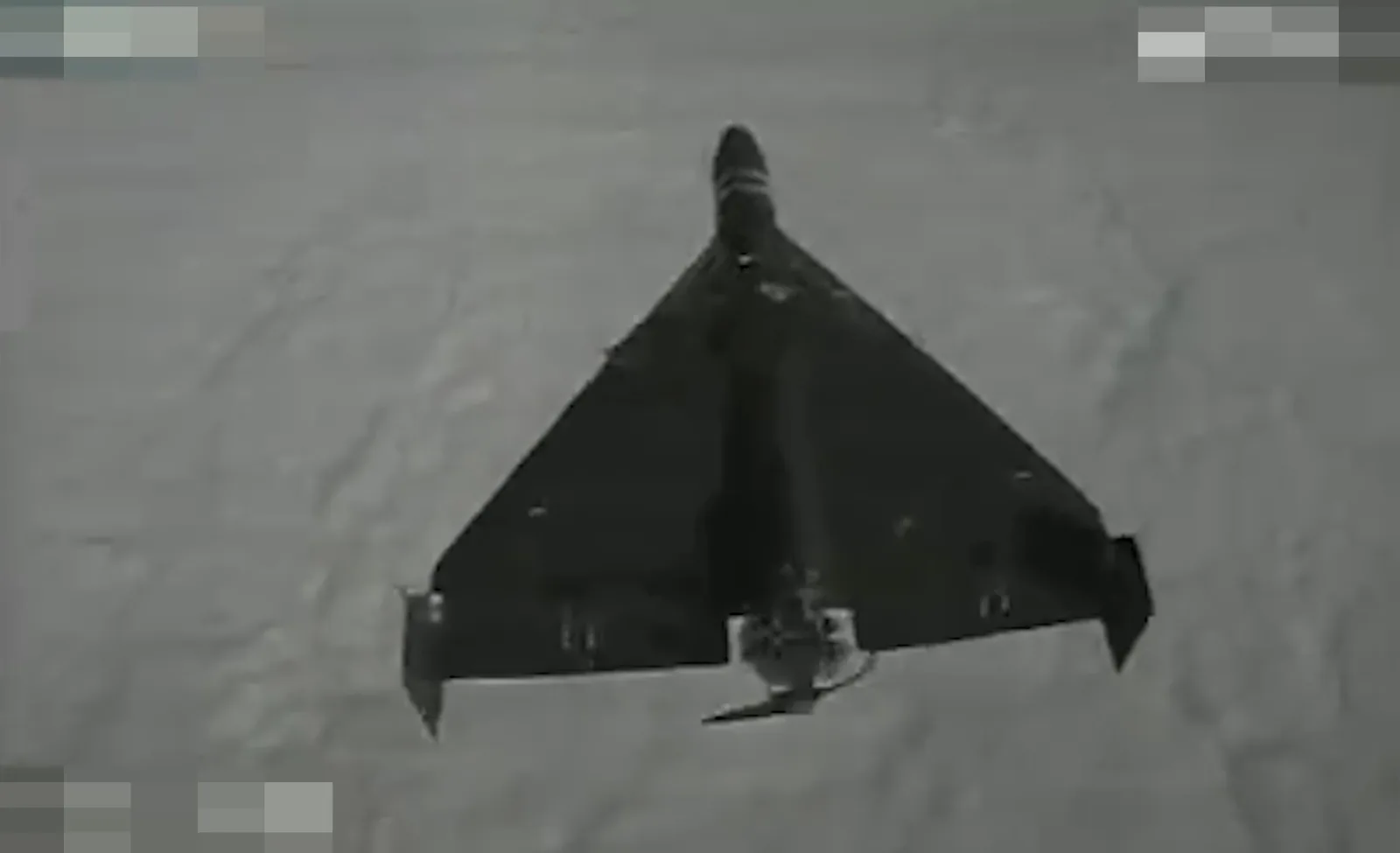
Beforehand, air defence systems, radar installations, and electronic warfare assets had reportedly been knocked out step by step, so that the long-range one-way attack (OWA) drones and cruise missiles would not be intercepted before reaching the bridge. In previous attacks, that is exactly what had always happened.
According to a statement from President Zelenskyy, a total of eleven systems were used: Dovbush, Vendetta, Da Vinci, Sichen, Mich-2000, Ruta, Palianytsia, An-197, FP-1, FP-5 Flamingo, and R-360 Neptune.
Zelenskyy’s account of the 16-17 November attack also described a clear division of tasks: The Ukrainian Palianytsia drones hit the road section, which was completely destroyed as a result. A number of cruise missiles then hit the rail bridge section, and these included the Luch Design Bureau Neptune, the Destinus Ruta and the Fire Point FP-5 Flamingo.
A message from Kyiv
Zelenskyy’s statement also noted that the Flamingo also scored a precision-guided hit, and the data link worked flawlessly until the last second. However, the section of the Crimean Bridge used by trains has not collapsed. The severity of the damage remains unclear for now. According to the Russian news agency TASS, rail traffic has since resumed.
Zelenskyy characterized the strike as a response to Russian attacks on Ukrainian infrastructure. Russia, he said, repeatedly targets civilian infrastructure such as bridges.
During the night of 16-17 November alone, Ukraine reported ballistic missile attacks on Dnipro, Pavlohrad, and the capital, Kyiv. “we are also reminding Russia that war will always return to where it began,” the Ukrainian president said. He expressly emphasised that the bridge is Russia’s most important military crossing into Crimea.
A trial by fire for Destinus
As soon as the road bridge portion collapsed, the first manufacturers came forward. Destinus declared that seven Ruta missiles had hit the bridge and brought part of it down. That, at least, contradicts the president’s account, which named the section that did not collapse as the target of the Ruta cruise missiles. It is possible, however, that Destinus was referring to the preparatory attacks of the previous night.
Zelenskyy also confirmed that Destinus’ Lord series (known as ‘Da Vinci’ in Ukrainian service) of OWA drones were used against Russian air defences in the run-up to the operation.
Destinus also declared on 17 November that it supports Ukraine’s armed forces “in their fight to defend Ukraine and Europe.” At the same time, the manufacturer pointed out that Ruta has already been used against Russian bridges on several occasions.