The UK is to lead the next stage of delivering cutting-edge undersea sensing technologies that will be deployed from uncrewed underwater vessels (UUVs) as part of the AUKUS security partnership between Australia, the UK and the United States, the UK Ministry of Defence (MoD) announced on 27 October 2026.
The announcement came following a series of tests and demonstrations at the Maritime Big Play (MBP) – Pacific exercise, held from 5 to 25 October out of San Diego and hosted by the US Naval Information Warfare Center (NIWC) Pacific, US Pacific Fleet and US Marine Corps. The MBP exercise acted as a proving ground where autonomous marine capabilities are integrated and tested before wider adoption across the AUKUS partnership.
The announcement advances the first signature project under AUKUS Pillar 2, announced in May 2026, which seeks to pool the innovation of each nations’ defence sector to develop advanced military capabilities to strengthen deterrence and security around the world.
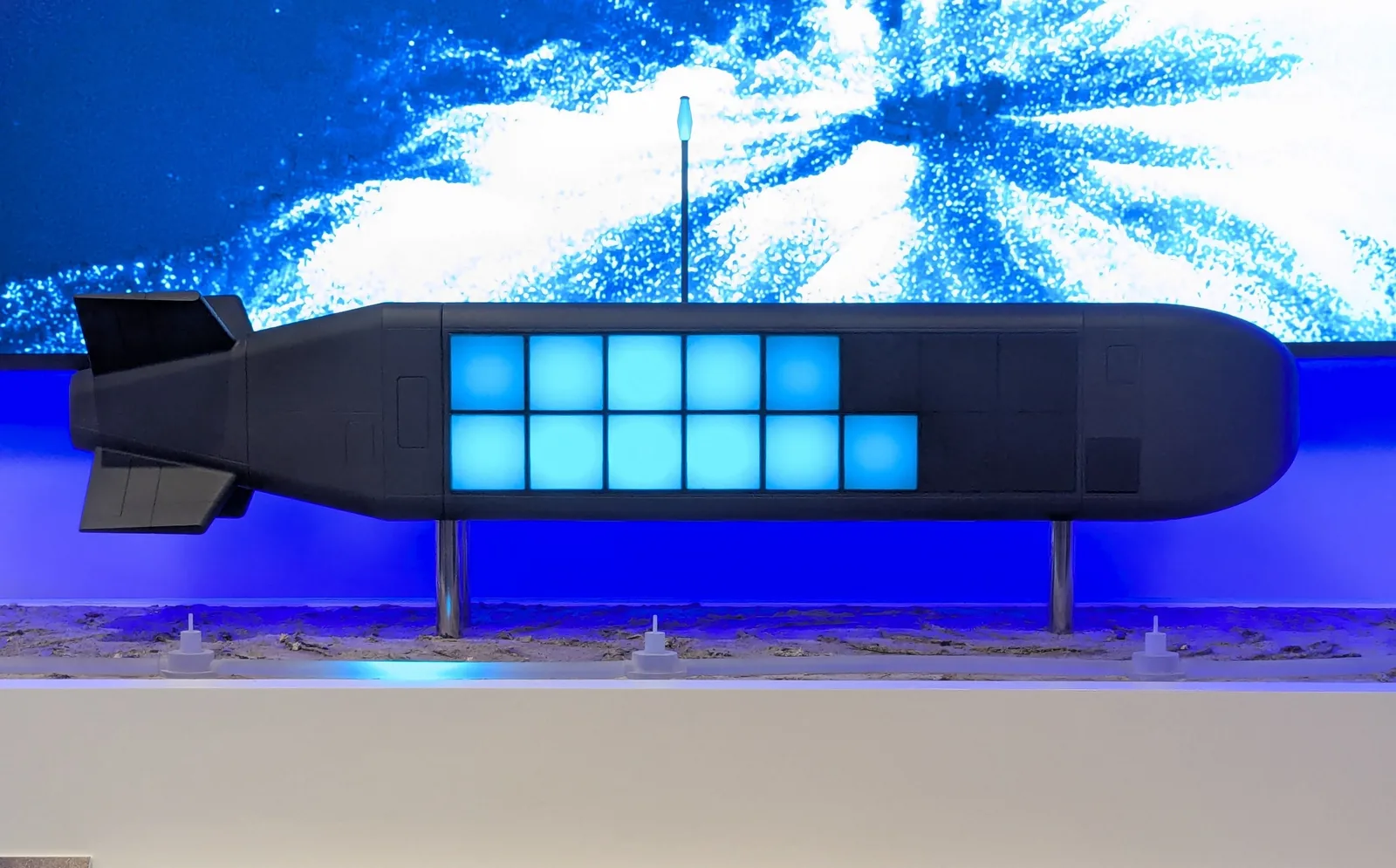
The UK will lead development and delivery of three pioneering sensor payloads for UUVs: a synthetic aperture sonar, a Deployable Anti-Submarine Warfare Sensor and a Deployable Non-Kinetic Effector. These capabilities will collect detailed underwater information, deploy sensors to detect and classify underwater threats, and generate underwater effects. The payloads will help UUVs provide surveillance of large ocean areas and protect underwater infrastructure.
The payloads will be available across the three nations’ UUV fleets from 2027, enhancing the reach and effectiveness of those fleets and reinforcing strategic deterrence across the Euro-Atlantic, High North and Indo-Pacific, the MoD stated.
UK commitment to AUKUS
“The UK is all in on AUKUS, and this cutting-edge technology shows why,” UK Minister for Defence Readiness and Industry Luke Pollard was quoted as saying by the Uk MoD. “By leading development of these sensor payloads, we’re putting British innovation at the heart of AUKUS and strengthening our collective undersea capability.”
Sir Stephen Lovegrove, the Prime Minister’s Special Representative on AUKUS, added, “AUKUS is a uniquely powerful partnership, and the depth and breadth of our cutting-edge capability and strength in the maritime domain has been demonstrated this week in San Diego.
“The UK is now stepping forward to lead development of three of the most advanced undersea sensor payloads any of our three nations have fielded, sharpening our collective edge and reinforcing security across the Euro-Atlantic and the Indo-Pacific,” said Lovegrove.
The AUKUS partnership is backed by the UK’s Defence Investment Plan, which was published on 30 June 2026 and set out GBP 298 billion (EUR 356.8 billion) of UK defence spending over the next four years, marking the largest sustained increase since the end of the Cold War, the MoD noted.
The MBP exercise aims to shorten the path from innovation to capability by testing new maritime technologies in realistic operational environments. Exercises at MBP-Pacific tested how Australian, UK and US crewed and uncrewed systems can operate together across four strands: anti-submarine warfare (ASW), lethality, contested resupply, and subsea and seabed warfare.
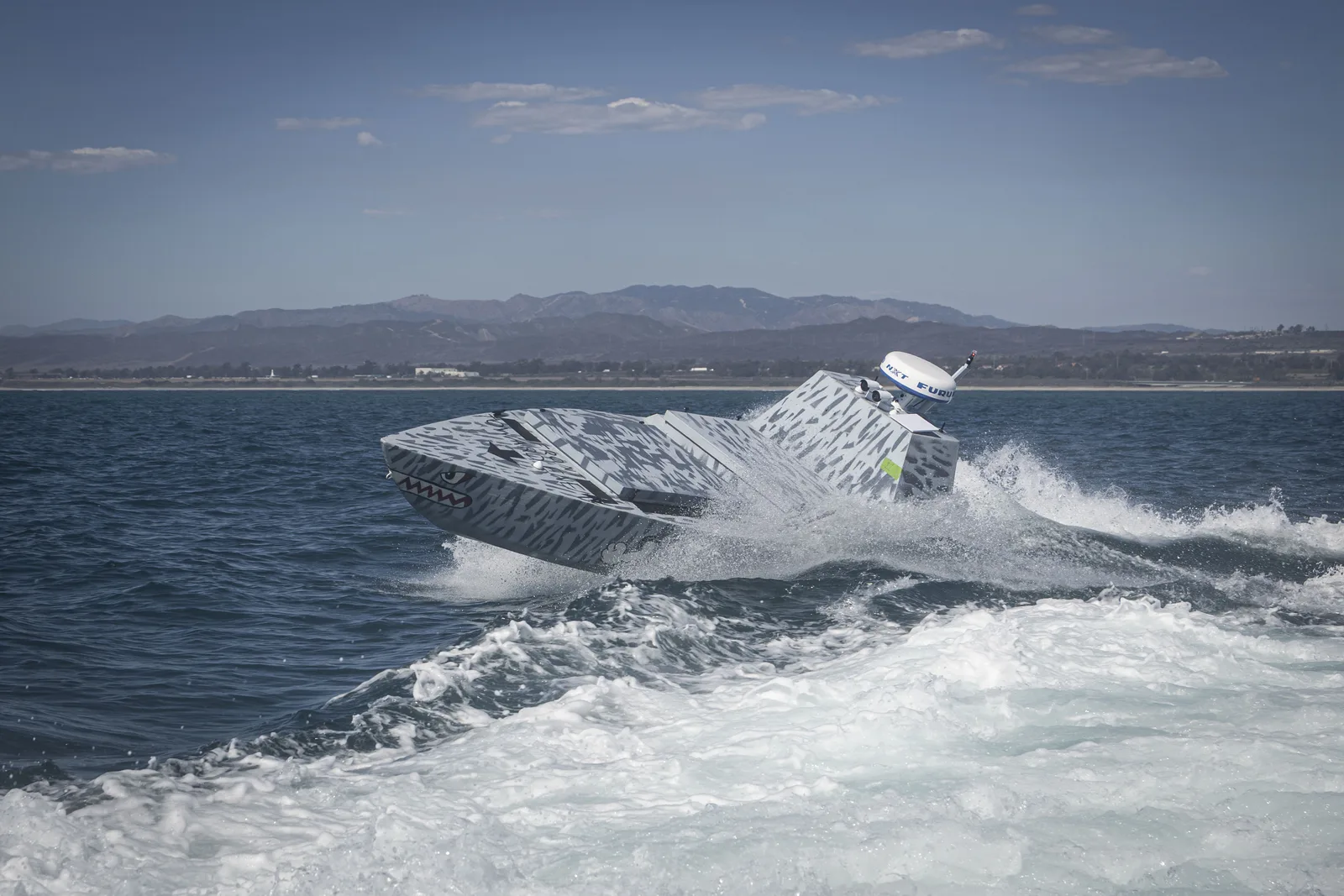
The UK led the ASW strand, contributing 13 uncrewed surface vehicles (USVs), two ASW targets and four underwater gliders from six industry partners. The testing supports the UK’s transition to a Hybrid Navy: a more flexible, modern force blending crewed and uncrewed platforms, able to detect underwater threats to the UK and allies’ critical undersea infrastructure.
The MBP exercise and the announcement on delivery progress for the first signature project follows a strong month for UK delivery against AUKUS Pillar 2, the MoD noted. This included the successful test firing of a US-Australian heavyweight torpedo from a UK extra-large uncrewed underwater vehicle (XLUUV), XV Excalibur: a historic first for an uncrewed submarine and an important milestone in enhancing interoperability and delivering the signature project.
UK industry has been working at pace to develop capabilities conducive to the AUKUS partnership. At the inaugural Thales Tech Summit in London on 14 September 2026, for example, Thales briefed on a modular and scalable flank panel sonar solution, a retractable optronic ISTAR mast and a thin-line towed array that has already been ‘wet-tested’, most likely on XV Excalibur.