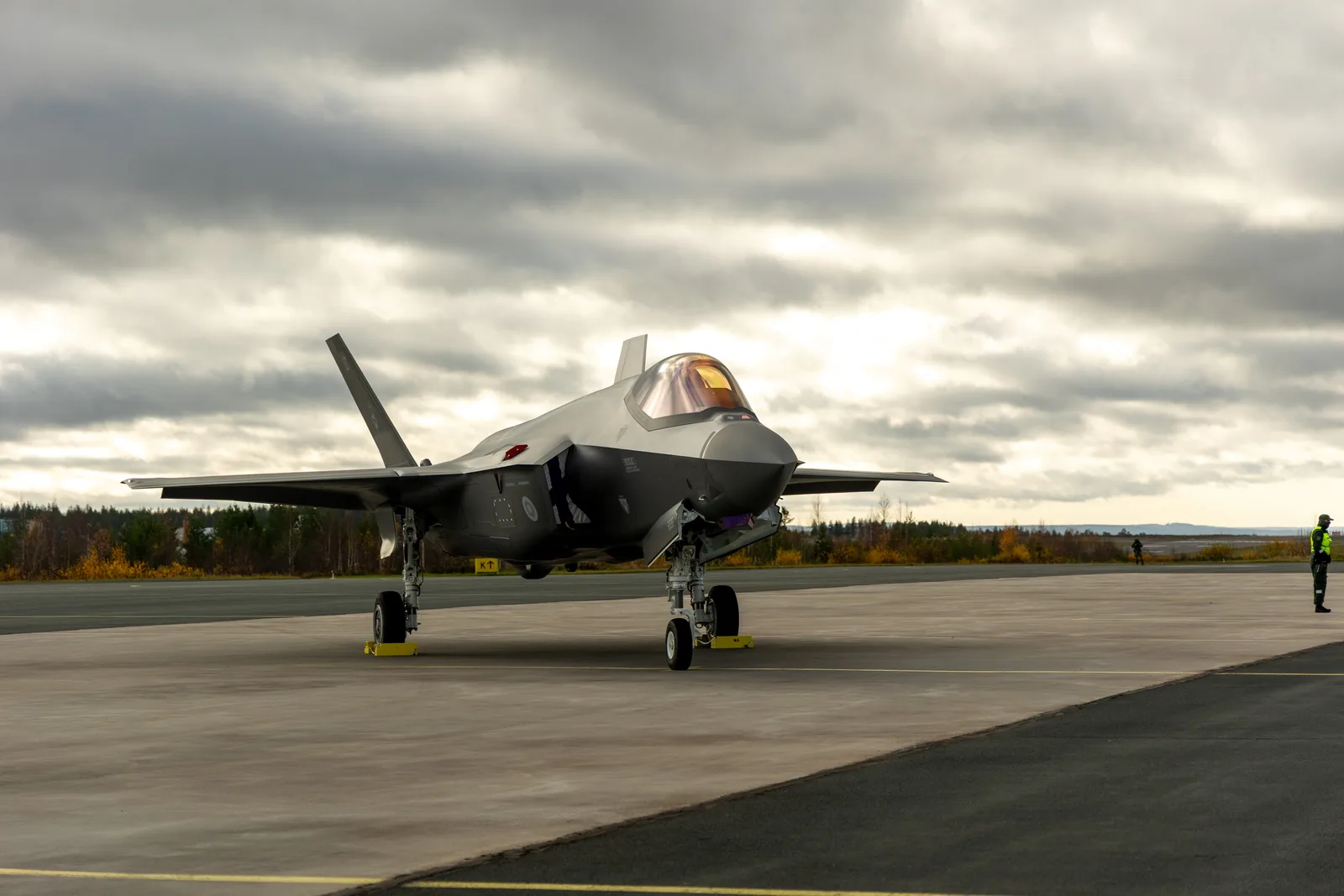
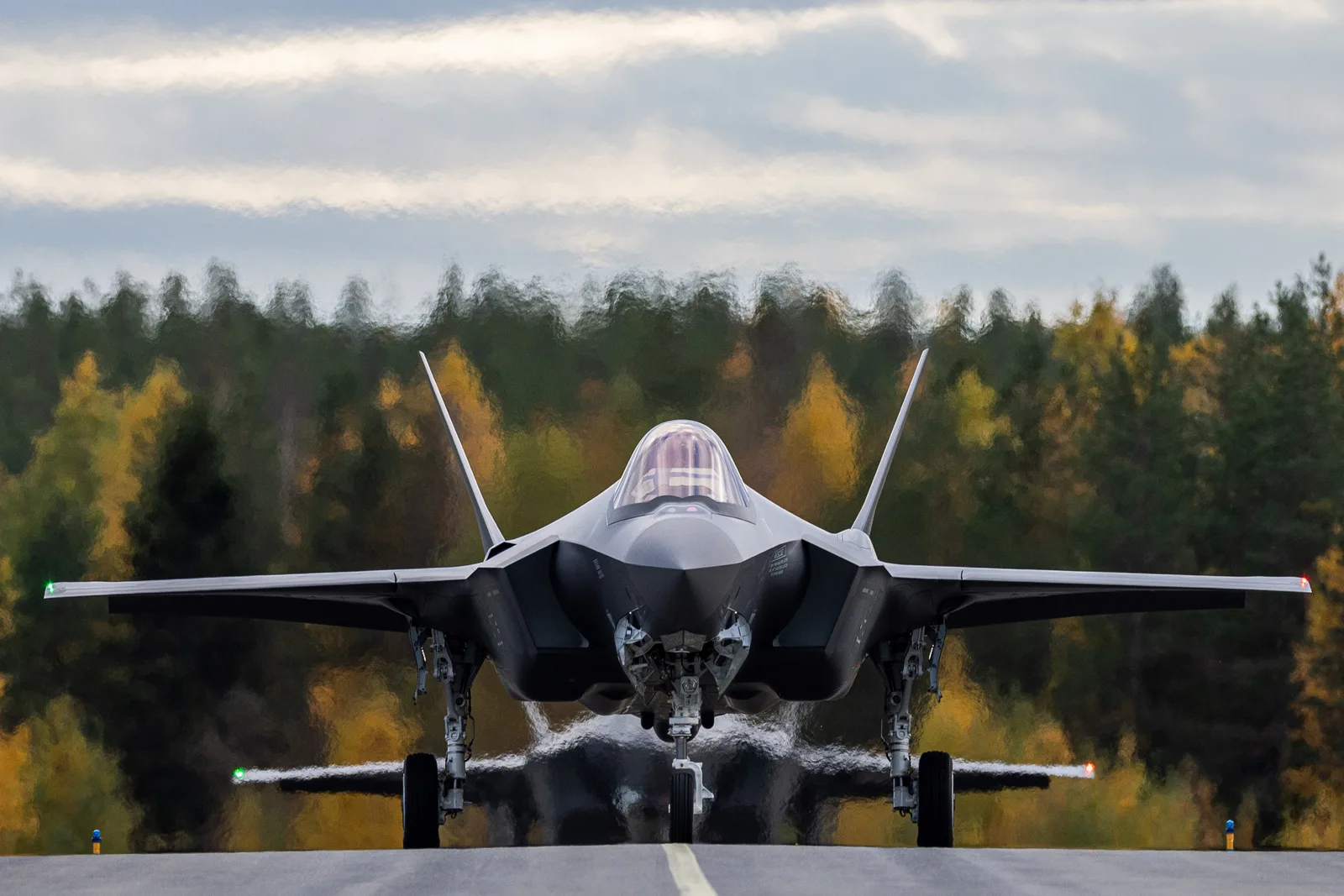
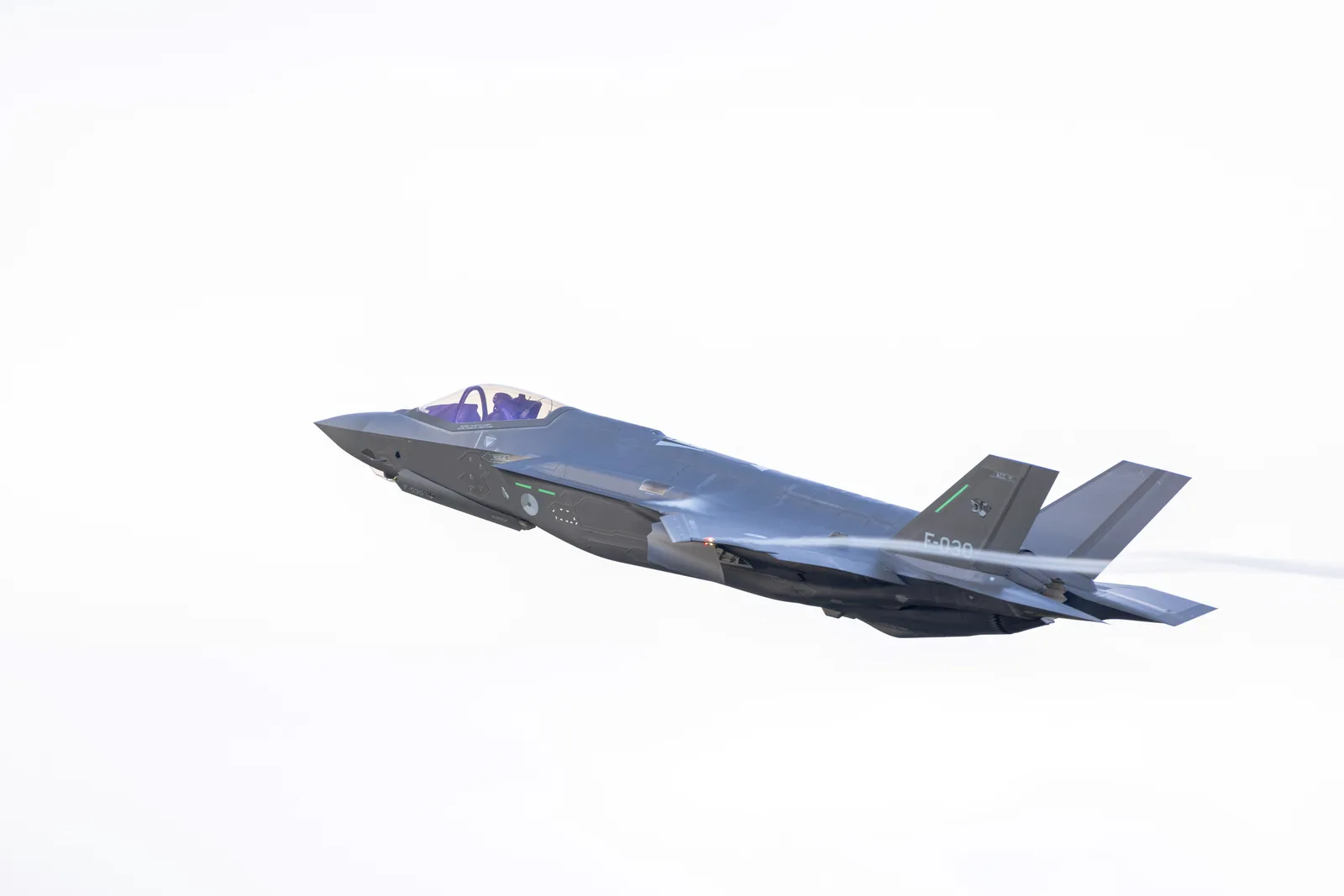
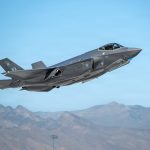
The official arrival ceremony for the Finnish Air Force’s Lockheed Martin F-35A Lightning II Joint Strike Fighter into service took place at Rovaniemi Air Base in northern Finland on 1 October 2026, marking the next generation of combat airpower for Finland.
“Finland getting the F-35 strengthens the transatlantic partnership. For us, the F-35s are about projecting power, security and situational awareness in the Arctic. It’s about keeping the northeastern part of Europe safe,” said Finnish President Alexander Stubb.
Finnish Defence Minister Antti Häkkänen echoed those sentiments, highlighting the benefits of interoperability and regional security. “The delivery of F-35s and their integration into Finland’s defence system strengthens both Finland’s and the Alliance’s deterrence and defence,” he said. “This capability will have a key role in European, Nordic and especially Finnish security.”
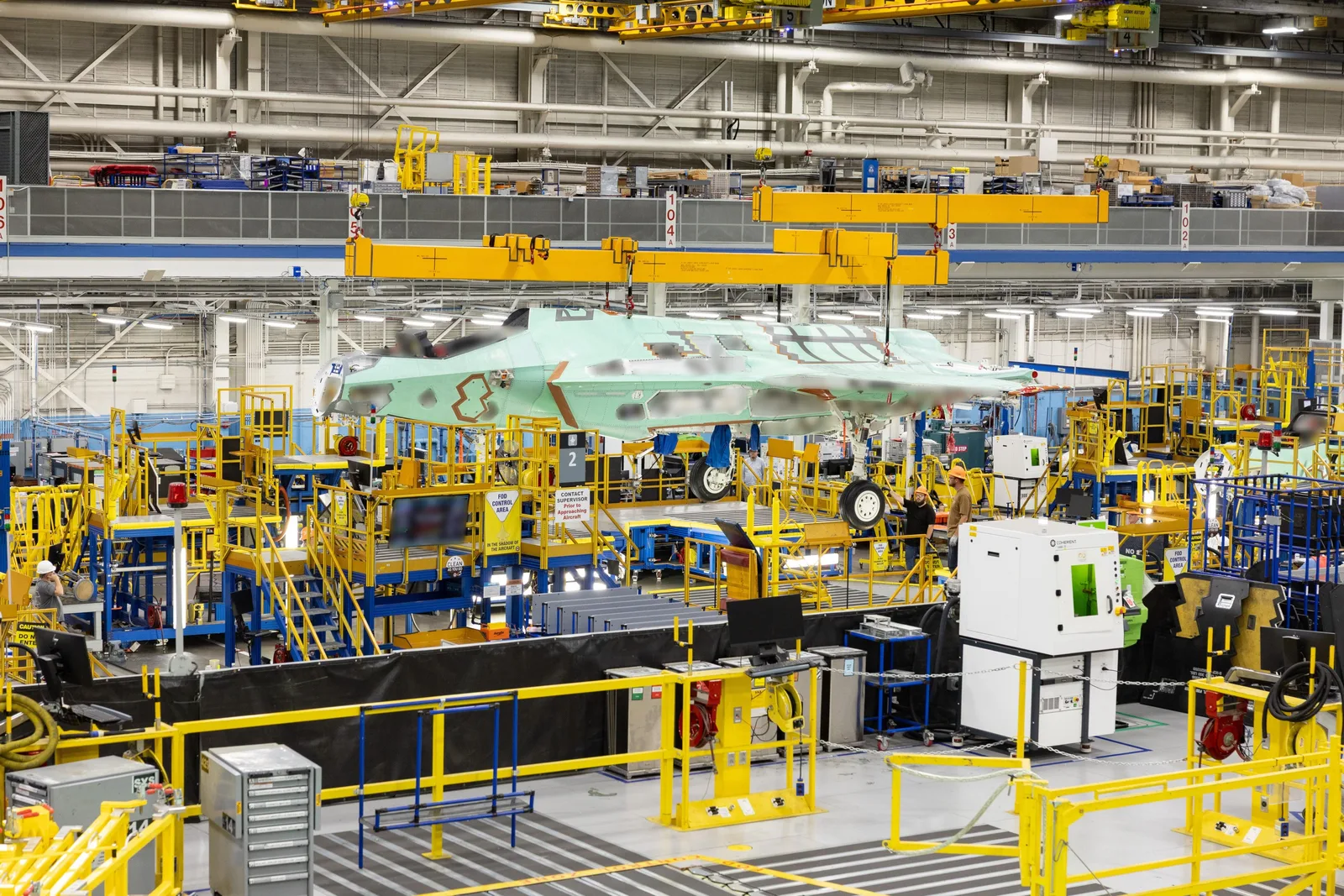
The F-35A was selected as the country’s replacement for the Boeing F/A-18C/D Hornet in December 2021, following the EUR 9.4 billion H-X acquisition programme that was launched in 2014. A total of 64 aircraft are being procured by the Finnish Air Force, representing Finland’s largest government acquisition in history.
Initial operating capability (IOC) with the F-35As will be reached in early 2028, when the Rovaniemi-based Fighter Squadron 11 of the Lapland Air Wing finishes its conversion from the Boeing F/A-18C/D Hornet. Fighter Squadron 31 of the Karelia Air Wing, based at Rissala Air Base in Siilinjärvi, will also be converted to F-35As. Full operational capability (FOC) with the F-35s is targeted for 2030, when the F/A-18 Hornet fleet is due to be completely retired.
Modifications to the Finnish F-35s that will be done in-country include the installation of drag chute pods, as well as other work to bring the aircraft to the Block 4 configuration. Retrofits are to be carried out either at the local air wing level or by Finnish industry. Delays in developing and implanting the Block 4 standard – initially scheduled for 2026 – mean that full deployment of the upgrades will not be delivered until the early 2030s.
Three Finnish F-35s began the ferry journey from Lockheed Martin’s Fort Worth facility on 15 September, flown by US Air Force pilots. One aircraft suffered an avionics fault after a scheduled stop in the Azores and will be transferred with the next batch of aircraft in the coming months.
Finland received its first F-35 in January 2026, with delivery to the flight training facility at Ebbing Air National Guard Base in Arkansas. Eight aircraft will be based at Ebbing to support pilot training, which will be subsequently transferred to Finland in 2028. In total, approximately 150 Finnish personnel are to receive training in the United States, covering 20 pilots, 80 maintainers and 50 other staff. The first Finnish pilot flew an F-35 in April 2026, following on from theoretical and simulation training at Eglin Air Force Base in Florida.
Pilot training will continue in the US until 2028, with some pilots also beginning to receive training at Rovaniemi with Finnish instructors in 2027.
Finnish F-35A combat loadout
The acquisition of the F-35 by Finland has also led to a wide range of new weapons being procured for the platform to enhance Finland’s capabilities. These include the announcement of an acquisition of the AIM-120D-3 Advanced Medium-Range Air-to-Air Missile (AMRAAM) in December 2025, upgrading the force’s current stock of AIM-120C-7 AMRAAMs that are employed by the F/A-18 Hornet fleet and the country’s National Advanced Surface-to-Air Missile Systems (NASAMS). The aircraft are also to come with AIM-9X Block II Sidewinder short-range air-to-air missiles.
Air-to-ground procurements that have been announced include Joint Direct Attack Munitions (JDAMs), GBU-39/B Small Diameter Bomb Is (SDB Is) and GBU-53/B SDB IIs, AGM-88G Advanced Anti-Radiation Guided Missile – Extended Range missiles and AGM-158B Joint Air-to-Surface Standoff Missile – Extended Range (JASSM-ER) missiles. The US government approval package for the F-35 in 2020 also included the AGM-154C-1 Joint Stand Off Weapon (JSOW-C1), building on existing inventory acquired for the F/A-18 Hornet fleet. The new munitions significantly extend the strike capabilities and range possessed by the Finnish Air Force’s F/A-18 Hornet fleet, bolstering the country’s conventional deterrence and interdiction capacities.
Acquisition of the new weapons has not been entirely postponed until the entry into service of the F-35. A 2022 US Foreign Military Sales (FMS) request from the Finnish government covered 40 AIM-9X Block II Sidewinder missiles and 48 AGM-154 JSOWs to augment the F/A-18 Hornet fleet.
A new era of collaborative operations
The entry into service of the F-35 with the Finnish Air Force has also involved a greater level of collaboration across the European F-35 user community.
Under the ‘Capacity on Call’ initiative, launched in 2025, F-35 users from Belgium, Denmark, Finland, the Netherlands and Norway are able to pool and share resources across national fleets. The provisions of the initiative include “interfly”, where pilots from one nation can fly the aircraft of another; cross-servicing, where mechanics and maintainers can repair and refuel aircraft from other agreement nations; and armament sharing, where compatible weapons can be used interchangeably.
The agreement was put into practice in September 2026, when pilots and equipment were changed during the Weapons Instructor Course held by the Royal Norwegian Air Force (RoNAF). Pilots from Finland, Norway, Denmark, the Netherlands, Belgium and the United States flew a six-nation mission using aircraft from the RoNAF and Royal Netherlands Air and Space Force. For Finland, the exercise marked the first time a Finnish Air Force pilot had flown an F-35 in Europe.
Localised F-35 industrial facilities
Under the H-X programme industrial participation for Finnish industry formed a significant part of the bidding package. Throughout the procurement process a minimum industrial participation requirement of 30% of the contract value was to be achieved by the successful bidder. Projects have been designed to support economic aims, security of supply and the ability to operate the aircraft with a high degree of sovereignty.
One key task to be conducted by Finnish defence firm Patria is the assembly and maintenance of the F-35’s F135 turbofan engines. Patria and engine-maker Pratt & Whitney signed a memorandum of understanding in 2024 covering the maintenance, repair and overhaul (MRO) of the F135, with an agreement for the final assembly of the engines being reached in February 2026. The first F135 assembled in country by Finnish workers was completed at a new assembly and maintenance facility in Linnavuori, Nokia, in September 2026. Assembly work on the engines will continue until 2030, when the Linnavuori facility will shift to MRO work.
Other development projects attached to the F-35 industrial participation requirements include development of signals intelligence (SIGINT) technology with the VTT Technical Research Centre of Finland, millimetre wave radar imaging technology, space-based ISR sensor development and cyber security.
Outlook – NATO interoperability
Finland’s accession into NATO in April 2023 has led the country to a much wider range of requirements for interoperability and coalition operations. As the country with the longest border with Russia, joint operations from intelligence, surveillance and reconnaissance through to air policing over the eastern Baltic fall firmly within the homeland defence role for the country. Co-operation with Sweden through the alliance framework has already yielded results, with the Finnish Air Force’s Air Operations Centre co-ordinating aircraft from the Finnish and Swedish air forces on an air identification mission against Russian aircraft on 24 September, for example.
As more NATO countries continue to join the F-35 programme, the interoperability requirements that support wider data fusion and distribution will serve to support alliance security. While not every country in the Baltic area of operations – be it on home soil or as a deployed air policing mission – will be operating the F-35, the platform’s sensor systems will augment those of airborne early warning platforms and ground- and sea-based sensors.
The creation and early success of the ‘Capacity on Call’ initiative will boost the pooling and sharing of resources for the European F-35 fleets, preventing over-warehousing of componentry in some countries while others scramble for support. Furthermore, the ability to use other nations’ stocks without having to go through political and trade control barriers will ensure operational flexibility. For Finland, where the threat of Russian aggression is felt more acutely than elsewhere in Europe, this means that the F-35 is able to deliver the operational flexibility when the security situation may demand it the most.