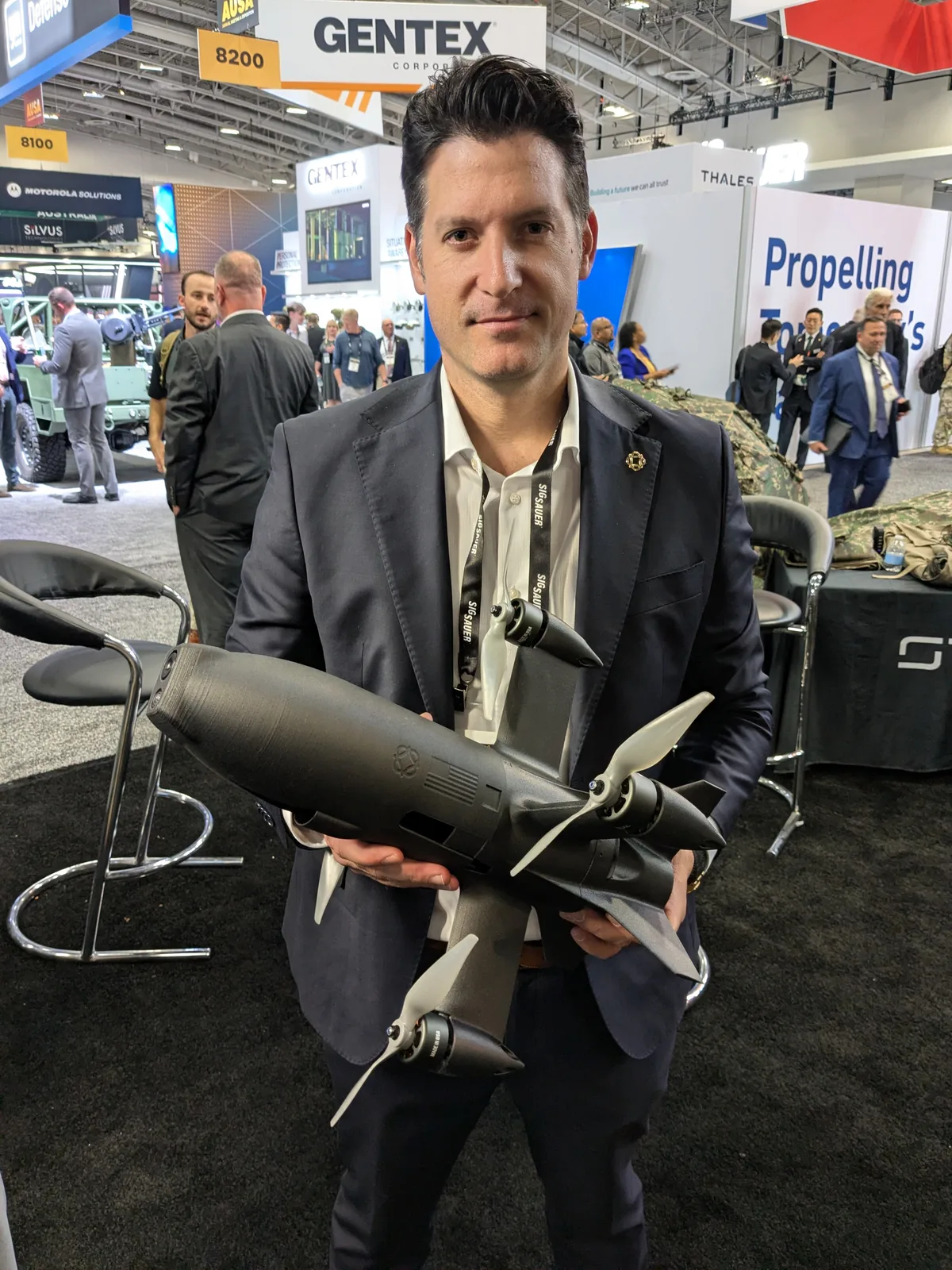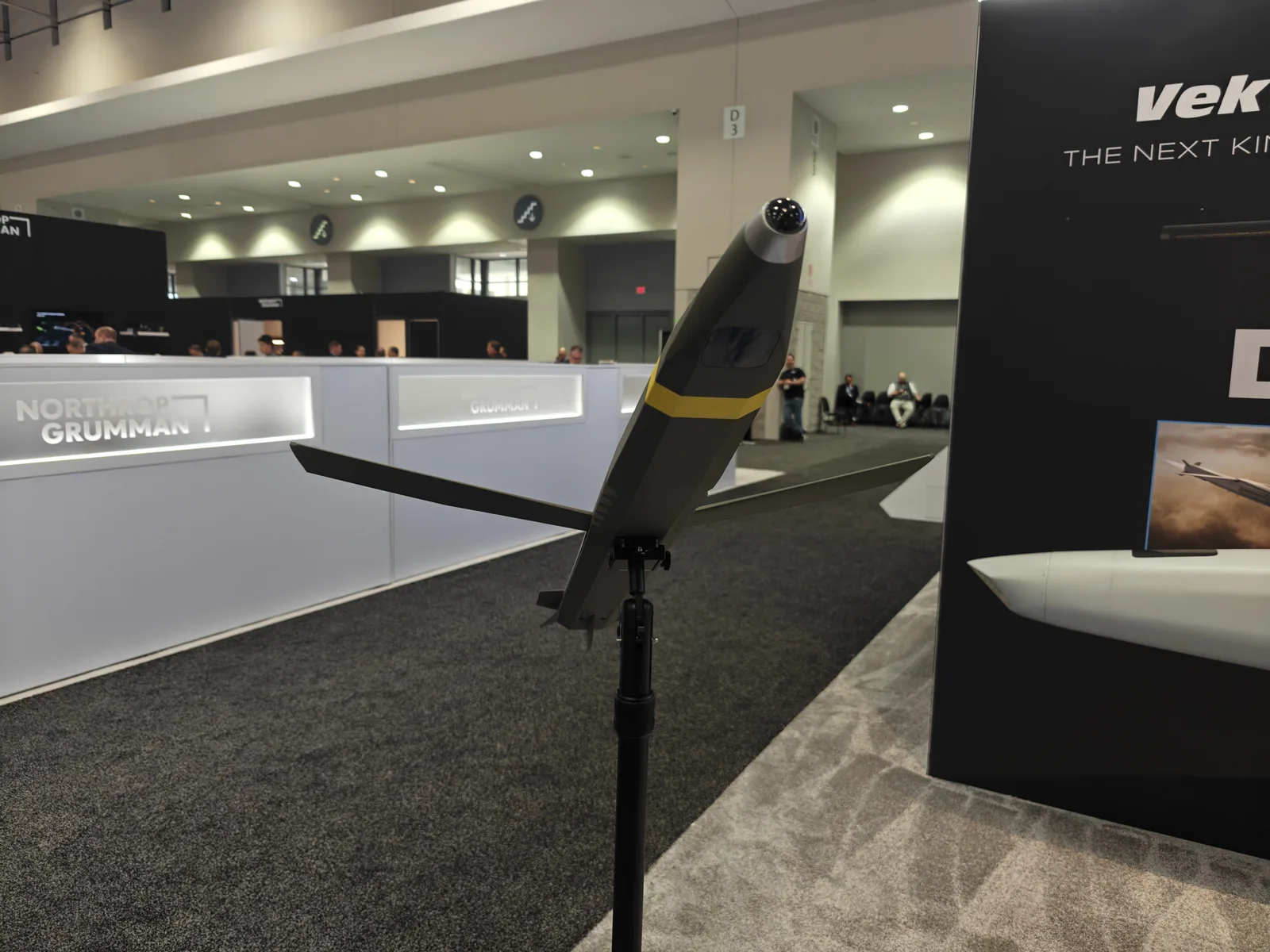
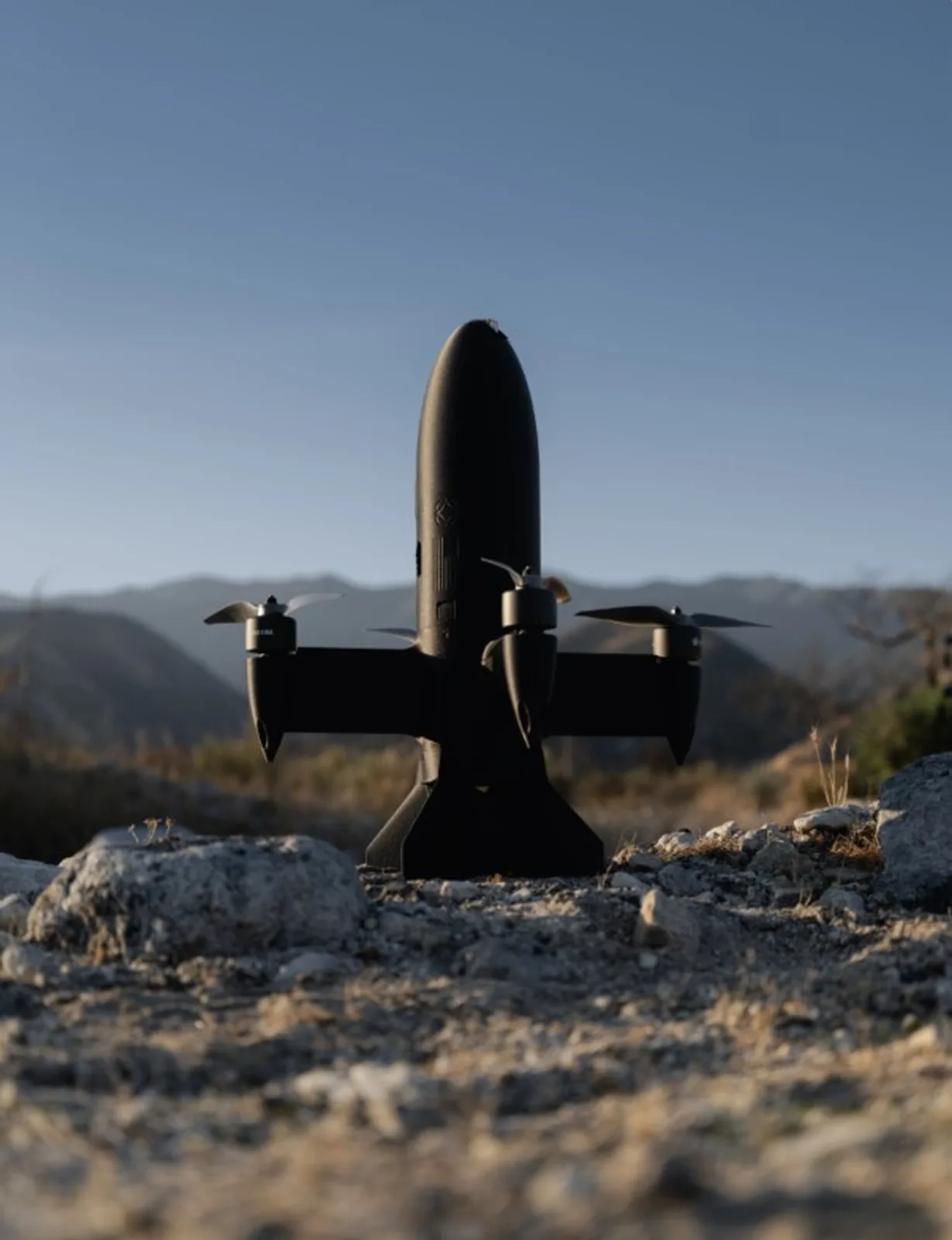
US defence technology company Powerus unveiled its latest counter-drone interceptor, the Guardian-3, at the Association of the US Army (AUSA) 2026 exposition, held in Washington, DC, from 12 to 14 October.
As Brett Velicovich, president of Powerus, explained to Warsight at AUSA on 12 October, the Guardian-3 is the third model in the Guardian interceptor series.
“What makes this one so special is that it’s fully autonomous,” he said. “The original Guardian interceptor line was manual. That’s based on what operators in the field want. Particularly in Ukraine, they like to have manual control over their interceptors, so we built our original Guardians to have a pilot behind them.”
Powerus then developed its Guardian-2 as a semi-autonomous system, the launch of which would be cued by a radar but for which the flight management and engagement authority is retained by the operator.
However, as Velicovich noted, unlike Ukraine, the armed forces of the United States, Europe and the Middle East “don’t have all of these drone pilots, so they need more automation. Now everything’s got to go automated to fix the pilot issue. So we integrated special cameras [in the Guardian-3] that are able to track and lock onto a threat. So in that last 200 m of the kill chain, it will lock on the target and chase it down, or it’ll get in front of it. Ideally, it’s in front of it when it arrives, and then if for some reason it’s not it can chase it down. But we also have the capability to turn back manually.”
The Powerus website states that three seekers are available for the Guardian-3: a radar-based seeker is entering service, with visual and laser-based seekers currently in testing.
Guardian characteristics
Guardian interceptors have a 15 km range, fly at 217 mph (349 km/h), carry a 0.5 kg warhead payload and employ a proximity fuze with core point detonation. They are currently capable of intercepting Group 3 unmanned aerial vehicles (UAVs) such as Iranian Shahed-136 and Geran-2-type attack drones as well as loitering munitions and Orlan- and Zala-class reconnaissance UAVs. While Velicovich noted that they cannot yet intercept the latest jet-powered Shaheds, he added, “We’ll get to that soon.”
Guardian interceptors can be launched from the ground, but Velicovich noted that Powerus is also selling a containerised launch system that is fully enclosed.
“It’s called the cradle,” he explained. “It can automatically open and the interceptor will launch out of that. So you can put these things around a perimeter and monitor their health. They can sit out there for weeks at a time and be ready to fire.”
The Powerus website states that Guardian interceptors have “been employed operationally against reconnaissance aircraft, loitering munitions and one-way attack drones in active theatre, in both manual and semi-autonomous launch modes, alongside integrated detection radars”. The company claims an 89% successful-interception-per-launch rate across manual and semi-autonomous launch modes.
The Guardian user base
Regarding the Guardian line’s current user base, Velicovich said, “We have a variety of customers in the US government space. Our primary customers, the US Air Force, just signed a USD 82 million [EUR 73 million] deal a couple weeks ago. … We’re not talking about exactly what they procured because of sensitivity purposes, but they’ve procured a myriad of different systems [and] the Guardian 2 is a part of that.”
Asked how the US Air Force is using these systems, Velicovich replied, “They don’t really tell us, but if you’re an air force unit deploying overseas in the Gulf States, you need to protect your base … so these things could sit on the perimeter of the base and cover anything coming in.”
Velicovich added that meanwhile Powerus is already taking orders for the Guardian-3.