The appointment of Andrei Belousov as Minister of Defence of the Russian Federation in May 2024 prompted many theories about the possible trajectory that the development of the Russian military and defence industry may take. More than two years later, it is possible to compare the Ministry of Defence’s performance under Belousov with that of his predecessor and draw some preliminary conclusions.
Comparing Belousov to Shoigu: What has changed in Russia’s military?
Since Andrei Belousov’s appointment to the post of Russian Minister of Defence on 12 May 2024, analysis of Russia’s defence sector has been heavily shaped by the contrast between Shoigu and Belousov.
The generally negative sentiment towards Sergei Shoigu, in some cases, produced a dichotomy in perceptions of the Russian MoD’s approach to weapons development and procurement. While Shoigu was often portrayed as a traditionalist, wedded to a classic command style and conventional armaments such as artillery, armour and crewed aircraft, his successor was presented as a modern technocrat capable of bringing a new vision to the military’s slow-adapting structures.
In particular, Belousov was expected to accelerate the large-scale introduction of unmanned systems across all domains, the adoption of new-generation command-and-control (C2) systems and, perhaps most importantly, the rebuilding of relations between the military and the defence industry. In the latter area, this was expected to involve greater participation by civilian contractors and changes to the procurement process aimed at enabling rapid prototyping, testing and implementation of innovative systems.
As a result, at least in theory, these changes were expected to reduce the time between the emergence of a threat or operational requirement and the delivery of a functioning system to the armed forces.
Most early assessments of Belousov’s performance were based on a standard set of factors: his economic education, previous government positions, and the state of the Russian military and defence industry in 2024. On this basis, observers predominantly identified three main reasons for his appointment:
- preparing the military industry for a protracted war of attrition;
- optimising budgetary spending, including the prioritisation and deprioritisation of weapons development and procurement programmes, as well as combating corruption;
- resolving the supposed conflict between Russia’s Ministry of Defence and its defence industry.
In addition, Belousov’s experience as chair of the Government Commission for the Development of Unmanned Aircraft Systems (established in late 2022) and his role in coordinating projects under the technological sovereignty agenda provided further indications of the areas the new minister was likely to prioritise.
What observations can be made in mid-2026?


Silent changes
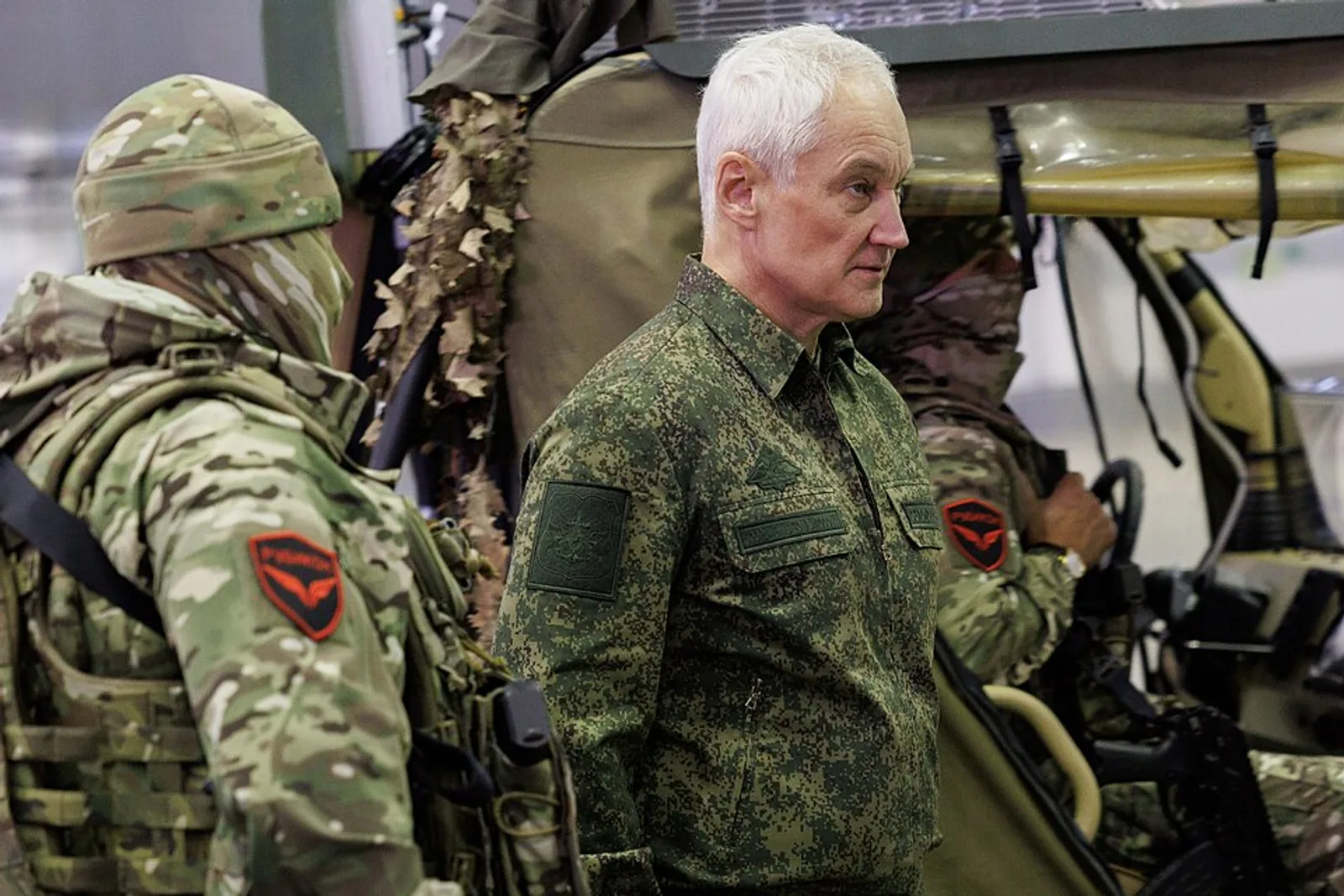
Of all the developments in the Russian military under Belousov’s leadership, perhaps the best known and most influential have been the establishment of the ‘Rubikon’ Centre for Advanced Unmanned Technologies in August 2024 and the creation of the Unmanned Systems Forces (USF) in November 2025. Additionally, in November 2024, the Russian MoD reported that Rubikon specialists were already communicating with representatives of the so-called ‘People’s VPK’, an informal military-industrial ecosystem comprising volunteers, small start-ups, private companies and groups of technology enthusiasts developing weapons and military systems.
At a glance, all these developments appear to support the theory that Belousov was appointed to accelerate the Russian military’s adaptation to new operational requirements and developments in the use of unmanned systems by the Armed Forces of Ukraine (AFU).
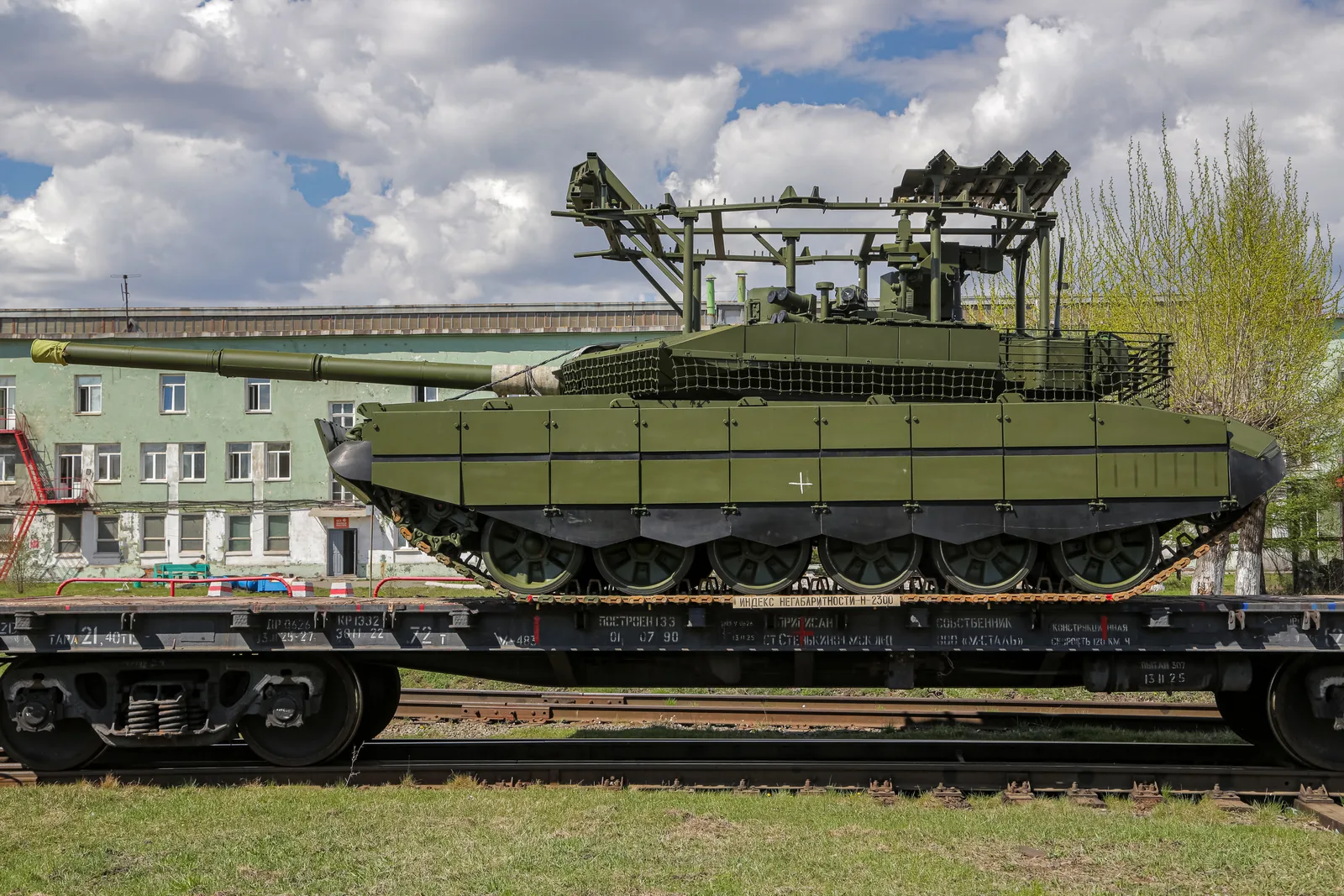
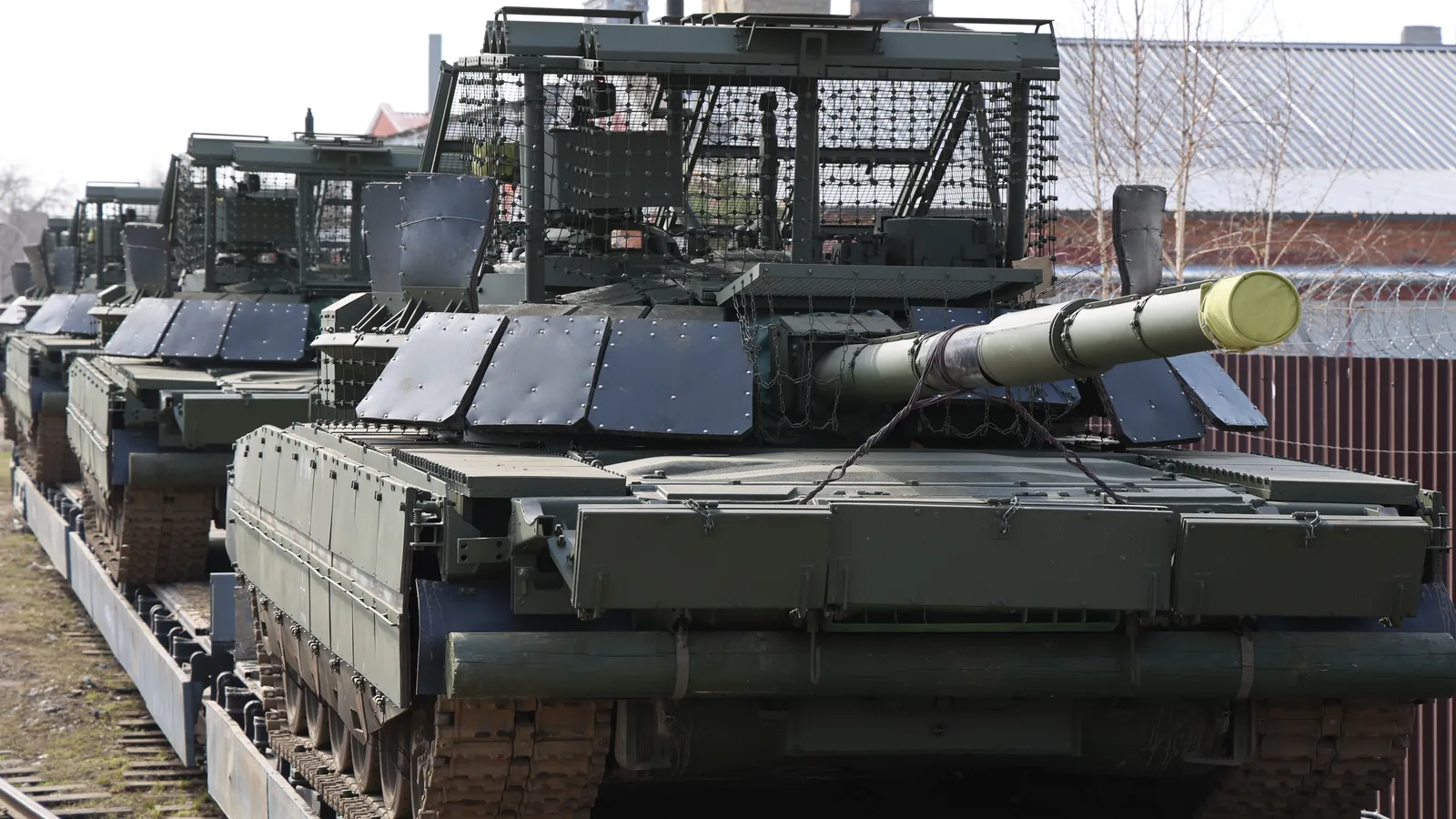
On the other hand, the available evidence suggests that these developments complemented the existing military structure and enhanced its capabilities, representing an evolutionary rather than revolutionary change. Drones have not replaced tanks on production lines, and unmanned systems units have been integrated into the existing organisational structure rather than disrupting it.
For example, in November 2025 Sergey Ishtuganov, Deputy Commander of the USF, provided details about the formation of unmanned systems units. He stated that by the time of their creation, the USF had already “formed regular regiments, battalions and other units.” Their combat operations were conducted according to a unified plan and in coordination with other units within the army groups, while the expansion of the existing combat formations and the creation of new USF units were ongoing.
In other words, the establishment of the new branch of service was preceded by the development of its basic organisational structure, training system and mechanisms for cooperation with manufacturers.
The same pattern can be observed in production. Official data indicate that output of conventional armaments across major weapons categories has grown steadily since 2022, while the category structure has remained unchanged, at least since 2021.
At the same time, the Russian industry has dramatically expanded production capacity for newer types of weapons. According to First Deputy Prime Minister Denis Manturov, industrial capacity for first-person view (FPV) drone production alone increased from 150,000 per month in 2023 to the same number per day in 2026, equivalent to a theoretical annual capacity of approximately 54.75 million units.
Importantly, the expansion of drone production capacity appears to have been achieved without compromising the ongoing production of conventional munitions. In 2024, annual output was reported at 16.5 million units across all types, while in December 2025, Putin reported that production of strike assets and ammunition had increased 22-fold compared with 2022. Based on available 2022 estimates, this would imply an output of approximately 13.2–22 million units in 2025.
Taken together, these developments suggest that the changes introduced under Belousov have been less about replacing the existing military-industrial and organisational framework than about expanding it to incorporate new capabilities and technologies.

Ensuring continuity
When discussing major long-term national programmes, such as Russia’s State Armament Programmes (GPV), it is important to keep several factors in mind.
First, they are based on long-term planning. The recent GPV model follows a 10-year cycle, with the programme being approved in five-year intervals. Development programmes for the defence industry typically have similar or even longer timescales.
For example, in June 2025, during a meeting to discuss the main parameters of the draft State Armament Programme for 2027–2036, Putin pointed out that some of the “necessary steps” aimed at developing the defence industry and bringing it to its current level had been initiated as early as 2008. At the time, Anatoly Serdyukov was Minister of Defence, and some of his reforms were themselves considered controversial.
In other words, such complex systems as the military and the defence industry are designed with the understanding that military and civilian administrators may be replaced during a single programme cycle. Senior officials are therefore expected to ensure continuity rather than radically alter the system. This applies equally to Serdyukov, Shoigu and Belousov.
In centralised systems such as Russia’s defence industry and armed forces, the personality of the individual minister – in this case, the Minister of Defence – plays a less significant role than long-term planning and institutional continuity.
Second, once a long-term plan is put into effect, it may be fine-tuned and adjusted, but the Russian bureaucratic system is likely to avoid fundamental changes once a programme is underway.
Finally, institutional inertia and technological dependencies heavily constrain the ability of the military and the defence industry to rapidly change direction. Production depends on supply chains, design bureaus, trained personnel, tooling, contracts and other factors that cannot be changed immediately, while some elements of the system may not need to be changed at all.
Taking these factors into account, criticism of the Russian MoD, Sergei Shoigu or any other senior leader for failing to implement rapid changes only applies to a limited extent, at least when assessed against the timescales of major weapons development and production programmes. Some programmes that came to fruition under Belousov were initiated during Shoigu’s tenure, such as the modernised Arena-M active protection system (APS), while some of the innovations launched under Belousov have required more than a year to implement. Others, such as the ‘Svod’ tactical C2 system, are still under development or in limited deployment.
Institutional culture runs deep
As of August 2026, it can be concluded that many of the more radical forecasts and assumptions made in 2024 have not been borne out. The Russian Ministry of Defence and the defence industry have continued to operate at their own pace, without radical changes in either production or personnel policy. As demonstrated by the experience of interaction with the so-called ‘People’s VPK,’ the Russian MoD has not fundamentally changed or streamlined internal processes, such as testing and modification cycles, in an effort to accelerate the development of new weapons.
As for the hypothesis that Belousov’s appointment was intended to prepare the defence industry for a long war, the available evidence suggests that large-scale changes had already begun as early as 2008, and that the relevant processes were well underway by the time Belousov took office.
At the same time, Russian institutions and organisations remain highly closed to outside scrutiny. Internal changes tend to take place quietly, while internal conflicts are rarely exposed publicly. Given the limited availability of information, drawing broad conclusions about internal conflicts or corruption is therefore a particularly risky approach. Personnel changes, such as the replacement of a defence minister, should therefore generally not be regarded as a direct reflection of underlying institutional processes.

Share post