While Washington and Tehran trade unacceptable demands in relation to a resolution of the ongoing conflict, the Pentagon is preparing to deploy more troops to the CENTCOM area of operations.


While Washington and Tehran trade unacceptable demands in relation to a resolution of the ongoing conflict, the Pentagon is preparing to deploy more troops to the CENTCOM area of operations.

The leadership in Tehran appears to have called the bluff of US President Donald Trump, who in recent days has yo-yo’d between threats of more intense US military action against Iran and claims of ceasefire talks.
On 21 March Trump threatened crippling attacks on Iran’s energy infrastructure, but when Iran matched that coercion with its own threats – to close the Strait of Hormuz and attack regional infrastructure in response – Trump backed off. By 23 March the US president appeared to have completely changed tack, claiming that his administration had engaged Iran with “very good and productive conversations regarding a complete and total resolution of our hostilities in the Middle East”.
On 24 March Trump doubled down on his claim that the Iranians were negotiating, cryptically telling reporters in the Oval Office, “They gave us a present, and the present arrived today. I’m not going to tell you what that present is, but it was a very significant prize.” When pressed for further details, Trump said it was “oil and gas related”.
The Iranian response to those assertions was typically defiant and directly contradicted any notion of progress being made towards a resolution of the conflict.
Addressing the US leadership in a recorded video address on Iranian state television on 25 March, Lieutenant Colonel Ebrahim Zolfaghari, a spokesman for the Iranian military’s Khatam Al-Anbiya Central Headquarters, stated, “The strategic power you used to talk about has turned into a strategic failure. The one claiming to be a global superpower would have already gotten out of this mess if it could. Don’t dress up your defeat as an agreement. Your era of empty promises has come to an end. Have your internal conflicts reached the point where you are negotiating with yourselves?
“We state this clearly: until it is our will, nothing will go back to the way it was. That will only come about when the very thought of acting against the Iranian nation is wiped from your corrupt minds,” Col Zolfaghari added. “Our first and last word has been the same from day one and it will stay that way: someone like us will never come to terms with someone like you. Not now, not ever.”
A 15-point ceasefire proposal conveyed by the Trump administration to Iran on 24 March included the following demands:
In return for agreeing to these terms during negotiations facilitated by Pakistan, the US undertook to lift all sanctions on Iran and assist with a civilian nuclear plant in Bushehr for electricity production.
According to Iran’s state broadcaster Press TV, the country’s leadership both rejected those proposals and issued their own demands for a resolution of the conflict. These include:
Needless to say, none of these demands would be acceptable in Washington, DC.
Meanwhile, the Pentagon officially confirmed on 25 March that at least 1,000 soldiers from the US Army’s 82nd Airborne Division are likely to deploy to the US Central Command (CENTCOM) area of operations. The contingent includes a battalion of the 1st Brigade Combat Team, which is currently acting as the division’s Immediate Response Force (IRF), as well as the division’s commander, Major General Brandon Tegtmeier, and his divisional staff.
As a rapid deployment force, the IRF is built around a rotating battalion of the 1st Brigade Combat Team along with US Air Force Air Mobility Command assets, who are kept on high alert level to undertake an airborne deployment on 18 hours’ notice with no prior warning. The initial IRF entry force is then reinforced with subsequently arriving battalions.
These troops would be added to thousands of US marines already bound for the CENTCOM area of operations. On 18 March the US Marine Corps’ 11th Marine Expeditionary Unit (MEU), consisting of at least 2,200 marines, was ordered the Middle East from San Diego aboard the Wasp-class amphibious assault ship USS Boxer (LHD 4), while on 13 March a force from the 31st MEU, led by the Japan-based America-class amphibious assault ship USS Tripoli (LHA 7) and including up to 2,500 marines, was ordered to the Gulf region.
Trump Administration officials have mentioned Kharg Island, off Iran’s northern Gulf coast, as a potential target for a ground operation. The island, which was the subject of an extensive air strike by US forces on 13 March, is the location of Iran’s most important oil terminal, which typically handles 90% of Iran’s crude exports.
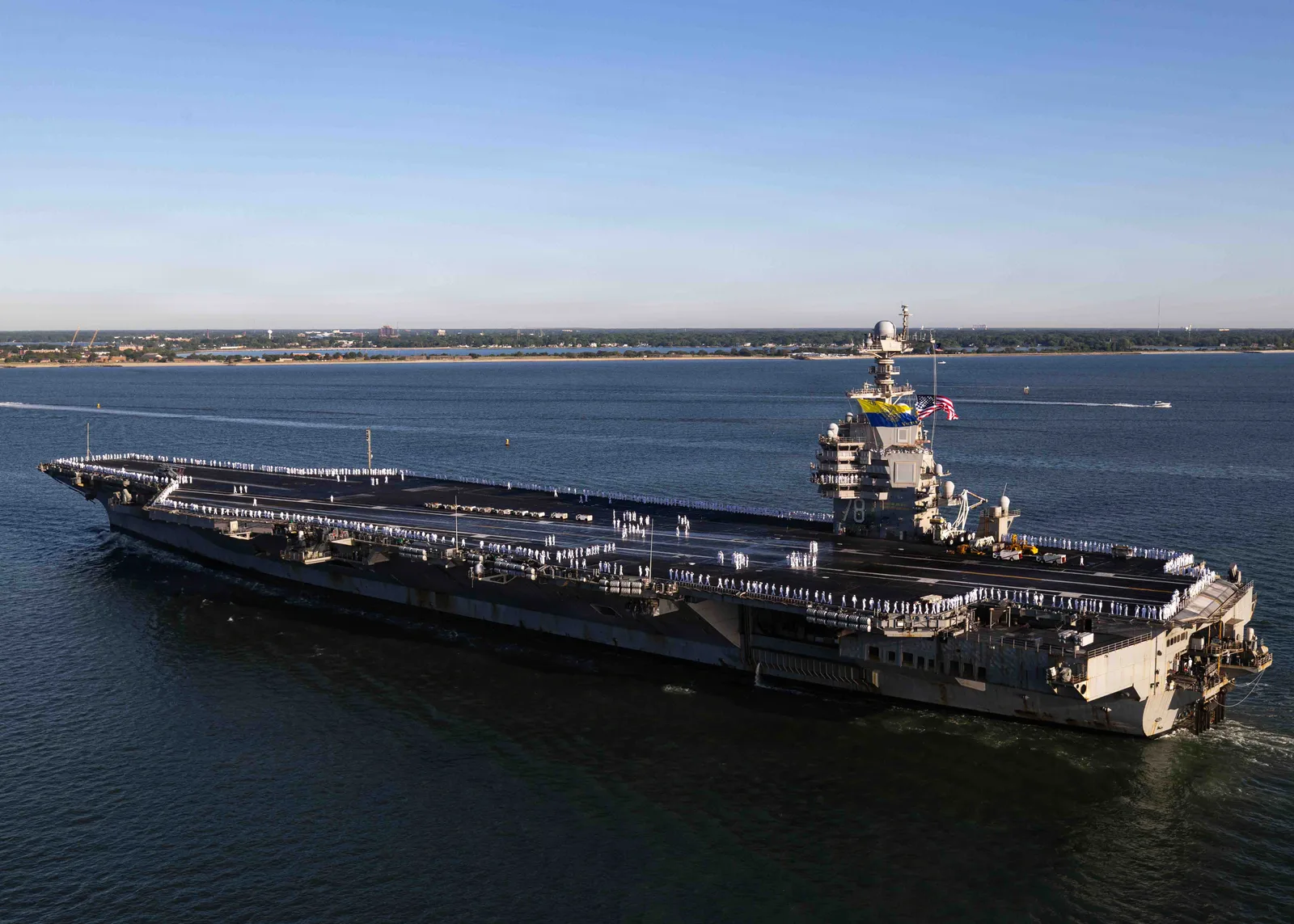
At the moment US forces only have one aircraft carrier, USS Abraham Lincoln (CVN 72), in the CENTCOM area of operations, as the other carrier deployed there, USS Gerald R Ford (CVN 78), had to suspend operations following an internal fire on 12 March and is now undergoing repairs while alongside in Souda Bay, Crete. A replacement carrier, USS George H W Bush (CVN 77), is en route to the Middle East but is not expected to arrive in theatre until early April.

At an official press briefing on 25 March White House Press Secretary Karoline Leavitt asserted that “Just over three weeks in it’s abundantly clear that Operation ‘Epic Fury’ has been a resounding military triumph” and that the Trump Administration was “very close to meeting the core objectives of Operation ‘Epic Fury’.
“The Iranian regime is being cripped and their ability to threaten the United States and our allies is being significantly weakened,” said Leavitt. “Their ambitions of building a nuclear weapon have also been crushed to an even greater degree than they were in Operation ‘Midnight Hammer’ in June 2025. That’s why you’re beginning to see the regime look for an exit ramp.”
Leavitt maintained that “productive conversations” were being had with the Iranian regime to resolve the conflict.
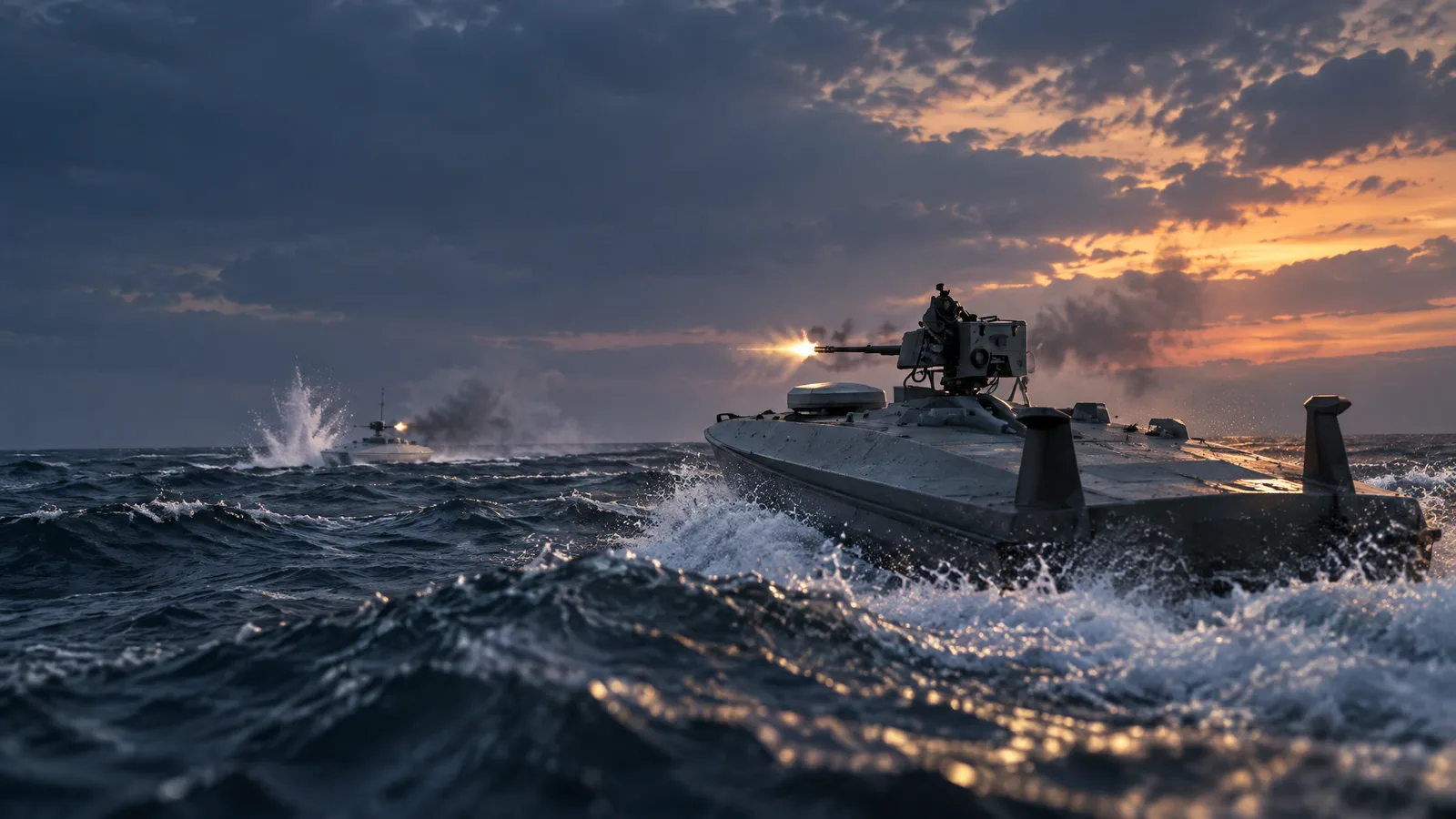
Detailing the latest figures on the US military’s pummelling of Iran – which are, of course, in addition to Israeli strikes – Leavitt stated, “More than 9,000 enemy targets have been struck to date. Compared to the start of the operation Iran’s ballistic missile attacks and drone attacks are down by roughly 90%. The United States is also annihilating the Iranian regime’s navy. We have destroyed more than 140 of their naval vessels, including almost 50 minelayers. This is the largest elimination of a navy over a three-week period since World War Two.”
Such figures certainly give the impression of ‘winning’ in a conventional sense. They do not, however, deliver a true readout of how this asymmetric conflict is actually going.