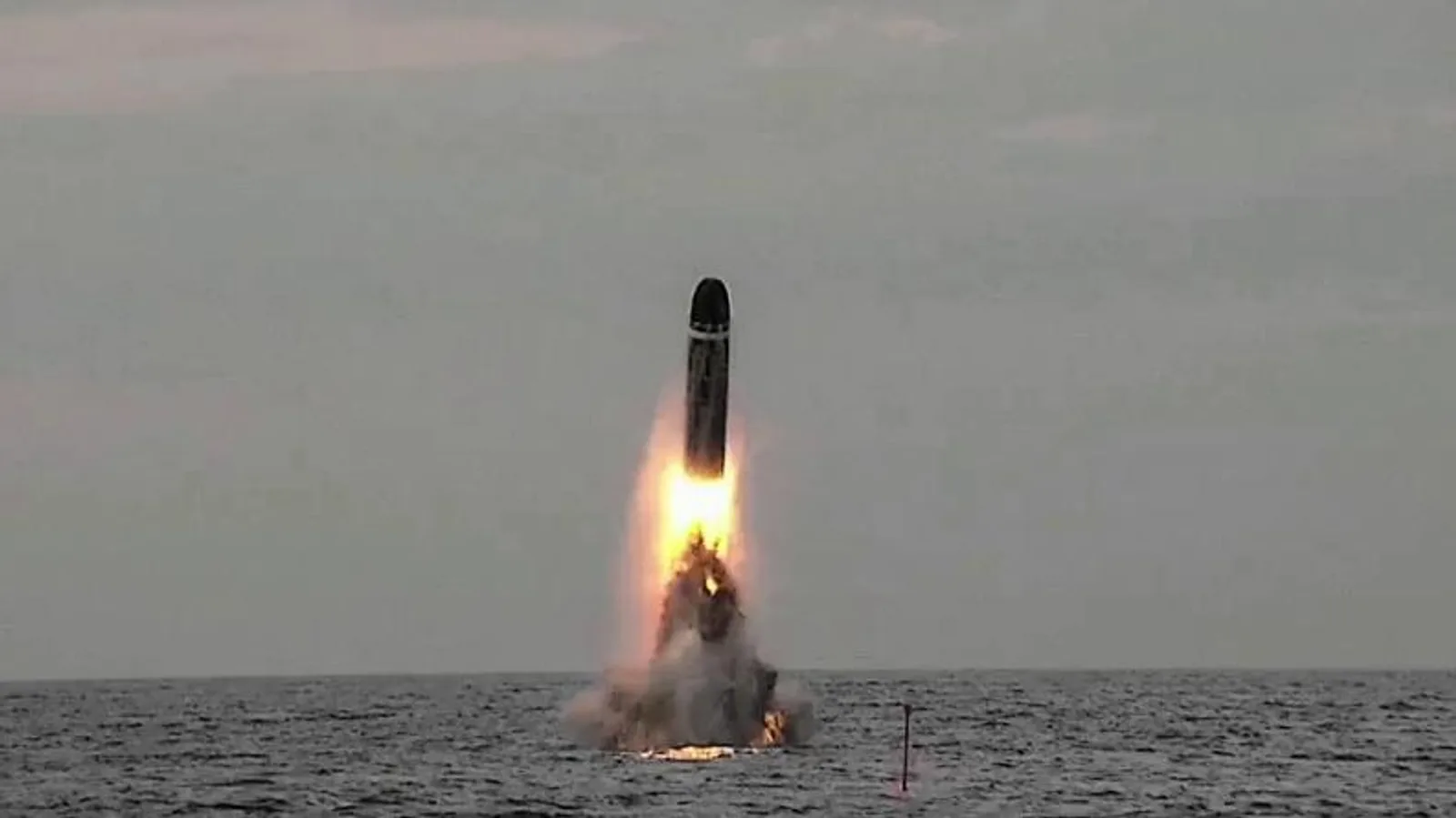
The Royal Australian Navy’s maritime uncrewed systems (MUS) programme has taken its next major step, with Australia’s defence department announcing new payload options for the navy’s three MUS systems.
New payloads take Australian navy to next milestone in uncrewed system development
The Australian Department of Defence (DoD) has revealed several planned capability options to provide new payloads for the Royal Australian Navy’s (RAN’s) maritime uncrewed system (MUS) programme.
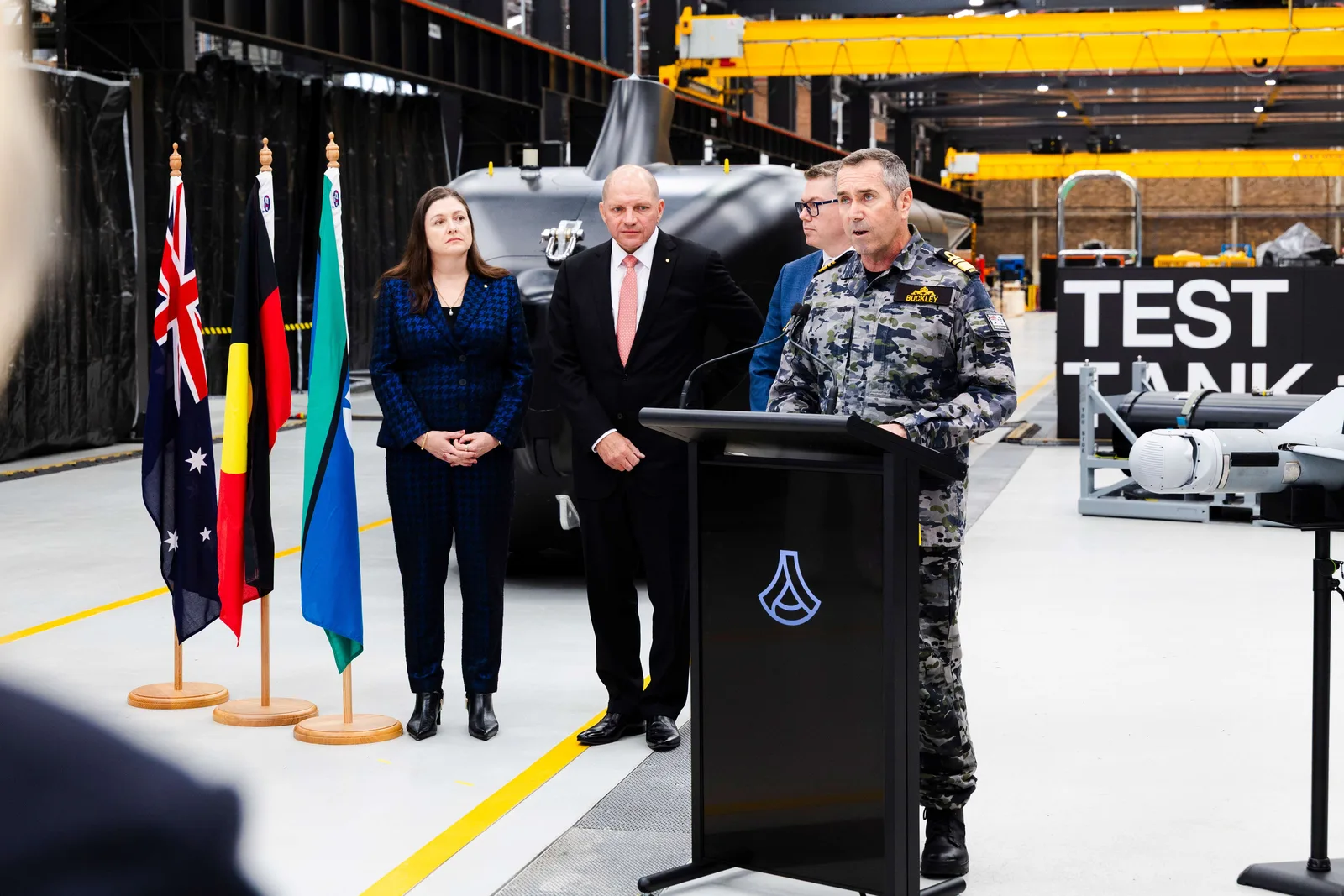
In a 19 October 2026 press release, the DoD said a number of new payload options had been developed for the RAN’s MUS fleet, with these options including supply caches, sea mines, and uncrewed aerial vehicles (UAVs). These payloads can be delivered discreetly, courtesy of the covert operational nature of much of the navy’s MUS fleet.
“The government is today unveiling the development and integration of payloads into the Ghost Shark and Speartooth uncrewed underwater vehicles [UUVs] and BlueBottle [uncrewed surface vessel (USV)],” the statement said.
Such new payloads have been developed as part of MUS capability collaboration between the RAN, the DoD’s Defence Science and Technology Group and Advanced Strategic Capabilities Accelerator programme, and defence industry.
Maritime milestone
In what it referred to as “a major milestone in the development and testing of advanced undersea warfare capabilities for the Australian Defence Force (ADF)”, the DoD said some of these payloads would be deployed to the ‘Maritime Big Play – Pacific’ exercise taking place from 5 to 25 October 2026 off San Diego, on the US west coast. The ‘Maritime Big Play’ exercise concept was developed under Pillar II of the Australia/UK/US AUKUS strategic partnership: while Pillar I is delivering a new nuclear-powered attack submarine for the RAN and the UK Royal Navy, Pillar II is developing wider advanced maritime technologies, particularly for the underwater domain.
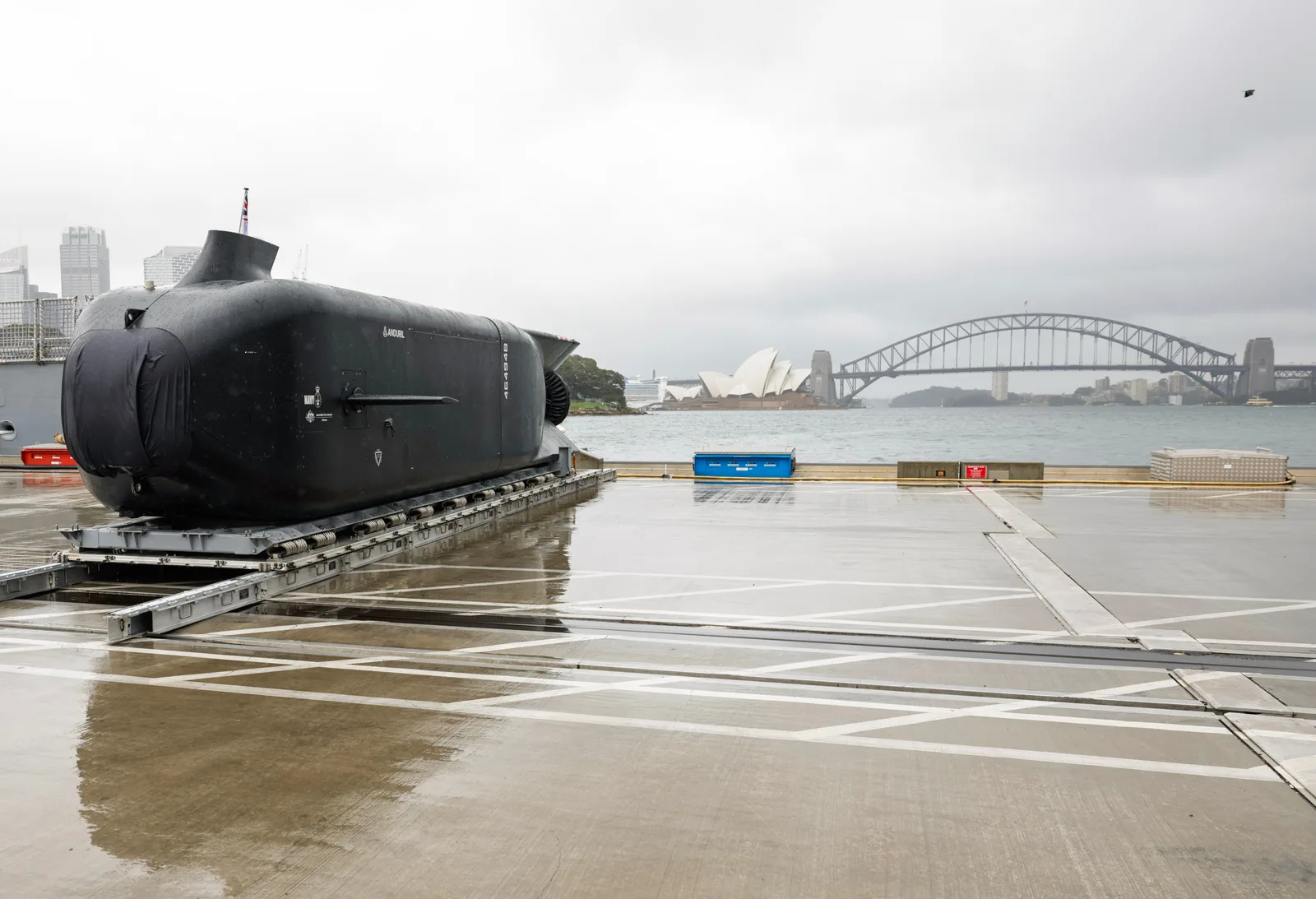
Currently, the RAN’s MUS force structure is built largely around Ghost Shark (based on Anduril’s Dive-XL design), Speartooth, and BlueBottle. All three platforms – what the RAN refers to as ‘robotic and autonomous systems’ (RAS) – were developed originally with intelligence, surveillance, and reconnaissance (ISR) tasking as their primary operational requirement. The RAN sees RAS capability as crucial to delivering the required persistent mass and reach in ISR to cover its large area of responsibility (AOR), and to support the decision advantage that Australia’s geostrategic challenges mandate.
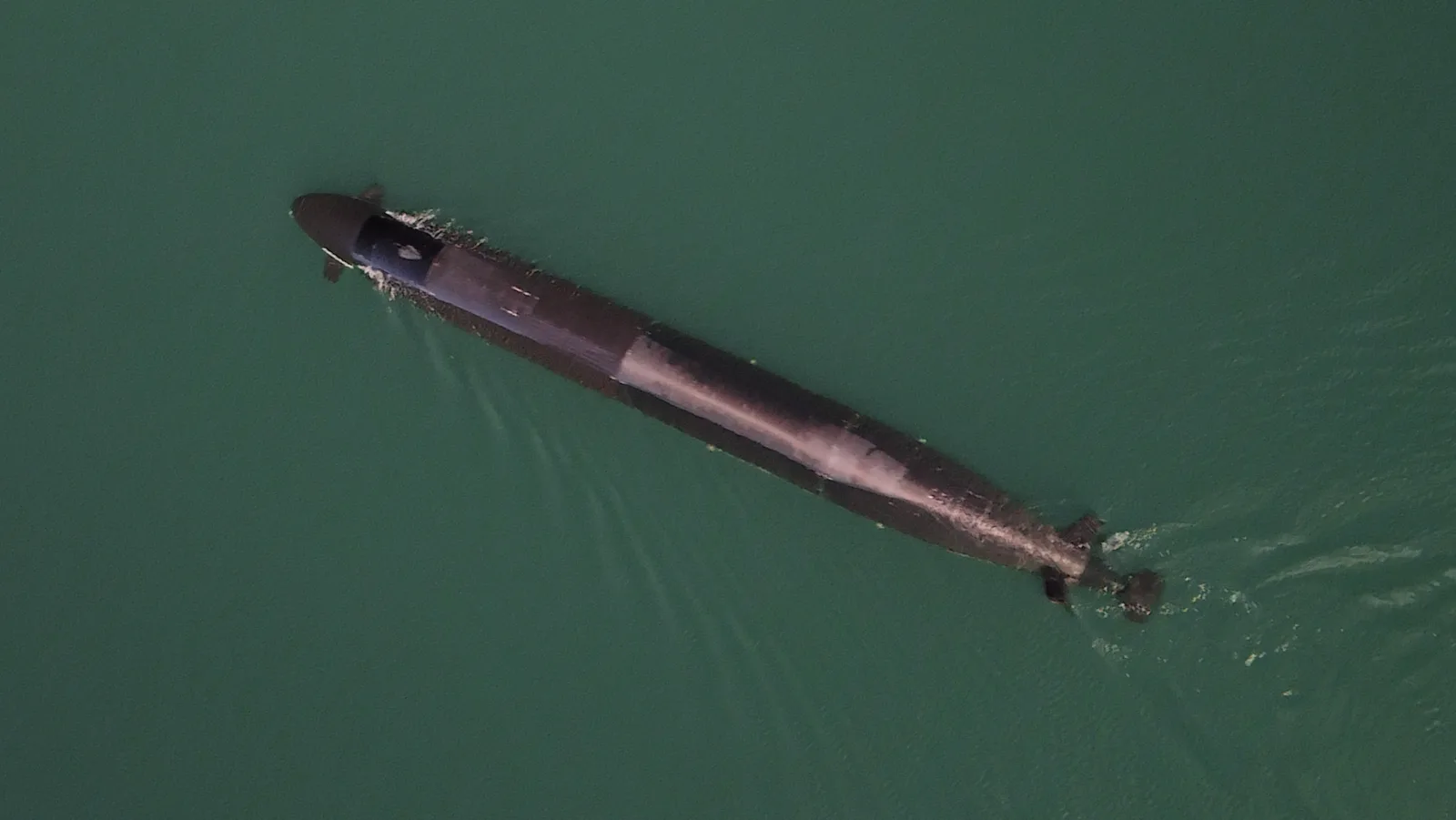
Ghost Shark, with its additional payload space (reflecting its additional typology as an extra-large autonomous underwater vehicle [XLAUV]), has been earmarked to provide strike capability too.
Together, MUS-based ISR and strike outputs are designed to support Australia’s strategic-level maritime domain awareness and deterrence effects that help keep adversary interests in check across the Indo-Pacific theatre.

Australian navy MUS development
The RAN’s first Ghost Shark prototype XLAUV arrived in April 2024, with two more delivered before June 2025. The first production variant was completed in January 2026. This followed an August 2025, AUD 1.7 billion contract placed with manufacturer Anduril Australia to deliver a Ghost Shark fleet. ABC news reported this fleet will include “dozens” of Ghost Sharks.
Speartooth is referred to as a ‘large UUV (LUUV)’ by manufacturer C2 Robotics, reaching a length of 8-12 m depending on configuration (with the latter figure being similar to Ghost Shark, albeit with a much narrower beam). The craft was designed to support generation of affordable mass. It has progressed through testing (including in major at-sea exercises like ‘Maritime Big Play’ and ‘Talisman Sabre’), and is in formal test and evaluation. It is understood that programme progress remains subject to a government decision on acquisition.
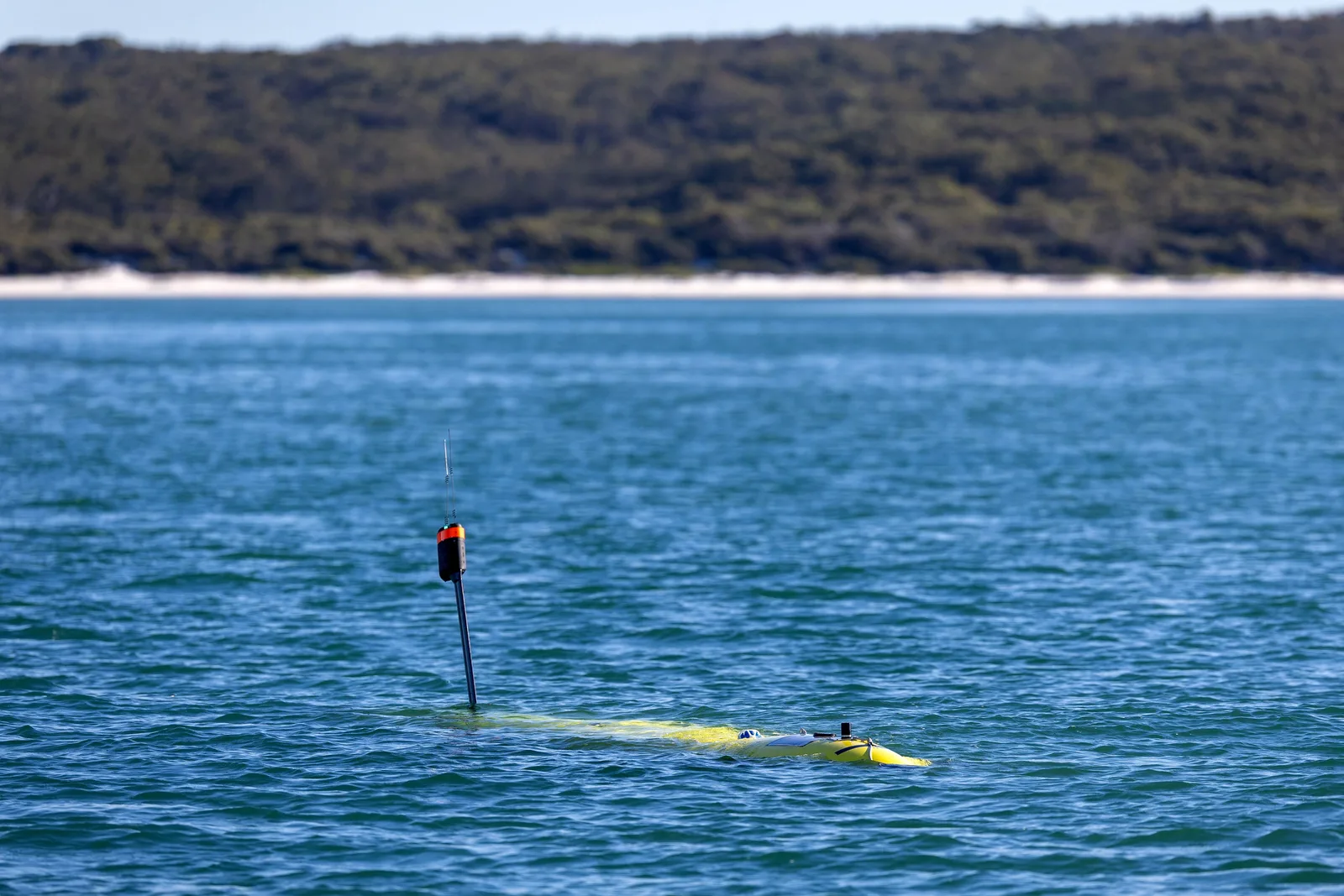
BlueBottle has been procured and deployed in numbers. To date, 15 are in service, including generating extended ISR and wider maritime security tasking coverage in waters around northwestern Australia. In March 2026, the government announced the procurement of 40 more, under an AUD 176 million contract to builder Ocius Technology and with deliveries anticipated from early 2027.
As the RAN’s three programmes progressed, other workstrands developing in parallel addressed the navy’s intent to develop additional capability options for the MUS systems. As its understanding of the platforms matured, the navy developed its ambition to enhance payload options and to integrate all three MUS into an effects-based ‘system of systems’.
Bringing payload capacity and flexibility as UUVs, Ghost Shark and Speartooth are regarded by the navy as being akin to ‘underwater trucks’. On the surface, for crewed and uncrewed platforms alike, the RAN is aiming to enhance sensing range to support various above water warfare requirements.

Play time
In May 2026, the AUKUS defence ministers announced the first Pillar II ‘Signature Project’ – development of state-of-the-art UUV payloads and enabling capabilities.
The technologies provided by such payloads will directly support RAN mission requirements, including underwater warfare (UWW), seabed operations, sea denial, and critical undersea infrastructure protection, the DoD statement said; it added that the RAN’s MUS systems are designed to accommodate various different, mission-customised payloads.
Such payloads and enabling capabilities have also been a testing and development focus in ‘Maritime Big Play’ iterations over the past three years, the DoD said.
The demonstrations conducted at the October 2026 ‘Maritime Big Play – Pacific’ exercise represent another milestone for the RAN’s MUS development. “Australia will again have the opportunity to showcase its sovereign developments at Exercise ‘Maritime Big Play – Pacific’ this week,” Richard Marles, Australia’s Defence Minister and Deputy Prime Minister, said in the statement. “The development of advanced, cutting‑edge payloads under AUKUS Pillar II is a critical part of our work alongside the US and the UK.”
The RAN’s MUS development pathway, including through ‘Maritime Big Play’, is underpinned by continued and significant financial investment from the government. For example, the latest National Defence Strategy (NDS) and associated Integrated Investment Program (IIP), published in April 2026, included an allocation of up to AUD 5.8 billion over the next decade to support autonomous and uncrewed UWW capability development.
As the IIP noted, ‘Maritime Big Play’ is becoming a regular testing environment for emerging technologies the ADF is developing.
Share post