Colt Canada officially launches C25 carbine to customers in UK and Europe

Colt Canada has officially launched its C25 carbine in Europe while embarking on a ‘rebrand’ with a consciously more proactive PR operation in support of sales initiatives beyond the company’s Canadian prime customer.

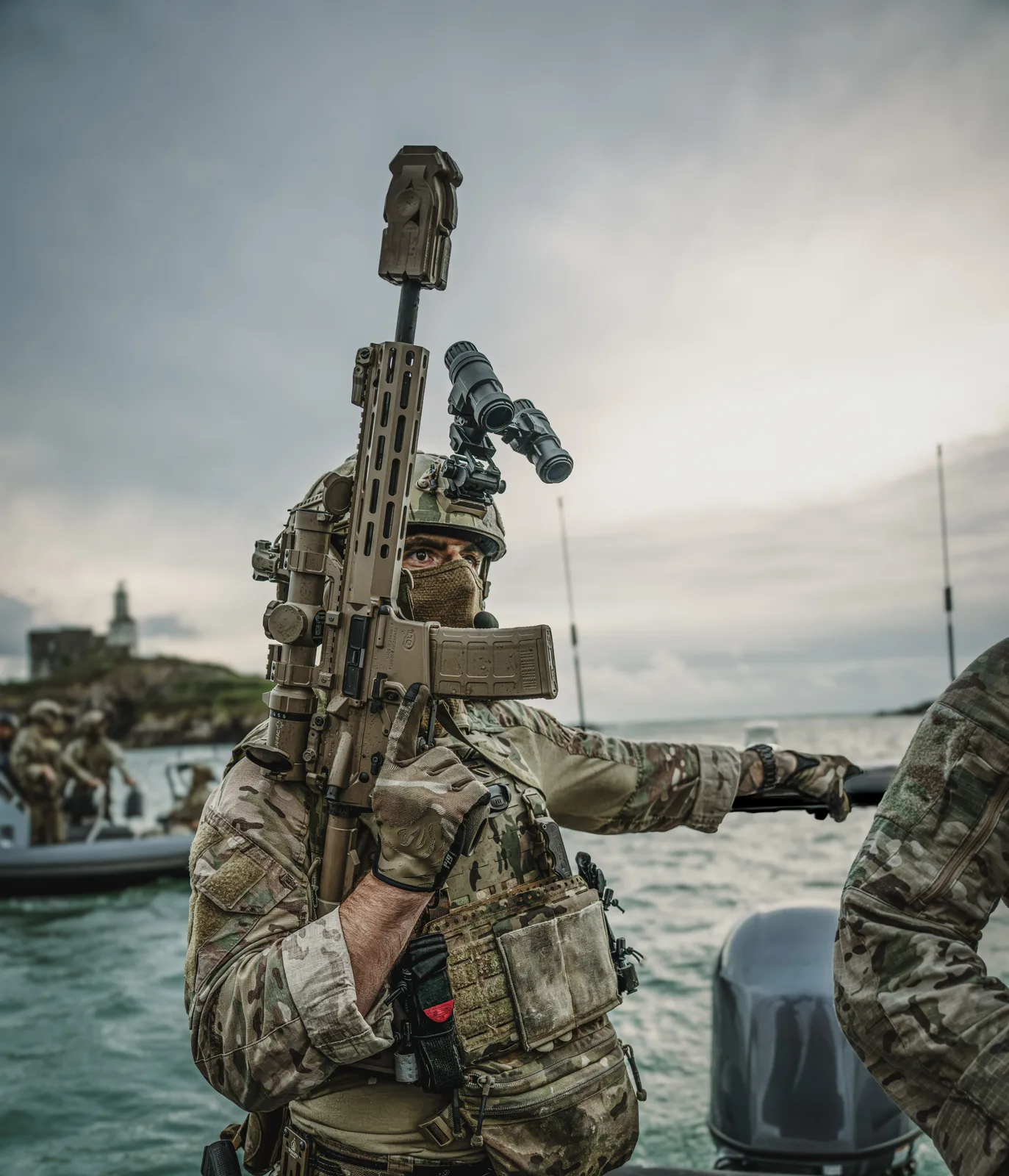
The Colt Canada C25 carbine was officially selected under the Canadian Department of National Defence’s Canadian Modular Assault Rifle (CMAR) programme in March 2026 to replace the Canadian Armed Forces’ C7/C8 5.56 mm service weapons.
The Colt Canada C25 carbine was officially selected under the Canadian Department of National Defence’s Canadian Modular Assault Rifle (CMAR) programme in March 2026 to replace the Canadian Armed Forces’ C7/C8 5.56 mm service weapons. (Colt Canada)
Pete Felstead

Canadian small-arms manufacturer Colt Canada officially announced the launch of its new C25 carbine to customers in the UK and Europe on 2 October 2026.

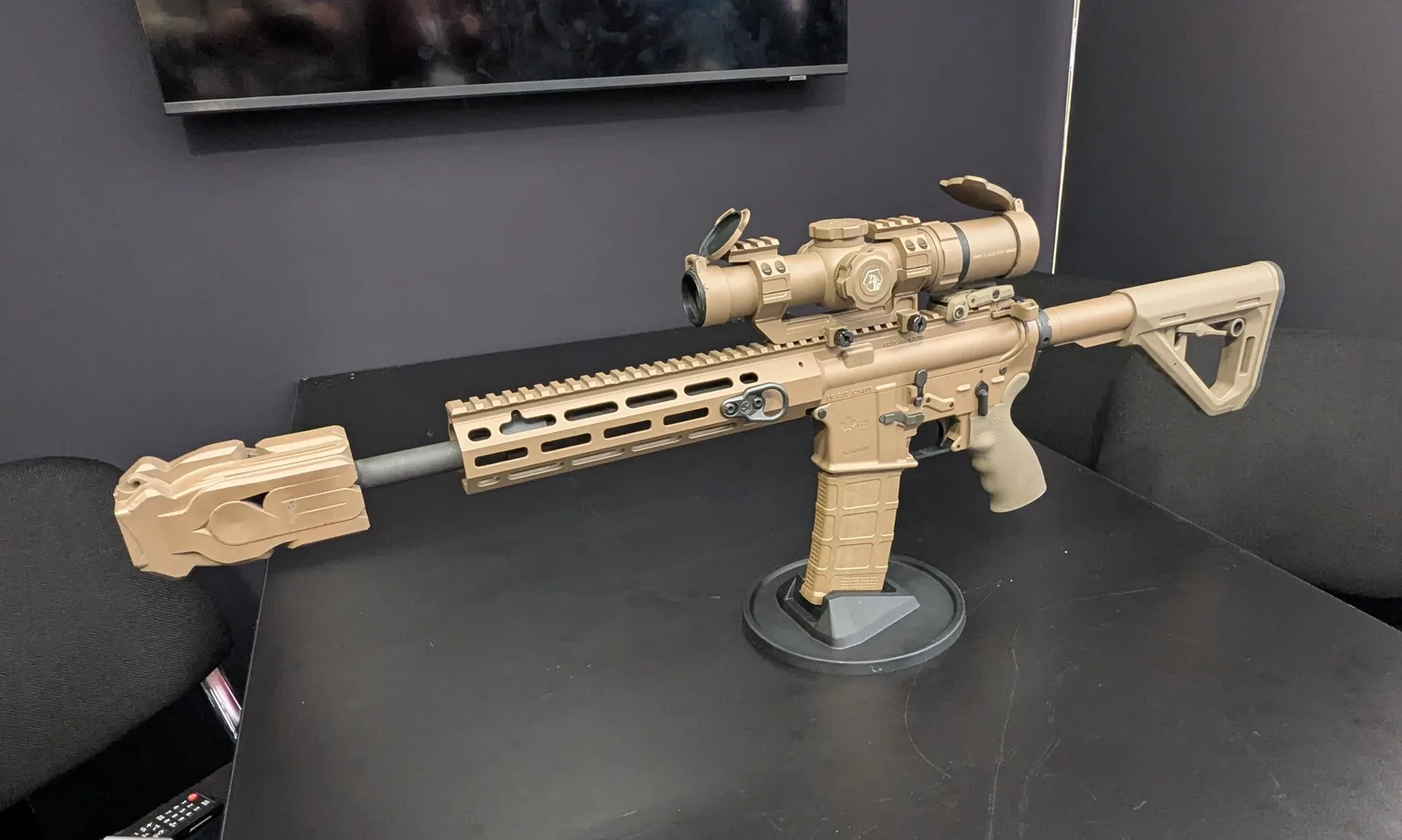
Having previewed the weapon at the UK’s Defence Vehicles Dynamics 2026 event, held at the UTAC Millbrook Proving Ground in Bedfordshire from 16-17 September, the company held a press facility at Copenhagen Firing range on 3 October at which defence press and other invited guests were able to take the C25, as well as the company’s C20 7.62 mm Semi-Automatic Sniper Weapon (SASW), onto the firing range.

The event in Copenhagen also represented something of a ‘coming out’ party for Colt Canada with regard to its public relations operations, given that, since its origins as Diemaco from 1974, the company has always been primarily focused on the Canadian government’s small arms requirements (Diemaco was acquired by Colt Defense in 2005). While Colt Canada describes itself as “the Canadian government’s centre of excellence for small arms”, it remains a private company that since 2022 has been part of the Czech-headquartered Colt CZ Group. From the start of October, however, the company has emerged with a new commercial ‘rebrand’ and PR operation, along with a new website, www.coltcanada.com, that is commensurate with its product portfolio and export presence.

Colt Canada has supplied military customers across Europe since the 1990s. Today, approximately 3,000 Colt Canada C7 and C8 rifles are in service with the armed forces of Denmark (hence the 3 October press facility being held in Copenhagen) and the Netherlands, as well as certain specialist units in the UK armed forces. Additionally, around 2020 the Botswana Defence Force selected the Colt Canada C8 Modular Rail Rifle (MRR), while in August 2025 Colt Canada secured a major contract with the Danish Defence Acquisition and Logistics Organization (DALO) for the supply of 26,000 C8 MRRs.

As Tom Taylor, the Chief Business Development Officer for North America for the Colt CZ Group, explained in Copenhagen on 3 October, “Colt Canada has always conducted itself as sort of a quiet professional organisation. They had a very specific mission, which was serving the Canadian government and the Canadian Department of Defense, and so that was their job. … Because Colt Canada is basically a B-to-G organisation, business to government, there was no marketing.”

Consequently, the company has now embarked on truly establishing its brand, built around the motto ‘Shaped through service’.

The C25

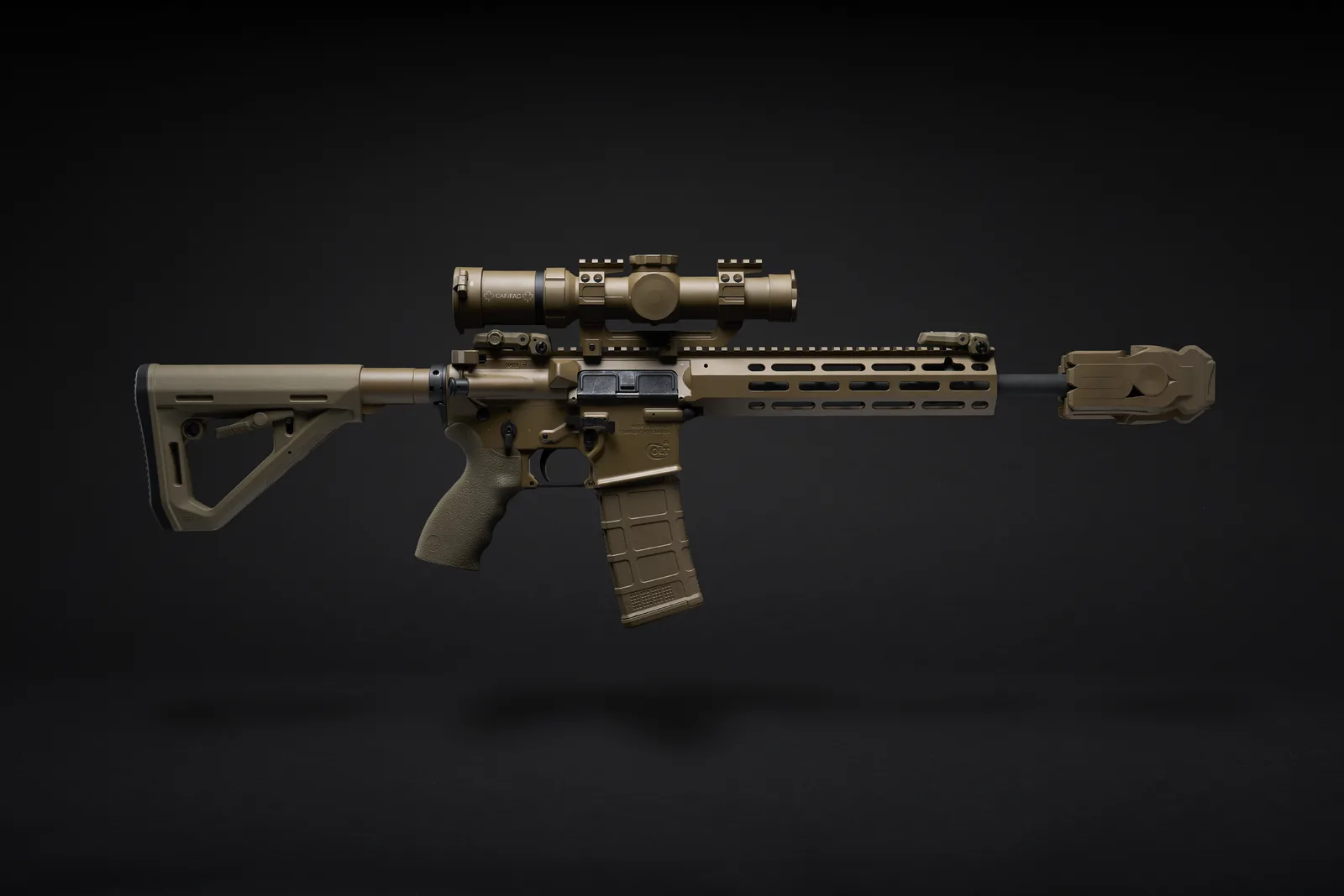
Using an AR-style expansion gas bleed-off operating system, the 5.56×45 mm-chambered C25 was developed in conjunction with Defence Research and Development Canada (DRDC). It was officially selected under the Canadian Department of National Defence’s Canadian Modular Assault Rifle (CMAR) programme in March 2026 to replace the Canadian Armed Forces’ C7/C8 5.56 mm service weapons, which were introduced in 1984. Colt Canada has been awarded a CAD 307 million (EUR 191 million) contract for the first 30,000 C25 weapons.

The C25, which has an intended effective range of 300 m, addresses the challenge of defeating Level IV body armour, which is increasingly prevalent on the modern battlefield and which Colt Canada notes cannot be reliably defeated by the standard NATO 5.56 mm cartridge.

However, while a new intermediate calibre between the NATO-standard 5.56 mm and 7.62 mm cartridges is currently the subject of much international debate, with the C25 rifle Colt Canada has taken a different approach.

“With no settled view yet on a next-generation intermediate calibre,” the company stated in a 16 September press release, “Colt Canada, in line with Canadian Department for National Defence operational doctrine and employment, has approached the gap from a different perspective: making the soldier dramatically more accurate against the smaller, harder targets that armour leaves exposed, under the fatigue and stress of sustained operations,” adding that the C25 “is a precision and human-factors programme built around a defined concept of employment”.

The C25 thus features four meaningful upgrades to ensure a soldier firing the weapon, even under duress, can be as accurate as possible:

  • a two-stage trigger that provides a more sensitive, positive break, supporting greater consistency under stress;
  • an optimised geometry within the weapon’s 13.7-inch (348 mm) chrome-lined, free-floating, cold-hammer-forged barrel that reduces disturbance to the projectile, supporting higher practical accuracy;
  • a Multi-Function Muzzle Device (MFMD), designed by US company Strategic Sciences and 3D-manufactured by partner Canadian company Millbrook Strategic Sciences, that performs four functions: flash suppression, recoil reduction, sound suppression and reduction of the firer being exposed to noxious gases; and
  • incorporation of the Colt Low Power Variable Optic (LPVO) featuring 1 to 6× magnification, which supports faster target acquisition by offering a greater magnification than other typical sights while not requiring the firer to choose between one fixed magnification and another.
The Colt Canada C25 addresses the issue of defeating Level IV body armour by being designed to allow soldiers to fire more accurately, even under duress.
The Colt Canada C25 addresses the issue of defeating Level IV body armour by being designed to allow soldiers to fire more accurately, even under duress. (Colt Canada)

Timothy Moore, head of international business development for Colt Canada, noted of the C25’s MFMD on 3 October, “The Canadian Armed Forces are the first army globally to go to a fully suppressed fleet, so everyone from the chief bottle washer through to the chief of the general staff will have a suppressed weapon system. That is absolutely unheard of.” He additionally noted of the MFMD, “We put 10,000 rounds through this device and the notional gain in weight due to carbon was marginal,” thus minimising maintenance of the weapon.

A marketing video presented by Colt Canada on 3 October additionally noted of the C25 design, “A redesigned patent-pending bolt catch and release improves ergonomics while making maintenance simpler. The sturdy monolithic upper receiver is machined from a single forging, its rigidity supporting a true free-floating barrel. An uninterrupted top rail and end lock mounting allow the system to adapt to the mission. The lower rail is reinforced to withstand the recoil forces of a 40 mm low-velocity launcher.”

As well as being fully ambidextrous, the C25 is also backwards compatible with components from Colt Canada’s previous weapon designs. Referring to Royal Danish Army troops practising on an adjacent range on 3 October, Moore said, “I can go on to Range 9 with the Danish army, who are on C7s at the moment. I can take the bolt of that C7, I can put it in [the C25] and guess what: it will run. I can take the [C25] upper receiver and then put it on their lower [receiver] over there and, bearing in mind that lower might have been produced in the late 1980s, I can drop that upper on and the only stoppage I’m going to get is an empty magazine.”

Moore noted the significance of this from an interoperability perspective. “It’s not just about ammunition,” he said. “It’s also about how you can sustain that individual within the fight and keep them in the fight. And if I can do that by putting in a Dutch upper on a Danish lower, then I’m still in the fight.”

Moore said that Colt Canada is currently exploring different natures of 5.56 ammunition for the C25, but has not as yet worked on intermediate calibres between 5.56 mm and 7.62 mm that might, for example, become part of the equation in the UK’s formative Project Grayburn, which seeks to replace the UK armed forces’ SA80 family of rifles from around 2030.

Regarding Project Grayburn, Moore said, “We are observing, we are understanding, and if we fit, we fit, and if we don’t fit, happy days.”

Colt Canada will also produce a rifle designated the C26 as the Full Spectrum (FS) variant of the CMAR programme, although this weapon is still in development. While the C25 is a general-service weapon configured for broad support use, the C26 is purpose built for frontline infantry units and primary combat roles. The final configuration for the C26 is still being finalised, but it is intended to have an effective range of up to 500 m and will probably be issued with a 1-10x LPVO.

On the range

As the defence press gathered in Copenhagen on 3 October were invited to try out the C25 on the range, it was clear that even journalists with limited to no experience firing assault rifle-type weapons were regularly hitting relatively small targets, including a moving target, at a range of 100 m.

While this author has only fired a limited number of assault rifles, including a Heckler & Koch G36 and a PA md. 86 (the Romanian version of the Soviet AK-74), the recoil of the C25 was noticeably benign in comparison. Additionally, the optic picture from the LPVO at around ×5 at 100 m made it very difficult to miss.

As a gas-operated rifle derived from the mechanism originally designed by US firearm designer Eugene Stoner for the ArmaLite AR-15/M16 rifle in the 1950s, the C25 is also inherently more centrally balanced than rifles that use a piston mechanism in the front end of the rifle.

Meanwhile, the ambidextrous nature of the C25 – unlike the UK’s SA80, for example – is a feature that should not be discounted, given that up to 12% of the global population – and thus a similar proportion of military personnel – are left handed.

As the Colt Canada C25 carbine was officially launched in Europe during a press facility at Copenhagen Firing range on 3 October 2026, Warsight Deputy Editor Peter Felstead also took the opportunity to try out Colt Canada's C20 7.62 mm Semi-Automatic Sniper Weapon (SASW).
(CPM / Peter Felstead)

Share post

You may be interested in

Categories

LandAll News

Used tags

C25 carbineColt Canada

Similar posts