The United Kingdom and Poland have signed a wide-ranging treaty that further deepens the two countries bilateral defence and security partnership.
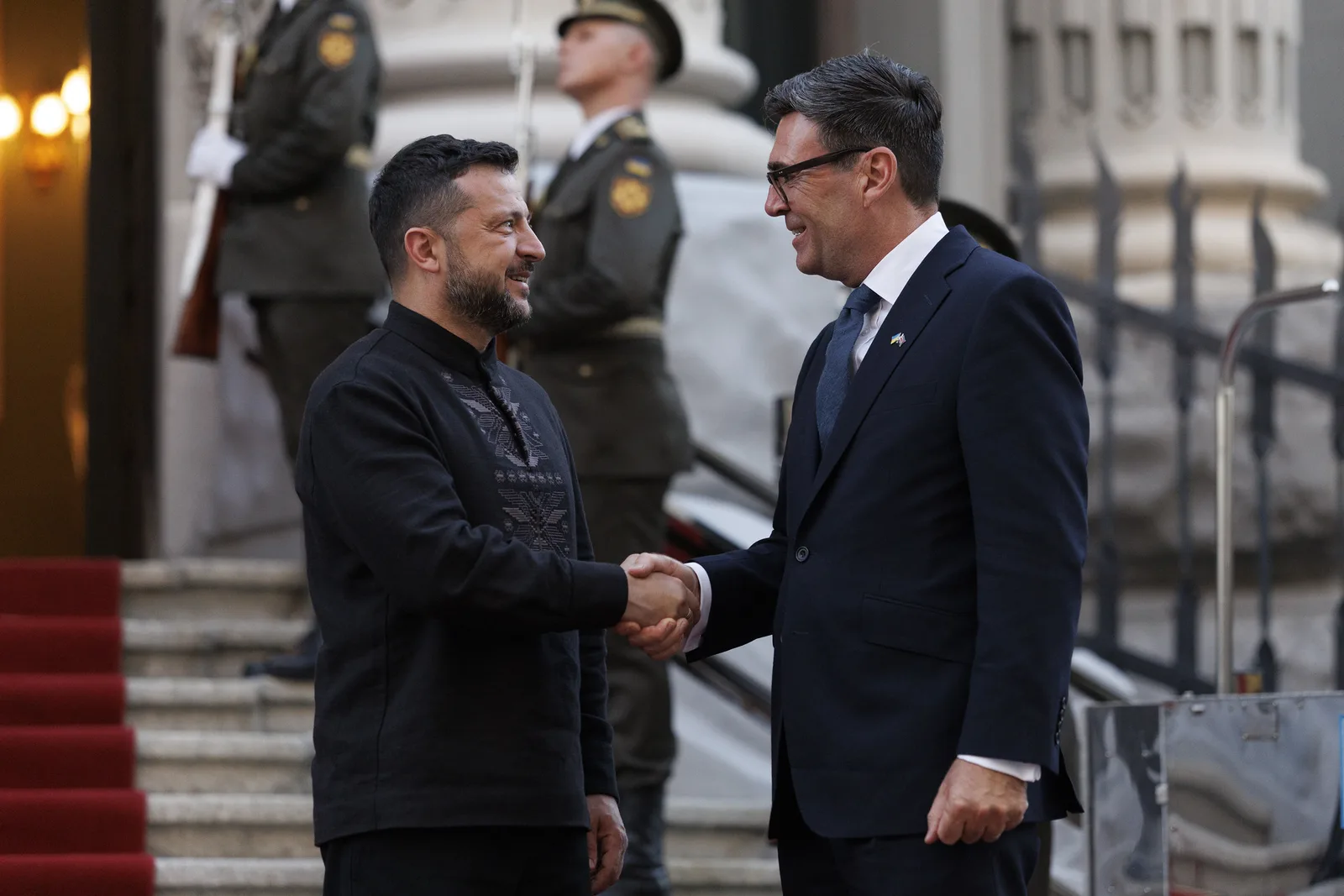
The accord was signed by UK Prime Minister Sir Keir Starmer and Polish Prime Minister Donald Tusk on 27 May 2026 in the ‘Battle of Britain’ bunker at RAF Uxbridge, which in 1940 served as the operational centre for No 11 Group Fighter Command, in which British and Polish pilots fought together to defend the UK from the Luftwaffe.
The new accord, which Tusk as referred to as the Northolt Treaty after the nearby RAF station, builds on the UK-Poland Treaty on Defence and Security Cooperation that was signed in Warsaw on 21 December 2017 and especially on the UK–Poland 2030 Strategic Partnership Joint Declaration on Foreign Policy, Security and Defence, which was signed in London on 5 July 2023, 16 months after Russia invaded Ukraine.
The text of the treaty covers a whole spectrum of co-operation, but the two countries have committed to “deepen co-operation in international security and foreign policy” and “intensify co-operation alongside other partners, and within multilateral formats such as NATO, the Organisation for Security and Co-operation in Europe (OSCE) and the UN in order to address international challenges”.
The treaty also noted that the parties “underscore the threat the Russian Federation poses to international peace and security” and “reaffirm their commitment to countering and deterring Russian aggression and interference in all its forms”.
Related to this, the treaty said Poland and the UK “recognise the urgent need for Europe to step up the development of new defence capabilities in all domains in order to strengthen their security and protect their territory, and are resolved to play their part in this generational effort”.
Poland, of course, is already taking such measures, while the UK is struggling in this regard; according to the latest NATO estimates in defence spending as a share of GDP, in 2025 Poland topped all other allies with a defence spending level of 4.48%, while the UK was 12th among the allies, with an estimated spend of 2.4% of GDP. The UK government has in recent months been increasingly accused of dragging its feet on adequately preparing the UK armed forces for conflict with Russia, which Lord Robertson, the chief author of the Labour government’s 2025 Strategic Defence Review (SDR), referred to in a speech on 14 April as a “corrosive complacency”.
However, there are already joint UK-Polish defence programmes, on which the latest treaty is likely to build. On 4 October 2022, for example, the two countries signed an agreement to co-operate on air defence missiles that outlined the scale of industrial co-operation on Poland’s Narew ground-based air defence (GBAD) programme. The Polish Mała Narew short- to mid-range GBAD system uses CAMM missile and iLaunchers produced by MBDA UK.
The UK-Polish treaty signed on 27 May is one of a number of bilateral accords signed between France, Germany, Poland and the UK in recent years as those countries look to bind their defence ties in support of Ukraine and to deter further Russian aggression in Europe. Their diplomatic efforts also come in the wake of a strained European relationship with the Trump Administration, which has moved to withdraw US troops from Europe.
In mid-May the Trump Administration cancelled the deployment of 4,000 US soldiers to Poland in a completely out-of-the-blue decision while also confirming the withdrawal of 5,000 troops from Germany. While the German withdrawal remains in place in the wake of US President Donald Trump’s recent spat with German Chancellor Friedrich Merz, who has refused to allow Germany to be drawn into the US/Israeli war with Iran, the Polish deployment was reinstated by Trump on 21 May following strong criticism from both Republican and Democrat lawmakers.